 Bellingham Siding
 Roofing Built for Happy Valley's Weather, Not Just Any Weather
Happy Valley sits close enough to Bellingham Bay that salt-laden air is a daily fact of life, and far enough into the Pacific Northwest weather pattern that driving rain off the water and a long, damp moss season are just part of owning a home here. Asphalt shingle roofing can handle all of that when it's specified and installed correctly for this specific microclimate. It struggles when it's installed the same way a crew might install it in a dry inland market. We work Whatcom County roofs year-round, and Happy Valley's mix of older bungalows, mid-century homes, and newer infill construction gives us a good sense of what actually holds up here versus what looks fine for a season or two before problems show up.
This page is about one service, in one neighborhood: asphalt shingle roofing in Happy Valley. Not a general overview of every roofing material we touch, and not a sales pitch. Just what your roof actually needs given where it sits, what a correct installation involves, and how we run the job from first look to final cleanup.
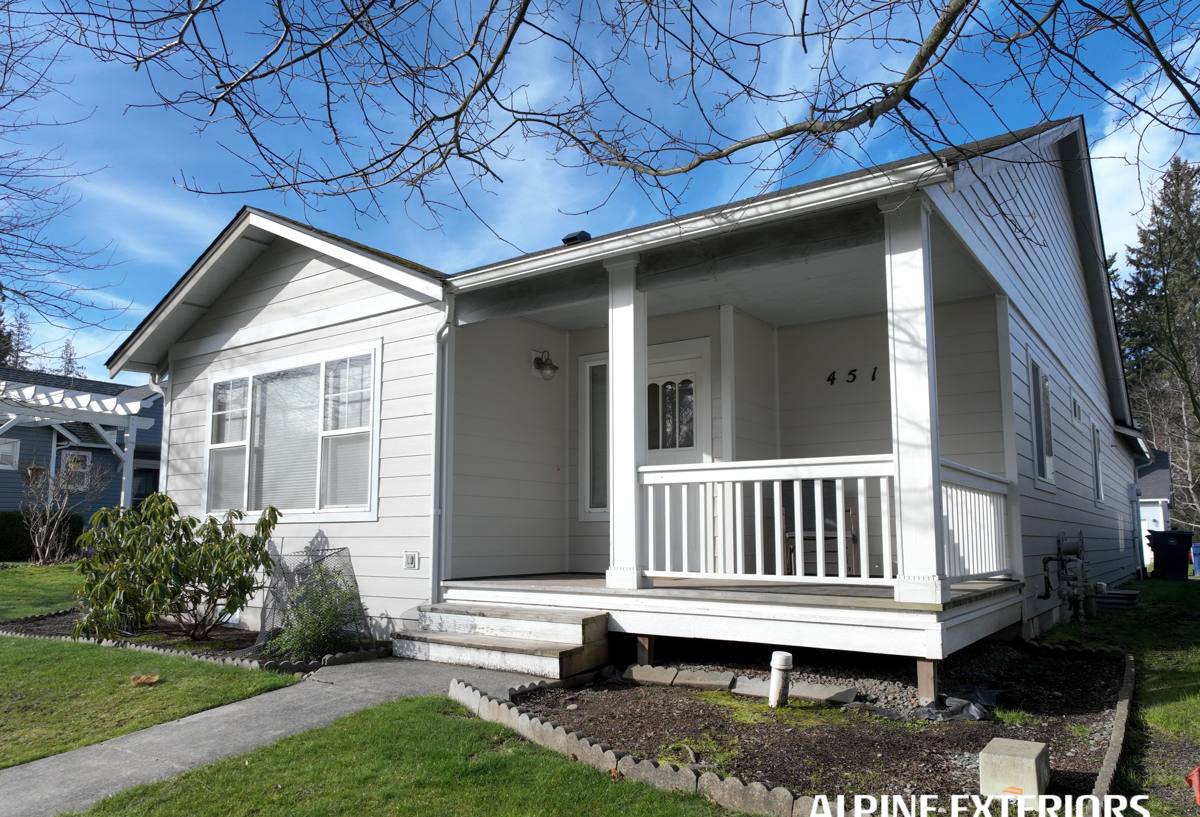
What Bellingham's Coastal Climate Does to a Shingle Roof
Three things drive most of the roofing problems we see in this part of Bellingham, and all three show up together, which is part of what makes the area demanding.
Salt Air and Metal Fatigue
Being close to the bay means airborne salt settles on roofing components year-round, not just during storms. Salt accelerates corrosion on exposed metal — flashing, fasteners, vent caps, and drip edge. Standard galvanized fasteners and cheaper flashing stock corrode faster here than they would ten or fifteen miles inland. This doesn't ruin a roof overnight, but it shortens the life of the metal components long before the shingles themselves are due for replacement, which is exactly the kind of failure that leads to a leak nobody saw coming.
Driving Rain Off the Water
Wind off the bay doesn't just drop rain straight down — it pushes it sideways and up under laps, edges, and penetrations that would stay dry in a calmer climate. That means underlayment coverage, shingle nailing pattern, and detail work at valleys, walls, and penetrations matter more here than the shingle brand printed on the wrapper. A roof that's "basically fine" in a low-wind market can leak in Happy Valley if those details were rushed.
Moss and Prolonged Moisture
Bellingham's wet season runs long, and shaded, north-facing, or tree-covered sections of roof stay damp for extended stretches. That's exactly the environment moss and algae need to establish. Moss isn't just cosmetic — as it grows, it lifts shingle edges, holds moisture against the roof deck, and works its way into laps and fastener lines. Left unmanaged over several seasons, it shortens the life of an otherwise sound roof.
What "Correct" Actually Means for a Happy Valley Roof
A lot of roofing pitches focus on the shingle. The shingle matters, but in this climate the system around it is what determines whether the roof performs for its full expected lifespan.
- Underlayment coverage suited to wind-driven rain — synthetic or self-adhered underlayment at eaves, valleys, and other vulnerable areas, not just the bare minimum required by code.
- Corrosion-resistant flashing and fasteners — metal specified with the salt-air environment in mind, not generic stock.
- Proper nailing pattern and fastener count — under-driven or over-driven nails and short-cut fastener counts are a common source of early wind and rain damage that isn't visible from the ground.
- Ventilation that matches the attic — balanced intake and exhaust so moisture from inside the home doesn't add to what's already coming from outside.
- Ice-and-water or high-moisture protection at valleys and low-slope transitions — the areas where water concentrates and lingers longest.
- Algae-resistant shingle options where moss and streaking are a known issue — a reasonable upgrade for shaded or tree-covered roof sections.
None of this is exotic. It's disciplined, standard practice applied consistently — which is where a lot of roofing jobs quietly fall short.
Our Process for a Happy Valley Asphalt Shingle Roof
1. On-Roof Inspection, Not a Drive-By Estimate
We get on the roof (or use a close visual inspection where access doesn't allow it) to check deck condition, existing flashing, ventilation, and the specific exposure of your home — how much shade, how much wind, which sides take the worst of the weather off the bay. A number written from the street doesn't account for any of that.
2. A Written Scope You Can Actually Read
You get a clear scope of work: what's being removed, what underlayment and flashing are being used, fastener and nailing specifics, ventilation changes if needed, and cleanup expectations. No vague line items.
3. Tear-Off and Deck Assessment
For a full replacement, we remove existing roofing down to the deck and check for soft spots, rot, or prior water damage that wouldn't be visible otherwise. This is often where hidden problems from years of moss or minor leaks finally get addressed properly instead of being covered over.
4. Underlayment, Flashing, and Detail Work
This is the stage that determines how the roof handles driving rain, and it's also the stage that's easiest for a rushed crew to shortcut. Valleys, wall transitions, chimneys, vents, and skylights get the most attention because that's where leaks actually start.
5. Shingle Installation
Installed to manufacturer spec for nailing pattern, exposure, and fastener count — not "close enough." This is also where we'll talk through algae-resistant or heavier-weight shingle options if your roof has shaded sections prone to moss.
6. Final Walkthrough and Cleanup
Magnetic sweep for stray fasteners, debris cleanup, and a walkthrough so you understand what was done and what to expect going forward — including a realistic sense of moss and debris maintenance for your specific lot.
Repair, Partial Replacement, or Full Replacement?
Not every roof in Happy Valley needs a full tear-off. Age, extent of damage, and how the existing system was originally installed all factor in.
| Situation | Typical Approach | What to Watch For |
|---|---|---|
| Isolated leak, roof under 10-15 years old, decking sound | Targeted repair | Confirm the repair addresses the cause, not just the symptom (e.g., failed flashing vs. shingle wear) |
| Moss buildup with early shingle lifting, roof otherwise intact | Moss treatment and cleaning, monitor for recurrence | Repeated moss growth in the same spot often points to shade or ventilation, not just a cleaning issue |
| Widespread granule loss, multiple leak points, roof 20+ years old | Full replacement | Deck condition often only becomes clear once old roofing is removed |
| One slope facing the worst weather badly worn, rest of roof sound | Partial replacement (case by case) | Matching shingle profile and color, and confirming flashing continuity between old and new sections |
We'll give you a straight answer on which category your roof falls into rather than defaulting to the most expensive option.
Choosing Shingles for This Specific Environment
Standard three-tab and architectural (dimensional) asphalt shingles both have a place, but the decision in Happy Valley usually comes down to exposure and shade rather than just budget.
- Architectural shingles generally offer better wind resistance and a heavier profile, which matters on exposed sides facing the bay.
- Algae-resistant (AR) shingles use copper-infused granules to slow algae and moss growth — worth considering on north-facing or tree-shaded roof sections where moisture lingers longest.
- Wind ratings should be checked against your specific exposure, not just the manufacturer's baseline claim, since gusts off the water can exceed what a roof set back from the coast would ever see.
- Warranty structure varies by manufacturer and by whether installation is done by a certified installer — worth understanding before you assume a warranty covers what you think it covers.
We install a range of manufacturer product lines rather than pushing one brand, because the right choice depends on your roof's exposure, your budget, and how long you plan to stay in the home.
What to Ask Before You Hire Anyone for This Job
Roofing has a low barrier to entry, and Whatcom County sees its share of contractors who show up during storm season and aren't around the following year when a warranty issue comes up. A few questions separate a real local roofing crew from someone passing through:
- Are you licensed and insured in Washington, and can you provide proof?
- Do you carry workers' compensation coverage for your crew?
- Will the estimate include specific underlayment, flashing, and fastener details — or just a total price?
- Who handles a warranty claim if something goes wrong two years from now?
- Have you worked on homes in this specific area, and do you understand the exposure differences between an inland roof and one closer to the bay?
A contractor who can answer these clearly, in writing, is worth more than one offering the lowest number with the vaguest scope.
Maintenance That Actually Extends Roof Life Here
Even a correctly installed roof needs some ongoing attention in this climate. The two things that matter most for Happy Valley homes are gutter and valley debris control, and moss management on shaded sections. Clogged gutters back water up under the shingle edge, and unmanaged moss holds moisture against the roof surface longer than the shingles were designed to tolerate. Neither requires constant attention, but ignoring both for years at a stretch is how a well-installed roof ends up with premature problems.
A periodic visual check — especially after major windstorms off the water — catches lifted shingles or displaced flashing before they turn into interior damage. Most of the leaks we get called out for started as something small that went unnoticed for a season or two.
Get a Straight Answer on Your Roof
If you're dealing with a leak, aging shingles, persistent moss, or you just want an honest read on how much roof life you have left, we're happy to take a look. We'll give you a clear, no-pressure estimate that reflects what your roof actually needs for Happy Valley's conditions — not a generic number. Use the form below to request a free estimate and we'll go from there.