 Bellingham Siding
 Sunnyland's Exterior Challenge: Salt Air, Rain, and Moss
Sunnyland sits in one of Bellingham's established residential neighborhoods, close enough to Bellingham Bay that homes here catch the same salt-laced marine air that moves across most of Whatcom County. Combine that with the region's long, wet fall-through-spring stretch and the mild, shaded conditions that let moss and algae take hold, and you get an exterior environment that is genuinely harder on a house than it looks from the street. It isn't dramatic weather. It's relentless, low-grade exposure, and that's exactly the kind of exposure that wears out the wrong siding material years before it should.
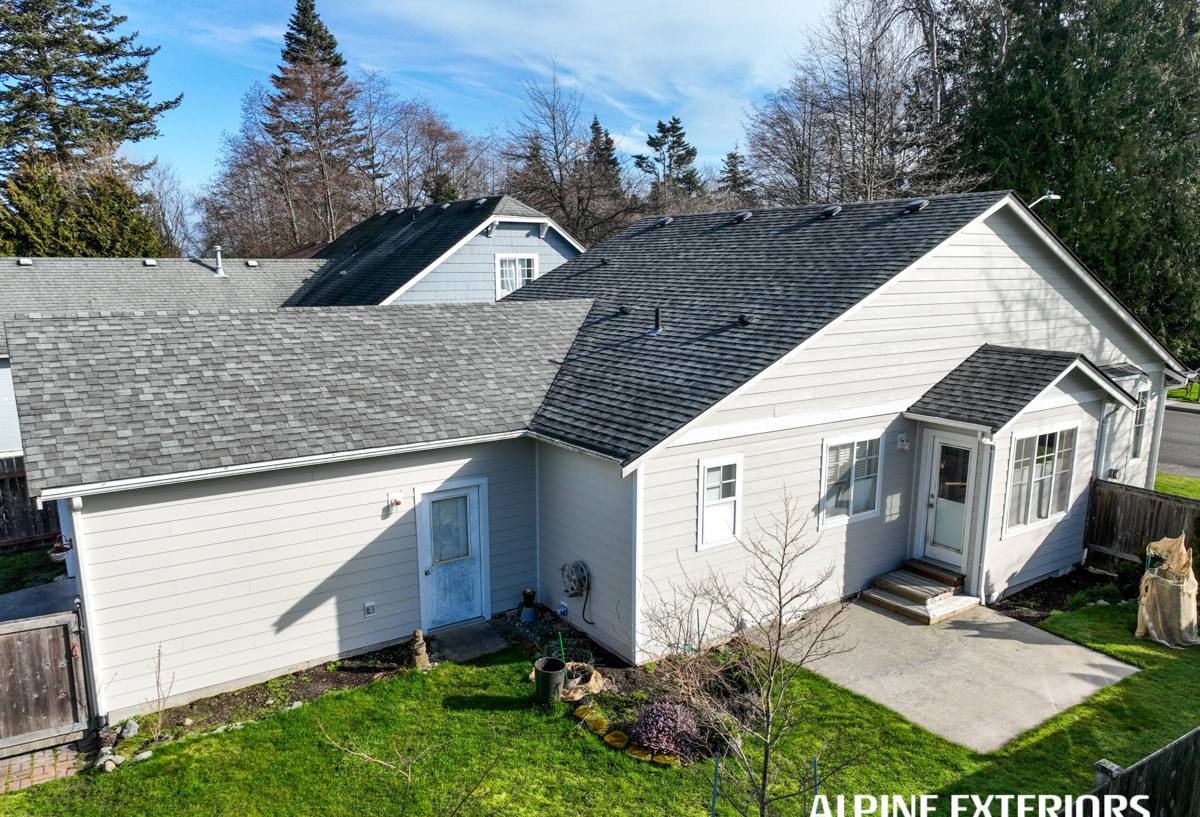
Homes in this part of Bellingham tend to be a mix of older, established houses and newer infill construction, often with mature trees and landscaping close to the structure. That shade and greenery is part of what makes Sunnyland a nice place to live, but it also means siding, trim, and roofing stay damp longer after a storm than they would on an open, sun-exposed lot. Moss doesn't need direct rain to grow — it just needs consistent moisture and shade, and Sunnyland has plenty of both for a good chunk of the year.
How Marine Air and Moisture Actually Damage a House
Salt Air and Metal Fasteners
Salt-laden air accelerates corrosion on exposed metal — nail heads, flashing, hose bibs, light fixtures — faster than it does further inland. Over years, corroding fasteners can stain siding, loosen trim, and create small gaps where water starts working its way behind the cladding. It's a slow process, which is exactly why it goes unnoticed until paint is peeling around a nail head or a piece of trim has started to separate.
Driving Rain and Wind-Driven Moisture
Whatcom County storms often come with real wind behind the rain, and wind-driven rain doesn't behave like a straight-down shower. It gets pushed sideways into seams, laps, and butt joints — the places where siding systems are most vulnerable if they weren't installed with correct overlaps, flashing, and caulking in the first place. A siding product that's only rated for moderate exposure, or that was installed with shortcuts on the water-management details, tends to show its weaknesses first in exactly this kind of climate.
Moss, Algae, and Prolonged Dampness
Moss and algae growth isn't just a cosmetic problem. Sustained dampness against a wall surface softens paint film, can encourage rot in wood-based products, and traps moisture right where you don't want it — against the substrate. Left alone through a few wet seasons, what starts as a green tinge on the north side of a house can turn into a real maintenance project.
Why We Only Install James Hardie Fiber Cement
We made a decision a while back to stop installing several products that are common in this market — vinyl, LP SmartSide, primed spruce, cedar, and other fiber cement brands like Cemplank or Allura — and to install James Hardie exclusively. That's not a marketing gimmick; it's a standard we hold because of what we see on houses in exactly this kind of climate.
James Hardie fiber cement is non-combustible and dimensionally stable, meaning it doesn't expand and contract with moisture the way wood-based products can, and it resists the kind of moisture-driven swelling and softening that shows up on engineered wood siding after repeated wet seasons. Hardie's ColorPlus factory-applied finish is baked on under controlled conditions, which gives it better resistance to fading and moisture intrusion at the finish layer than field-applied paint typically achieves — an advantage that matters in a place where paint has to survive months of damp exposure every year.
Hardie also engineers specific product lines (their HZ5 and HZ10 designations) for different climate zones, accounting for freeze-thaw cycling and moisture exposure rather than using one generic formulation everywhere. And the transferable warranty structure gives homeowners real protection if they sell the house within the coverage period — something that matters more than people expect when it comes time to list.
None of this means other products are worthless — vinyl is inexpensive, cedar has real character, LP SmartSide has genuine fans. But we've chosen to put our name behind one system we can install to spec and stand behind fully, rather than juggle multiple product lines with different failure modes and warranty terms. For Sunnyland's climate specifically, fiber cement's stability and moisture resistance line up with what the neighborhood actually needs.
Full Exterior Protection: Siding, Roofing, Windows, and Decks
Siding is only one part of a house's defense against Bellingham's weather. We also handle roofing, windows, and decks, because those systems all interact — a roof that's shedding water improperly, a window that's not flashed correctly, or a deck ledger board that's trapping moisture against the house can undermine even perfectly installed siding.
Roofing
A roof in poor condition sends water down onto siding and trim in ways the siding was never designed to handle. Moss on a roof surface is often the first visible sign of the same conditions that are affecting the walls below.
Windows
Old or poorly flashed windows are one of the most common sources of hidden water intrusion in older Sunnyland homes. Replacing siding without addressing window flashing just moves the problem, it doesn't solve it.
Decks
Decks attached to the house create a direct connection point where water management has to be right, or moisture works its way into the wall assembly behind the ledger board.
Looking at the whole exterior envelope together, rather than siding in isolation, is how problems actually get fixed instead of just relocated.
Why a Local Crew Matters Here
A crew that works across Whatcom County regularly understands things that don't show up in a spec sheet: how Sunnyland's tree cover and lot shading affect drying time after installation, which details need extra attention given the marine air, and how local permitting and inspection processes work in Bellingham specifically. That local knowledge shows up in small decisions — flashing details, fastener choices, caulk selection — that add up to a siding job that actually performs over 20-plus years rather than one that just looks good on installation day.
It also means someone answers the phone if a question comes up two years after the job, rather than a homeowner trying to track down a crew that only worked in the area for one season.
What Correct Installation Actually Involves
Fiber cement siding performs the way it's rated to perform only when it's installed correctly. The material isn't the whole story — the installation details are just as important, especially in a wet climate.
- Proper starter strip and clearance from grade and hard surfaces to prevent wicking
- Correct fastener type, spacing, and depth (over- or under-driven nails are a common failure point)
- Rain screen or drainage plane behind the siding where appropriate for the wall assembly
- Properly lapped and sealed house wrap or weather-resistive barrier
- Flashing integrated correctly at windows, doors, and roof-to-wall intersections
- Factory-cut and factory-primed edges maintained wherever possible, with field cuts properly sealed
- Caulking only at manufacturer-specified joints, not as a substitute for proper flashing
Any one of these done wrong can shorten the useful life of even the best siding material. It's why installation crew experience matters as much as the product choice itself.
Comparing Siding Options for a Sunnyland Home
| Factor | James Hardie Fiber Cement | Vinyl | Engineered Wood (LP SmartSide) | Cedar |
|---|---|---|---|---|
| Moisture resistance | High — non-combustible, dimensionally stable | Good, but seams can allow water behind panels | Moderate — vulnerable to edge swelling if unsealed | Requires ongoing sealing/staining to resist moisture |
| Finish durability | Factory-baked ColorPlus finish | Color molded through material, can fade | Field-applied paint, needs recoating | Needs regular refinishing |
| Fire resistance | Non-combustible | Can soften/melt under heat | Combustible | Combustible |
| Typical maintenance | Low — periodic washing | Low, but repairs can be visible | Moderate — watch for edge damage | High — recurring stain/seal cycle |
| Warranty structure | Long-term, transferable | Varies by manufacturer | Varies, moisture damage often excluded | Typically none from a manufacturer |
What Affects Your Estimate
Every Sunnyland property is a little different, and a fair estimate accounts for the specifics of your house rather than a flat per-square-foot number.
- Current siding material and whether removal/disposal is needed
- House size, number of stories, and roofline complexity
- Amount of trim, corner detail, and architectural features
- Condition of the wall sheathing and weather barrier underneath
- Whether windows, roofing, or decking need attention at the same time
- Access — tree cover, fencing, and lot layout can affect setup and staging
Costs for a full fiber cement siding replacement typically run in a broad mid-to-upper range compared to vinyl, reflecting both material and correct installation labor — but the honest comparison has to include expected lifespan, maintenance cost over time, and resale impact, not just the invoice on installation day.
Get a Straight Answer for Your Home
If your Sunnyland home is showing moss buildup, peeling paint, soft spots, or siding that's simply reached the end of its service life, we're happy to take a look and give you a straightforward assessment — what's actually going on, what your options are, and what a proper fix would involve. There's no pressure and no obligation. Use the form below to request a free estimate.