 Bellingham Siding
 Deck Repair Built for Sunnyland's Climate
Sunnyland is one of Bellingham's established residential neighborhoods, with a mix of older homes and newer builds sitting under mature tree cover just a short distance from Bellingham Bay. That combination — shade, moisture, and salt-tinged marine air drifting in off the water — is hard on exterior wood structures, and decks take the worst of it. A deck here doesn't fail because the homeowner neglected it. It fails because Whatcom County's climate is genuinely tough on horizontal wood surfaces, and most decks were never detailed to handle years of standing moisture and moss growth.
We repair decks in Sunnyland regularly enough to know the pattern: it's rarely one dramatic problem. It's usually a handful of small, moisture-driven issues that compound over several wet seasons until a board flexes, a post feels soft, or a railing wobbles more than it should.
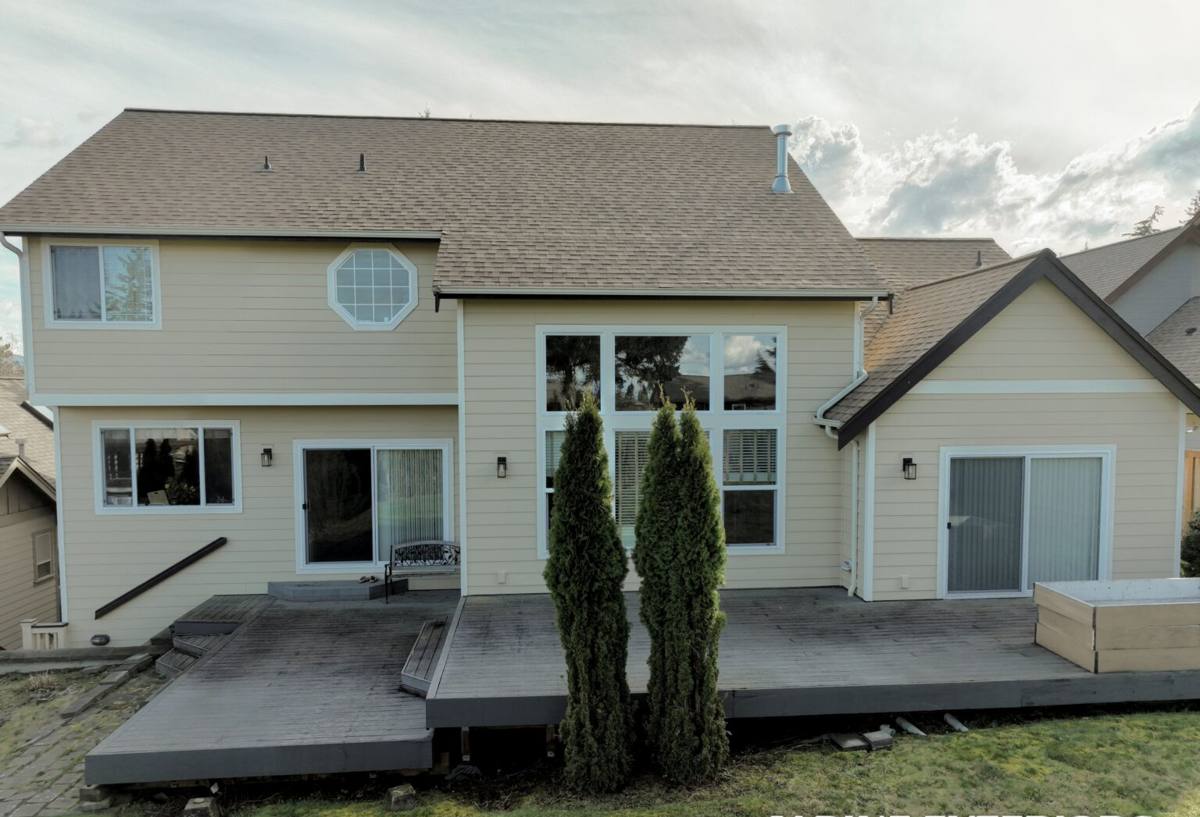
Why Local Decks Wear the Way They Do
Driving Rain and Standing Moisture
Bellingham gets a lot of rain, and much of it doesn't fall straight down — wind off the bay drives it sideways into ledger boards, under railing caps, and into the gaps between decking boards. Horizontal surfaces that don't shed water fast enough stay damp for days at a time, which is exactly the condition wood rot and fungal decay need to take hold.
The Long Moss Season
Moss doesn't just grow on roofs. On a shaded deck in Sunnyland, moss and algae can colonize decking boards and stair treads for most of the year, not just a few weeks. Beyond looking neglected, a mossy deck surface holds moisture against the wood far longer than bare wood would, and it turns steps and landings slick and genuinely dangerous underfoot.
Salt Air and Metal Fatigue
Proximity to Bellingham Bay means the air carries a low but steady dose of salt. Over years, that accelerates corrosion in the fasteners, joist hangers, and structural brackets holding a deck together — often well before the wood itself shows obvious damage. A deck can look solid on the surface while the hardware underneath is quietly failing.
Common Problems We Find in Sunnyland Deck Repairs
- Ledger board rot — where the deck attaches to the house, often from missing or failed flashing that let water track behind the siding for years.
- Post base decay — the bottom few inches of support posts, especially where they meet concrete footings or sit in a plant bed that stays damp.
- Corroded fasteners and hangers — screws, nails, and joist hangers that have rusted enough to lose holding strength, sometimes invisible until a board comes loose.
- Cupped, splintering, or spongy decking boards — the visible surface of a much older moisture problem underneath.
- Loose or undersized railings — original railing systems that were never built to current guardrail standards, or that have loosened at the post connections.
- Moss and algae buildup — a maintenance issue that becomes a safety and structural issue if left too long.
What a Correct Deck Repair Actually Involves
A deck repair that lasts starts with an honest structural look, not just a patch on whatever board is visibly cracked. We work from the ground up:
1. Structural Inspection
We check the ledger board attachment and flashing, probe posts and beams for soft spots, inspect footings for movement or heaving, and test joist hangers and fasteners for corrosion — not just visually, but by feel and, where needed, by removing a board to look underneath.
2. Isolating the Damage
Rot doesn't stay where it starts. We trace moisture damage back to its source — often a flashing gap, a missing drip edge, or a low spot that never drains — because replacing a board without fixing why it rotted just buys a few more years before the same repair is needed again.
3. Rebuilding to Current Standards
Where we replace structural members, we bring that section up to current guardrail height, baluster spacing, and connection hardware standards, even if the rest of the deck predates those requirements. It's a chance to fix a safety gap while the work is already open.
4. Sealing Water Out, Not In
Proper ledger flashing, gapped decking for drainage, and correctly fastened joist tape or flashing on structural members matter more to a deck's lifespan in this climate than the species of wood used. Trapping moisture against untreated wood is worse than leaving it exposed.
Repair or Replace? Factors That Actually Matter
Not every deck problem calls for a full rebuild, and not every deck is worth patching. These are the factors we actually weigh:
| Factor | Favors Repair | Favors Replacement |
|---|---|---|
| Ledger board condition | Solid, dry wood behind flashing | Soft, rotted, or flashing missing entirely |
| Support posts & footings | Firm wood, stable footings | Soft post bases, cracked or heaved footings |
| Decking boards | A few isolated bad boards | Widespread cupping, splintering, or soft spots |
| Framing & joists | Sound with isolated hanger corrosion | Joists spongy or undersized for current loads |
| Age of structure | Under roughly 15 years, built to code | Older, undersized, or never permitted |
| Overall cost impact | Lower — targeted labor and materials | Higher upfront, but resets the moisture clock |
Most of the decks we see in Sunnyland fall in the middle: the framing is salvageable, but the ledger flashing, a portion of the decking, and the railing hardware all need attention at the same time. That's normal for a deck that's weathered several Bellingham winters.
Our Deck Repair Process
- On-site inspection — we walk the deck, probe suspect areas, and check the ledger, posts, and railings by hand.
- Straight assessment — we tell you what's actually wrong, what's cosmetic, and what's a safety issue, in plain terms.
- Written scope and estimate — a clear description of what gets replaced, what gets sealed or flashed, and what the finished result looks like.
- Repair work — structural fixes first, then decking, then railings and finish details, in that order.
- Final check — we confirm railings are solid, boards are secure, and drainage details are actually shedding water before we call it done.
Materials and Hardware We Use
For structural framing, pressure-treated lumber rated for ground contact remains the standard for posts and any wood near soil or concrete contact — it's proven, inspectable, and repairable in sections. For decking surfaces, we'll walk homeowners through the honest trade-offs between wood and composite: wood costs less upfront and repairs easily board-by-board, but needs periodic cleaning and refinishing to keep moss and algae from taking hold in this climate. Composite decking resists moisture and moss better and needs less upkeep, but it costs more initially and, if a board is ever damaged, the whole run may need to be replaced to match rather than patched.
Fasteners and connectors matter as much as the decking itself. Given the salt air near the bay, we use stainless steel or heavy hot-dip galvanized fasteners and hangers rated for treated lumber contact — standard zinc-coated hardware corrodes noticeably faster in this environment and is a common source of repeat failures we see on older decks.
Permits, Code, and Safety in Bellingham
Deck repair work in Bellingham and greater Whatcom County can trigger permit requirements depending on the scope — particularly when structural framing, footings, or the ledger connection are involved, or when a deck is more than 30 inches above grade. Guardrail height, baluster spacing, and stair rise-and-run also have specific code minimums that older Sunnyland decks sometimes predate. We handle the parts of this that are our job: building repairs correctly and to current structural and safety standards, and being upfront with homeowners about when a project's scope means it's worth confirming permit requirements with the city before work starts.
A Simple Maintenance Checklist Between Repairs
A repaired deck lasts longer with a little seasonal attention. This is what we recommend to Sunnyland homeowners:
- Sweep leaves and debris off the deck surface regularly in fall, especially in shaded corners where moss takes hold fastest.
- Rinse or gently brush moss and algae off boards and stair treads before they build up a slick layer.
- Check that gaps between decking boards are clear so water can actually drain through rather than pooling.
- Look under the deck once a year for soft spots on posts, rust streaks near hardware, or standing water near footings.
- Test railings and stair connections by hand for looseness, particularly after a hard winter.
- Reseal or refinish wood decking on the schedule the product calls for — don't wait until it's visibly gray and cracked.
Why a Crew That Already Works Sunnyland Matters
A deck repair contractor who works this specific part of Bellingham regularly already knows what to check first: the ledger flashing detail, the post bases, the hardware corrosion pattern that shows up faster this close to the bay. That's not a sales pitch — it's the difference between a repair that guesses at the cause and one that goes straight to it. We're not driving in from out of the area to give a quick estimate and disappear; we're repairing decks in the same climate conditions your home deals with year-round, and standing behind that work.
If your deck has a soft board, a wobbly railing, or just needs an honest look before another wet season sets in, we're happy to come take a look. Use the form below to request a free, no-pressure estimate — we'll tell you straight what's going on and what it actually takes to fix it right.