 Bellingham Siding
 Working in the Puget Area of Whatcom County
Puget sits close enough to Bellingham Bay and the surrounding waterways that homes here deal with a very specific mix of weather stress: salt-laden air moving in off the water, long stretches of driving rain through fall and winter, and shaded, damp conditions that let moss and algae take hold on anything that stays wet too long. None of that is unusual for Whatcom County, but it does mean the exterior materials on a Puget-area home have a harder job than the same materials would have thirty miles inland.
We're a local crew, and we treat Puget the way we treat every neighborhood we work in around Bellingham: we look at the specific exposure of the house — how much sun it gets, which direction the weather comes from, how close it sits to trees or water — before we recommend anything. A house tucked into a tree line with heavy shade needs a different maintenance conversation than a house sitting open to wind off the bay, even if they're a mile apart.
What the Local Climate Actually Does to a House
Salt Air
Proximity to saltwater accelerates corrosion on fasteners, flashing, and any metal components on the exterior. It also degrades certain paints and coatings faster than inland weather does, which shows up as premature fading, chalking, or peeling on siding and trim.
Driving Rain
Bellingham doesn't just get a lot of rain — a good portion of it comes in sideways during winter storms. That matters because wind-driven rain finds weaknesses in siding laps, window flashing, and butt joints that a straight-down rain would never reach. Water intrusion at those points is one of the most common causes of hidden rot we find when we open up an older exterior.
Moss and Algae
Shaded, moisture-holding surfaces in this region grow moss and algae year-round, not just in winter. On porous or absorbent siding materials, that growth can hold moisture against the substrate long enough to cause real damage. On a properly sealed, factory-finished surface, it's mostly a cosmetic issue that washes off.
Why We Only Install James Hardie Fiber Cement
We made a deliberate decision to standardize on James Hardie fiber cement siding and not install vinyl, LP SmartSide, Cemplank, Allura, primed spruce, or cedar. That's not a marketing position — it's a response to what we consistently see in this climate.
Vinyl can warp and become brittle with age and temperature swings, and its seams and butt joints are a common path for wind-driven rain to get behind the cladding. Wood-based products like primed spruce and cedar look great initially but require an ongoing maintenance commitment — repainting, sealing, and vigilance against moisture and insects — that most homeowners underestimate until the bills start showing up. Engineered wood siding products have improved over the years, but they still rely on the integrity of an organic wood-strand core; if water gets past the coating at a cut edge or fastener point, that core can swell and deteriorate. Fiber cement products from other manufacturers vary in their finish quality, moisture-resistant formulation, and warranty backing, and we've found the differences matter over a 10-, 20-, and 30-year horizon.
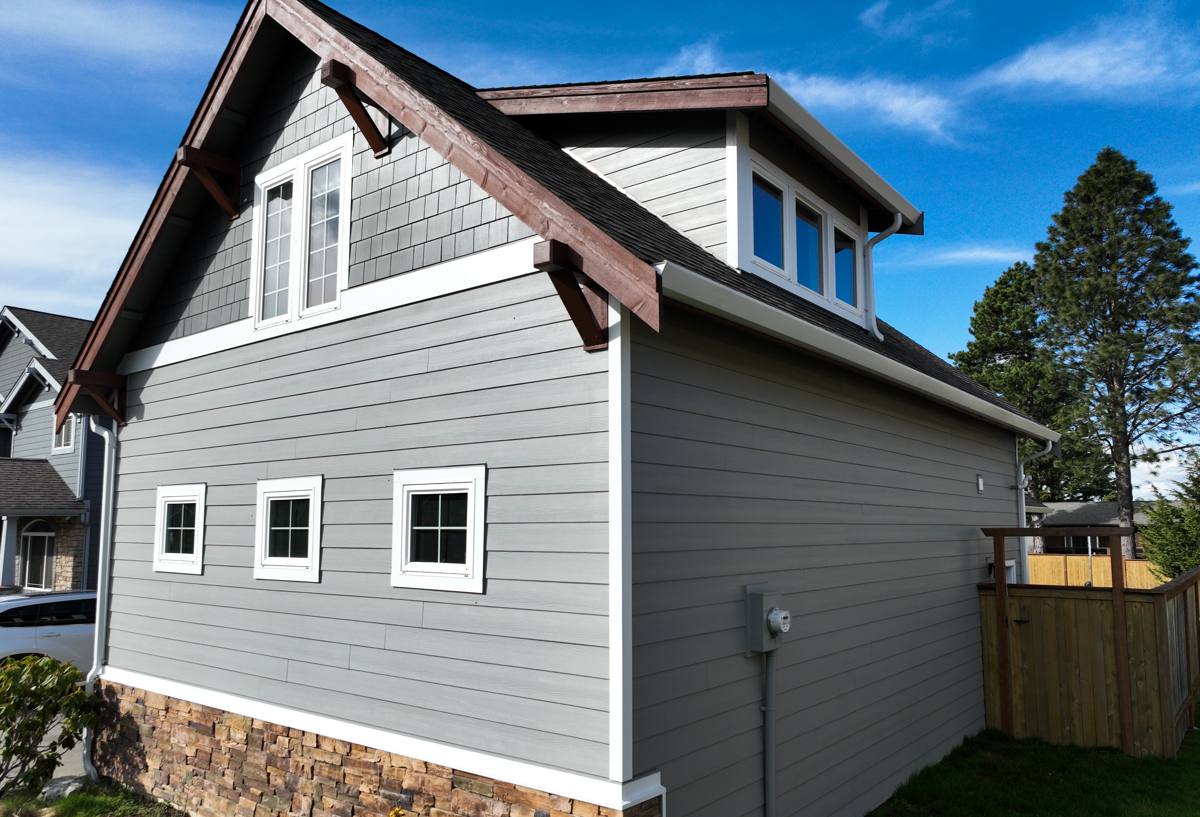
James Hardie fiber cement is non-combustible, engineered specifically for wet climates through its HardieZone HZ5 product line, and finished at the factory with ColorPlus Technology — a baked-on finish that resists fading and chipping far better than field-applied paint. It doesn't rot, it doesn't attract insects, and it holds up to salt air and driving rain the way materials built for this exact climate should. It also carries a strong transferable warranty backed by a manufacturer that's been refining this specific product category for decades. When it's installed correctly — proper clearances, correct fastening, sealed joints, and flashing detailed the way the manufacturer specifies — it's the most durable, lowest-maintenance option we can put on a house in Whatcom County.
Full Exterior Services for Puget Homes
Siding is our specialty, but the exterior of a house works as a system, and we handle the components that work alongside it:
- Siding: James Hardie fiber cement installation, including replacement of failing or rotted existing siding
- Roofing: Roof replacement and repair, coordinated with siding work so flashing and transitions are handled correctly the first time
- Windows: Replacement windows installed with proper flashing integration into the siding system, which matters as much for keeping water out as the window itself
- Decks: New builds and replacements, built to handle the same wet-climate exposure as the rest of the house
Handling these together matters more than it might seem. A large share of the water damage we find on older Bellingham-area homes started at a poorly integrated window flashing detail or a roof-to-wall transition that was never sealed correctly. When one crew handles siding, roofing, and windows as a coordinated job instead of three separate trades working around each other, those transition points get the attention they need.
Why a Local Crew Matters Here
Whatcom County's climate isn't generic Pacific Northwest weather — the combination of coastal salt exposure, rainfall volume, and moss pressure is specific enough that installation details which work fine in a drier inland climate can fail here. A crew that works this area regularly knows to pay extra attention to things like:
- Proper starter strip and clearance at the foundation line to keep splashback and standing moisture away from the bottom edge of the siding
- Correct caulking and sealant choices that hold up under sustained damp conditions rather than drying out or cracking prematurely
- Flashing details at windows, doors, and roof intersections sized for wind-driven rain, not just vertical rainfall
- Fastener selection that resists corrosion from salt-air exposure
These aren't exotic techniques — they're standard best practices that get skipped when a crew is unfamiliar with how hard this specific climate can be on a building envelope.
Cost Factors on a Puget-Area Exterior Project
Every house is different, but the variables that most often move a project's scope and cost are consistent. This isn't a price quote — it's a starting point for the conversation we'll have during a walkthrough.
| Factor | Why It Matters |
|---|---|
| Existing siding condition | Hidden rot or water damage found during tear-off can add sheathing repair before new siding goes on |
| Home size and complexity | More corners, gables, and trim detail means more cutting, fitting, and labor time |
| Siding profile and color | Lap width, texture, and ColorPlus finish options affect material cost |
| Window and door count | Each opening requires flashing and trim work that adds to labor |
| Access and site conditions | Tree cover, slope, and staging space affect how efficiently the crew can work |
| Combined scope | Bundling siding with roofing, windows, or a deck can improve scheduling and transition-point coordination |
What to Expect From the Process
A typical project starts with an on-site walkthrough where we look at the existing exterior, note any signs of water damage or deferred maintenance, and talk through what we'd recommend and why. From there we put together a written scope and estimate before any work begins. Once a project is scheduled, tear-off and any necessary sheathing repair happen first, followed by installation of the new siding system — starter strips, house wrap or weather-resistive barrier checks, flashing, and the Hardie siding itself — finished with trim and caulking details built for this climate.
We'll walk you through maintenance expectations before we leave the job site, because even low-maintenance materials benefit from a little homeowner attention over the years.
A Simple Maintenance Checklist for This Climate
- Rinse siding annually to clear salt residue, pollen, and early moss or algae growth before it builds up
- Keep gutters clear so overflow doesn't run down the face of the siding
- Trim back vegetation and tree limbs that keep sections of the exterior shaded and damp
- Inspect caulking at window and door trim every year or two and re-seal if it's cracked or pulling away
- Walk the exterior after major windstorms to check for loose trim, damaged flashing, or debris caught against the siding
Get a Straightforward Estimate
If you're weighing a siding, roofing, window, or deck project for a home in the Puget area, we're happy to come take a look and give you an honest read on what your house actually needs. There's no pressure and no obligation — just a local crew walking your property and telling you straight what we see. Use the form below to request a free estimate.