 Bellingham Siding
 Siding Built for South Hill's Elevation and Exposure
South Hill sits above downtown Bellingham, rising toward views of Bellingham Bay and the water beyond. That elevation is part of what makes the neighborhood desirable, but it's also what makes exterior materials work harder here than they do just a few blocks downhill. Homes on South Hill catch wind and driving rain coming off the bay with less buffering than properties tucked into lower, more sheltered parts of the city. At the same time, many streets are lined with mature trees, which means large stretches of siding sit in shade for much of the year — shade that keeps moisture sitting on wood and composite surfaces longer than direct sun would allow.
We're a Bellingham-based exterior crew, and South Hill is a neighborhood we know from repeated jobs, not a pin on a service map we drove to once. That matters when you're deciding what to put on a house that has to handle both wind-driven rain and shaded, damp conditions in the same year.
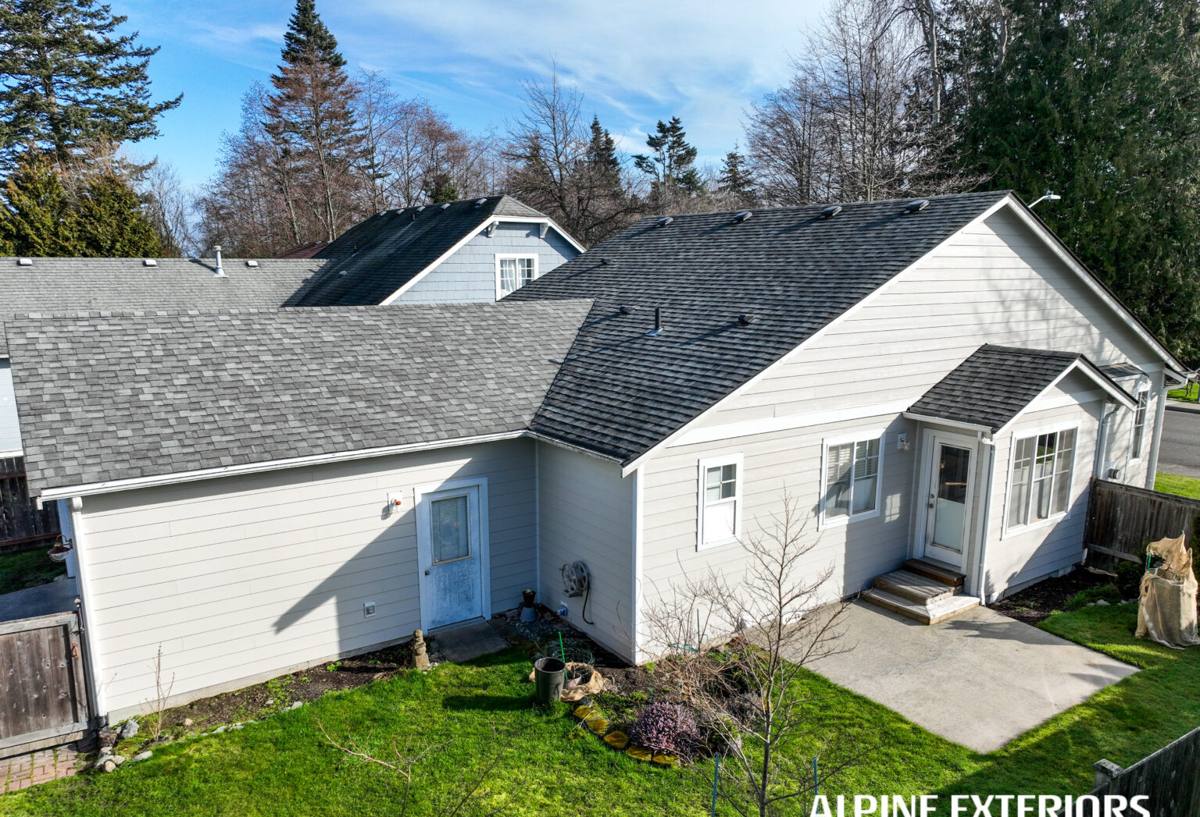
What Whatcom County Weather Does to Siding on a Hill
Wind-Driven Rain
Bellingham's weather pattern brings long stretches of steady, horizontal rain rather than short heavy downpours. On an elevated, more exposed lot, that rain gets pushed into wall assemblies with more force than it would on a sheltered street. Lap siding with weak seams, warped boards, or failed caulking lets water track behind the cladding, where it can sit against sheathing and framing unseen for months.
Moss and Shade
The tree canopy that gives South Hill its character also means north- and east-facing walls can stay damp for days after a storm clears. Moss and algae take hold readily on porous or textured surfaces, and once established they hold moisture directly against the siding face — accelerating whatever decay process is already underway underneath.
Salt Air
Proximity to Bellingham Bay puts a mild but constant salt content in the air on South Hill, more than inland Whatcom County neighborhoods get. Salt exposure isn't dramatic the way it is on an oceanfront lot, but over years it contributes to fastener corrosion, finish breakdown, and faster fading on lower-quality paint systems.
Temperature Swings
Like the rest of Bellingham, South Hill sees a wide range of dampness through the year without extreme heat — but the freeze-thaw cycles that do occur in winter stress any siding material that absorbs water. Materials that swell and contract with moisture content are the ones that eventually crack, cup, or pull away from fasteners.
Why We Only Install James Hardie Fiber Cement
We install one siding system on South Hill homes: James Hardie fiber cement. We don't offer vinyl, LP SmartSide, primed spruce, cedar, or other fiber cement brands like Cemplank or Allura. That's a deliberate standard, not a lack of options.
Fiber cement is made from cement, sand, and cellulose fibers — it doesn't have the wood content that gives moisture a food source for rot, and it doesn't soften or swell against sustained dampness the way wood-based composites can. That matters directly on a shaded, rain-exposed hill like South Hill, where siding doesn't always get the chance to dry out between storms. James Hardie's ColorPlus factory-applied finish is also baked on under controlled conditions, which holds color and resists the fading and chalking that salt-tinged air and UV exposure cause over time in field-applied paint systems.
We're not going to tell you every other product is unusable — vinyl, engineered wood, and other fiber cement brands all have a place in the market and homeowners install them successfully elsewhere. Our decision is about what we're willing to warranty our labor against on this coastline, in this rainfall, on this kind of terrain. Hardie's engineered HZ product lines are built specifically for climates like ours, and that's the deciding factor for us.
Quick Comparison: What We See in the Field
| Factor | James Hardie Fiber Cement | Vinyl | Wood-Based Composite (e.g. LP SmartSide) |
|---|---|---|---|
| Moisture absorption | Does not swell or rot; cement-based | Doesn't absorb, but seams and panels can warp/buckle | Wood-fiber core can absorb and swell if edges are exposed |
| Combustibility | Non-combustible | Combustible, can melt/deform near heat | Combustible |
| Finish durability in salt/UV | Factory-baked ColorPlus finish, long fade resistance | Color molded through material but can chalk over decades | Field-applied paint, needs recoating on a shorter cycle |
| Moss/algae resistance | Hard, dense surface resists organic growth better than porous composites | Smooth surface, low but can still host growth in shade | Textured surface can trap moisture and organic growth |
| Installation sensitivity | Requires correct fastening, clearances, and caulking per manufacturer spec | Forgiving of minor installer error | Sensitive to end-cut sealing and moisture management |
How We Approach a South Hill Siding Job
Inspection First
Before we talk about new siding, we look at what's actually happening on the walls now — where moss has taken hold, where caulking has failed, whether there's soft sheathing behind the cladding, and how the home's trim, flashing, and roofline are managing water. On a hill lot, we also look at drainage around the foundation and how close plantings and tree canopy sit to the walls, since that shade and moisture pattern will affect the new siding too.
Correct Installation, Not Just Correct Product
James Hardie siding is only as good as the installation behind it. That means proper fastener spacing and type, correct clearances from grade, decks, and roof lines, sealed and flashed joints, and following Hardie's published installation instructions rather than shortcuts. A quality product installed loosely will still let water in on an exposed hillside lot — the material choice and the workmanship both have to hold up.
Working Around Established Landscaping
Many South Hill properties have mature trees and established yards that we work carefully around rather than clearing. That means more hand-work near planting beds and canopy, and scheduling around what protects root systems and existing hardscape.
Beyond Siding: Roofing, Windows, and Decks on South Hill
Siding rarely fails in isolation. On South Hill homes we regularly find that a roofing issue — worn flashing, moss buildup on shingles, a gutter that's overflowing at a valley — is feeding water down onto siding below it, or that older single-pane windows are creating rot points at the trim where siding meets the frame. We handle roofing, windows, and decks alongside siding so a homeowner isn't hiring separate crews for problems that are actually connected.
- Roof moss and flashing issues that direct water onto exterior walls
- Window trim and flashing gaps that let water behind new siding
- Deck ledger boards and rim joists exposed to the same rain and shade patterns as the siding
- Gutter and downspout placement relative to grade and foundation drainage
What to Check Before You Hire Anyone for Exterior Work on South Hill
- Do they carry Washington State contractor licensing and insurance, and will they show you proof without being asked twice?
- Do they install one siding system to spec, or do they sell whatever's cheapest to move that month?
- Will they walk your specific walls — shaded sides, exposed sides — and explain what's different about each before quoting?
- Do they address moisture and drainage issues, or just cover the wall with new material over an existing problem?
- Is their warranty tied to correct installation, and will they put that in writing?
What a South Hill Siding Project Typically Involves
Every home is different, but on South Hill we're usually dealing with older housing stock, established trees, and a mix of sun and shade exposure across different walls of the same house. That means a full siding job often includes removing old cladding, inspecting and repairing sheathing where needed, addressing any moisture damage found underneath, then installing James Hardie panels or lap siding with correct flashing at windows, doors, and rooflines. Timelines depend on home size, access, and weather windows — Bellingham's rain pattern means we plan around dry stretches rather than fighting through active storms.
If your home is showing moss buildup that keeps coming back, siding that stays damp longer than it should, or visible warping and cracking on rain-exposed walls, those are signs worth having looked at before they turn into sheathing or framing repairs. We offer a free, no-pressure estimate for South Hill homeowners — walk the property with us, get a straight answer on what's going on with your siding, and see what a James Hardie fiber cement system would look like on your home. Use the form below to get started.