 Bellingham Siding
 Why South Hill Roofs Wear Differently Than Roofs Inland
South Hill sits up above downtown Bellingham, which sounds like an advantage until you think about what that elevation actually means for a roof. Homes up here catch more wind off Bellingham Bay, more of the salt-laden air that comes with it, and more of the driving, sideways rain that Whatcom County storms are known for. Add in mature tree canopy on many South Hill lots — a big part of what makes the neighborhood attractive — and you get roofs that stay shaded and damp for long stretches of the year. That combination is exactly what shortens the life of a standard asphalt shingle roof and exactly what a well-installed metal roof is built to handle.
This isn't a general "metal roofing is great" pitch. It's about what a roof on this specific hill, in this specific climate, actually needs to hold up for decades instead of needing patchwork repairs every few years.
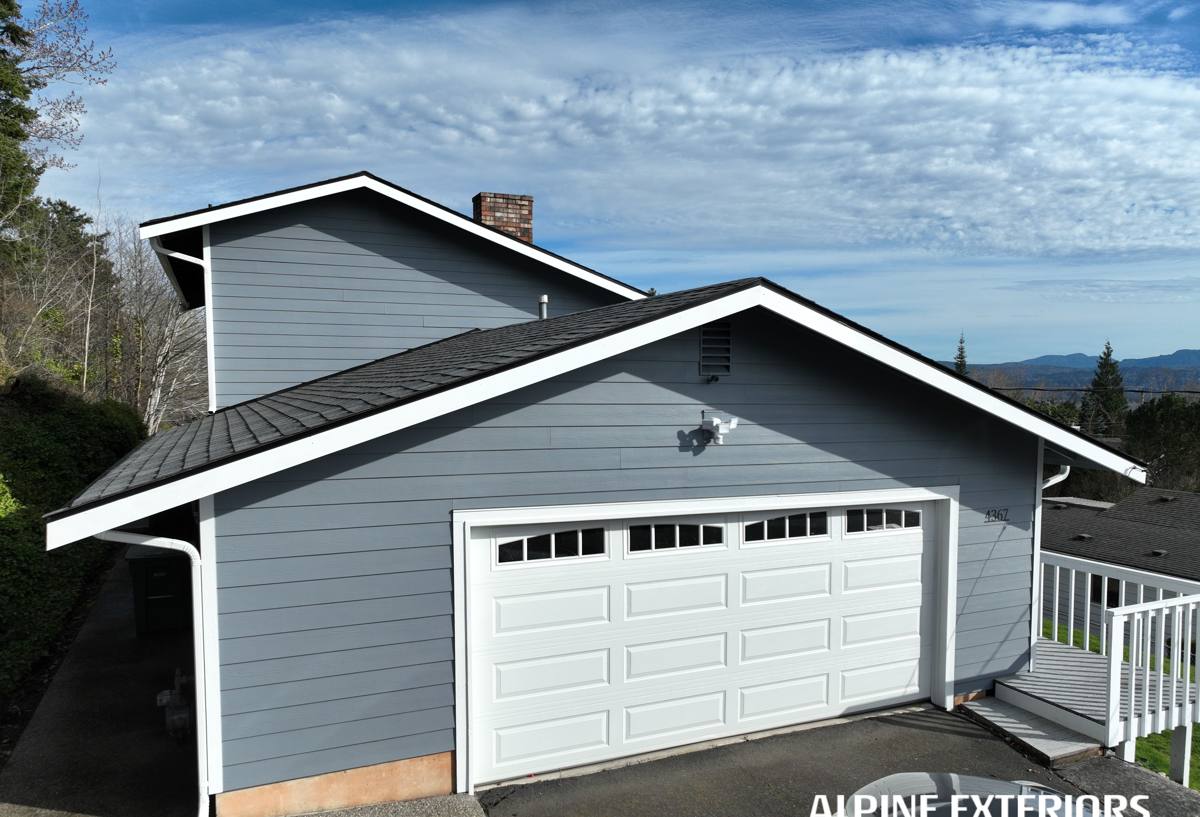
What the Local Climate Actually Does to a Roof
Salt Air and Corrosion
Proximity to the bay means airborne salt settles on exterior surfaces, including roofing. Cheap or poorly coated metal will show it — chalking, fastener rust, coating breakdown at cut edges. The fix isn't avoiding metal, it's specifying the right coating system and finishing cut edges and fasteners correctly during install, which is a workmanship issue as much as a materials one.
Driving Rain
Wind-driven rain doesn't just fall on a roof, it pushes sideways and works its way under laps, around penetrations, and into any gap that a fair-weather installation would get away with. A roof that only has to shed water straight down is a different design problem than one that has to resist rain being forced uphill under a shingle edge.
Long Moss Season
Shade, moisture, and mild temperatures for most of the year add up to a moss season that runs long in this part of Whatcom County. Moss holds moisture against the roof surface, works into shingle laps, and accelerates rot in the decking underneath. Metal roofing gives moss far less to grip, and a properly ventilated, properly detailed metal roof dries out faster between rain events than a shingle roof under the same trees.
What a Correct Metal Roof Installation Actually Involves
A metal roof is only as good as the details underneath it. The panels get the attention because they're visible, but the parts that determine whether the roof lasts are mostly hidden.
Underlayment and Moisture Barrier
A high-temperature synthetic underlayment goes down first, with self-adhered ice-and-water membrane in the valleys, at eaves, and around any penetration. On a shaded, damp lot, this layer is what protects the deck if wind ever drives water past the panel seams — and on South Hill, it will get tested.
Flashing at Chimneys, Dormers, and Valleys
Older South Hill homes often have more roof complexity than a typical new build — dormers, multiple roof planes, chimneys — and every one of those transitions is a place where a roof leaks if the flashing is generic instead of formed to fit. Custom-bent flashing at these details matters more than the panel brand.
Fastening and Panel Seams
How the panels attach determines how the roof performs over 30-plus years. Concealed-fastener systems (standing seam) keep water off the fasteners entirely. Exposed-fastener panels rely on gasketed screws that need re-torquing or replacement over time, especially with the thermal cycling and wind load a hilltop lot sees.
Choosing a Metal Roofing System for a South Hill Home
Not every metal roof is the same product wearing a different color. The three systems homeowners in this neighborhood typically compare each make a different tradeoff between upfront cost, appearance, and long-term maintenance.
| System | How It's Fastened | Best Fit | Maintenance Over Time |
|---|---|---|---|
| Standing seam | Concealed clips, no exposed fasteners | Steep or complex rooflines, long-term ownership | Very low — no fasteners to fail |
| Exposed-fastener (corrugated/ribbed) | Gasketed screws through the panel face | Simpler rooflines, tighter budgets | Moderate — screws and gaskets need periodic checks |
| Stone-coated steel | Nailed like traditional shingle/tile | Homes wanting a shingle or shake look with metal's durability | Low — coating and granule adhesion are the main watch points |
For most South Hill homes with tree cover and bay-facing exposure, standing seam earns its higher upfront cost through fewer future failure points. Exposed-fastener systems are a reasonable option on simpler roof shapes, sheds, or additions where budget matters more than the last inch of long-term performance. We'll walk the actual roof with you before recommending one over the other — pitch, tree cover, and roof complexity all factor in.
Metal vs. Asphalt Shingles, Honestly
We install both, and metal isn't automatically the right call for every roof or every budget. Here's the honest comparison for a shaded, rain-heavy, salt-air lot like the ones common on South Hill.
- Moss resistance: metal sheds moss far better; shingles under tree cover need more frequent moss treatment and cleaning
- Wind-driven rain performance: standing seam metal handles sideways rain better than shingles, which rely on gravity and overlap alone
- Upfront cost: shingles are less expensive to install; metal costs more up front but spreads that cost over a much longer service life
- Lifespan: a well-installed metal roof commonly outlasts two or more shingle roof cycles
- Repairability: shingles are easier to spot-repair after storm damage; a damaged metal panel is a bigger repair, though it's a rarer event
Our Process for a South Hill Metal Roof
- On-site inspection: we get on the roof (not just a ladder look) to assess deck condition, existing ventilation, tree exposure, and every flashing point that'll need custom work.
- System recommendation: based on the roof's pitch, complexity, and your budget, we recommend a panel system and walk you through why, including honest tradeoffs.
- Tear-off and deck check: old roofing comes off and we inspect the decking underneath — moss-damaged or rotted sections get addressed before anything new goes down, not covered up.
- Underlayment and flashing: synthetic underlayment, ice-and-water membrane at vulnerable points, and custom-formed flashing at every penetration.
- Panel installation: panels are installed to manufacturer spec for fastening pattern, expansion allowance, and seam engagement.
- Cleanup and walkthrough: site cleared of debris and fasteners, and we walk the finished roof with you before calling the job done.
Living Under Trees: Moss and Debris Management
Choosing metal doesn't eliminate maintenance, it reduces it. Gutters on a tree-covered South Hill lot still need clearing so water has somewhere to go once it sheds off the panels — a metal roof moving water fast into a clogged gutter just moves the moisture problem to your fascia and siding instead. We size and pitch gutter systems to handle the volume a metal roof sheds during a real Pacific Northwest downpour, not just a light rain.
Why Hire a Crew Already Working in This Neighborhood
Metal roofing rewards experience with the specific conditions it's installed under. A crew that already works South Hill roofs regularly knows which roof shapes on this hill tend to have flashing complications, understands the wind exposure difference between a hilltop lot and one down near the water, and has already worked through Bellingham's permitting process for roofing work. That familiarity shows up in fewer surprises mid-project and a roof detailed for the conditions it'll actually face, not generic conditions from a manufacturer spec sheet written for a different climate entirely.
Checklist Before You Hire
- Confirm they're licensed and insured to work in Washington, and ask to see it
- Ask what underlayment and ice-and-water membrane they use, not just the panel brand
- Ask how they detail flashing at chimneys, dormers, and valleys — this is where most leaks start
- Get the fastening system explained: concealed clip vs. exposed screw, and why they're recommending it for your roof
- Ask about ventilation — a sealed-up roof under trees traps moisture instead of shedding it
- Get the warranty terms in writing, both material and workmanship
Cost Factors Worth Understanding
We don't publish blanket prices because roof complexity drives cost more than square footage alone does. What actually moves the number on a South Hill home: roof pitch and complexity (dormers, valleys, multiple planes), whether the existing roof needs full tear-off or deck repair, the panel system chosen (standing seam runs higher than exposed-fastener), and access — tree cover and hillside lots can add setup time. We'll give you a real, itemized number after seeing the roof, not a phone-quote guess.
If you're weighing a metal roof for a South Hill home, we're glad to take a look and give you a straight answer on what your roof actually needs — no pressure, no inflated urgency. The estimate is free; use the form below to get one scheduled.