 Bellingham Siding
 Barkley sits close enough to Bellingham Bay and the surrounding evergreen cover that its roofs work harder than a lot of inland Whatcom County homes realize. Between the salt-tinged marine air, the long stretch of driving rain that runs from fall through spring, and a moss season that never really ends, a roof in this part of Bellingham needs to be installed with those specific conditions in mind — not just installed to code. This page covers what a correct new roof installation looks like for Barkley homes, what our process involves, and why local experience matters more here than a lot of homeowners expect.
Why Barkley's Climate Is Tougher on Roofs Than It Looks
Barkley's mix of established tree canopy, proximity to the water, and Bellingham's wet winters creates a combination of stresses that show up on roofs faster than most people think. None of these factors are dramatic on their own, but together they shorten the useful life of a poorly installed or mismatched roofing system.
Salt Air and Metal Fasteners
Bellingham Bay is close enough that airborne salt reaches homes well inland of the shoreline, especially on days with wind off the water. Salt-laden moisture accelerates corrosion on exposed metal — nails, flashing, and fastener heads that aren't rated for coastal exposure will rust years before they should. This is one of the most common causes of premature leaks we find on older Barkley roofs: not a shingle failure, but a fastener or flashing failure.
Driving Rain and Wind-Driven Water
Bellingham doesn't just get rain — it gets long stretches of sustained, wind-pushed rain that tests every seam, lap, and penetration on a roof. Water that would sit still on a calm-weather roof gets driven sideways and upward under wind pressure, which means underlayment quality and flashing detail matter more here than in drier climates. A roof that's "good enough" for a dry region can leak in Bellingham simply because it wasn't built to handle water moving in more than one direction.
Moss, Shade, and Organic Growth
Barkley's tree cover is part of what makes the neighborhood attractive, but shaded, north-facing roof sections stay damp far longer after a storm than roofs in full sun. That extended moisture window is exactly what moss and algae need to establish. Once moss gets a foothold, it lifts shingle edges, holds water against the roof deck, and accelerates granule loss — turning a cosmetic issue into a structural one if it's left unaddressed.
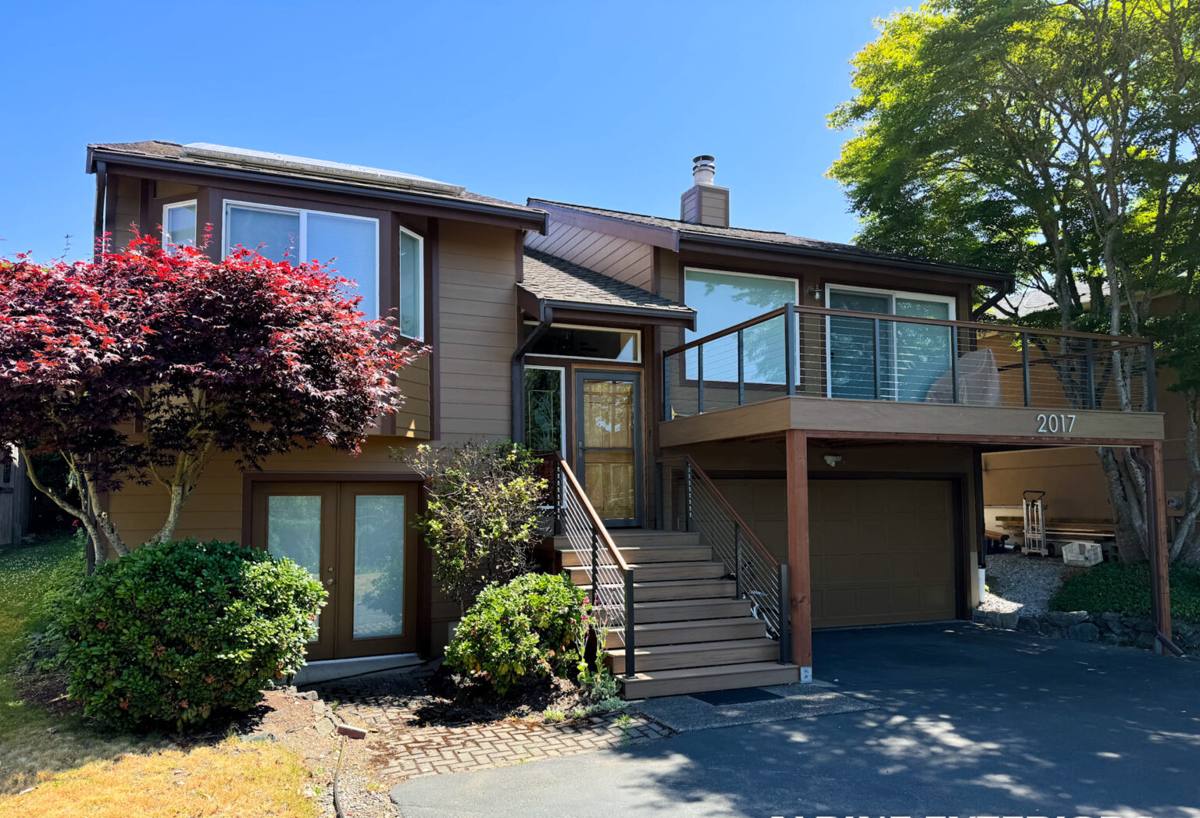
What a Correctly Installed Roof Needs to Handle Bellingham Conditions
A new roof installation in Barkley isn't just about laying shingles. The system underneath — the parts you don't see once the job is done — is what determines whether the roof performs well for its full expected lifespan in this climate.
- Ice-and-water shield at vulnerable points — valleys, eaves, and around penetrations, where wind-driven rain and occasional freeze-thaw cycles are most likely to force water backward under the shingle line.
- Synthetic underlayment rated for extended wet exposure — Bellingham's rainy season means the underlayment may be exposed to moisture longer than in drier regions before shingles go down or during future repairs.
- Corrosion-resistant fasteners and flashing — stainless or hot-dip galvanized hardware rather than standard-grade metal, particularly on homes closer to the water.
- Balanced attic ventilation — proper intake and exhaust airflow keeps the roof deck dry from underneath, which matters as much as keeping water out from above.
- Algae-resistant shingle options — many manufacturers now offer copper-infused or algae-resistant granules specifically for shaded, damp climates like ours.
Our New Roof Installation Process for Barkley Homes
Every roof we install follows the same disciplined sequence, adjusted for the specific exposure, pitch, and shading of the property.
1. On-Site Assessment
We inspect the existing roof, decking, ventilation, and any problem areas — moss buildup, soft decking, undersized flashing — before quoting anything. This tells us whether the job is a straightforward tear-off and replace, or whether deck repair and ventilation upgrades need to be part of the scope.
2. Tear-Off and Deck Inspection
We remove the old roofing material down to the deck and inspect for rot, delamination, or soft spots — common in shaded areas where moisture has been sitting longer than it should. Any compromised decking gets replaced before anything new goes down; installing new roofing over a weak deck just hides a problem that will resurface.
3. Underlayment and Flashing
This is where a Bellingham-appropriate roof is actually built. We install ice-and-water shield in the areas most exposed to wind-driven rain, run synthetic underlayment across the field, and install new flashing at every valley, chimney, skylight, and wall intersection using corrosion-resistant materials.
4. Roofing Material Installation
Shingles, panels, or other roofing material go down per manufacturer specification, with attention to nailing pattern and exposure — details that affect wind resistance and warranty validity, and that get rushed on jobs where the crew isn't used to marine-climate installs.
5. Ventilation and Final Walkthrough
We check that intake and exhaust ventilation are balanced, clean up the site, and walk the finished roof with the homeowner so they know exactly what was done and what to expect going forward.
Roofing Material Options for Barkley Homes
There's no single "best" roofing material for every Barkley home — the right choice depends on the home's shading, roof pitch, budget, and how long the owner plans to stay in the house. Here's how the common options compare for our specific climate.
| Material | Moss/Algae Resistance | Wind-Driven Rain Performance | Typical Lifespan Here | Maintenance Notes |
|---|---|---|---|---|
| Architectural asphalt shingles (algae-resistant) | Good with AR granules | Very good with proper underlayment | 20-30 years | Periodic moss treatment on shaded slopes recommended |
| Standard 3-tab shingles | Fair — more prone to moss without AR granules | Adequate | 15-20 years | Higher upkeep in shaded, damp areas |
| Metal roofing (standing seam) | Excellent — moss struggles to grip smooth panels | Excellent | 40-60 years | Low maintenance; higher upfront cost |
| Cedar shake | Poor without regular treatment | Fair — seams need careful detailing | 20-30 years with upkeep | Requires ongoing moss/moisture maintenance in our climate |
We'll walk through these trade-offs honestly during your estimate — not every material suits every roof, and the right call depends on your home's specific shading and exposure, not just the price tag.
Signs a Barkley Roof Needs Replacement, Not Repair
Not every roofing problem calls for full replacement, but there's a point where patching stops making financial sense. Look for these signs:
- Granule loss heavy enough that shingles look bald or the gutters are filling with grit
- Moss or algae covering more than a small section, especially if it's returned after a prior cleaning
- Soft or spongy spots when walking the roof, which usually mean deck damage underneath
- Daylight visible through the roof deck from inside the attic
- Multiple past repairs in different areas, suggesting the roofing system as a whole is at end of life
- Shingles curling, cracking, or lifting at the edges — a common early sign in wind-exposed sections
Cost Factors for a Barkley Roof Replacement
Every roof is priced individually, but the same handful of factors drive cost up or down on most Bellingham-area jobs:
| Factor | Why It Matters |
|---|---|
| Roof size and complexity | More valleys, dormers, and penetrations mean more flashing labor and material |
| Existing deck condition | Rot or soft decking found during tear-off adds repair cost, especially common on shaded, long-standing moss areas |
| Material choice | Asphalt, metal, and cedar have very different material and labor costs |
| Roof pitch and access | Steeper or harder-to-access roofs take longer and require more safety setup |
| Ventilation upgrades needed | Adding or correcting intake/exhaust venting is often bundled into a replacement |
We provide a written, itemized estimate before any work starts, so you know exactly what you're paying for and why.
Why a Locally Experienced Crew Matters in Barkley
Roofing crews that work primarily in drier or inland climates sometimes underbuild for what Bellingham actually throws at a roof — lighter underlayment, standard-grade fasteners, or ventilation specs that work fine in a dry climate but fall short here. A crew that regularly works Whatcom County neighborhoods like Barkley already knows which slopes hold moss longest, where wind-driven rain tends to find weak flashing, and how to detail a roof so it performs through a full Bellingham winter rather than just passing inspection. That local pattern recognition is hard to replicate from a spec sheet.
Maintaining Your New Roof After Installation
A well-installed roof still benefits from basic upkeep, particularly in a climate like ours:
- Keep gutters clear of needles and debris so water isn't backing up under the roof edge
- Have shaded, moss-prone sections checked and treated periodically rather than waiting until growth is heavy
- Trim back overhanging branches where practical to reduce shade and debris buildup
- Schedule a walk-through inspection after major windstorms to catch lifted shingles or flashing issues early
- Address small leaks or soft spots immediately — they rarely stay small in a climate this wet
If your Barkley home needs a new roof, or you're not sure whether repair or replacement makes more sense, we're happy to take a look and give you a straightforward, no-pressure estimate using the form below.