 Bellingham Siding
 Deck Building in Lynden: Built for the Weather You Actually Get
Lynden sits far enough inland from Bellingham Bay that people sometimes assume the weather is milder here than on the water. It isn't, not for a deck. You still get long stretches of driving rain off and on for most of the year, humidity that never fully clears, and a moss season that can run from fall through spring. A deck built without that in mind will look fine for a year or two and then start showing problems — soft spots, black streaking, boards that cup or split, hardware that bleeds rust through the finish. A deck built for this climate holds up for decades instead.
We build and repair decks for homeowners around Lynden and the rest of Whatcom County, and almost every callback we get on someone else's work traces back to the same thing: the deck was built the way it would be built in a dry climate, not a wet one. Framing gets tucked too close to grade, ledger boards get sealed with hope instead of flashing, and decking gets fastened in ways that trap water instead of shedding it. None of that shows up on install day. It shows up two or three winters later.
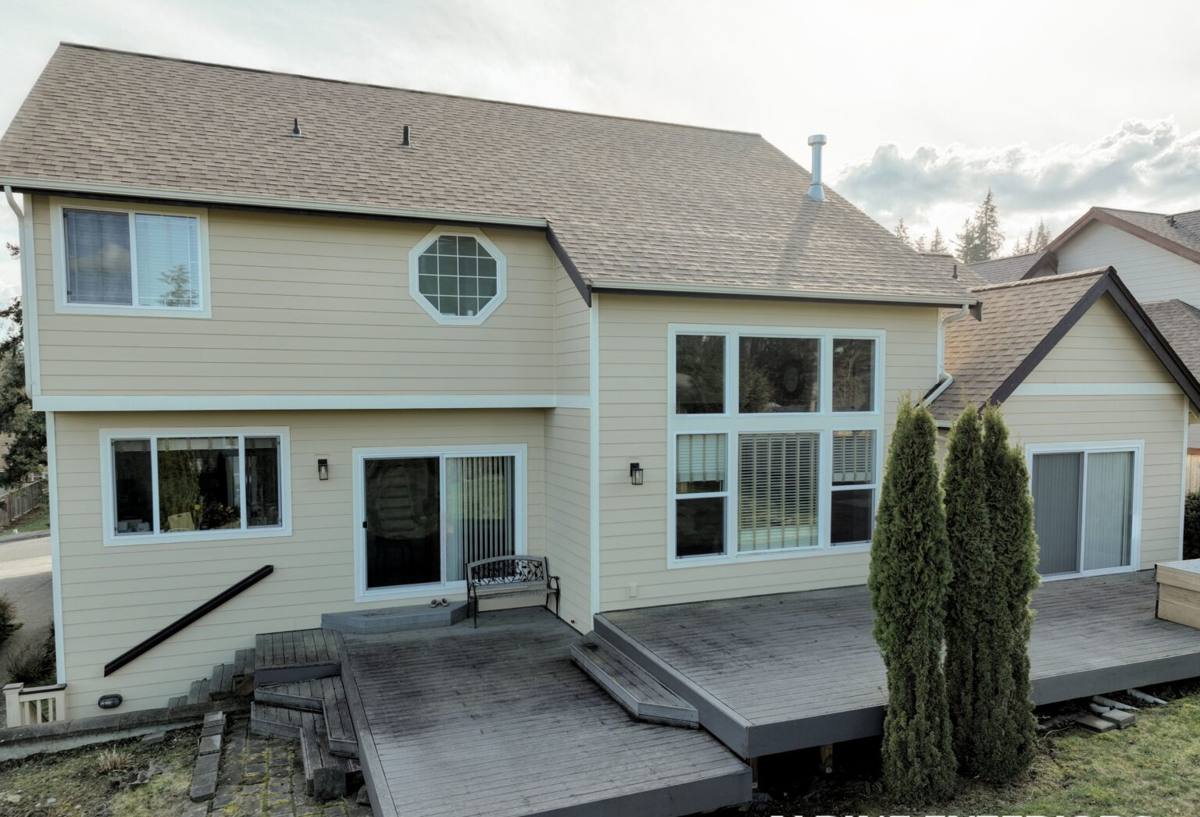
What a Deck in This Area Actually Needs
Water has to keep moving
Rain that falls on a deck isn't the real problem — rain that sits on a deck is. Every part of a correctly built deck, from the ledger connection to the individual board gaps, is there to keep water moving off the structure instead of pooling in it. That means proper drainage slope, gapped decking, and flashing details at every point where the deck meets the house.
Moss and algae need a fighting chance to lose
Whatcom County's moss season is long, and shaded decks under trees or on the north side of a house are the worst hit. Material choice, board spacing, and even how much sun a deck gets from your landscaping all affect how fast moss and algae take hold. We won't tell you a deck can be moss-proof — nothing that sits outside here truly is — but we can build one that's far easier to keep clean and far less likely to stay damp long enough for growth to get established.
Salt-influenced air still reaches inland
Lynden is inland, but this whole region carries some salt-laden air off Bellingham Bay and the Sound, especially with the prevailing weather patterns that move through Whatcom County. It's not the same exposure a waterfront deck gets, but it's enough to accelerate corrosion on the wrong hardware over the years. Fastener and connector selection matters more here than it would somewhere landlocked and dry.
Choosing a Decking Material That Fits Lynden
There's no single "best" decking material — there's a best material for your budget, your maintenance appetite, and how much shade and moisture your specific yard deals with. Here's how the common options actually compare once you factor in this climate:
| Material | Upfront Cost | Maintenance | How It Handles This Climate |
|---|---|---|---|
| Pressure-treated lumber | Lowest | Needs re-sealing every 1-2 years | Performs well if sealed and maintained; neglect shows fast in the wet season |
| Cedar | Mid | Needs staining/sealing periodically | Naturally rot-resistant and handles moisture well, but still needs upkeep to fight moss and graying |
| Composite decking | Higher | Low — occasional washing | Resists rot and doesn't absorb water like wood, but still needs airflow underneath to avoid mold in shaded, damp spots |
| PVC/capped composite | Highest | Lowest | Best moisture resistance of the group; best choice for heavily shaded lots that stay damp longest |
Our honest take: composite and capped composite cost more up front, but for a shaded Lynden lot that holds moisture for days after a storm, the reduced maintenance and better rot resistance usually pay for themselves in fewer callbacks and less of your own weekend labor. For a deck that gets good sun exposure and airflow, well-maintained cedar or treated lumber is still a completely reasonable choice — it just asks more of you over time.
Framing and Substructure: Where Decks Actually Fail First
The decking boards are what you see and what most people focus on, but the framing underneath is what determines whether the deck is safe and how long it really lasts. This is also where corner-cutting is hardest to spot after the fact.
- Ledger board attached to the house with proper flashing, not just caulk or sealant alone
- Joists and beams sized correctly for the actual span and load, not just "what's on hand"
- Post bases set above grade and on proper footings, not buried or resting directly on soil
- Corrosion-resistant fasteners and structural connectors rated for exterior/ground-contact use
- Adequate airflow underneath the deck so framing can dry out between rain events
- Joist tape or a similar moisture barrier on top of framing lumber to slow rot at fastener points
Skipping any one of these doesn't cause an immediate problem. It causes a problem in year four or five, usually hidden under decking that still looks fine from above. That's exactly why deck failures catch homeowners off guard — the damage happens out of sight.
Our Deck Building Process
Whether it's a new deck or a rebuild of an existing one, our process for Lynden jobs follows the same order:
- On-site assessment. We look at grade, drainage, sun/shade exposure, and how the deck will tie into the house before we talk materials.
- Design and material selection. We walk through the material comparison above based on your specific site conditions and budget, not a one-size-fits-all recommendation.
- Permitting. We handle the permit application and inspection scheduling required for the project — more on this below.
- Demo and site prep, if needed. Removal of an existing deck, grading adjustments, and any drainage corrections happen before new framing goes in.
- Framing. Ledger, footings, posts, beams, and joists built to code and to the moisture-management details described above.
- Decking, railing, and finish work. Boards, railings, stairs, and any finish (stain, sealant) installed and completed.
- Final walkthrough. We go over drainage, gaps, and maintenance expectations with you before we call the job done.
Permits and Code Requirements in Whatcom County
Most deck projects — especially anything attached to the house or built above a certain height — require a permit and inspection through the local jurisdiction. This isn't a formality we skip to save time; it's protection for you. An inspected deck means the framing, footings, and railing heights have been checked by someone other than the crew that built it. We handle the permit process as part of the job so you're not the one tracking down inspection windows or code requirements on top of everything else.
Whatcom County and its cities also apply setback and height rules depending on your lot, and older Lynden properties sometimes have decks that predate current code — which matters if you're rebuilding rather than starting fresh. We'll flag anything like that during the initial assessment rather than after work has started.
Keeping a Deck Healthy Once It's Built
A well-built deck still needs upkeep — the difference is how much and how forgiving it is when you fall behind. A basic seasonal routine goes a long way in this climate:
- Sweep debris and standing leaves off the deck regularly, especially in fall
- Rinse off moss and algae buildup before it gets established, rather than after
- Check that gaps between boards aren't clogged with debris that traps moisture
- Inspect railings, stair connections, and ledger flashing once a year
- Re-seal or re-stain wood decking on the schedule your material actually needs, not "whenever"
- Trim back overhanging branches that keep the deck shaded and slow to dry
None of this is complicated, but it's easy to let slide, and in a climate this wet, sliding on maintenance is exactly how a good deck turns into a problem deck.
What Affects the Cost of a Lynden Deck Project
Every deck is priced around a handful of real factors, not a flat per-square-foot number that ignores your site:
| Factor | Why It Moves the Price |
|---|---|
| Decking material | Composite and PVC cost more upfront than treated lumber or cedar |
| Height and substructure complexity | A deck with stairs, multiple levels, or extra footings needs more framing and labor |
| Site access and grading | Sloped or hard-to-access lots take longer to prep and build on |
| Railing style | Cable, glass, and custom railings cost more than standard baluster railing |
| Demo of an existing deck | Removing and disposing of an old structure adds labor before the new build starts |
| Permit and inspection requirements | Larger or attached decks generally require more documentation and inspection steps |
We'd rather walk your specific site and give you real numbers than quote a broad range that doesn't mean much until we've seen what you're working with.
Why It Matters That We Already Work in Lynden
A deck built by a crew that's never dealt with Whatcom County's drainage patterns, soil, and moss season is guessing at details that a local crew already knows cold — how much slope drainage actually needs here, which framing details hold up through this many wet months a year, and which materials are worth the extra cost on a shaded lot versus a sunny one. That local knowledge doesn't show up on a quote sheet, but it shows up in how the deck performs five and ten years out. If you're comparing bids, ask any contractor directly how they handle ledger flashing and under-deck airflow — the answer tells you a lot about whether they're building for this climate or just building a deck.
If you're planning a new deck or looking at rebuilding one that's past its prime, we're happy to come take a look and give you a straightforward, no-pressure estimate — just fill out the form below.