 Bellingham Siding
 Why Siding Replacement Costs Vary So Much From House to House
Ask five Bellingham homeowners what they paid to reside their house and you'll get five different answers, sometimes for houses that look nearly identical from the street. That's not because contractors are making numbers up — it's because siding replacement cost is the sum of a lot of separate decisions, and each one moves the total. Square footage matters, but so does the shape of the house, what's hiding underneath the old siding, the trim package, and which material you choose to put up.
This page walks through those cost drivers one at a time so you know what you're actually paying for when a proposal lands in your hands, and what questions to ask before you sign anything. We won't quote you a number here — every house in Whatcom County is different — but you'll leave knowing why your neighbor's bid and yours aren't going to match.
Home Size, Shape, and Story Height
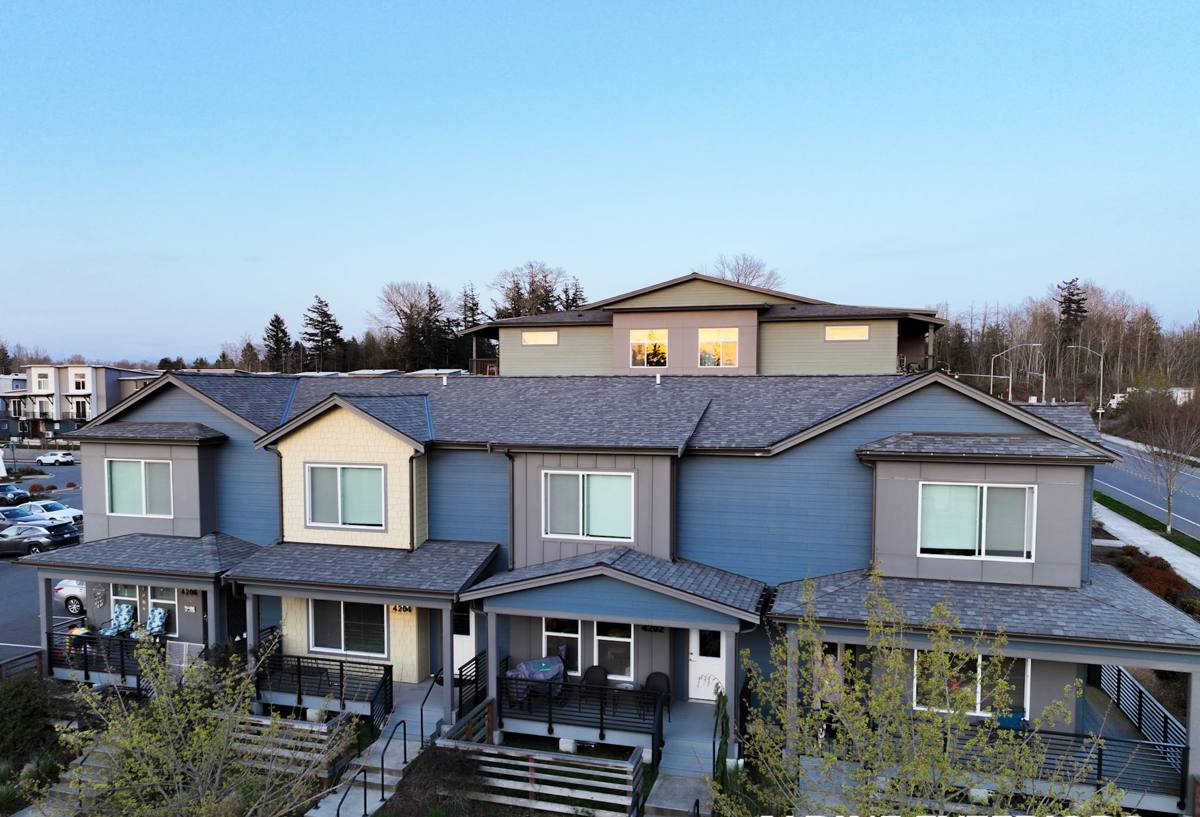
Square footage is the starting point, but it's a rough one. Two 2,000 square foot homes can cost noticeably different amounts to reside depending on their shape. A simple rectangular ranch is faster and cheaper to side than a house with lots of gables, dormers, bump-outs, and roof-to-wall intersections, because every corner, valley, and transition adds cutting, fitting, and flashing time.
Story height matters too. Two-story and taller homes require scaffolding or lift equipment, more careful staging, and slower, more deliberate work at height — all of which adds labor hours that a single-story home simply doesn't need.
Factors that add complexity (and cost)
- Multiple roof pitches and dormers that create extra flashing and cutting work
- Bay windows, bump-outs, and architectural details
- Steep or difficult site access that limits equipment staging
- Existing decorative trim, shutters, or millwork that has to be removed and reinstalled or replaced
Tear-Off, Prep, and What's Underneath the Old Siding
What's under your existing siding has a bigger effect on final cost than most homeowners expect. A full tear-off to bare sheathing lets us actually see what's there — and in a lot of older Bellingham homes, especially ones near the water or in shaded, moss-prone yards, we find water-damaged sheathing, rot around window openings, or old house wrap that's failed and let moisture in behind the cladding for years without anyone knowing.
That kind of damage isn't something a contractor can quote sight unseen. A house that just needs new siding over sound sheathing and a fresh weather-resistive barrier is a very different project than one that needs sections of sheathing replaced, framing repaired, and window flashing redone before a single piece of siding goes up. This is also why we're cautious about install-over-existing-siding shortcuts — they save money up front but they hide problems instead of fixing them, which almost always costs more later.
Material Choice: The Single Biggest Line Item
More than any other decision, what you choose to put on the walls determines your total cost — and your cost five, ten, and twenty years from now. Vinyl is the cheapest material up front and the fastest to install, but it's also the thinnest, the most prone to warping in heat or cracking in cold, and it fades over time with no factory finish to protect it. LP SmartSide and other engineered wood products cost more than vinyl but less than fiber cement, and their strand-based wood core makes them genuinely sensitive to moisture intrusion at cut edges and seams if the installation isn't precise — a real concern in a region that sees as much driving rain as Whatcom County does.
Fiber cement costs more than either option up front. It also doesn't burn, doesn't rot, holds a factory-baked finish for decades instead of needing repainting, and stands up to salt air and moisture cycling better than wood-based products. That's the trade-off in plain terms: pay less now and plan on more maintenance and a shorter service life, or pay more now and get a material engineered to handle this climate with minimal upkeep for the life of the warranty.
Rough cost comparison by material
| Material | Relative upfront cost | Long-term maintenance | Expected service life |
|---|---|---|---|
| Vinyl | Lowest | Low, but fades and can crack or warp | Shorter — early replacement common |
| LP SmartSide / engineered wood | Moderate | Moderate — edge sealing and repainting cycles | Depends heavily on installation quality |
| Fiber cement (James Hardie) | Highest of the three | Low — factory finish, no rot | Longest, with a strong transferable warranty |
We install James Hardie fiber cement exclusively, in the HZ product lines engineered for Pacific Northwest moisture conditions. We made that decision after years of seeing what salt air, moss, and constant rain do to lower-cost materials over time — it's a business decision built around what actually holds up here, not a sales pitch.
Trim, Accessories, and Finish Details
Siding itself is usually less than the full picture. Trim boards around windows and doors, corner boards, fascia, soffit work, and any decorative banding all add material and labor cost, and they're often underestimated in low-ball bids. A proposal that only prices the flat field siding and skips a clear trim package is one to ask questions about.
Color also plays a role with fiber cement. Factory-applied ColorPlus finishes cost a bit more than primed board that gets field-painted, but they eliminate an entire maintenance cycle — no repainting the siding itself for the life of the finish warranty, which matters a lot when the alternative is scheduling exterior painting every several years in a climate that doesn't give you many dry weeks in a row to do it.
Labor and Installation Quality
Installation is where a lot of siding failures actually start, regardless of material. Fiber cement in particular is installation-sensitive — proper fastening, correct clearances above rooflines and decks, correctly lapped and flashed weather-resistive barrier, and factory-spec joint treatment all matter for how the siding performs over the following decades. A crew that rushes the install can undercut even a premium material's warranty and performance.
This is part of why labor cost varies between bids even when the material line is identical. A contractor pricing enough time to flash penetrations correctly, install proper starter strips and weep screed, and follow manufacturer fastening schedules isn't padding the bid — they're pricing the difference between siding that lasts and siding that fails early in ways that aren't obvious until years later.
Bellingham and Whatcom County Climate Factors
Local climate shapes this decision more than people expect when they're just comparing numbers on a page. Bellingham sits on the water, and homes anywhere near Bellingham Bay or the county's shoreline deal with salt air that accelerates corrosion on fasteners and finishes not rated for it. Add in the driving rain that comes through on winter storms off the Sound, and wall assemblies here take on more moisture stress than siding in a drier inland climate ever has to handle.
Then there's the long moss season. Shaded north-facing walls, tree cover, and our extended damp stretches mean moss and algae growth on siding is a near-constant maintenance issue across Whatcom County, not an occasional one. Materials and finishes that resist that growth — and that can be cleaned without damaging the surface — save real money in upkeep over the life of the siding. All of this is exactly why we think material selection deserves more weight in a Bellingham siding decision than it might in a milder, drier region.
Permits, Disposal, and Other Line Items Homeowners Forget
A few line items get left out of casual estimates but show up in a real proposal:
- Building permits, which most siding replacement projects in Whatcom County jurisdictions require
- Disposal and hauling of old siding and any removed sheathing or trim
- Repair of incidental damage found once old siding comes off — sheathing, flashing, or window trim
- Temporary weather protection if a project spans a stretch of rain, which is a real scheduling factor here more months than not
A bid that's noticeably lower than others is worth a second look to see which of these it actually includes.
Getting an Accurate Number for Your Home
The only way to get a real number is a walk-around of the actual house — measuring elevations, checking trim and window details, and, ideally, pulling a section of existing siding to see what condition the sheathing is in before it's priced blind. Anyone quoting a whole-house number over the phone or from a photo is guessing.
What to have ready before an estimate
- A general sense of any known problem areas — soft spots, stains, or past leaks
- Whether you want a full tear-off or are open to discussing what's under the current siding first
- Your priorities: lowest upfront cost, lowest lifetime cost, or a specific look or color
- Any trim, window, or door replacement you're considering at the same time, since bundling that work with siding often saves labor overlap
If you'd like an honest, no-pressure look at what your home actually needs, we're happy to walk it with you and put together a detailed estimate — no generic per-square-foot number, just a real accounting of your house. Use the form below to get started.