 Bellingham Siding
 Siding Built for Ferndale's Coastal Whatcom County Climate
Ferndale sits close enough to the water that salt air is a real factor in how a home ages, not just a talking point. Add Whatcom County's long wet season, frequent driving rain off the Strait, and the shade that keeps moss and algae established on north-facing walls for months at a time, and you have a climate that is genuinely tough on exterior materials. Homes here don't fail because owners neglect them. They fail because the siding, trim, or roofing wasn't matched to what this specific stretch of Washington actually does to a building envelope year-round.
We work throughout Ferndale and the surrounding Whatcom County communities, and we see the same patterns on house after house: paint that won't hold past a few years on the weather side, trim boards going soft at the bottom, and green-black staining that keeps coming back no matter how many times it gets pressure washed. None of that is inevitable. It's a product and installation problem, and it's fixable with the right approach.
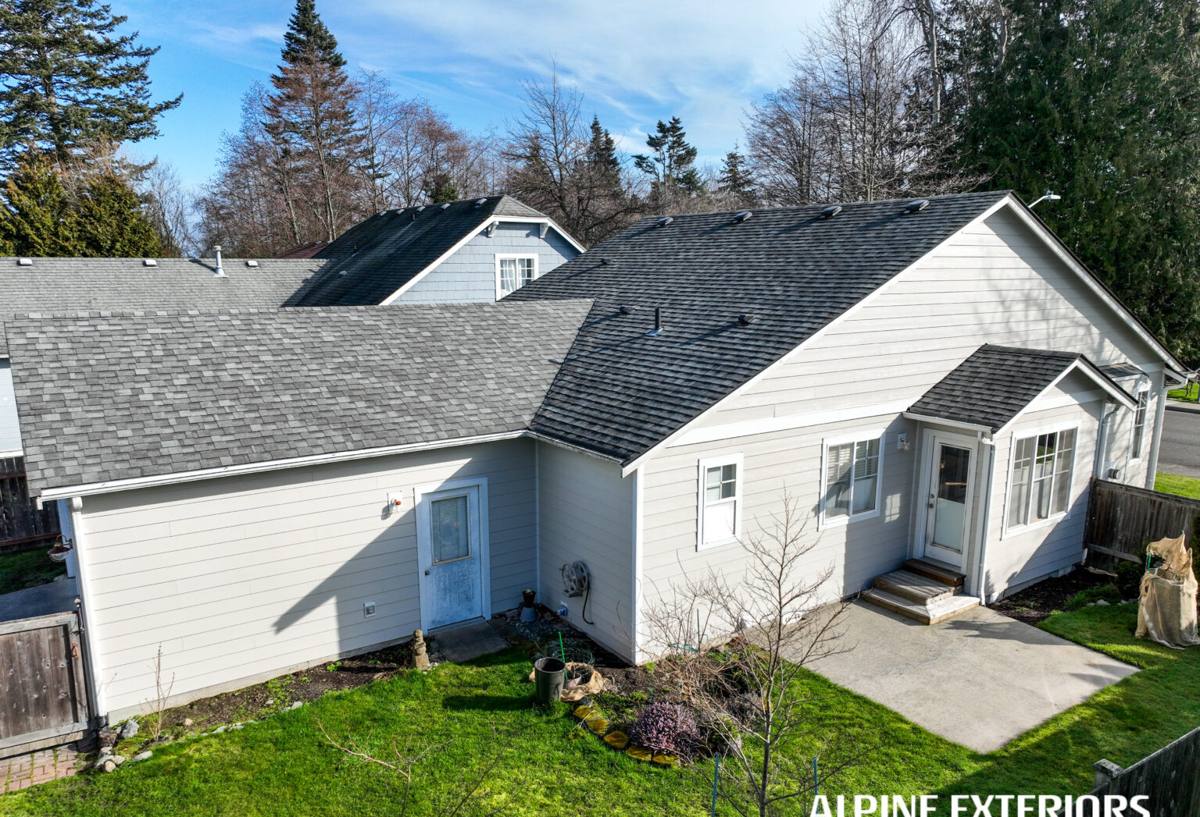
What Ferndale Homes Actually Face
Salt Air and Marine Moisture
Proximity to Bellingham Bay and the Strait of Georgia means airborne salt is part of daily weathering here, especially on homes closer to the water or exposed to prevailing winds off the coast. Salt-laden air accelerates the breakdown of paint films, corrodes exposed fasteners, and speeds up deterioration in wood products that aren't built to shrug off constant moisture cycling.
Driving Rain
Whatcom County doesn't just get a lot of rain — it gets wind-driven rain that hits siding at an angle instead of running straight down. That matters because it forces water into laps, seams, and butt joints that a vertical rain would never reach. Any siding system with weak joint design or poor water-shedding detail will show it here first.
Moss and Algae Season
Shaded walls, roof valleys, and north-facing elevations in this area can stay damp for weeks at a stretch during the wet months. That's exactly the environment moss and algae need to take hold. Once organic growth establishes on a porous or absorbent surface, it holds moisture against the material and accelerates rot and paint failure underneath — a slow problem that compounds year over year if the surface can't resist it.
Why Product Choice Matters More Here Than in Drier Climates
In a dry climate, a lot of siding products perform adequately because they're rarely tested. In Ferndale's climate, every weak point in a product gets exercised constantly — the rain doesn't let up long enough for materials to fully dry between exposures for much of the year. That's why we install exclusively James Hardie fiber cement siding and don't offer vinyl, LP SmartSide, Cemplank, Allura, or primed wood siding as alternatives. It's not a marketing position; it's the outcome of what we've seen hold up on real Whatcom County homes over time.
Why We Don't Install the Alternatives Here
- Vinyl siding can warp and buckle with temperature swings and doesn't hold paint if a homeowner ever wants a color change — and its seams and J-channels give wind-driven rain more places to work into the wall assembly.
- LP SmartSide is an engineered wood product, which means it depends entirely on unbroken factory sealing and careful field caulking at every cut edge; in a climate this wet, any breach in that seal is an invitation for moisture intrusion.
- Cemplank and Allura are fiber cement competitors to Hardie, and while the category itself is sound, we've standardized on one manufacturer so our crews install one system to spec, every time, with one warranty structure behind it.
- Primed spruce or cedar is a real wood product, which means real wood problems — swelling, cupping, and rot — problems that show up faster in a marine, high-rainfall climate than almost anywhere else in the country.
James Hardie fiber cement is non-combustible, doesn't rot, resists moss and algae far better than wood-based products, and holds its factory-applied ColorPlus finish for years without the chalking and fading that plague field-painted surfaces exposed to this much rain and salt air. It's engineered specifically for climates like this one — Hardie's HZ10 product line is formulated for the wetter, cooler climates of the Pacific Northwest.
How We Approach a Ferndale Siding Project
Every job starts with an honest look at the house, not a sales pitch. We check for hidden moisture damage behind the existing siding, evaluate the state of the water-resistive barrier, and look at flashing details around windows, doors, and rooflines — the places driving rain in this area finds its way in. Replacing siding without addressing a failed barrier or bad flashing just re-covers the same problem.
Installation Details That Matter in This Climate
- Correct panel gapping and caulking per Hardie's published specifications, not shortcuts that save an hour but cost a homeowner a moisture problem in five years
- Proper flashing and kickout details at rooflines and window heads, where wind-driven rain concentrates
- Rain-screen or drainage plane detailing where the wall assembly calls for it, to give any incidental moisture a way out
- Fastener placement and spacing that meets manufacturer requirements, which matters for both wind resistance and warranty validity
- Careful sequencing around trim, corners, and penetrations so water is always directed outward, never trapped
Roofing, Windows, and Decks — The Same Climate Problem
Siding is only one piece of a home's defense against this weather. We also handle roofing, windows, and decks in Ferndale because they all face the same driving rain and moss pressure, and they all need to work together as one system.
Roofing
A roof in this area needs proper underlayment, valley flashing, and ventilation to manage the volume of rain and the moss growth that comes with prolonged shade and moisture. A roof that traps moisture in the attic will cause problems long before shingles wear out on their own.
Windows
Window flashing and integration with the surrounding siding is one of the most common failure points we find on older homes. A quality window installed with poor flashing details will leak in this climate; a modest window installed correctly usually won't. Integration matters more than brand.
Decks
Decks take the driving rain and moss exposure directly, with no roof overhang to soften it. Proper board spacing, ledger flashing, and material choice all affect how long a deck stays sound and how much upkeep it demands from a Ferndale homeowner.
Comparing Siding Options for a Ferndale Home
| Factor | James Hardie Fiber Cement | Vinyl | Engineered Wood (LP-type) | Primed Wood |
|---|---|---|---|---|
| Moisture/rot resistance | Strong — cement-based, doesn't rot | Won't rot, but seams allow water intrusion | Depends entirely on sealed edges holding up | Weak — real wood absorbs and swells |
| Moss/algae resistance | Strong with factory finish | Moderate | Moderate if sealed well | Weak — porous surface holds growth |
| Salt air durability | Strong | Moderate — can become brittle over time | Moderate | Weak |
| Finish longevity | Factory ColorPlus, years before repaint | Doesn't hold paint if color change wanted | Field-painted, more frequent maintenance | Field-painted, frequent maintenance |
| Fire resistance | Non-combustible | Combustible | Combustible | Combustible |
What to Look For When Hiring for Exterior Work in Whatcom County
Ferndale homeowners get pitched a lot of exterior contractors, and it's worth being selective given how much a bad installation costs to undo later.
- Ask specifically how they detail flashing at windows, doors, and roof-to-wall intersections — this is where driving rain finds weaknesses
- Ask whether they install to the manufacturer's published specifications or their own shortcuts
- Ask how they handle moss and algae exposure on shaded elevations
- Confirm they carry proper licensing and insurance for work in Washington
- Ask for the warranty structure in writing, including what's covered on materials versus labor
A Local Crew Matters in a Climate Like This
A crew that works Whatcom County regularly knows which elevations in Ferndale hold moisture longest, how far inland the salt air effect really reaches, and how the moss season here differs from a general Pacific Northwest description. That local knowledge shows up in small decisions — where to add extra flashing, which wall gets the most driving rain, how much drainage detailing a particular lot needs — that a crew unfamiliar with this specific stretch of coastline might not think to make.
If you're dealing with siding that's holding moisture, moss that keeps coming back, or you're simply planning ahead for a home built to handle Ferndale's weather, we're happy to take a look and give you a straightforward, no-pressure estimate.