 Bellingham Siding
 Roof Repair in Ferndale: What Local Homes Are Up Against
Ferndale sits close enough to the water and far enough into Whatcom County's rain shadow patterns that its roofs take a specific kind of beating. Homes here deal with salt-tinged air moving in off the Strait, long stretches of driving rain through fall and winter, and a moss season that can run eight months or more if a roof isn't kept clear. None of that is dramatic on its own. What it does is slow and cumulative — the kind of damage that shows up as a stain on a bedroom ceiling two years after the actual failure happened.
A roof repair in this area isn't just patching a leak. It's understanding why that particular spot failed first, and whether the rest of the roof is a few seasons behind it. We work Ferndale regularly, alongside the rest of Bellingham and Whatcom County, and the failure patterns repeat often enough that we can usually tell what we're dealing with before we're even on the ladder.
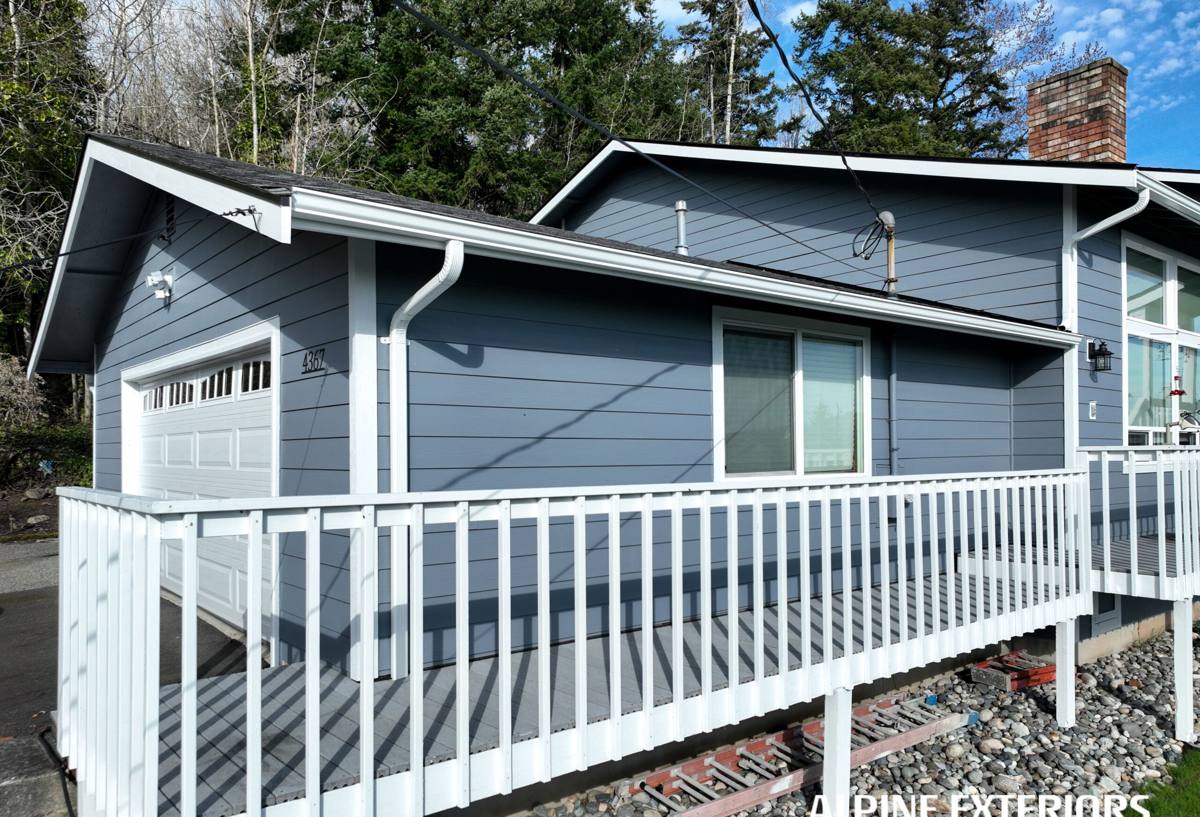
Why Salt Air, Rain, and Moss Matter More Here Than Elsewhere
Salt Air and Metal Fatigue
Ferndale isn't oceanfront, but it's close enough that airborne salt reaches roofing hardware, flashing, and exposed fasteners over time. Salt accelerates corrosion on anything galvanized or painted metal — nail heads, drip edge, valley flashing, vent boots with metal collars. A fastener that would last decades inland can start weeping rust streaks and losing its seal years earlier out here. That's why the fastener and flashing spec we use locally leans toward corrosion-resistant materials rather than whatever's cheapest at the yard.
Driving Rain, Not Just Rain Volume
What matters for roofing isn't just how much rain falls — it's the direction it comes from. Wind-driven rain off the Strait pushes water sideways into laps, seams, and flashing details that a straight-down rain would never reach. This is why so many "mystery leaks" trace back to a step flashing detail at a wall intersection, or a vent boot on the windward side of the roof, rather than the open field of the shingles themselves.
Moss: The Slow Damage Nobody Notices Until It's Expensive
Whatcom County's shaded, damp lots are ideal moss habitat, and Ferndale's tree cover is no exception. Moss doesn't just look bad — its root structure lifts shingle edges and holds moisture against the roof deck long after the rest of the neighborhood has dried out. A roof that looks fine from the ground can have moss working underneath the shingle tabs for a full season before it ever shows as a leak. By the time water reaches the interior, the underlayment and sometimes the decking underneath the mossy patch have already been compromised.
What a Correct Roof Repair Actually Involves
A lot of roof repairs fail — meaning the same leak comes back within a year or two — because they treat the symptom instead of the cause. A tube of sealant over a stain is not a repair; it's a delay. Here's what we actually check and do on a legitimate repair call:
- Trace the leak to its real entry point, which is often several feet from where the interior stain shows up
- Inspect flashing at every penetration nearby — chimneys, vents, skylights, wall intersections — not just the obvious spot
- Check underlayment condition and decking for soft spots or delamination where water has been sitting
- Assess moss and debris buildup as a contributing cause, not a separate issue to ignore
- Match repair materials to what's already on the roof, or explain honestly when an exact match isn't possible
- Re-seal and re-fasten with corrosion-resistant hardware suited to this coastal-influenced climate
- Confirm proper water shedding path after the repair — not just that it looks sealed
Skipping any of these is how a homeowner ends up paying for the same repair twice.
Common Ferndale Roof Repair Scenarios
| Issue | Typical Cause Locally | What a Proper Fix Involves |
|---|---|---|
| Ceiling stain near an exterior wall | Wind-driven rain past step flashing or siding-to-roof transition | Re-flash the wall intersection, check kick-out flashing, verify water diverts away from the wall |
| Leak near a bathroom or kitchen vent | Cracked or UV-degraded rubber vent boot | Replace the boot collar, check surrounding shingles for granule loss |
| Shingle edges lifting or curling | Moss root intrusion holding moisture | Careful moss removal, damaged shingle replacement, treatment to slow regrowth |
| Slow leak with no obvious source | Underlayment failure at a valley or low-slope section | Open the area, inspect decking, replace underlayment and shingles in that section |
| Rust streaks on flashing or fasteners | Salt air corrosion on lower-grade metal | Replace with corrosion-resistant flashing and fasteners rated for coastal exposure |
Repair vs. Replacement: An Honest Read
Not every Ferndale roof that's leaking needs to be replaced, and not every roof that "just needs a patch" should stop there. The honest answer depends on age, how widespread the damage is, and what condition the decking is in once we're actually up there.
- Repair usually makes sense when the roof is under 15 years old, the damage is localized to one flashing detail or a small shingle area, and the decking underneath is still solid.
- Replacement becomes the more honest recommendation when we find multiple failure points, widespread moss damage across several sections, soft or delaminated decking, or a roof that's already past its expected service life for this climate.
We'll tell you straight which category your roof falls into. A repair that's really a stopgap on a roof that needs replacement isn't a favor to anyone — it just moves the real cost down the road with interest.
Our Process for Ferndale Roof Repair Calls
1. Inspection First, Not a Guess From the Ground
We get on the roof, not just look at it from the driveway. Ground-level inspections miss lifted shingle edges, cracked boots, and moss undergrowth every time.
2. A Clear Explanation of What We Found
Before any work starts, you get a straightforward explanation of what's actually wrong, why it's happening, and what the fix involves — no scare tactics, no upsell pressure.
3. Repair Work Matched to the Existing Roof
We use materials and fastening methods suited to Whatcom County's conditions, and we match shingle type and color as closely as the market allows so the repair doesn't stand out like a patch job.
4. Cleanup and a Final Check
Debris and old materials are cleared from the property and gutters before we call the job done, and we verify the fix actually sheds water correctly rather than just looking sealed.
Why It Matters That We Already Work in Ferndale
A roofing crew that's unfamiliar with this specific stretch of Whatcom County will often treat every leak as a generic shingle problem. A crew that already works Ferndale and greater Bellingham recognizes the patterns fast — which wall intersections tend to fail under wind-driven rain, which roof orientations hold moss longest, which flashing materials hold up against the salt air and which don't. That familiarity shortens the diagnostic time and reduces the chance of a callback for the same issue.
It also means we're not disappearing after the invoice. We're local, we're back in this area regularly, and a repair that doesn't hold is something we hear about and stand behind — not a problem for someone three counties away.
Simple Maintenance That Extends the Life of a Repair
A good repair lasts longer when the rest of the roof is kept in reasonable shape. A few habits make a real difference in this climate:
- Clear moss buildup before it spreads across shingle tabs, ideally checked once a year
- Keep gutters clear so water isn't backing up under the lowest course of shingles
- Trim overhanging branches that keep sections of roof shaded and damp longer than the rest
- Have flashing and vent boots checked every few years, since rubber and sealant degrade faster with UV and salt exposure
- Address small leaks quickly — a slow drip today is a soft deck section in two winters
Get a Straight Answer on Your Roof
If you're dealing with a leak, a stain that keeps coming back, or moss that's gotten out of hand, we're happy to take a look and give you an honest read on what it actually needs — repair, and how extensive, or something more. Reach out for a free, no-pressure estimate and we'll walk the roof with you before we recommend anything.