 Bellingham Siding
 Siding Built for Cordata's Weather, Not Just Its Streets
Cordata sits on the north end of Bellingham, close enough to Bellingham Bay and the Strait of Georgia that homes here deal with a specific mix of exterior stress: salt-tinged air moving in off the water, long stretches of driving rain through fall and winter, and a shade-and-moisture combination that keeps north-facing walls and roof lines damp for weeks at a time. Add in the mature tree canopy common to newer Cordata developments and older county lots alike, and you get a moss season that can run from October through April. None of that is exotic for Whatcom County, but it adds up differently on siding than it does on roofing or gutters, and it's why we approach exterior work in this neighborhood the way we do.
We're a Bellingham-based crew that installs, repairs, and replaces siding, roofing, windows, and decks across Whatcom County. Cordata is regular territory for us, not a stretch assignment, and that matters more than it sounds like it should when you're trying to figure out who to trust with the outside of your house.
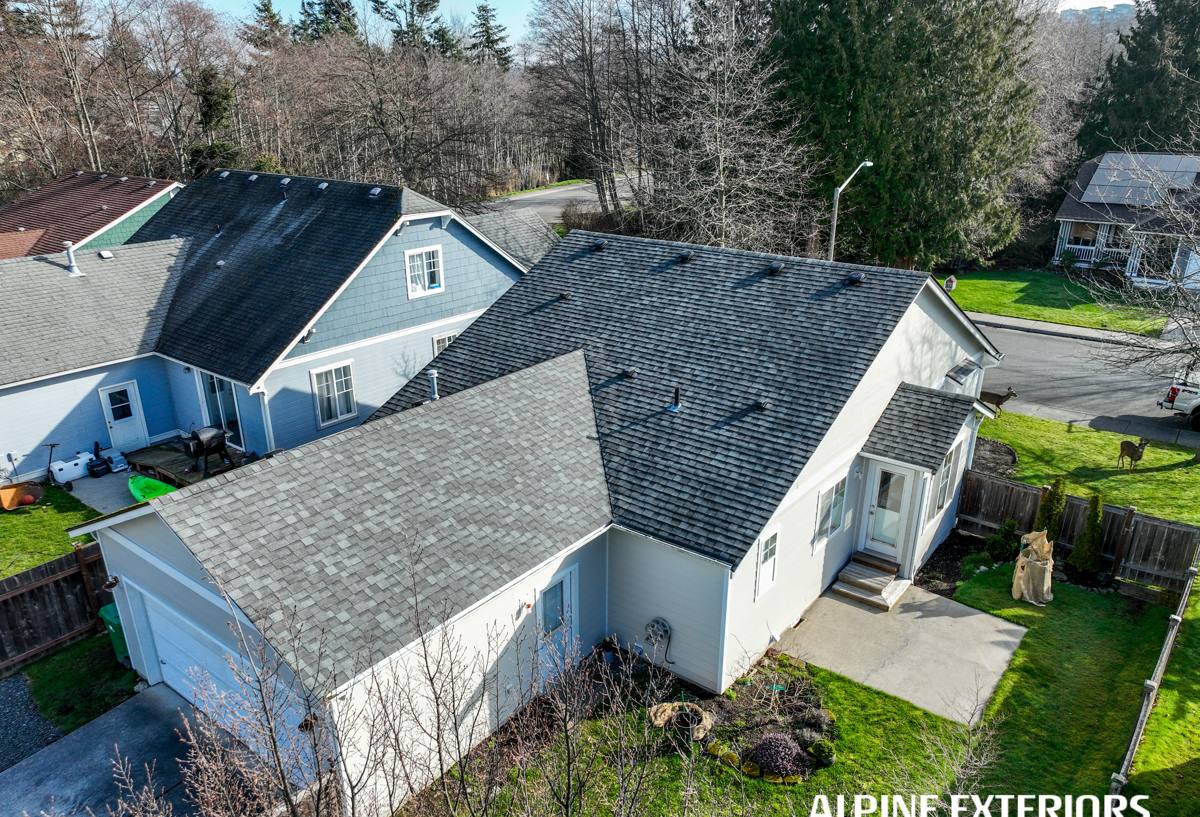
What Cordata Homes Actually Face
Salt Air and Moisture, Even Away From the Water
You don't have to be waterfront to feel bay effects. Salt-laden air travels, and combined with the region's humidity, it accelerates corrosion on fasteners, staining on painted surfaces, and breakdown of anything that wasn't engineered to handle repeated wet-dry cycling. Siding that looks fine going up can start chalking, swelling, or delaminating within a few winters if the material or the finish wasn't built for this climate.
Driving Rain and Wind-Driven Water Intrusion
Bellingham doesn't get the volume of rain some parts of the Pacific Northwest see, but it gets a lot of wind-driven rain — the kind that hits siding at an angle and finds every gap in flashing, caulk, and seams. Over years, that's what causes rot behind siding that looks perfectly fine from the curb. It's a slow, hidden failure mode, and it's the single biggest reason installation quality matters as much as material choice.
Moss, Algae, and the Shade Problem
Cordata's tree cover is part of what makes the neighborhood pleasant to live in, but shaded, moisture-retentive walls are exactly where moss and algae take hold. On absorbent siding materials, that growth isn't just cosmetic — it holds moisture against the surface and shortens the material's working life. On a material that doesn't absorb water, it's a surface-level maintenance issue you can wash off.
Why We Only Install James Hardie Fiber Cement
We get asked fairly often why we don't offer vinyl, LP SmartSide, or other engineered wood products, especially since some of them cost less upfront. The honest answer is that we made a standard for ourselves based on what actually holds up in this climate over decades, not just what looks good at installation.
- Non-combustible material. Fiber cement doesn't burn, which matters increasingly in Washington as wildfire smoke seasons and rural-urban interface risk both grow.
- Moisture resistance without an absorbent core. Hardie's fiber cement doesn't swell, rot, or delaminate the way wood-based products can when a seal fails somewhere in the field — and in a wet climate, a seal will eventually fail somewhere.
- Factory-applied ColorPlus finish. The color is baked on in a controlled environment, not brushed on at the jobsite, which means better fade and chip resistance against sun, salt air, and repeated wet weather.
- Climate-engineered product lines. Hardie makes an HZ5 formulation specifically for regions with freeze-thaw cycling and cold-wet exposure, which is a closer match to Whatcom County than a one-size-fits-all product.
- A warranty that's actually transferable. That protects the value of the house for the next owner, not just the one who paid for the siding.
We're not saying every other product is junk — vinyl and engineered wood siding have their place, and plenty of homes have them without incident. We just decided we didn't want to be the crew installing something we knew would need closer babysitting in this exact climate, and stopped offering those materials rather than sell something we couldn't fully stand behind for the long haul.
How Material Choice Plays Out Over Time in This Climate
| Factor | Vinyl Siding | Engineered Wood (e.g. LP SmartSide) | James Hardie Fiber Cement |
|---|---|---|---|
| Moisture response | Doesn't absorb, but can warp/buckle with heat and poor installation | Absorbent core; relies on sealed edges and coatings staying intact | Does not absorb water or rot; stable in wet-dry cycling |
| Salt air exposure | Generally stable but can fade/chalk | Coating breakdown accelerates moisture entry near the coast | Factory finish resists fading and chalking |
| Moss/algae growth | Surface growth, low material impact | Growth can hold moisture against absorbent substrate | Surface growth washes off without affecting the material |
| Fire rating | Combustible | Combustible | Non-combustible |
| Typical practical lifespan | 20-30 years, variable | Highly dependent on maintenance and installation quality | 30-50+ years when installed to spec |
Our Siding Process for Cordata Properties
Inspection First
Before we talk products, we look at what's actually happening on your walls now — where the moisture damage is, whether flashing and trim details were done right the first time, and what's driving the wear you're seeing. Sometimes what looks like siding failure is really a flashing or drainage plane problem that needs fixing regardless of what goes back on the wall.
Correct Installation for a Wet Climate
Fiber cement performs the way it's supposed to only when it's installed with proper clearances, correct fastening, and functioning weep and drainage details behind it. In a climate like this, sloppy installation is what turns a 50-year material into a 15-year problem. We follow Hardie's installation specifications because that's what keeps the manufacturer's warranty valid and, more importantly, what actually keeps water out.
Full Exterior Perspective
Because we also handle roofing, windows, and decks, we're looking at your home as one connected system rather than siding in isolation. Roof-to-wall transitions, window flashing, and deck ledger connections are common places where water gets behind siding no matter how good the siding itself is — so we flag those during any siding project, whether or not you want us to touch them.
Why a Local Crew Matters Here
A contractor who works Whatcom County regularly already knows what Cordata's rain patterns, shade cover, and salt exposure do to a house over time — we're not learning your neighborhood's failure points on your dime. Local crews are also easier to hold accountable: we're not driving in from out of the area for one job and disappearing if a warranty issue comes up two winters later. That matters more with siding than almost any other exterior trade, because siding problems are often invisible until they're expensive.
Signs Your Current Siding May Be Struggling
- Persistent moss or algae staining that comes back quickly after cleaning
- Soft spots, bubbling, or visible swelling, especially near the bottom courses or trim
- Paint or finish that's chalking, peeling, or fading unevenly on shaded walls
- Gaps opening up at seams, corners, or around windows and doors
- Visible warping or buckling on wide, sun-exposed sections
- A musty smell or interior staining on walls that back onto exterior siding
If you're seeing more than one of these, it's worth having it looked at before the next wet season rather than after.
What Affects the Cost of a Siding Project in Cordata
| Factor | Why It Matters |
|---|---|
| Home size and wall complexity | More corners, gables, and trim details mean more labor and material cuts |
| Existing damage | Rot repair, sheathing replacement, or flashing corrections add scope beyond the siding itself |
| Hardie product line chosen | Lap siding, panel systems, and shingle-style profiles vary in material and labor cost |
| Access and site conditions | Tree cover, slope, and setbacks common in Cordata can affect staging and scaffolding needs |
| Trim and accessory work | Fascia, soffit, and trim replacement alongside siding affects total project cost |
We don't quote broad numbers without seeing the house, because the honest range depends heavily on the condition behind your current siding — not just the square footage in front of it.
Ready for an Honest Look at Your Siding?
Whether you're dealing with visible damage, planning ahead before it becomes a problem, or just want a second opinion on what you're currently seeing, we're happy to come take a look. There's no pressure and no cost to get an estimate — just a straight assessment from a crew that works this exact climate on a regular basis.