 Bellingham Siding
 Cordata's Climate Puts Real Demands on Siding
Cordata sits in north Bellingham, a few miles back from Bellingham Bay, but it's still squarely inside Whatcom County's marine climate. Moisture-laden air moves inland off the Salish Sea and settles into neighborhoods well beyond the waterfront, which means siding here deals with more than just rain. Homes in Cordata see long stretches of driving, wind-pushed rain in fall and winter, cool damp air that lingers into late spring, and a moss season that can run eight months or longer on north-facing walls and shaded siding runs near mature landscaping.
That combination is hard on the wrong siding material. Wood-based products absorb moisture and swell. Vinyl can warp or fade and gives moss and algae an easy surface to grip. Even siding that looks fine from the curb can be failing behind the surface if the water-resistive barrier, flashing, and fastening weren't done correctly. In a climate like this, the material and the installation both have to be right — one without the other doesn't hold up.
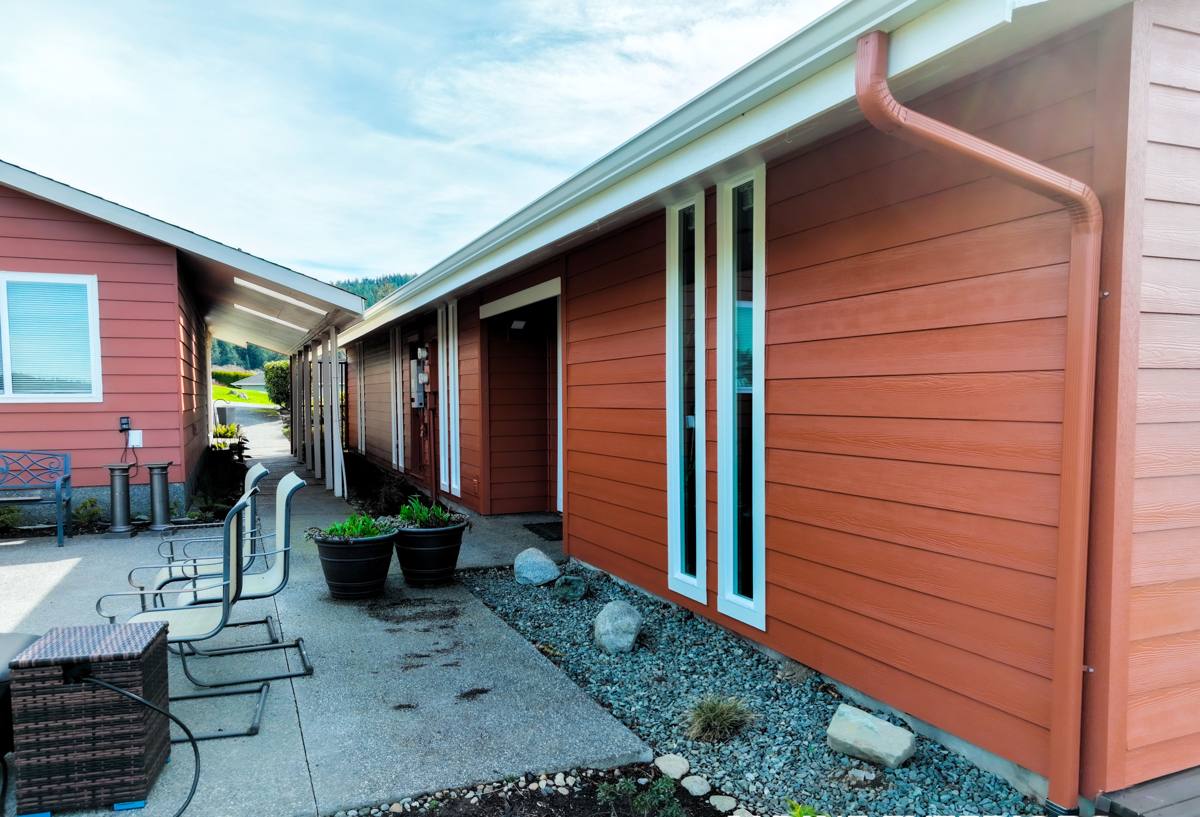
Why We Install James Hardie and Nothing Else
We standardized on James Hardie fiber cement siding because it's engineered for exactly this kind of climate, and because it's the one product we're willing to put our name behind for the long haul. Hardie panels are made from cement, sand, and cellulose fiber — a composition that doesn't rot, doesn't feed moss and mildew the way wood does, and holds its shape through repeated wet-dry cycles. It's also non-combustible, which matters more every year given the region's fire seasons, even here on the wetter side of the state.
James Hardie also makes climate-specific product lines, and for the Pacific Northwest that means the HZ5 formulation — engineered for regions with freeze-thaw cycles and sustained moisture exposure. It's not a generic siding product adapted for our weather; it's built for it from the start.
What HZ5 Actually Changes
- Engineered moisture resistance suited to prolonged damp conditions, not just occasional rain
- Better performance through freeze-thaw cycling, which happens more often in Whatcom County than most homeowners realize
- A factory-applied ColorPlus finish that resists the fading and chalking that plain field-painted siding shows after a few wet winters
- A product warranty structure built around the region it's rated for, rather than a one-size-fits-all national spec
Moss, Mildew, and the ColorPlus Advantage
Moss doesn't just grow on roofs. In shaded side yards and north-facing walls common throughout Cordata's residential streets, moss and mold can colonize siding surfaces that stay damp for days at a time. Fiber cement doesn't give organic growth the food source that wood does, and Hardie's factory-baked ColorPlus finish is smoother and more consistent than a job-site paint job, which gives spores less to hold onto in the first place.
That doesn't mean Hardie siding is maintenance-free — nothing exposed to eight months of wet weather a year is. But it means the maintenance is manageable: a rinse-down and an occasional soft wash, not scraping, caulking, and repainting every few years the way wood siding demands.
What a Correct Installation Involves
Most siding failures we get called out to inspect in this region aren't material failures — they're installation failures. The product held up fine; the details underneath it didn't. A correct James Hardie install in a climate like Cordata's comes down to a handful of things that are easy to skip and expensive to fix later.
Before the First Panel Goes Up
- Full inspection of the sheathing for existing rot or water damage before anything new goes over it
- A continuous, properly lapped water-resistive barrier — every seam matters, not just the obvious ones
- Correct flashing at every window, door, and roofline transition, since these are the spots water actually gets in
- Rainscreen or furring strategy where wall assembly and exposure call for it, to let moisture that does get behind the siding actually dry out
During Installation
- Manufacturer-specified nailing patterns and fastener types — the wrong fastener corrodes and stains long before the siding itself wears out
- Correct panel gaps and clearances at grade, decks, and roof lines so panels aren't sitting in standing water or trapped moisture
- Proper caulking and sealant at penetrations, using products compatible with the ColorPlus finish
- Field-cut edges primed or sealed per spec, not left exposed
Skip any one of these and you can end up with a home wearing a premium siding product that still fails early — trapped moisture behind the panels, streaking from the wrong fasteners, or gaps that let moss and debris pack in at the bottom courses. The material's reputation gets blamed for what was actually a shortcut in the install.
Comparing Siding Options for a Cordata Home
We get asked why we don't offer vinyl, LP SmartSide, or cedar as lower-cost alternatives. Here's the honest comparison for this climate, not a sales pitch:
| Material | Performance in Sustained Moisture | Moss/Algae Resistance | Long-Term Maintenance |
|---|---|---|---|
| James Hardie (HZ5) | Engineered for it; doesn't rot or swell | Strong — non-organic surface, factory finish | Occasional wash; no repainting cycle |
| Vinyl | Doesn't rot, but warps/cracks with temperature swings | Moderate — textured seams collect grime | Low effort, but fades and can't be repainted well |
| LP SmartSide / engineered wood | Wood-based; vulnerable at cut edges and seams if moisture gets in | Weaker — organic material feeds growth if compromised | Requires diligent caulking and inspection |
| Cedar / primed spruce | Absorbs moisture; needs consistent sealing to perform | Weak — natural wood readily supports moss and mildew | High — regular refinishing and treatment |
Vinyl and engineered wood aren't bad products in every climate. They're just not what we'd choose to stand behind on a home that's going to sit through Whatcom County winters for the next 30-plus years. Fiber cement's upfront cost is higher; its cost over the life of the siding, including maintenance, is usually lower.
What Drives Cost on a Cordata Project
| Factor | Why It Matters |
|---|---|
| Existing wall condition | Sheathing repair or rot remediation adds time and material before new siding can go on |
| Home size and complexity | Multiple stories, dormers, and trim details take more labor per square foot than a simple ranch elevation |
| Panel style and profile | Lap siding, shingle-style panels, and panel-and-batten systems price differently |
| Trim and accessory scope | Fascia, soffit, and trim board replacement alongside siding affects total project cost |
| Access and site conditions | Landscaping, fencing, and setback affect scaffolding and staging time |
We won't quote a number without seeing the home — anyone who does is guessing. But these are the honest variables that move the price, and we'll walk through them plainly during an estimate.
Our Process for a Cordata Siding Project
- On-site assessment — we inspect existing siding, sheathing condition, and problem areas like north-facing walls and low-clearance sections before quoting anything
- Detailed proposal — product line, panel style, color, and scope spelled out, with the reasoning behind each recommendation
- Prep and protection — landscaping, walkways, and adjacent surfaces protected before demo starts
- Tear-off and sheathing check — any hidden moisture damage gets addressed before new siding goes up, not covered over
- Barrier, flashing, and rainscreen installation — the unglamorous part that determines whether the siding lasts
- Hardie panel installation to manufacturer spec — correct fasteners, gaps, and sealing throughout
- Final walkthrough — we go over the finished work with the homeowner before calling the job done
Why Local Experience in Cordata Matters
A crew that's worked other homes in this part of Bellingham already knows which wall orientations collect moss fastest, how the neighborhood's mix of home ages affects sheathing condition, and how the area's seasonal rain patterns should shape flashing and rainscreen decisions. That's not something you get from a manufacturer's install manual alone — it comes from having actually done the work in this climate, on homes with the same exposure your house has.
It also means faster, more accurate estimates. We're not guessing at how Whatcom County's driving rain and moss season will treat a given elevation — we've seen it play out on siding jobs across Bellingham and can plan around it from day one.
Living With James Hardie Siding After Installation
Once it's installed correctly, Hardie siding in this climate is low-drama. A yearly rinse with a garden hose or low-pressure wash removes the pollen, dust, and early moss growth before it takes hold. Keep an eye on caulking at trim and penetrations every couple of years, since sealant is the one component that wears faster than the siding itself. Beyond that, the ColorPlus finish is designed to go a long time without needing to be repainted — a real advantage over field-painted materials that need attention every few years in a climate this wet.
If you're weighing a siding project on a Cordata home, we're happy to take a look and give you a straightforward, no-pressure estimate — what we'd recommend, why, and what it would involve. Use the form below to get started.