 Bellingham Siding
 Birchwood's Exterior Climate: What Homes Are Really Up Against
Birchwood sits close enough to Bellingham Bay and the broader Whatcom County shoreline that salt-laden air is a real factor in how exteriors age here, not just a coastal talking point. Add in the region's long, wet fall-through-spring stretch of driving rain, and a moss season that can run for months on shaded roof slopes and north-facing walls, and you've got three separate stresses working on a home's siding, trim, and roofing at the same time: corrosion and salt exposure, sustained moisture intrusion, and organic growth that holds water against building materials far longer than a quick rain shower would.
None of these factors is dramatic on its own. The problem is that they're constant. A siding product or installation detail that would be fine in a drier inland climate can start showing problems within a few years in a neighborhood like Birchwood, simply because it never gets a real chance to dry out between weather events.
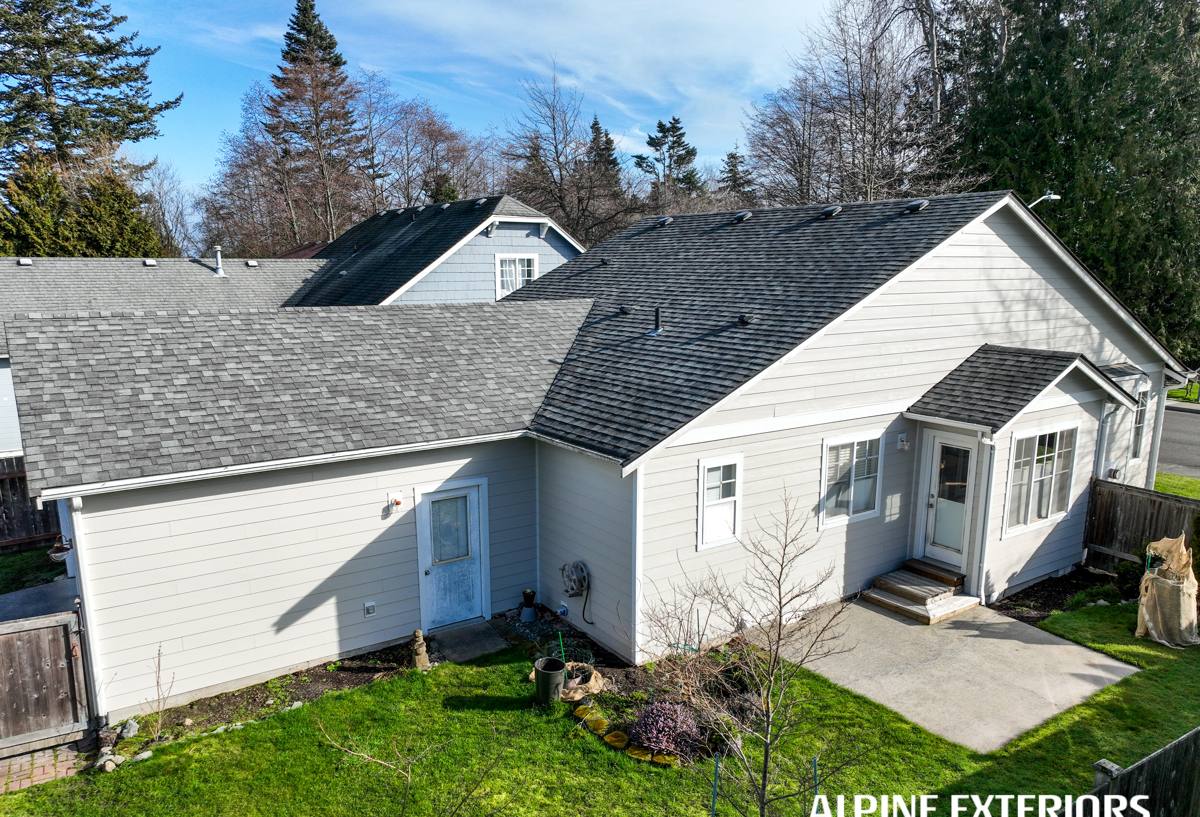
How Salt Air, Rain, and Moss Actually Damage a Home
Salt Air and Metal Components
Salt-carrying air accelerates corrosion on fasteners, flashing, gutters, and any exposed metal trim. When siding fasteners corrode faster than expected, panels can loosen or streak with rust stains long before the siding material itself would otherwise need replacing.
Driving Rain and Wind-Driven Moisture
Bellingham's rain doesn't always fall straight down. Wind-driven rain gets pushed sideways into wall assemblies, seams, and butt joints. If a siding product swells, cups, or absorbs water at those joints, moisture works its way behind the cladding and into sheathing — where it can sit unseen for a long time.
Moss, Algae, and Prolonged Dampness
Shaded walls, north exposures, and areas under tree cover in and around Birchwood hold moisture longer, which is exactly what moss and algae need to take hold. On wood-based or wood-composite siding, that sustained dampness softens fibers over time. On fiber cement with a factory finish, it's mostly a surface cleaning issue rather than a structural one.
Why We Install Only James Hardie Fiber Cement Siding
We made a deliberate decision as a company to install James Hardie fiber cement exclusively — not vinyl, not LP SmartSide, not Cemplank or Allura, not primed spruce or cedar. That's not a marketing position, it's an operational one, and it comes directly out of what we see on Whatcom County homes over time.
Wood and engineered-wood sidings can perform well when maintained aggressively, but they depend on an unbroken paint or coating film to keep moisture out. In a climate with this much sustained rain and shade-driven dampness, any gap in that film — a nail pop, a hairline check, a scuffed corner — becomes an entry point. Vinyl siding handles moisture differently: it doesn't rot, but it can warp, fade, and its seams and J-channels give wind-driven rain a path behind the panel if it isn't detailed carefully, with limited ability to dry once water gets in.
James Hardie fiber cement is non-combustible, dimensionally stable in wet-dry cycling, and comes with a factory-applied ColorPlus finish that's baked on rather than field-painted, which removes a lot of the maintenance vulnerability we just described. It's also engineered in specific product lines (HZ5, for example) tuned for climate zones like ours. We'd rather stand behind one system we trust in this climate than offer several and hope each one gets detailed correctly.
How James Hardie Compares to the Alternatives We Don't Install
| Factor | James Hardie Fiber Cement | Vinyl | Wood / Engineered Wood |
|---|---|---|---|
| Moisture response | Dimensionally stable, resists swelling | Doesn't absorb, but seams can leak | Absorbs and swells if coating fails |
| Finish durability | Factory-baked ColorPlus finish | Color molded through, can fade/chalk | Depends entirely on paint maintenance |
| Combustibility | Non-combustible | Combustible | Combustible |
| Typical maintenance | Occasional wash, repaint on your schedule | Occasional wash, prone to cracking with age | Regular repainting/resealing required |
| Warranty structure | Long-term, transferable manufacturer warranty | Varies widely by manufacturer/grade | Varies; often shorter on coatings |
Beyond Siding: Roofing, Windows, and Decks in the Same Climate
Siding doesn't work in isolation. On a lot of Birchwood homes, the same conditions that stress siding are stressing the roof, windows, and any exterior deck at the same time, which is why we handle all four as one exterior system rather than treating them as separate trades.
Roofing
A roof that's shedding moss and holding moisture at the edges puts extra water load on the wall assembly below it. Clean roof drainage and proper flashing at wall-roof intersections protect the siding work as much as the roof itself.
Windows
Window flashing and the seal between window frame and siding is one of the most common places we find hidden water intrusion on older homes. Replacing siding is a natural point to also address failing window flashing, especially on the weather-facing sides of a house.
Decks
Decks in this climate face the same driving-rain and moss exposure as siding, just closer to the ground where things stay damper longer. Ledger board attachment and proper flashing where a deck meets the house are critical details we treat with the same care as a siding tie-in.
What Correct Installation Looks Like Here
Fiber cement siding performs the way it's designed to only when it's installed to manufacturer specification, and that matters more in a wet, salt-air climate than in a mild one. Details that seem minor elsewhere aren't minor here:
- Proper clearance between siding and roof lines, decks, and grade so water and debris don't sit against the bottom edge
- Correct fastener type and spacing to resist both wind load and corrosion over time
- Rain-screen or drainage-plane approach behind the siding so any incidental moisture can drain and dry rather than pool
- Properly lapped and sealed joints, especially at butt seams and around windows and doors
- Factory-cut and factory-primed edges used wherever possible, since field-cut edges need to be sealed correctly to maintain the product's moisture resistance
- Flashing integration with roofing and window trim so water is directed out and away rather than behind the cladding
Skipping or rushing any of these is how a good product ends up with a bad reputation. It's also why the crew doing the installation matters as much as the product itself.
Signs a Birchwood Home May Need Siding Attention
- Persistent moss, algae, or dark streaking on siding that doesn't wash off
- Soft or spongy spots when you press on wood or composite siding, especially near the bottom courses
- Peeling, bubbling, or chalky paint that keeps returning after repainting
- Visible warping, cupping, or gaps opening up at siding seams
- Rust staining running down from fasteners or metal trim
- Rising energy bills that can't be explained by usage changes, which can point to compromised wall insulation from moisture
Any one of these on its own isn't necessarily an emergency, but they're worth a professional look before they turn into sheathing or framing repairs.
What Affects the Cost of a Siding Project in This Area
| Cost Factor | Why It Matters Locally |
|---|---|
| Extent of hidden moisture damage | Sheathing or framing repair adds cost and is more common on older, unmaintained wood siding in wet climates |
| Home size and wall complexity | More corners, gables, and trim details mean more labor and material |
| Product line selected | James Hardie offers different lines and finish options at different price points |
| Accessibility | Steep lots, tree cover, or tight access common in some Birchwood streets can affect equipment and labor time |
| Scope bundled with roofing, windows, or decks | Combining exterior work can reduce redundant setup and access costs versus separate projects |
Why a Local Crew Matters for This Kind of Work
A crew that works Whatcom County regularly knows how the shoreline's salt exposure, prevailing wind-driven rain, and shaded, moss-prone walls actually behave over a full year, not just during a single site visit. That translates into decisions on the ground — where to add extra flashing, which walls need the most drainage attention, how tight to run fastener spacing — that a generic installation approach won't necessarily catch. It also means someone is nearby if a warranty question or maintenance question comes up years down the road, rather than a crew that installed the siding once and moved on to another region.
Get a Straightforward Look at Your Home's Exterior
If you're noticing moss buildup, paint that won't hold, or you're just planning ahead for a home in Birchwood, we're glad to take a look and give you an honest read on what your siding, roofing, windows, or deck actually need — no pressure, no inflated scope. Use the form below to request a free estimate.