 Bellingham Siding
 Siding Installation for Birchwood Homes in Bellingham
Birchwood sits close enough to the water and the surrounding tree cover that its houses take a different kind of beating than siding a few miles inland. Salt-laden air off Bellingham Bay works into seams and fastener heads. Driving rain off Whatcom County's winter storms finds any gap in a water-resistive barrier. And the long, wet moss season here means anything organic-friendly on a wall — bare wood, certain paint films, shaded siding that never fully dries — becomes a growing surface instead of just a finish. A siding installation in this neighborhood has to be built for that combination, not just installed to code minimums.
This page covers what a correct installation looks like specifically for Birchwood conditions, how our crew approaches the job, and why we only install James Hardie fiber cement rather than the vinyl or engineered-wood products you'll see quoted elsewhere.
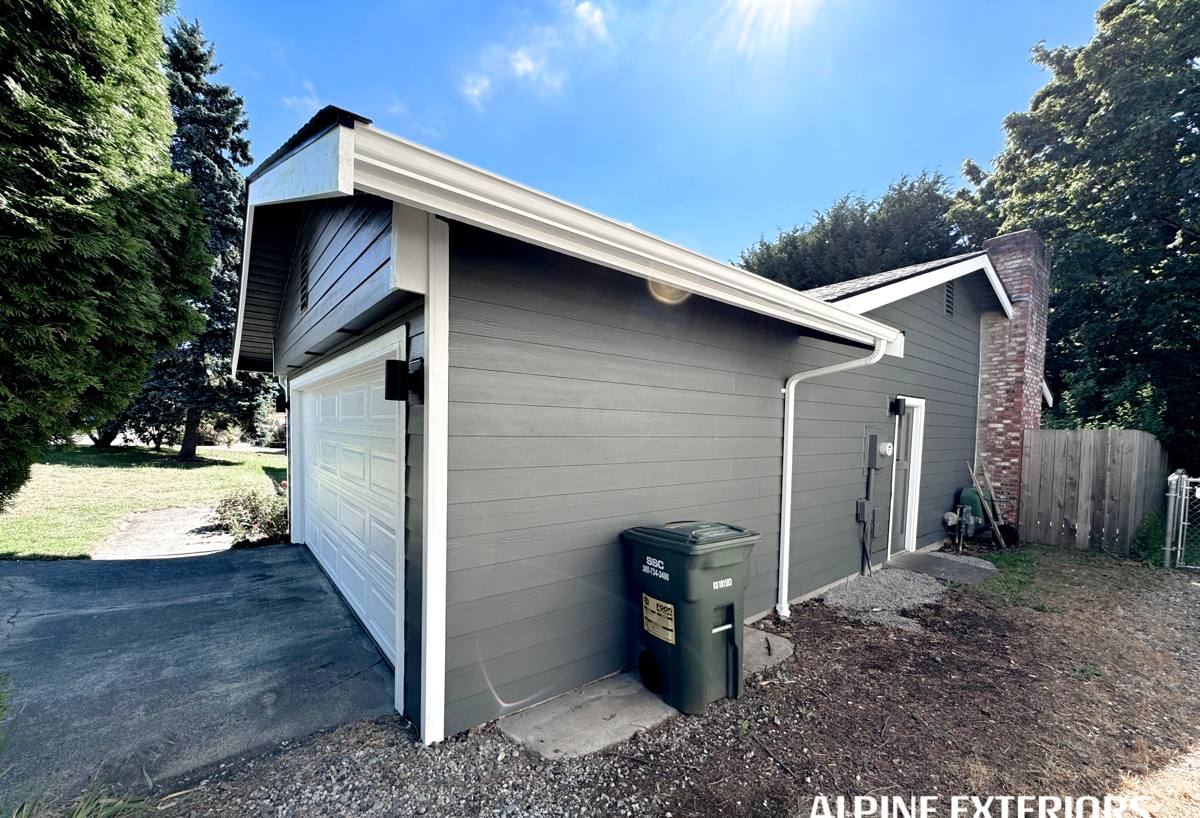
What Birchwood's Climate Actually Does to Siding
Salt Air and Corrosion
Homes closer to Bellingham Bay see accelerated corrosion on exposed metal — fasteners, flashing, trim caps. Cheap or under-spec fasteners rust and streak the siding face long before the siding itself fails. This is a fastener and flashing problem as much as it's a siding-material problem, and it's one of the first things we check on any Birchwood job, new install or tear-off.
Driving Rain and Wind-Driven Moisture
Storms coming off the Sound don't just fall straight down — wind pushes rain sideways into wall assemblies, which is exactly the condition lap siding and its flashing details are supposed to defend against. Poor lap spacing, missed kickout flashing at roof-wall intersections, or caulk used in place of proper flashing are the most common reasons a wall that "looks fine" is actually taking on water behind the cladding.
Moss, Shade, and Slow Drying
Whatcom County's tree cover and long wet season mean north-facing and shaded walls in Birchwood can stay damp for days after a storm. Any siding material that absorbs moisture, or any finish that traps it against the substrate, gives moss and mildew a foothold. The material choice and the finish matter as much as the installation technique for this specific issue.
Why We Install Only James Hardie Fiber Cement
We don't quote vinyl, LP SmartSide, primed spruce, cedar, or other fiber cement brands. That's not a marketing position — it's a standard we hold because of what we've seen these products do, and not do, in exactly this climate.
What the alternatives get right
Vinyl is inexpensive and low-maintenance in the sense that it doesn't need painting. Engineered wood products like LP SmartSide have real strengths in impact resistance and workability, and cedar has genuine aesthetic appeal that some homeowners specifically want. These aren't bad products in every context — they're just not what we choose to put our name behind here.
Why we don't install them in Whatcom County conditions
Vinyl expands and contracts significantly with temperature swings and can warp or crack under wind-driven impact; it's also a fuel source in wildfire-adjacent conditions, which is a growing concern regionally. Engineered wood and cedar both depend on an intact factory or field-applied finish to keep moisture out — once that finish is compromised at a cut edge, a fastener hole, or a scratch, the substrate can swell, delaminate, or rot, and in a climate with this much sustained moisture and shade, that failure mode shows up faster than it would somewhere drier. Fiber cement brands other than James Hardie vary in their finish warranty, their climate-specific engineering, and their factory quality control, and we've standardized on the one product line where we're confident in all three.
Why James Hardie
James Hardie fiber cement is non-combustible, doesn't support moss growth the way bare or under-finished wood does, and holds its factory-applied ColorPlus finish far longer than field-painted alternatives — which matters directly for moss-prone, shaded Birchwood walls. Hardie also engineers regional HZ5 product formulations for the kind of moisture cycling the Pacific Northwest sees, and backs the material with a long transferable warranty that's meaningful because the company controls both the substrate and the finish.
What a Correct Installation Involves
Fiber cement siding is only as good as the assembly behind it. A correct James Hardie installation in Birchwood conditions includes:
- A water-resistive barrier installed shingle-style (each layer overlapping the one below) with all seams taped
- Rigid or self-adhered flashing at every window, door, and roof-wall intersection — never caulk alone
- Kickout flashing at every roof-to-wall termination to direct water away from the wall assembly
- Correct lap exposure and butt-joint sealing per James Hardie's published installation instructions
- Stainless or hot-dip galvanized fasteners appropriate for near-coastal exposure, driven to the manufacturer's specified depth and pattern
- Proper clearance between the siding's bottom edge and grade, decks, or roofing to prevent wicking
- Factory-primed or ColorPlus-finished cut edges sealed before installation, not after
Skipping any one of these doesn't usually show up as a problem in year one. It shows up in year five or ten, as staining, soft trim, or moisture damage behind the wall — which is more expensive to fix than it would have been to do correctly the first time.
Our Installation Process
1. Site Walk and Assessment
We look at the existing wall assembly, note shaded or moss-prone elevations, check for any signs of past moisture intrusion, and identify flashing details that need attention regardless of the siding material going on top.
2. Tear-Off and Substrate Check
On a re-side, we remove the old siding and inspect the sheathing underneath. Soft or water-damaged sheathing gets replaced before anything new goes on — installing over a compromised substrate just hides the problem.
3. Weather Barrier and Flashing
This is the step that determines whether the wall stays dry for the next 30-plus years. We install the water-resistive barrier and all flashing to manufacturer spec before a single piece of siding goes up.
4. Hardie Installation
Panels or lap boards go up per James Hardie's fastening and clearance specifications, with attention to the coastal fastener requirements noted above.
5. Trim, Caulk, and Touch-Up
Cut edges get sealed, joints get finished, and any factory-finish touch-up is done with Hardie-matched product so the ColorPlus warranty stays intact.
6. Final Walkthrough
We walk the finished job with the homeowner before calling it done.
Cost Factors for a Birchwood Siding Installation
Every home is different, but the line items that actually move the price are consistent. We don't publish fixed pricing because wall condition varies too much to make that honest — but here's what drives the estimate:
| Factor | Why It Matters |
|---|---|
| Tear-off vs. new construction | Removing and disposing of existing siding adds labor and hauling cost |
| Sheathing condition | Water-damaged sheathing found during tear-off requires repair before re-siding |
| Home size and wall complexity | Dormers, multiple gables, and cut-up elevations increase labor time and material waste |
| Product line and profile | HardiePlank lap, HardiePanel, and Artisan trim carry different material costs |
| Trim and flashing scope | Homes needing new window/door flashing or fascia work cost more than a straightforward re-side |
| Access and site conditions | Tight lots, mature landscaping, or multi-story walls affect staging and labor |
A Checklist Before You Hire Anyone for This Job
- Ask what water-resistive barrier and flashing details they use — not just what siding brand they quote
- Confirm they're a factory-trained or Hardie-preferred installer, not just someone who's "worked with it before"
- Ask how they handle sheathing repair if it's found during tear-off, and whether that's a separate change order
- Get the fastener spec in writing, especially for near-coastal work
- Ask whether touch-up paint will be Hardie-matched ColorPlus product
- Confirm what's covered by the manufacturer warranty versus the installer's workmanship warranty
Why a Crew That Already Works Birchwood Matters
A lot of siding problems in this part of Whatcom County trace back to installation details that work fine in a drier climate but fail here — under-flashed penetrations, caulk substituted for proper flashing, or fastener choices that weren't rated for salt air exposure. A crew that installs regularly in Bellingham and the surrounding bay-adjacent neighborhoods has already made those adjustments standard practice, rather than learning them on your house. That familiarity with local wall assemblies, permitting expectations, and the specific moisture patterns of shaded, tree-covered lots is what separates a siding job that holds up for decades from one that needs attention again in five years.
Maintenance After Installation
James Hardie siding is genuinely low-maintenance compared to wood, but "low" isn't "none," especially in a moss-prone climate. A yearly rinse-down of shaded and north-facing walls, keeping gutters clear so water isn't sheeting down the siding face, and trimming back vegetation that keeps a wall damp all go a long way toward protecting the finish and the substrate underneath.
If you're planning a siding project in Birchwood, we're happy to walk the property, look at what's actually going on with your walls, and give you a straightforward, no-pressure estimate. There's a form below — reach out and we'll get a time on the calendar.