 Bellingham Siding
 Exterior Work Built for Columbia's Bellingham Climate
Columbia sits close enough to Bellingham Bay that salt air is a real factor in how exteriors age here, and it's far enough inland to still catch the full brunt of Whatcom County's long wet season. That combination is tougher on siding, trim, and roofing than most homeowners realize until they're dealing with the results: peeling paint, soft trim boards, and a green film that seems to come back no matter how often it's scrubbed off. We work on homes throughout this part of Bellingham regularly, and the patterns repeat from house to house because the climate doesn't change block to block.
This page covers what Columbia homes tend to face, how we approach siding, roofing, window, and deck work for this specific area, and why the material choice on the walls of your house matters more here than it would in a drier climate.
What the Climate Does to Exteriors Here
Salt Air and Moisture
Proximity to the bay means airborne salt is part of daily life, even a mile or two inland. Salt-laden moisture accelerates corrosion on fasteners, flashing, and metal trim, and it speeds up the breakdown of paint films on wood and composite siding products that weren't engineered with a coastal environment in mind. Over years, that shows up as chalky, fading paint and fasteners that bleed rust streaks down the siding.
Driving Rain
Bellingham doesn't get the heaviest rainfall totals in the state, but it gets a lot of wind-driven rain off the water, and wind-driven rain finds every gap in a building envelope that vertical rain would miss. Poorly lapped siding, undersized flashing, and caulk-dependent joints all fail faster under driving rain than they would in a calm, straight-down storm. This is one of the biggest reasons installation quality matters as much as the material itself.
Moss and Prolonged Dampness
Whatcom County's moss season runs long — shaded north and east-facing walls, roof valleys, and anywhere water sits or drains slowly stay damp for weeks at a stretch. Wood-based products absorb that moisture and give moss, algae, and mold something to grow on. Once organic growth establishes itself on a wall or roof, it holds even more moisture against the surface, which speeds up rot underneath. It's a self-reinforcing problem, and pressure-washing only knocks it back temporarily.
Siding: Why We Only Install James Hardie
We install James Hardie fiber cement siding exclusively. We don't install vinyl, LP SmartSide, Cemplank, Allura, primed spruce, or cedar, and that's a deliberate standard, not a lack of options. Here's the reasoning, product by product:
- Wood products (cedar, primed spruce): Real wood has genuine appeal, but in a climate with this much sustained moisture and moss pressure, wood siding needs consistent repainting, caulking, and moisture management to hold up. Skipped maintenance shows up fast as rot, especially on north-facing walls and lower courses near grade.
- LP SmartSide: An engineered wood product with a resin-treated strand design that resists moisture better than raw wood, but it's still wood-based at its core. Cut edges, fastener penetrations, and any breach in the factory coating are places moisture can get in, and once it does, the product behaves like the wood product it is.
- Vinyl siding: Inexpensive and low-maintenance in the sense that it doesn't need painting, but it's a thin plastic product that can warp in temperature swings, crack in impacts, and it doesn't hold paint if you ever want a color change. It also doesn't offer the same fire performance as fiber cement.
- Cemplank and Allura: Both are fiber cement competitors to James Hardie, and fiber cement as a category is the right call for this climate. Where we part ways is manufacturing consistency, factory finish warranty terms, and product engineering specific to Pacific Northwest conditions — areas where we've found Hardie's HZ5 product line and ColorPlus finish process to be the stronger long-term bet.
James Hardie fiber cement is non-combustible, doesn't feed moss and mold the way wood-based products can, and the ColorPlus factory-applied finish is baked on under controlled conditions rather than field-painted, which matters in a region where field painting has a narrow weather window. Hardie's HZ5 product line is engineered for exactly this kind of freeze-thaw, high-moisture climate. The transferable limited warranty backs both the substrate and the finish, which gives homeowners real protection if they sell within the warranty period.
Hardie Siding Profiles We Install
| Profile | Look | Best Fit |
|---|---|---|
| HardiePlank lap siding | Traditional horizontal lap, several reveal widths | Most single-family homes in the neighborhood |
| HardiePanel vertical siding | Vertical board look, often paired with lap | Accent gables, modern or farmhouse styling |
| HardieShingle | Staggered or straight-edge shingle profile | Craftsman and cottage-style homes |
| HardieTrim | Fiber cement trim boards | Corners, window and door surrounds, fascia |
Roofing for This Area
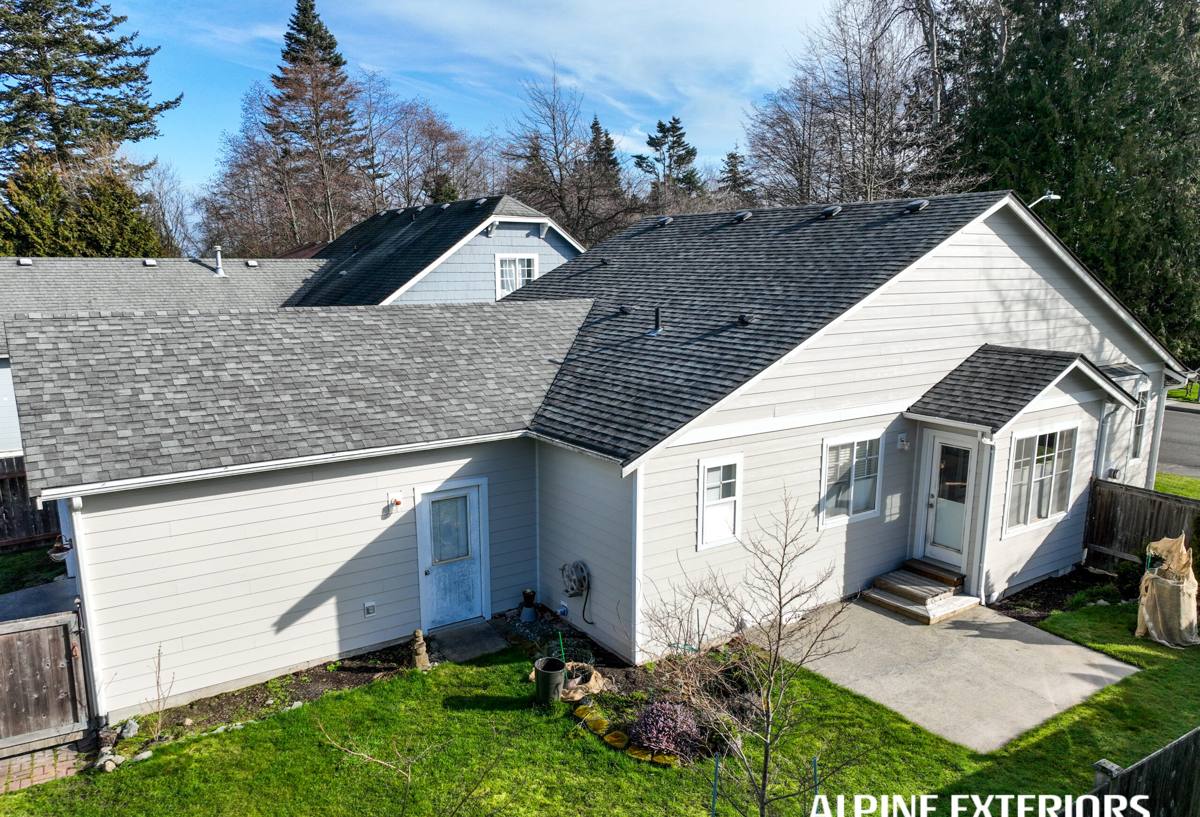
Roofing failures in Columbia rarely start as a leak — they usually start as moss holding moisture against shingles, or flashing that's corroded from years of salt-laden air. We look at moss growth, valley and step flashing condition, and ventilation when we evaluate a roof here, since poor attic ventilation combined with a damp climate is a common cause of premature shingle wear from the underside. Whether the job is a full replacement or targeted repair, correct flashing detail at every penetration and transition matters more in this climate than the shingle brand on the label.
Windows: Sealing Out Wind-Driven Rain
Window replacement in a climate like this is as much about the flashing and sealing detail as it is about the window unit itself. A high-efficiency window installed with a poor flashing job will leak under wind-driven rain regardless of its energy rating. We pay close attention to head flashing, sill pans, and proper integration with the siding system so water is directed out and down rather than trapped behind the trim. That integration point — where new windows meet old wall assemblies — is one of the most common sources of hidden moisture damage we find when we open up a wall.
Decks: Built to Handle a Wet Season
Decks in this part of Bellingham take a beating from the same moisture and moss pressure as siding and roofing, just horizontally instead of vertically, which means water doesn't run off as readily. Proper joist spacing, gapping between boards, and ledger flashing where the deck meets the house are the details that determine whether a deck lasts through many wet seasons or starts showing soft spots and mold within a few years. We build and repair decks with drainage and airflow underneath as a priority, not an afterthought.
Why a Local Crew Matters
A crew that works Whatcom County regularly knows which walls in a given house orientation stay damp longest, how far salt exposure reaches inland from the bay, and which installation details actually hold up here versus in a drier climate where the same shortcuts might go unnoticed for years. That local knowledge shapes real decisions on a project — flashing details, fastener choices, and where extra attention to moisture management is worth the time.
Signs Your Siding, Roof, Windows, or Deck Need Attention
- Paint that's peeling, chalking, or bubbling on wood or composite siding
- Persistent moss or dark streaking on siding or roof surfaces that returns quickly after cleaning
- Soft or spongy spots on siding, trim, deck boards, or ledger connections
- Visible gaps, warping, or cracking in existing siding panels
- Rust staining below fasteners or metal flashing
- Window frames that feel damp or show staining on interior sills after storms
- Shingles that look patchy with moss growth concentrated in shaded areas
What a Project Typically Involves
Every project starts with a walk-around assessment of the current exterior — siding condition, trim, flashing, roof, and any moisture entry points — followed by a straightforward estimate. For siding replacement specifically, that usually means removing the old material down to the sheathing, inspecting and repairing any water damage found underneath, installing a weather-resistive barrier correctly lapped for this climate, and then installing James Hardie siding to manufacturer specification, including proper fastening, clearances, and caulking at transitions. Roofing, window, and deck work follow the same principle: address what's underneath before covering it back up.
Get a Free Estimate
If you're noticing moss buildup, peeling paint, or soft spots on your siding, roof, windows, or deck, it's worth having a local crew take a look before a small problem turns into a structural one. We offer free, no-pressure estimates for homes in Columbia and the surrounding Bellingham area — use the form below to get started.