 Bellingham Siding
 Siding Built for Sehome's Climate, Not Just Its Curb Appeal
Sehome sits close to the heart of Bellingham, in the shadow of Sehome Hill and near Western Washington University, where older homes mix with newer infill construction on lots shaped by slope, mature trees, and tight urban setbacks. It's a neighborhood with real character, and a lot of exterior siding that's quietly losing a decades-long fight with Whatcom County's weather. If you live in Sehome, you already know the pattern: damp mornings that don't burn off until noon, driving rain that comes in sideways off the water, and a green-black film that creeps across siding, fences, and roofs every fall and never fully leaves before the next one starts.
We're a local siding, roofing, window, and deck contractor, and Sehome is squarely inside our service area. This page is about what actually happens to exterior siding here, and how we approach replacement and repair work for homes in this part of Bellingham.
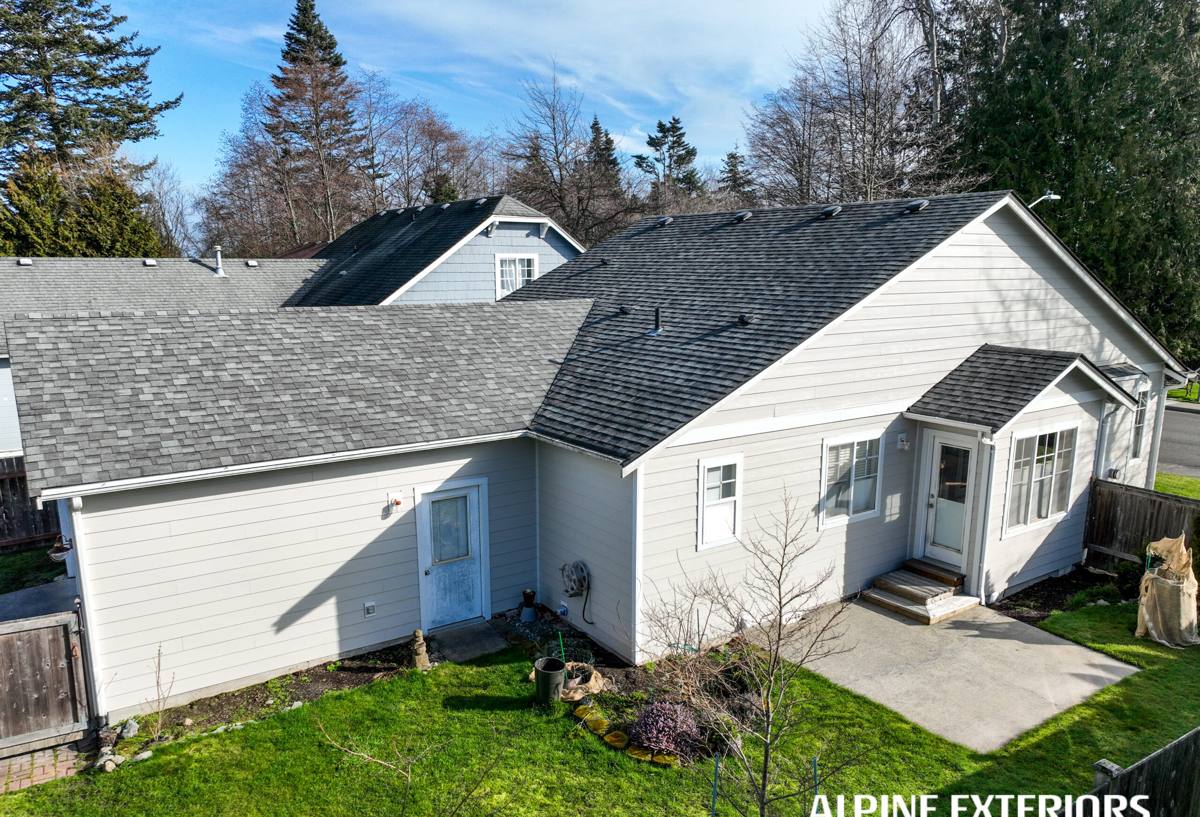
What Sehome's Microclimate Does to Siding
Salt Air and Marine Moisture
Bellingham sits on Bellingham Bay, and even homes a mile or more inland in Sehome are exposed to salt-laden marine air carried in on prevailing winds. Salt air accelerates corrosion on fasteners, flashing, and any exposed metal trim, and it works alongside moisture to break down siding materials that aren't built to handle constant damp-dry cycling. Over years, that combination shows up as rust streaking below nail heads, soft spots at butt joints, and paint that fails faster than the can promised.
Driving Rain
Wind off the bay doesn't just bring rain, it pushes it. Driving rain forces water sideways into laps, seams, and butt joints that were designed for water running straight down, not sideways under pressure. Homes on more exposed lots, or with west- and southwest-facing walls that catch the prevailing weather, take the brunt of it. This is where poor installation detailing turns into real problems: gaps at trim, insufficient overlap, or missing flashing that would never leak in a dry climate becomes a chronic moisture path here.
The Long Moss Season
Whatcom County's moss season isn't really a season anymore in neighborhoods like Sehome with tree cover and shade, it's most of the year. Moss and algae need sustained moisture and low light to establish, and Sehome's mix of mature trees, north-facing walls, and long damp stretches gives them exactly that. Moss on siding isn't just a cosmetic problem. It holds water against the surface, keeps that surface from drying out between rains, and on materials that are moisture-sensitive, that constant dampness is what eventually causes swelling, delamination, or rot underneath.
Why We Install James Hardie Fiber Cement, and Nothing Else
We made a decision a while back to standardize on James Hardie fiber cement siding for every install we do, including here in Sehome. We don't install vinyl, LP SmartSide, Cemplank, Allura, primed spruce, or cedar. That's not a marketing angle, it's a call based on what holds up under exactly the conditions described above.
What Makes Fiber Cement Different
Fiber cement is made from cement, sand, and cellulose fibers, which makes it dimensionally stable and non-combustible. It doesn't expand and contract with humidity the way wood-based products do, and it doesn't feed moss and algae the way organic siding materials can. James Hardie's HZ5 product line is engineered specifically for climates like ours, cold, wet, humid, with freeze-thaw cycling. The ColorPlus factory finish is baked on under controlled conditions rather than field-applied, which matters a lot in a place where you rarely get more than a few consecutive dry days to paint.
Being Honest About Trade-offs
Fiber cement is heavier and more labor-intensive to install than vinyl or engineered wood, which is part of why installation quality matters so much, more on that below. It costs more upfront than vinyl. We think the lifespan, fire resistance, and moisture performance justify that in this climate, but a straight answer on cost is part of being upfront with homeowners, not something we gloss over.
| Material | Moisture Behavior in Marine Climate | Moss/Algae Resistance | Why It Matters in Sehome |
|---|---|---|---|
| James Hardie Fiber Cement | Dimensionally stable, doesn't absorb and swell | Doesn't feed organic growth; factory finish resists staining | Handles driving rain, salt air, and shade without breaking down |
| Vinyl | Can warp/buckle with heat cycling; seams can allow water behind panel | Moderate; growth sits on surface but panels can trap moisture behind them | Lower upfront cost, shorter realistic service life here |
| Cedar / Primed Spruce | Absorbs moisture readily; prone to rot without diligent upkeep | Poor; organic material is a food source for moss and fungus | Needs frequent refinishing to survive our moss season |
| LP SmartSide / OSB-based | Engineered to resist swelling but edge/cut exposure is a known failure point | Moderate, dependent on coating integrity | Sensitive to installation detailing at every cut edge |
How We Approach a Sehome Job
The Walkaround
Every estimate starts with a full walk of the exterior, not just the side the homeowner is worried about. We're looking at siding condition, but also trim, flashing, window and door transitions, deck ledger connections if there's a deck involved, and roof edges where water first hits the building. In a neighborhood with as much slope and tree cover as Sehome has, drainage and shade patterns around the house tell us as much as the siding itself does.
What We Check For
- Soft or spongy siding, especially near the bottom courses and around window sills
- Moss or algae buildup concentrated on north- and east-facing walls or under tree canopy
- Rust streaking or staining below fasteners and trim
- Gaps, caulk failure, or missing flashing at butt joints and trim transitions
- Signs of water intrusion at deck ledgers, window heads, and roof-to-wall intersections
- Paint or finish failure that's happening faster than the product's expected service life
Installation Detailing That Matters Here
Fiber cement performs the way it's supposed to only when it's installed to spec, and in a driving-rain climate the details are what separate a 30-year exterior from a callback. That means correct fastener placement and spacing, proper clearances at grade and at roof lines, weather-resistant barrier and flashing integration behind the siding (not just caulk on top of it), and butt joints that are actually sealed or flashed rather than just butted together. This is where a crew's experience with the specific product and the specific climate shows up, and it's a big part of why we do this work ourselves rather than subbing it out piecemeal.
Roofing, Windows, and Decks: Why It's Connected Work
Siding doesn't fail in isolation. A roof edge that's shedding water onto a wall, a window that's not flashed correctly, or a deck ledger that's letting moisture into the rim joist will undermine even a well-installed fiber cement exterior. Because we handle roofing, windows, and decks alongside siding, we can flag those connection points during an estimate instead of installing new siding around a problem that's going to cause damage again in a few years. For a lot of Sehome homes, especially older ones near the university that have had multiple owners and multiple partial remodels, those connection points are exactly where problems tend to hide.
What a Sehome Homeowner Should Budget to Think About
| Factor | Why It Affects Cost/Scope |
|---|---|
| Tree cover and shade | More moss pressure, more time needed for drying between weather windows during install |
| Home age and prior siding material | Removal, sheathing repair, and moisture damage vary a lot with what's underneath |
| Wall exposure (which direction takes the weather) | Southwest and west walls near the bay often need more attention at flashing and trim |
| Slope and site access | Sehome's hillier lots can affect staging, scaffolding, and material handling |
| Trim and architectural detail | More corners, transitions, and trim profiles mean more labor per square foot |
Maintenance Realities for This Neighborhood
No siding material is maintenance-free in Whatcom County, but the maintenance burden differs a lot by material. James Hardie's factory ColorPlus finish holds color and resists moss staining significantly longer than field-applied paint on wood, which matters given how few dry days we get for touch-up painting. Homeowners in Sehome should still expect to periodically clean siding, especially on shaded, tree-covered walls, and keep gutters and downspouts clear so water isn't sheeting down the wall face. A quick annual look at caulking around windows and trim catches small gaps before they become moisture problems.
Why a Local Crew Matters
Bellingham's building envelope challenges aren't generic Pacific Northwest challenges, they're shaped by proximity to the bay, elevation, tree cover, and the specific rain patterns that come off the water. A crew that works Whatcom County regularly knows which walls in a neighborhood like Sehome take the worst of the weather, what moss pressure actually looks like a few years after installation, and how local permitting and inspection work. That local knowledge shows up in the details, flashing choices, fastener selection, where extra attention gets paid, that a generic install wouldn't necessarily catch.
If you're dealing with moss buildup, soft spots, or siding that's just tired of fighting the weather, we're happy to take a look. We offer free, no-pressure estimates for siding, roofing, window, and deck work throughout Sehome and the rest of Bellingham, just fill out the form below and we'll get in touch.