 Bellingham Siding
 Building Decks in Sehome, Bellingham
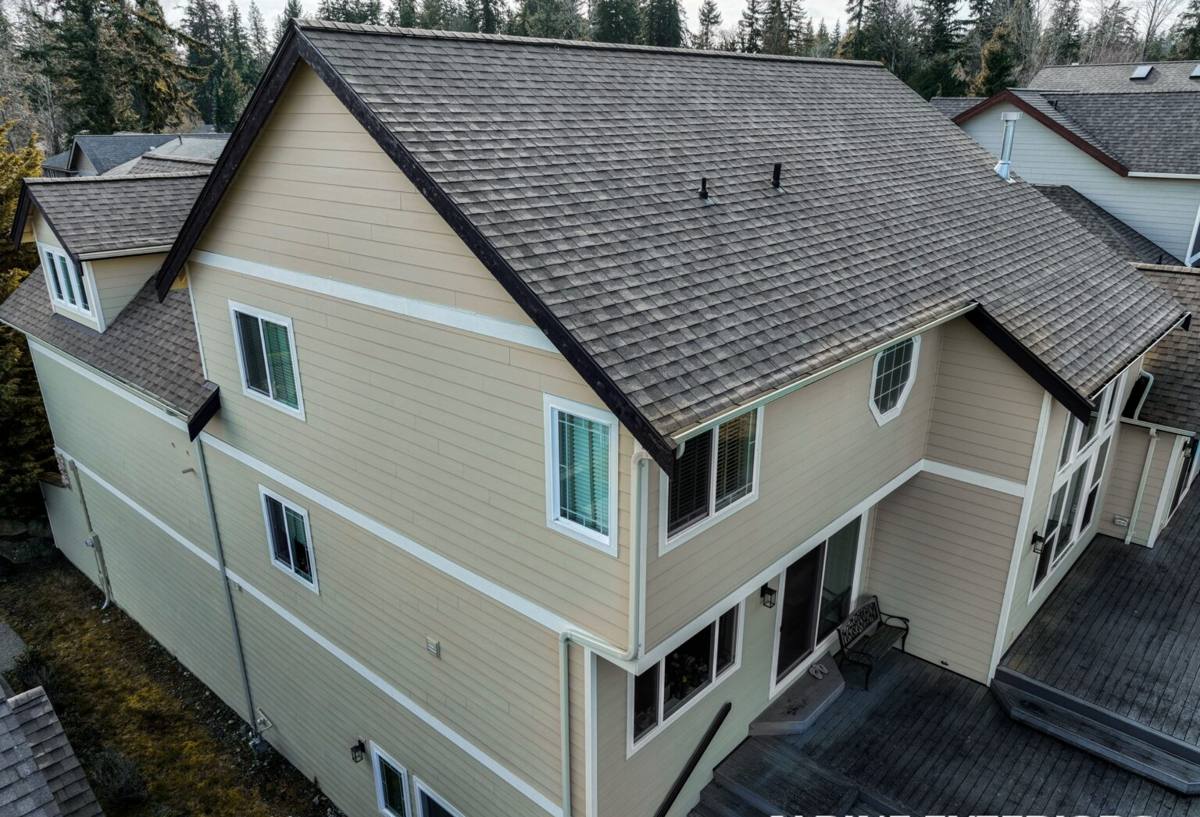
Sehome sits close enough to Bellingham Bay and the hillside terrain around it that a deck here lives a harder life than one built inland. Between the salt-tinged air off the water, the long stretch of driving rain that defines a Whatcom County winter, and a moss season that can run from October well into spring, an outdoor deck in this neighborhood is under constant, quiet pressure. Most of the damage doesn't show up as a dramatic failure. It shows up slowly, as soft spots near the ledger board, black streaking on the underside of boards, rusted fasteners bleeding through the decking, or a slick green film across the walking surface that never fully dries out.
A deck built for Sehome has to be built differently than a deck built for a dry climate. This page is about what that actually means in practice — not marketing language, but the specific decisions that separate a deck that lasts twenty-plus years from one that needs major repair in five.
What Bellingham's Climate Actually Does to a Deck
Salt air and moisture near the bay
Homes closer to Bellingham Bay pick up airborne salt that accelerates corrosion on anything metal — nails, screws, joist hangers, post bases. Standard electro-galvanized hardware can start showing rust bleed within a few seasons in this environment. It's a slow process, but once fasteners start corroding, they lose holding strength long before the wood around them looks like a problem, which is exactly why deck fastener choice matters more here than it would in a drier, inland town.
Driving rain and water management
Bellingham's rain doesn't just fall straight down — wind-driven rain gets pushed sideways into ledger connections, under flashing, and into any gap in the decking surface. A deck that isn't detailed correctly at the ledger board (where the deck attaches to the house) is one of the most common places we find hidden rot, because water gets behind the flashing and soaks the house's rim joist for years before anyone notices a soft spot in the siding or floor above.
The long moss season
Moss and algae need shade, moisture, and time — and Whatcom County gives them all three for most of the year. On a deck, that growth isn't just cosmetic. A mossy or algae-covered surface gets dangerously slippery when wet, and moss holds moisture against the decking material, which shortens the life of wood decking and can stain or etch some composite products if it's left to sit. Decks that get partial shade from trees or the house itself — which describes a lot of lots in this neighborhood — need a decking material and a maintenance plan that accounts for this from day one, not as an afterthought.
Sehome's Site Conditions Matter for Deck Design
Sehome is an established neighborhood with a mix of older and newer homes, mature tree cover in a lot of yards, and enough hillside terrain that many lots have real elevation change between the house and the yard. All three of those things change how a deck should be designed and built:
- Mature tree canopy means more shade on the decking surface, which means more moss and algae growth and slower drying after rain — this affects both material choice and board spacing for drainage.
- Sloped or uneven lots often call for taller support posts, additional bracing, and sometimes stepped or multi-level deck framing rather than a simple single-plane deck.
- Older housing stock means some existing decks were built to code standards from decades ago — before current guardrail height, footing depth, and ledger attachment requirements existed. A replacement or major addition is a chance to bring the whole structure up to current standards, not just patch what's failing.
None of this is unusual or a reason to avoid building — it just means the deck has to be engineered for the actual lot it sits on, not built off a generic plan.
What a Correctly Built Deck Involves Here
Footings and framing
Footings need to be set below frost depth and sized for the actual load and span, especially on sloped lots where post heights vary across the deck. Framing lumber should be rated for ground contact where it's within the required clearance, and any framing member exposed to standing water or splashback needs attention at the cut ends, since a factory-treated board that gets field-cut and left unsealed is a common early rot point.
Ledger board and flashing
This is the single most important detail on any deck attached to a house in this climate. The ledger needs proper flashing — typically a metal flashing piece integrated with the house's water-resistive barrier, not just caulk — so that wind-driven rain sheds away from the rim joist instead of behind it. We treat this as non-negotiable regardless of decking material chosen above it, because a beautiful deck surface means nothing if the structure underneath is quietly rotting.
Fasteners and hardware
Given the salt air common to this area, we use corrosion-resistant hardware — hot-dip galvanized or stainless steel depending on the application — for joist hangers, structural screws, and post connections. It costs more up front than standard hardware, but replacing rusted structural hardware after the decking is already installed is far more expensive and disruptive than specifying the right fastener the first time.
Guardrails and code compliance
Any deck more than a modest height above grade needs a code-compliant guardrail system, with baluster spacing and rail height that meet current building code — not whatever the previous deck happened to have. This matters especially on hillside lots in Sehome where deck height above grade tends to be greater than on flat lots.
Decking surface and drainage
Board spacing, orientation, and ventilation underneath the deck all affect how quickly the surface dries after rain. A deck that traps moisture near grade or against the house wall will grow moss and mildew faster than one designed with airflow in mind, regardless of which decking material sits on top.
Choosing a Decking Material for This Climate
There's no single "best" decking material — the right choice depends on how much shade the deck gets, your maintenance tolerance, and your budget. Here's how the common options actually compare for a shaded, wet-climate lot like most in Sehome:
| Material | Moss/algae behavior | Maintenance | Relative cost |
|---|---|---|---|
| Pressure-treated wood | Prone to moss in shade; needs regular cleaning | Annual cleaning, periodic staining/sealing | Lowest upfront |
| Cedar | Naturally rot-resistant but still grows moss in deep shade | Regular sealing to maintain color and resistance | Moderate |
| Composite decking | Won't rot, but algae/moss can still grow on the surface film | Periodic washing; no staining or sealing needed | Higher upfront, lower long-term |
| PVC / capped polymer | Most resistant to moisture damage; still needs occasional cleaning | Lowest ongoing maintenance | Highest upfront |
We'll walk through these trade-offs honestly during a consultation rather than steering everyone toward the highest-margin product. A well-built wood deck that gets cleaned and sealed on schedule can last for decades in this climate — the material choice is about your maintenance appetite and budget, not a right-or-wrong answer.
How Our Process Works
- On-site assessment — we look at the actual lot: slope, drainage, shade pattern, existing structure condition if there's a deck to replace, and how the deck connects to the house.
- Design and material selection — we talk through decking material, layout, and any features (stairs, multi-level, built-in seating) against your budget and maintenance preference.
- Permitting — most new decks and many replacements in the City of Bellingham require a building permit; we handle that submission and the required inspections rather than leaving it to the homeowner.
- Construction — footings, framing, ledger flashing, decking, and guardrails, built in that order with each stage checked before moving to the next.
- Final walkthrough — we go over the finished deck with you, including what maintenance it'll need and roughly when.
Maintaining a Deck Through a Whatcom County Moss Season
Even a well-built deck needs some seasonal attention in this climate. A simple, realistic maintenance routine goes a long way toward protecting the investment:
- Sweep leaves and debris off the surface regularly in fall — trapped organic matter feeds moss growth and holds moisture against the decking.
- Wash the deck surface at least once a year with a deck-safe cleaner to remove algae film before it builds up and gets slippery.
- Check and clear gaps between boards so water and debris can drain through rather than pooling.
- Inspect fasteners and hardware periodically for rust bleed or loosening, especially near the ledger board.
- Re-stain or reseal wood decking on the schedule appropriate to the product — skipping a cycle in this climate shows up faster than it would somewhere drier.
- Trim back overhanging branches where possible to reduce shade and speed up drying time after rain.
Why a Crew That Already Works in Sehome Makes a Difference
A deck builder who works regularly in this specific area already understands the practical realities that generic advice misses: how the City of Bellingham's permitting and inspection process actually runs, what footing depths and hardware hold up on this coastline, and how to plan construction access on a sloped lot without tearing up the yard in the process. That local familiarity shows up in fewer surprises during the project and a deck that's actually built for the conditions it will sit in for the next twenty years, not a generic spec sheet.
It also matters for something less obvious: knowing which decking products and hardware combinations have held up well on similar homes nearby, versus which ones look good on paper but struggle in a shaded, damp yard. That's the kind of judgment that only comes from doing the work in this exact climate, repeatedly.
Let's Talk About Your Deck
If you're planning a new deck or need to replace one that's showing its age, we're happy to take a look and give you an honest read on what it needs. There's no pressure and no obligation — just a straightforward assessment and a free estimate using the form below.