 Bellingham Siding
 Deck Repair Built for the Columbia Neighborhood's Climate
Columbia is one of Bellingham's older, well-established neighborhoods, and that means a lot of its decks have been standing through several decades of Pacific Northwest weather. Whatcom County's marine climate is hard on exterior wood structures in ways that homeowners in drier parts of the country never have to think about: near-constant humidity, driving rain that comes in sideways off Bellingham Bay, and a moss and algae season that can stretch from October through May. A deck that looks fine from the porch can be quietly failing underneath, and by the time it's visibly sagging or spongy, the damage has usually been building for years.
We repair decks in Columbia and the surrounding Bellingham area regularly, and the failure patterns are consistent. This page walks through what actually goes wrong with decks here, what a proper repair involves, and how we approach the work so it holds up through the next few decades of wet winters — not just the next dry summer.
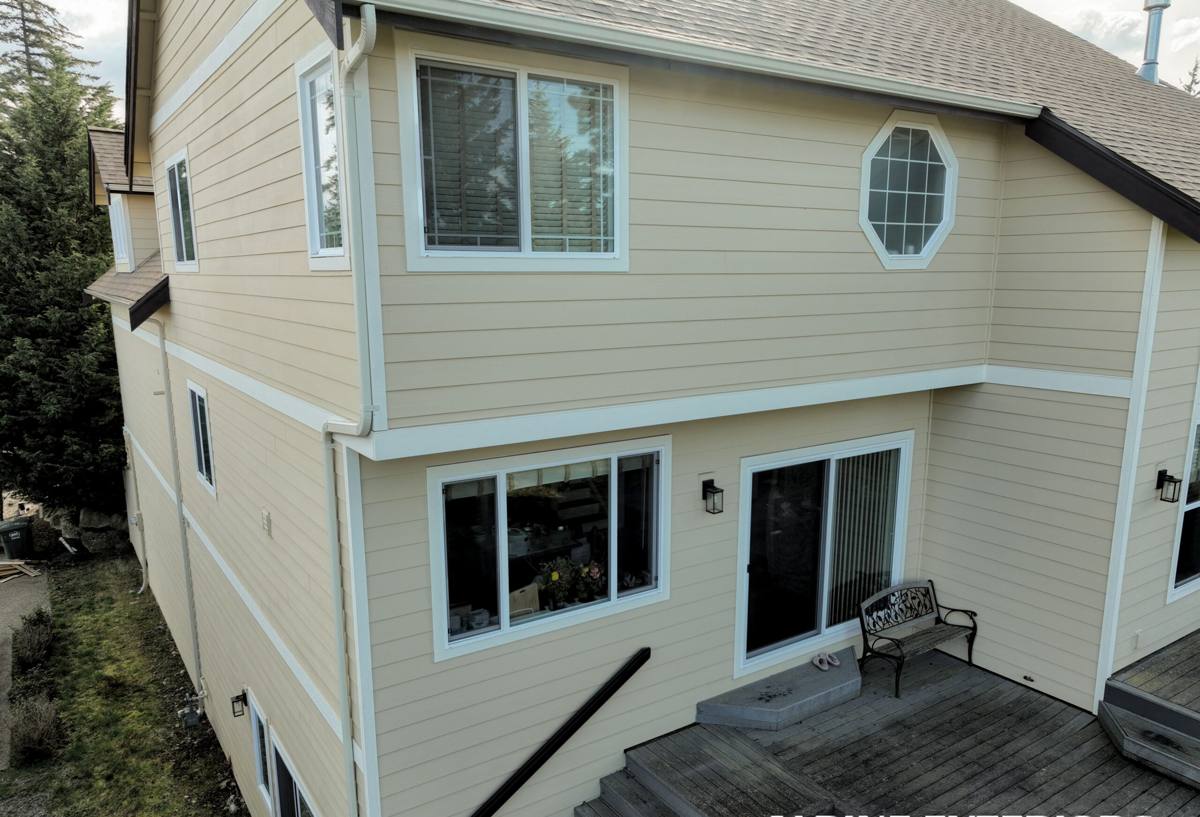
Why Local Decks Fail Faster Than the Manual Says They Should
Most decking and framing lumber is rated with an assumption of periodic drying time. In Columbia, that drying window shrinks every year the weather leans wetter. A few specific mechanisms show up again and again in our inspections:
Moisture That Never Fully Leaves
Long stretches of overcast, damp days mean wood surfaces stay wet longer between rain events. Combined with limited direct sun exposure on north- and east-facing decks (common on Columbia's tree-covered lots), moisture gets trapped in joints, fastener holes, and anywhere two boards meet. That's exactly where rot starts.
Moss, Algae, and Trapped Debris
A long moss season doesn't just make decking slippery — moss and algae hold moisture directly against the wood fibers or composite surface for months at a time. Left untreated, this accelerates decay in real wood and can stain or degrade the wear layer on composite boards. Leaf litter and needle debris between boards does the same thing, acting like a wet sponge pressed against the deck surface.
Salt Air and Metal Fatigue
Bellingham's proximity to the Bay means a steady low level of salt-laden air moves through the region. Over years, this accelerates corrosion on lower-grade fasteners, joist hangers, and structural screws — especially on older decks built before hot-dip galvanized or stainless hardware was standard practice. Corroded fasteners lose holding strength long before the wood around them looks obviously damaged.
Freeze-Thaw Cycling
Whatcom County doesn't get brutal winters, but it gets enough freeze-thaw cycling to matter. Water that's soaked into a crack or checked board expands when it freezes, widening the damage. Repeat that cycle every winter for a decade and small cracks become structural weak points.
Warning Signs Worth Taking Seriously
Most of the deck repair calls we get in Columbia start with one of these observations. None of them require a contractor to notice — a homeowner walking the deck a couple times a year will catch them early.
- Boards that feel spongy, springy, or noticeably softer underfoot than the rest of the deck
- Visible gaps, splitting, or checking along the length of decking boards
- Rust streaks bleeding out from screw heads or joist hanger hardware
- A ledger board (where the deck attaches to the house) that looks discolored or feels soft when pressed with a screwdriver
- Railings or posts that wiggle more than they used to
- Persistent moss or black-green staining that keeps returning within weeks of cleaning
- Stairs that feel less solid, or visible gaps opening between stair stringers and treads
Any one of these on its own might be minor. Several at once, or anything involving the ledger board or main support posts, is worth a professional look before the deck sees another wet season.
What a Correct Deck Repair Actually Involves
"Deck repair" covers a wide range of work, and the correct scope depends entirely on what's actually failing underneath the surface — not just what's visible from the top. A repair that only addresses the boards you can see, while ignoring compromised framing underneath, doesn't hold up here.
Ledger Board and Flashing
The ledger board is the single most important connection on most decks, since it ties the whole structure back to the house and typically carries the most load. In our climate, ledger boards fail from water intrudes behind inadequate or missing flashing, then sits against the house rim joist. A correct repair inspects the flashing detail, not just the wood, and corrects the water path so the same failure doesn't recur in a few years.
Framing and Structural Members
Joists, beams, and support posts take the real structural load. When these show rot or insect damage, sistering (bolting a new structural member alongside the damaged one) or full replacement is usually necessary — cosmetic patches on framing are not a lasting fix. We also check post bases and footings, since standing water around a post base is one of the most common hidden failure points on older Columbia decks.
Decking Boards and Fasteners
Individual board replacement is often the most visible part of a repair, but the fasteners matter just as much as the boards. Where corrosion-prone fasteners were used originally, we replace them with corrosion-resistant hardware rated for coastal/marine exposure, so the new work doesn't inherit the same failure mode.
Railings and Stairs
Railing posts and stair stringers see constant load and flex, and they're frequently under-attached on older decks built to earlier code standards. Repairs here focus on secure structural attachment first, appearance second — a railing that looks fine but isn't properly through-bolted is a liability, not a repair.
Repair vs. Replace: How We Make the Call
Not every deck problem means starting over, and not every deck is worth patching. We evaluate this honestly rather than defaulting to the more expensive option.
| Factor | Leans Toward Repair | Leans Toward Replacement |
|---|---|---|
| Framing condition | Joists and beams probe solid, only isolated soft spots | Widespread soft or crumbling framing, especially near the ledger |
| Age of structure | Under 15-20 years, built to a reasonable original standard | Original construction is decades old with outdated fastening methods |
| Extent of damage | Isolated to a few boards, one stair run, or a section of railing | Damage is spread across most of the deck surface or multiple systems |
| Ledger/flashing condition | Flashing is intact or easily corrected | Flashing is missing entirely or the rim joist behind it is compromised |
| Homeowner goals | Wants to extend the current deck's life a number of years | Wants a different layout, size, or material long-term |
In most cases we find in Columbia, a full teardown isn't necessary — the framing is salvageable and the visible problems are concentrated in the decking, fasteners, or a specific structural connection. We'll always tell you plainly when replacement is genuinely the more sensible option, rather than stretching a repair past the point it makes sense.
Wood vs. Composite: Trade-Offs Worth Understanding
When boards need replacing, homeowners often ask whether to match existing wood decking or switch sections to composite. Both are reasonable choices, and the right answer depends on priorities more than one being objectively better.
Pressure-treated wood is less expensive up front and easy to match to an existing deck's appearance, but it requires ongoing maintenance — sealing or staining every couple of years is genuinely necessary in this climate to keep moisture out of the grain, not just cosmetic upkeep. Skip that maintenance here and you'll see accelerated graying, checking, and moss uptake compared to a drier climate.
Composite decking costs more initially and some formulations can be sensitive to how they're installed — proper spacing and fastening matter more than with wood, since manufacturer warranties are often specific about installation method. In exchange, it resists moisture absorption and moss staining better than wood over the long run, which is a real advantage given how many months a year our decks stay damp. We install both, and we'll walk through the honest maintenance and cost trade-offs for your specific deck rather than pushing one material as universally correct.
Our Deck Repair Process in Columbia
1. On-Site Inspection
We walk the full deck, probe suspect boards and framing with a screwdriver or moisture meter, check the ledger and flashing detail, and look underneath wherever access allows. This tells us what's actually failing, not just what's visible.
2. A Straightforward Repair Plan and Estimate
You get a written scope of what needs to be done and why, broken into what's structural versus cosmetic, so you can see exactly what you're paying for. No pressure to upgrade beyond what the deck actually needs.
3. The Repair Itself
We replace what's compromised, correct any flashing or drainage issues that caused the original damage, and use corrosion-resistant fasteners and hardware suited to our marine climate — so the repair addresses the cause, not just the symptom.
4. Final Walkthrough
Before we consider the job done, we walk the deck with you, point out what was replaced and why, and go over any maintenance steps that will extend the life of the repair.
Seasonal Maintenance Checklist for Columbia Homeowners
A few habits go a long way toward preventing the next repair call, especially given how long the wet season runs here.
- Sweep leaves, needles, and debris off the deck surface and out from between boards regularly through fall
- Clean moss and algae buildup at least once a year, before it has a chance to establish through a full wet season
- Check fastener heads periodically for rust streaking or backing out
- Press or tap suspect boards to catch soft spots early, before they spread to neighboring boards
- Confirm gutters and downspouts aren't draining directly onto or under the deck
- Reseal or restain wood decking on a regular cycle rather than waiting until it visibly needs it
- Keep an eye on the ledger board area where the deck meets the house — it's the hardest spot to inspect and the most important one
Why Hire a Crew That Already Works in Columbia
Deck repair done right in Whatcom County isn't the same job as deck repair in a dry climate — the flashing details, fastener choices, and moisture management all need to account for how much water this region sees over a year. A crew that regularly works Columbia and the greater Bellingham area has already seen how local decks fail, which means less time spent diagnosing and more time spent fixing the actual problem. We know which connection points tend to fail first on older Columbia decks, what moss and algae exposure does to different materials here, and how to detail a repair so it isn't back on our schedule in three years.
If you're noticing soft boards, rust stains, a wobbly railing, or a deck that just doesn't feel as solid as it used to, we're happy to take a look. Reach out for a free, no-pressure estimate — we'll tell you honestly what your deck needs, whether that's a targeted repair or something more, using the form below.