 Bellingham Siding
 Birch Bay's Exterior Problem Is Different From Bellingham's
Birch Bay sits right on the water, and that changes what a house has to put up with. A few miles inland in Bellingham, siding and trim deal with plenty of rain and shade-driven moss, but Birch Bay homes get that plus a steady dose of salt-laden air blowing off the water, more direct wind exposure, and driving rain that hits walls at an angle instead of just falling straight down. We've worked on homes throughout Whatcom County, and the properties closest to the Birch Bay shoreline consistently show more wear on their south and west-facing walls than comparable homes set back from the water.
None of this means Birch Bay is a bad place to own a home — it's one of the reasons people love living there. It just means the exterior materials and installation details matter more here than they would in a more sheltered spot.
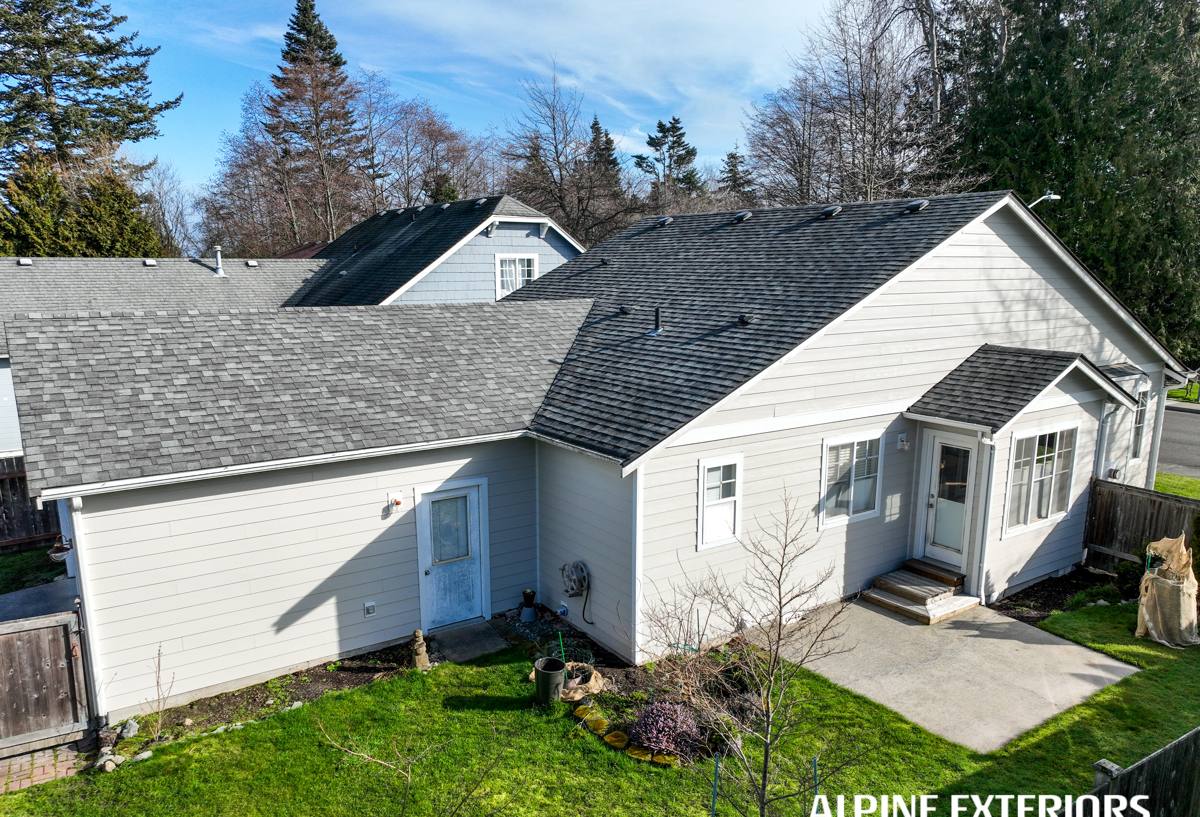
What Salt Air, Wind, and Moss Season Actually Do
Salt Air
Airborne salt is corrosive to metal fasteners, flashing, and hardware, and it can accelerate the breakdown of finishes that aren't built to handle it. Over years, siding and trim on homes closer to the bay tend to show fading, chalking, or finish failure sooner than the same products would inland — especially on lower-quality paints or coatings that were never engineered with coastal exposure in mind.
Driving Rain and Wind-Driven Moisture
Whatcom County gets a lot of rain in general, but wind off the water pushes that rain sideways into walls, seams, and window trim rather than letting it run straight down and off. That means water finds its way into gaps, laps, and joints that would stay dry on a more sheltered wall. Any siding system with weak seams, unsealed edges, or poor water management behind the cladding is going to struggle here.
Moss and Algae Season
Western Washington's long, mild, wet stretch from fall through spring is prime moss and algae growth season, and shaded or north-facing walls near the water rarely get enough sun and airflow to dry out between rain events. Moss holds moisture against a surface, and over time that trapped dampness is what actually causes rot and finish failure — the moss itself is more of a symptom than the root cause.
How We Approach Exterior Work for Birch Bay Homes
We handle siding, roofing, windows, and decks, and on a Birch Bay home we look at all four together rather than as separate projects. A siding replacement that ignores a compromised roof-to-wall flashing detail, or a deck built with fasteners that weren't rated for coastal exposure, just moves the moisture problem somewhere else on the house.
Siding
This is where we're the most opinionated of any contractor you'll talk to: we install James Hardie fiber cement siding exclusively. More on why below.
Roofing
Roofing near the water needs attention to ventilation, underlayment quality, and flashing at every penetration and wall intersection — the details that keep wind-driven rain from working its way under shingles or behind step flashing.
Windows
Window replacement in a marine climate is as much about the flashing and sealing details around the unit as it is about the window itself. A good window installed with poor flashing will leak; a modest window installed correctly usually won't.
Decks
Decks facing the bay take direct sun, salt air, and standing moisture in ways that shaded, inland decks don't. Fastener choice, ledger board flashing, and gaps for drainage and airflow matter more here than almost anywhere else in the county.
Why We Install Only James Hardie Fiber Cement Siding
We used to get asked why we don't offer vinyl, LP SmartSide, or other fiber cement brands. The honest answer is that after years of installing and repairing exteriors across Whatcom County, we standardized on one product line because it's the one we trust to hold up — especially in exposure like Birch Bay's.
- Non-combustible material — fiber cement doesn't contribute fuel to a fire the way wood-based or vinyl products can.
- Factory-applied ColorPlus finish — baked on and warranted at the factory, rather than field-applied paint that has to hold up against salt air and UV on its own.
- Climate-engineered HZ product lines — Hardie manufactures certain formulations specifically for wetter, cooler climates like ours, which matters when you're dealing with year-round moisture exposure.
- Dimensional stability — fiber cement doesn't expand and contract with moisture and temperature the way wood-based composite siding can, which matters for keeping seams and caulk lines intact over time.
- Strong transferable warranty — backed by the manufacturer, which matters if you sell the home before the siding's useful life is up.
We're not going to tell you other products are junk — vinyl is inexpensive and low-maintenance in the right setting, and engineered wood sidings have genuine fans. But vinyl can warp or crack in direct wind exposure and doesn't hold paint if you ever want to change color, and wood-based composite sidings depend heavily on perfect installation and consistent maintenance to keep moisture from finding the underlying substrate. On a shoreline property, we'd rather not gamble on those weak points. Hardie fiber cement, installed correctly, gives us a material we're comfortable standing behind on the homes taking the most punishment in the county.
How Common Siding Options Compare in Coastal Exposure
| Material | Salt Air / Moisture Behavior | Finish Durability | Maintenance Burden |
|---|---|---|---|
| James Hardie fiber cement | Dimensionally stable, doesn't rot or swell | Factory ColorPlus finish, long warranty | Low |
| Vinyl siding | Can warp or become brittle in wind/UV exposure | Color fades, can't be repainted easily | Low to moderate |
| LP SmartSide / engineered wood | Wood-based core sensitive to moisture intrusion | Field or factory finish, installation-sensitive | Moderate |
| Cedar / primed spruce | Natural material, needs consistent sealing | Finish requires regular upkeep | High |
Roofing, Windows, and Decks Near the Water
Roofing Details That Matter Here
On a bay-facing roof, we pay close attention to ridge and soffit ventilation (so moisture doesn't get trapped in the attic), underlayment quality, and flashing wherever the roof meets a wall, chimney, or vent. Wind-driven rain finds the weak points in a roof system faster than straight-down rain does, so those details aren't optional extras.
Window Replacement Considerations
Older single-pane or poorly flashed windows are a common source of condensation and drafts in homes exposed to Birch Bay's wind and temperature swings. When we replace windows, correct flashing integration with the surrounding wall assembly is just as important as the window unit itself.
Deck Building for Salt and Moss Exposure
For decks, we think about fastener corrosion resistance, proper spacing between boards for drainage and airflow, and ledger flashing where the deck meets the house — the single most common failure point we see on older decks in wetter parts of the county.
Why a Local Crew Makes a Real Difference
A contractor based in Whatcom County has actually stood on roofs and decks along the Birch Bay shoreline and seen firsthand how differently these homes age compared to ones a few miles inland. That's not something you can pick up from a manufacturer's spec sheet. It shapes decisions like where extra flashing detail is worth the labor, which wall orientations need the most attention, and how much ventilation a given deck or crawlspace actually needs given the microclimate right at the water's edge.
It also means straightforward accountability — a crew and a business that are still going to be here, working in this same county, long after the project wraps up.
What to Ask Any Contractor Before Hiring for Coastal Exterior Work
- Are they licensed and insured to work in Washington State, and can they provide proof?
- Do they have specific experience with homes exposed to marine/coastal conditions, not just general inland siding work?
- What fastener and flashing materials do they use, and are those materials rated for salt air exposure?
- What does their warranty actually cover — material, labor, or both — and for how long?
- Will they walk you through moisture management details (flashing, ventilation, drainage gaps) before work begins, not just after something goes wrong?
What This Means for Your Project Timeline and Budget
Coastal exposure doesn't necessarily mean a Birch Bay project costs dramatically more than one in Bellingham proper, but it does mean certain details — additional flashing, corrosion-resistant fasteners, more careful sealing at penetrations — aren't places to cut corners to save a little money upfront. Skipping them tends to show up as a callback or a bigger repair a few years down the line, which usually costs more than doing it right the first time.
We're happy to walk through your specific home, its orientation to the water, and what shape your current siding, roof, windows, or deck are in, and give you a straightforward picture of what needs attention now versus what can wait.
If you're in Birch Bay and dealing with tired, faded, or damaged siding — or just want an honest read on how your roof, windows, or deck are holding up against the salt air and rain — reach out for a free, no-pressure estimate. There's a form below to get started.