 Bellingham Siding
 Why Birch Bay Roofs Wear Differently Than Roofs Inland
Birch Bay sits right on the water, and that changes what a roof has to survive year after year. Homes here deal with a combination most inland Whatcom County properties never see at the same intensity: salt-laden air moving in off the water, driving rain that comes in sideways during winter storms, and a moss season that can run most of the year on north-facing and shaded slopes. Any one of these on its own is manageable. Together, they shorten the useful life of a poorly installed or poorly ventilated roof faster than most homeowners expect.
A new roof installation in this area isn't just about swapping old shingles for new ones. It's about building an assembly — decking, underlayment, flashing, ventilation, and surface material — that's matched to a coastal microclimate. That's the lens we bring to every Birch Bay roofing job.
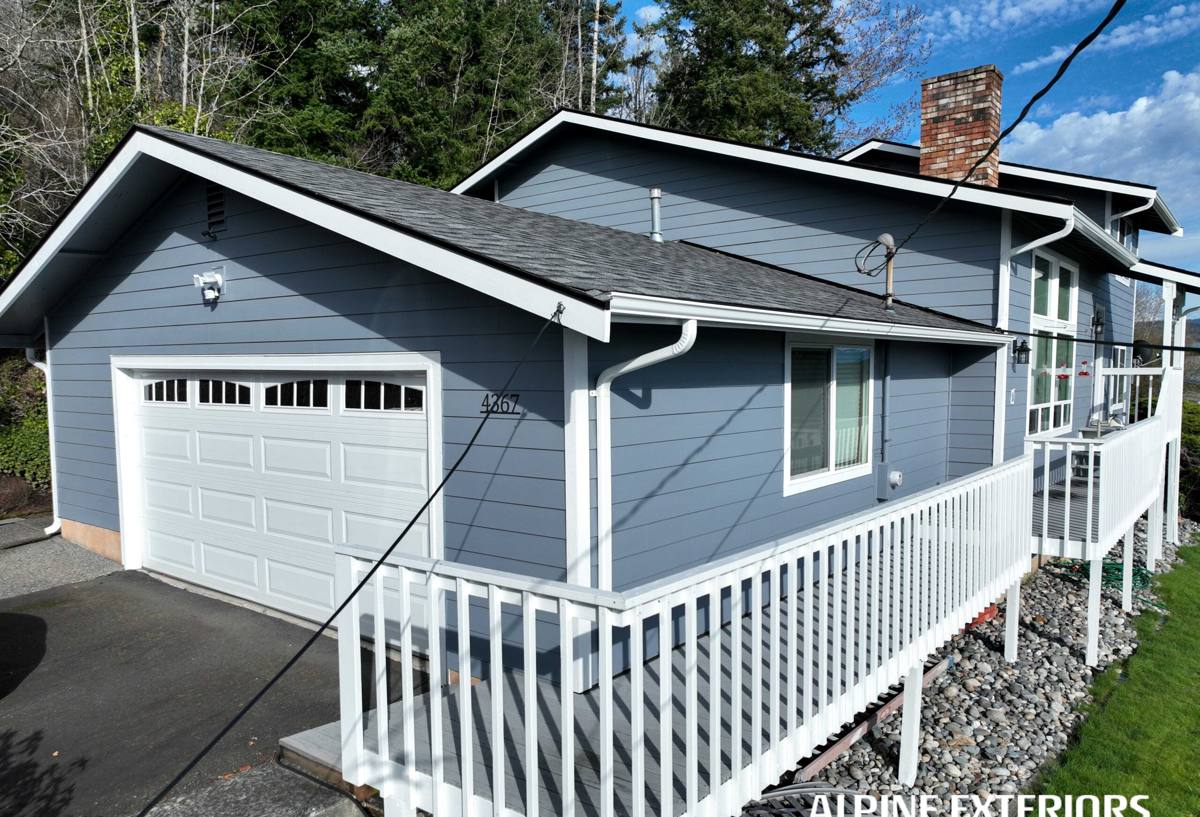
What Salt Air, Wind-Driven Rain, and Moss Actually Do to a Roof
Salt Air
Airborne salt accelerates corrosion on exposed metal — nail heads, flashing, drip edge, and roof vents. On a standard inland roof this is a minor factor. Close to Birch Bay's shoreline, it's one of the first things we account for when specifying fasteners and metal components, because corroded flashing is one of the most common causes of hidden leaks we find on older coastal roofs.
Wind-Driven Rain
Storms coming off the water don't just drop rain straight down — they push it sideways and upward under shingle edges, around vents, and into any gap in the flashing. A roof that would perform fine in a calm rain event can leak in Birch Bay if the underlayment, flashing laps, and shingle sealing weren't installed with wind-driven exposure in mind.
Moss and Sustained Moisture
Shaded, moisture-retentive conditions along the bay give moss a long growing season. Moss doesn't just look bad — it holds water against the roof surface, lifts shingle edges as it grows, and channels water back under the shingle line instead of off the roof. Left unaddressed, it steadily undermines a roof's ability to shed water.
Signs a Birch Bay Roof Is Due for Replacement, Not Another Repair
- Granule loss showing bare, shiny patches on asphalt shingles, especially on wind-exposed slopes
- Moss or dark algae staining that returns within a season or two of cleaning
- Curling, cupping, or lifted shingle edges, particularly on the windward side of the house
- Rusted or visibly deteriorated flashing around chimneys, skylights, and vent pipes
- Soft spots in the decking felt when walked on, or staining visible in the attic
- A roof approaching or past 20-25 years old with no documented tear-off or major overlay
Some of these can be addressed with targeted repair. Others mean the underlying assembly has already been compromised, and repair work would just be patching a problem that's going to resurface. Part of a proper estimate is being straight with you about which situation you're in.
What a Correct New Roof Installation Involves Here
Full Tear-Off and Deck Inspection
We remove the existing roofing down to the deck rather than laying new material over old. That's the only way to actually inspect the sheathing for rot, soft spots, or moisture damage that's been hidden under the old roof — common on homes near the bay where trapped moisture has had years to work on the plywood or plank decking underneath.
Ice and Water Shield at Vulnerable Points
Eaves, valleys, and roof-to-wall transitions get a self-adhering waterproof membrane underneath the primary underlayment. These are the spots wind-driven rain finds first, and they're also where standard underlayment alone tends to fall short in a coastal storm.
Corrosion-Resistant Flashing and Fasteners
Given the salt air exposure, we spec flashing, drip edge, and fasteners rated for coastal or marine conditions rather than standard-grade hardware. It costs a bit more up front and it's one of the details that determines whether flashing is still doing its job in year fifteen or has already started failing.
Balanced Attic Ventilation
Intake at the eaves and exhaust at the ridge, sized to the attic volume, so moist air actually moves out instead of condensing against the underside of the decking. Poor ventilation is one of the quiet causes of premature decking rot and interior moss-adjacent staining that homeowners often blame on the shingles when the real issue is airflow.
Underlayment Built for Wind-Driven Rain
We use synthetic underlayment with high tear strength and properly lapped, taped seams rather than relying on shingles alone to keep water out. In a wind event, underlayment quality is often the difference between water stopped at the deck and water finding its way into the living space.
Choosing a Roofing Material for a Birch Bay Property
There's no single "right" material for every home — it depends on your roof's exposure, your budget, and how the house looks. Here's how the common options actually compare for a bay-front or near-bay property.
| Material | Typical Lifespan Here | Coastal / Moss Performance | Relative Cost |
|---|---|---|---|
| Architectural Asphalt Shingle | 25-30 years | Good with proper ventilation and algae-resistant granules; still needs periodic moss treatment on shaded slopes | Lower |
| Standing-Seam Metal | 40-50+ years | Sheds moss and moisture very well; requires marine-grade fasteners and coatings near the water to manage salt exposure | Higher |
| Synthetic/Composite Shingle | 30-40 years | Resists moisture absorption well; performance depends heavily on manufacturer quality and correct installation | Mid to Higher |
| Traditional Cedar Shake | 20-25 years | Attractive but the most moisture- and moss-sensitive option in this climate; needs the most upkeep | Higher |
We'll walk through these trade-offs against your specific roof — slope, sun exposure, and how much moss maintenance you want to take on — rather than pushing one material for every job.
Our Installation Process
- On-site inspection and estimate — we assess the current roof, decking condition (where visible), ventilation, and any problem areas specific to your property's exposure
- Material selection — honest comparison of options based on your budget, the roof's exposure to wind and moisture, and how long you plan to stay in the home
- Permitting — we handle the required permitting through the applicable local jurisdiction before work begins
- Tear-off and deck inspection — full removal of old roofing, with any damaged decking identified and replaced before anything new goes down
- Underlayment and flashing installation — ice and water shield at vulnerable points, synthetic underlayment across the field, corrosion-resistant flashing throughout
- Ventilation correction — intake and exhaust ventilation balanced to the attic, addressed as part of the job rather than left for later
- Final material installation — shingles, metal panels, or composite material installed to manufacturer specification and local code
- Cleanup and walkthrough — site cleared of debris and old material, and we walk the finished roof with you before calling the job done
Why It Matters That We Already Work Birch Bay
A crew that mostly works drier, more sheltered parts of Whatcom County doesn't run into wind-driven rain and salt corrosion as a regular part of the job — so it's easy to under-spec flashing hardware or skip the extra ice and water shield that a bay-exposed roof actually needs. We spec differently for Birch Bay because we've seen what standard-grade materials do here over a few winters.
That local familiarity also shows up in smaller, practical ways: knowing which slopes on a given lot see the least sun and will need moss-resistant treatment sooner, understanding wind exposure patterns along the water that affect fastening schedules, and being able to give you a realistic maintenance timeline instead of a generic one that assumes a calmer climate.
Questions Worth Asking Before You Hire
- Is the crew doing a full tear-off, or proposing to install over the existing roof?
- Will flashing and fasteners be upgraded to corrosion-resistant hardware, or standard grade?
- Is ice and water shield included at eaves, valleys, and roof-to-wall transitions?
- Is attic ventilation being assessed and corrected, or left as-is?
- Are they licensed, bonded, and insured to work in Whatcom County?
- Does the estimate spell out material specifications, not just a total price?
A roofing quote that doesn't address these points isn't necessarily dishonest — but it may not be built for what a Birch Bay roof actually has to withstand.
Get a Straight Answer for Your Roof
If your roof is showing granule loss, recurring moss, or you're just past the point of another patch repair, it's worth getting an honest look before deciding what to do next. We'll assess your specific roof, exposure, and budget, and give you a clear recommendation — no pressure, no inflated urgency. Use the form below to request a free estimate for your Birch Bay home.