 Bellingham Siding
 Roof Repair in Cordata: A Neighborhood With Its Own Wear Pattern
Cordata sits in north Bellingham, close enough to the water and open exposure off Bellingham Bay that roofs here take a different kind of beating than roofs twenty miles inland. It's not one dramatic storm that does the damage — it's the accumulation. Driving rain that comes in sideways off the water, a moss season that can run eight or nine months out of the year, and a light coating of salt air that slowly works on fasteners, flashing, and metal edges. None of that shows up overnight. It shows up as a slow leak two years after a windstorm nobody thought twice about.
We repair roofs in Cordata regularly enough to know what tends to fail first here, and it's rarely the field of shingles itself. It's almost always the details — flashing, valleys, penetrations, and ventilation — the parts of a roof that depend on correct installation, not just decent materials.
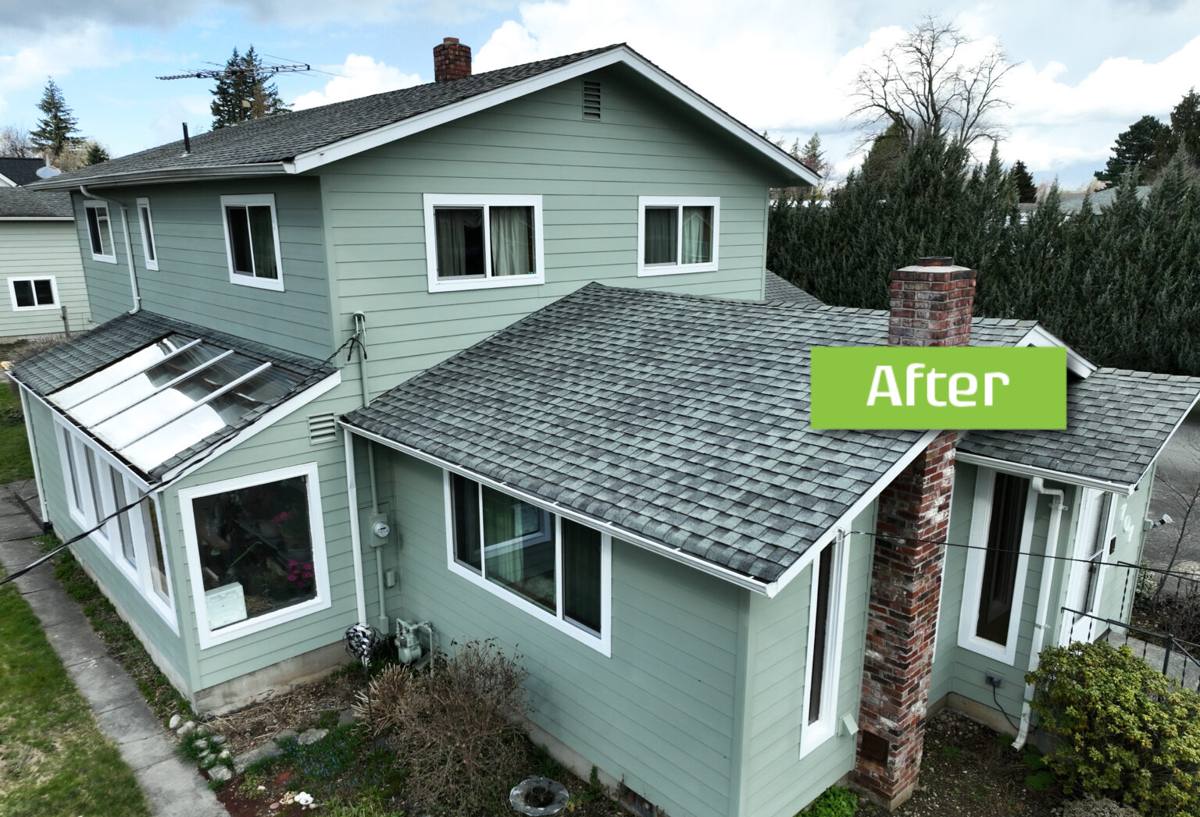
What Whatcom County Weather Actually Does to a Roof
Driving Rain and Wind-Driven Water
Bellingham doesn't get the heaviest rainfall totals in the state, but it gets a lot of low-intensity, wind-driven rain, and that's a harder test for a roof than a hard downpour. Wind-driven rain finds its way sideways and upward under lapped shingles, around poorly sealed vents, and through nail holes that were never properly sealed. A roof that would hold up fine in a calm rain can leak in a Cordata windstorm because the water isn't just falling — it's being pushed.
Salt Air and Metal Fatigue
Cordata's proximity to Bellingham Bay means a low but steady exposure to salt-laden air. Over years, that air is harder on exposed metal — flashing, drip edge, fasteners, and vent caps — than it is on inland homes. It doesn't ruin a roof by itself, but it shortens the working life of the metal components, which are usually the first thing to fail on an otherwise sound roof.
Moss and a Long Wet Season
Whatcom County's mild, wet climate is close to ideal moss-growing conditions. Moss holds moisture against the roof surface long after the rain stops, works its way under shingle tabs as it grows, and lifts edges just enough to let water in. North-facing slopes and shaded areas under trees are usually the worst offenders in Cordata, and moss problems tend to be gradual — which is exactly why they're often ignored until there's a stain on the ceiling.
The Roof Problems We See Most Often in Cordata
Not every roof issue calls for a full replacement. Most of the repair calls we run in this area fall into a handful of categories:
- Flashing that's rusted, lifted, or was never properly sealed around chimneys, skylights, and roof-to-wall transitions
- Valley leaks, where two roof planes meet and water volume is highest
- Moss and organic growth that's lifted shingle edges on shaded or north-facing sections
- Nail pops and wind-lifted shingles from storm exposure
- Clogged or undersized gutters backing water up under the roof edge
- Poor attic ventilation causing condensation that mimics a roof leak from the inside
A surprising number of "the roof is leaking" calls turn out to be one of the last two — a gutter or ventilation problem rather than a failure in the roofing material itself. Diagnosing which one it is matters, because fixing the wrong thing means the leak comes back.
What a Correct Roof Repair Actually Involves
A roof repair done right isn't just patching the spot where water is showing up inside the house. Water travels before it drips, so the visible stain and the actual entry point are often in different places entirely. A proper repair starts with tracing the path backward, not just covering the symptom.
Diagnosis Before Any Work Starts
We look at the roof from the deck up, not just the shingle surface. That means checking flashing details, valley construction, underlayment condition where accessible, attic ventilation, and how water is actually moving across that section of roof during rain. Guessing at the source and re-shingling over it is how the same leak comes back a year later.
Matching Materials, Not Just Covering Gaps
When we replace shingles, flashing, or underlayment on a repair, we match the existing roofing system as closely as possible — both for appearance and because mixing incompatible materials (certain metals against certain fasteners, for example) can actually accelerate corrosion rather than prevent it.
Sealing the Details, Not Just the Field
Most repair failures happen at transitions — where a roof plane meets a wall, a pipe, a skylight, or another plane. Those spots need step flashing, counter-flashing, or proper boot seals done correctly, not caulk as a substitute for the right flashing detail. Caulk is a short-term patch; correct flashing is the actual fix.
Repair or Replace? How We Help You Decide
Not every homeowner needs to hear "you need a new roof." Plenty of Cordata roofs are structurally sound and just need targeted work. We'll always tell you honestly which category yours falls into.
| Factor | Repair Usually Makes Sense | Replacement Usually Makes Sense |
|---|---|---|
| Roof age | Under roughly 15-18 years, asphalt shingle | Approaching or past manufacturer's expected service life |
| Extent of damage | Isolated to one section, flashing, or valley | Widespread granule loss, multiple failing sections |
| Underlying deck | Solid, dry, no rot found during inspection | Soft spots, rot, or repeated water intrusion into the deck |
| Leak history | First occurrence or clearly isolated cause | Recurring leaks in different spots over time |
| Cost outlook | Typically a smaller, targeted expense | Higher upfront cost, but resets the clock on the whole roof |
If a roof is within a reasonable window of the end of its service life and already needs several repairs, we'll say so plainly rather than stacking small fixes on a roof that's telling you it's done. That's a judgment call, and we'd rather make it honestly than sell you a repair you'll pay for twice.
Our Roof Repair Process
1. On-Site Inspection
We get on the roof (or use elevated inspection where pitch or safety requires it), check the attic for moisture and ventilation issues, and look at gutters and drainage — because a repair that ignores drainage often doesn't hold.
2. Plain-Language Diagnosis
You get a straightforward explanation of what's actually failing and why, in terms that make sense — not a sales pitch dressed up as an inspection report.
3. Written Scope and Estimate
Before any work starts, you know what's being done, what materials are being used, and roughly what it costs. No surprise change orders for work that should have been scoped up front.
4. The Repair Itself
We work the roof section by section, protect the property and landscaping while we're up there, and match materials to the existing roof wherever possible.
5. Cleanup and Walkthrough
Job site is cleared of debris and nails (magnetic sweep included), and we walk you through what was done before we consider the job finished.
Signs Your Cordata Roof Needs a Repair Now
Some roof problems can wait for a scheduled inspection. Others shouldn't. If you're seeing any of the following, it's worth having someone look sooner rather than later:
- Water stains on ceilings or upper interior walls, especially after wind-driven rain
- Visible moss buildup, particularly on north-facing or shaded slopes
- Shingles that are curling, cracked, or missing after a storm
- Rusted, lifted, or visibly gapped flashing around chimneys or vents
- Granules collecting in gutters or at downspout outlets
- A musty smell or visible mold in the attic, which often points to a ventilation or moisture issue tied to the roof
None of these automatically mean an expensive fix, but all of them are worth a real inspection rather than a guess.
Why a Crew That Already Works Cordata Makes a Difference
Roofing crews that work the same general area repeatedly build a working knowledge of how local homes are built, how they age, and what tends to go wrong first — the roof pitches common to the neighborhood, how nearby tree cover affects moss growth, and how exposed a given section of roof is to wind off the bay. That familiarity shortens the diagnosis and avoids repair approaches that don't hold up to this specific climate.
There's also a practical side to it: a local crew can typically get to a Cordata roof faster for both the initial inspection and any follow-up, which matters when there's an active leak. And because we're not driving in from out of the area for a single job, we're around to stand behind the repair afterward — not just for the invoice, but if a question comes up down the road.
Get a Straight Answer on Your Roof
If you've got a leak, a moss problem, or a roof that's due for a look after a Whatcom County storm season, we're happy to come take a look and tell you honestly what it needs — repair, monitoring, or otherwise. Request a free, no-pressure estimate using the form below, and we'll get back to you with next steps.