 Bellingham Siding
 Silver Beach and the Realities of Waterfront-Adjacent Siding
Silver Beach sits close enough to Bellingham Bay and Lake Whatcom's shoreline influence that homes here deal with a version of Whatcom County weather that's a little more intense than what you'd see a few miles inland. Salt-tinged air off the bay, wind-driven rain that comes in sideways during winter storms, and a wet season that stretches from October well into spring all add up to more stress on exterior materials than most homeowners realize until they're dealing with the consequences — paint that's failed early, trim that's gone soft, or siding that's holding moisture it was never designed to shed.
We work throughout Bellingham and Whatcom County, and Silver Beach is one of the neighborhoods where we see the clearest argument for choosing exterior materials deliberately rather than defaulting to whatever's cheapest or most common. This page walks through what the local climate actually does to a house here, how our siding, roofing, window, and deck work fits into protecting a home long-term, and why we've standardized on one siding product instead of offering the usual menu of options.
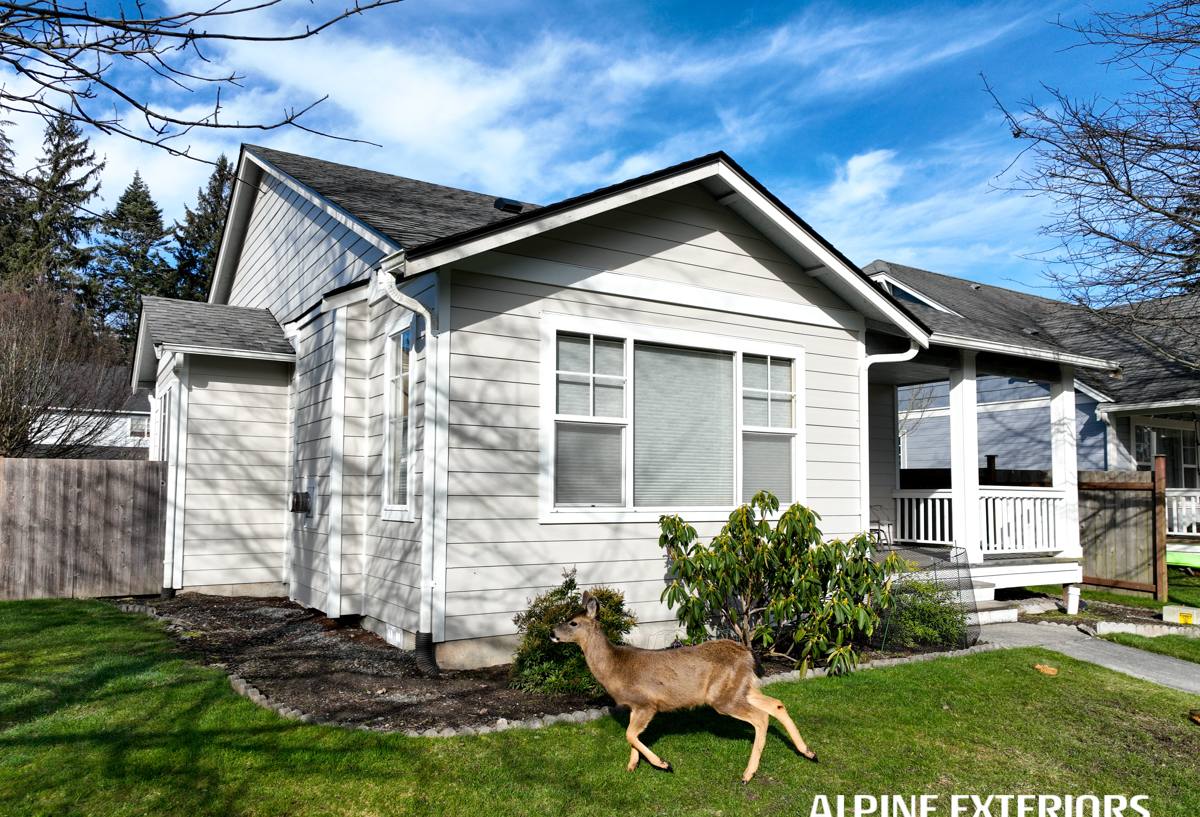
What the Climate Actually Does to a House in This Area
Salt Air and Moisture-Laden Wind
Proximity to the bay means a steady low-level exposure to salt-carrying air, especially during winter storm systems that push moisture inland off the Strait of Georgia and Puget Sound. Salt air accelerates corrosion on fasteners, flashing, and any exposed metal, and it interacts with certain siding coatings in ways that shorten their effective lifespan. It's rarely dramatic — nobody's siding falls apart in a season — but the cumulative effect over ten or fifteen years is real, and it shows up first at seams, fastener heads, and lower courses closest to grade.
Driving Rain
Bellingham's rain isn't just frequent, it's often wind-driven, which matters more than raw rainfall totals. Wind-driven rain gets pushed under laps, into butt joints, and behind poorly caulked trim in a way that straight-down rain never does. Siding systems that rely heavily on caulk and paint film to stay watertight are the ones most exposed to this pattern, because every hairline gap becomes an entry point during a storm rather than an occasional nuisance.
A Long Moss and Algae Season
Cool, damp, and shaded conditions for much of the year make Whatcom County prime territory for moss, algae, and mildew growth on north-facing walls, under eaves, and anywhere airflow and sun exposure are limited. This isn't just cosmetic — organic growth holds moisture against a wall surface, which speeds up rot in wood-based products and accelerates coating breakdown on anything with a painted or primed finish.
How These Factors Stack Up
| Climate Factor | What It Stresses | Where It Shows Up First |
|---|---|---|
| Salt air | Fasteners, flashing, coatings | Lower courses, seams, trim edges |
| Driving rain | Laps, joints, caulked seams | Butt joints, window trim, corner boards |
| Moss/algae season | Coatings, wood substrates | North walls, under eaves, shaded siding |
| Freeze-thaw cycling | Absorbed moisture in porous materials | Any material that's taken on water |
Why We Only Install James Hardie Fiber Cement Siding
We get asked fairly often why we don't offer vinyl, LP SmartSide, or other fiber cement brands like Cemplank or Allura. The honest answer is that after years of doing exterior work in this specific climate, we settled on one product line we trust to hold up here, and we'd rather stand behind that decision than sell homeowners something we have reservations about.
James Hardie fiber cement is non-combustible, which matters increasingly in this region, and it's engineered in climate-specific product lines — Hardie's HZ5 formulation is built for the wetter, cooler Pacific Northwest rather than a generic national spec. That distinction is relevant here: a siding product engineered for a dry, hot climate is not the same product performing in Bellingham's rain and salt air, even if it looks similar on a spec sheet.
Hardie's ColorPlus factory-applied finish is baked on under controlled conditions rather than field-painted, which reduces the number of ways a coating can fail early from moisture, UV, or inconsistent application. Fiber cement itself doesn't absorb water the way wood-based products can, which matters directly in a moss-and-driving-rain climate where organic growth and water intrusion are constant low-grade threats rather than occasional events.
None of this means other products are junk — vinyl is inexpensive and low-maintenance in mild climates, LP SmartSide has genuine strengths in dry regions, and other fiber cement brands are legitimate manufacturers. Our decision is about what we're comfortable putting our name behind in this specific climate, not a blanket judgment on every alternative.
How Siding Work Actually Happens on a Home Like Yours
Assessment First
Before we talk product or price, we look at what's actually going on with the existing siding — whether it's failing from water intrusion, UV breakdown, impact damage, or simple age, and whether the sheathing and framing underneath are still sound. In a climate like this, it's common to find moisture damage that isn't visible from the outside until siding comes off, particularly around old window flashing or at grade level.
Weather Barrier and Flashing Details
The siding material itself is only part of the system. Correct installation means a proper weather-resistant barrier, correctly lapped and sealed flashing at every window, door, and penetration, and attention to how water is meant to move down and off the wall rather than getting trapped behind it. This is where a lot of premature siding failure actually originates — not the material, but shortcuts in the details behind it.
Installing to Manufacturer Spec
James Hardie publishes specific installation requirements — fastener spacing and type, clearance from grade and roof lines, gapping at joints, caulking specifications — and those requirements exist because they're what the warranty is actually built on. Skipping them to save labor time is one of the most common ways a good product ends up with a bad reputation locally.
Roofing, Windows, and Decks — Why It's the Same System
Siding doesn't work in isolation. Roof drainage, gutter performance, window flashing, and even deck ledger attachment all affect how much water your walls are exposed to and where it ends up. A roof that's shedding water improperly onto a wall, or a window that's leaking behind the trim, will undermine even correctly installed siding. That's part of why we handle roofing, windows, decks, and siding as one exterior scope rather than treating them as unrelated trades — the failure points are almost always at the connections between them.
- Roof edges and gutters that dump water onto siding instead of away from it
- Window flashing integrated correctly with the water-resistant barrier, not just caulked over
- Deck ledger boards and flashing that don't create a hidden moisture trap against the house
- Consistent, climate-appropriate materials across the whole exterior rather than mismatched systems
What to Watch For on a Silver Beach Home
If you're trying to gauge whether your current siding is holding up, a few signs are worth checking for, especially heading into another wet season:
- Soft spots or visible swelling, especially near the bottom of walls or below window sills
- Persistent moss or algae staining that returns quickly after cleaning
- Paint that's peeling, bubbling, or chalking well before it should
- Visible gaps at butt joints, corners, or trim that weren't there originally
- Rust streaking from fastener heads, a sign of corrosion working from the inside out
- Musty smells or visible staining on interior walls that back onto exterior siding
Maintenance Realities for This Climate
No siding material is maintenance-free in Whatcom County, but the maintenance burden differs a lot by product. Wood-based siding needs regular repainting and sealing to keep moisture out, which is a real ongoing cost and labor commitment in a climate that gives you a narrow dry-weather window each year to actually do it. Fiber cement with a factory finish needs periodic washing to keep moss and grime from building up, and occasional caulk inspection at joints and trim, but it isn't dependent on a repaint cycle to stay watertight the way primed wood or field-painted products are.
A Simple Seasonal Checklist
- Rinse siding annually to prevent moss and algae buildup, especially on north-facing walls
- Inspect caulking at trim, window edges, and joints before the wet season starts
- Keep gutters clear so overflow isn't running down or behind siding
- Trim back vegetation and shrubs that keep siding shaded and damp
- Walk the exterior after major storms to check for new gaps, damage, or staining
Why a Local Crew Matters Here
Exterior work in Bellingham isn't the same job as exterior work in a drier inland climate, and crews who mostly work in different conditions can miss details that matter here — flashing laps sized for driving rain, clearance details that account for a long wet season, or simply recognizing early moss and moisture patterns before they become structural problems. Working across Whatcom County neighborhoods like Silver Beach day in and day out means we're used to building and repairing for this specific weather, not adapting a generic approach to it.
Get a Straightforward Estimate
If you're weighing a siding, roofing, window, or deck project on a Silver Beach home, we're happy to take a look, explain what we're seeing, and give you an honest read on what your home actually needs — no pressure, no inflated scare tactics. Use the form below to request a free estimate.