 Bellingham Siding
 Metal Roofing for Silver Beach, Bellingham
Silver Beach sits close enough to the water that homeowners here deal with a different set of roofing problems than folks a few miles inland. Damp air off the bay, wind-driven rain that comes in sideways during winter storms, and a shaded, tree-heavy setting that keeps roofs wet longer than they'd like — all of it adds up to a roof that has to work harder than the national averages assume. Metal roofing, installed correctly for this specific environment, handles that load better than most other options. Installed wrong, it fails in exactly the ways that make homeowners distrust the material in the first place.
This page covers what a metal roof actually needs to hold up in Silver Beach, what a correct installation looks like, and how we approach the job on homes in this part of Bellingham.
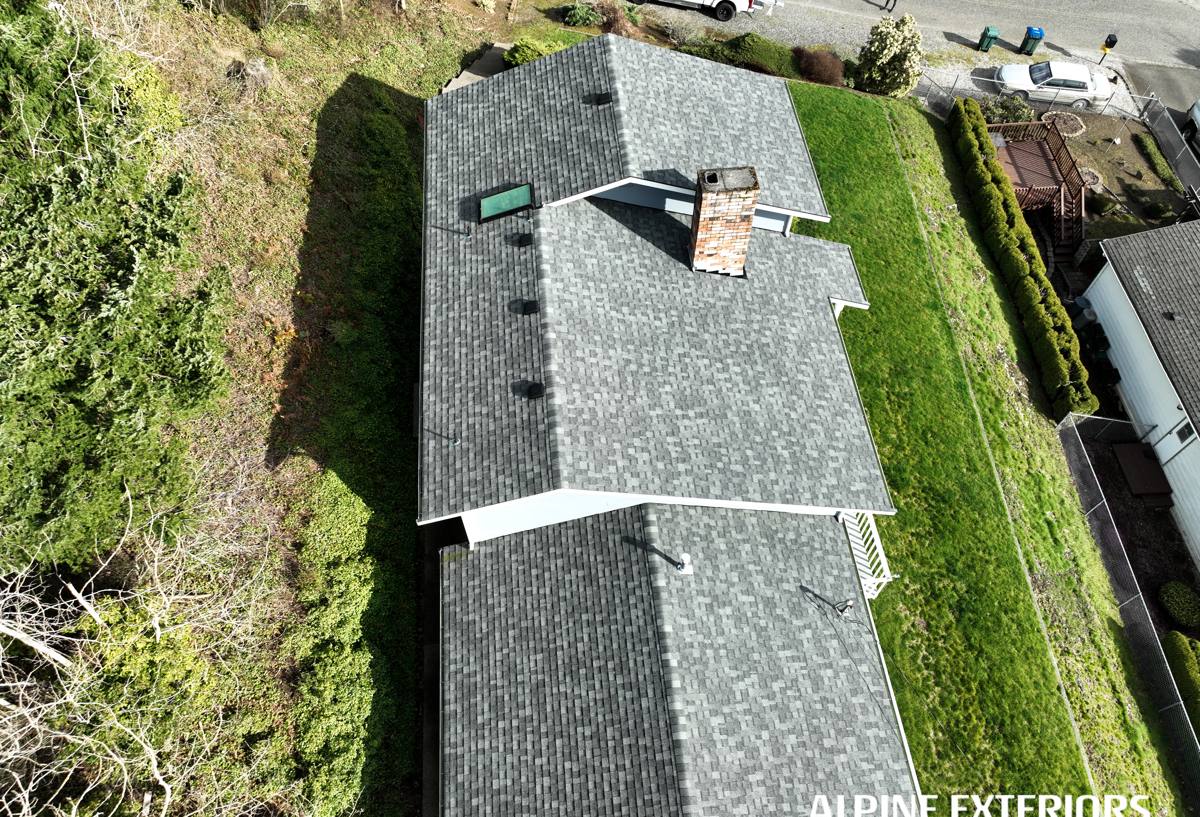
What This Climate Does to a Roof
Whatcom County weather isn't dramatic, but it's persistent, and persistence is what wears a roof down. Three things matter most for a home in Silver Beach:
- Salt-laden, moist air — even a short distance from Bellingham Bay, the air carries enough moisture and salinity to accelerate corrosion on unprotected metal, fasteners, and flashing.
- Driving rain — winter storms here don't just fall straight down; wind pushes rain sideways and up under laps, seams, and trim that would stay dry in a calmer climate.
- A long moss season — shade, moisture, and mild temperatures give moss and algae months to establish themselves on any surface that holds water or debris.
None of these are exotic problems. They're the same three factors every roof in this part of Washington deals with. The difference with metal roofing is that the material itself resists all three when it's specified and installed correctly — which is also exactly where a rushed or generic installation falls apart.
Where Standard Installations Go Wrong Here
Most metal roofing problems we get called out to inspect aren't material failures — they're installation shortcuts that didn't account for local weather. Fastener patterns designed for calmer climates back out under repeated wind-driven rain cycles. Flashing details copied from a drier region leak at valleys and penetrations. Panels installed tight against overhanging branches trap moisture and invite moss before the roof is even a few years old. A roof built for Silver Beach has to be detailed for Silver Beach, not for a spec sheet written somewhere else.
Choosing a Metal Roofing System That Fits
Not every metal roofing product performs the same way in a wet, coastal-influenced climate. The panel profile, the fastening method, and the coating all matter more here than they would in a dry inland region.
| System | How It Sheds Water | Best Fit |
|---|---|---|
| Standing seam (concealed fastener) | Raised interlocking seams with no exposed fasteners; excellent resistance to wind-driven rain | Most Silver Beach homes, especially anything exposed to open wind off the water |
| Exposed fastener panel | Screws through the panel face with rubber washers; adequate but washers age faster in salt-influenced air | Budget-conscious projects, outbuildings, garages |
| Metal shingles / shakes | Overlapping individual panels; good water shedding, closer visual match to traditional roofing | Homes wanting a metal roof that reads as a shingle or shake profile |
We steer most Silver Beach homeowners toward standing seam when budget allows, specifically because the concealed fastener design removes the weak point that wind-driven rain exploits — the exposed screw and washer. That's a maintenance and moisture-behavior tradeoff we're upfront about, not a claim that exposed-fastener systems don't have their place. For a garage or shop roof, they're often the right call.
Coating and Finish
The paint or coating system on a metal roof is doing real work near the water — it's the first line of defense against corrosion. We use factory-applied finishes rated for coastal exposure rather than field-applied coatings, because factory finishes bond more consistently and hold their warranty terms. Galvalume or painted steel with a quality baked-on finish is the standard we install to; bare or lightly coated metal isn't something we recommend for this location.
What a Correct Installation Involves
A metal roof is only as good as what's underneath and around it. The visible panels get most of the attention, but the details that keep water out in a driving rain are mostly hidden once the job is done.
Underlayment
We install a synthetic, high-temperature underlayment rated for the freeze-thaw and moisture cycling this region sees, with self-adhered ice-and-water membrane at eaves, valleys, and any low-slope transitions where wind-driven rain is most likely to test the roof.
Fastening and Panel Layout
Fastener spacing and clip placement are engineered to the wind exposure of the specific roof — a home on an open slope facing the water needs a tighter fastening schedule than one tucked behind trees and other structures. This isn't a detail that should be identical on every job.
Flashing and Penetrations
Valleys, chimneys, vents, and wall transitions are where the vast majority of roof leaks start, metal or otherwise. We custom-fabricate flashing to fit each condition rather than relying on universal trim pieces, and we seal penetrations with materials rated to move with the metal as it expands and contracts through temperature swings.
Ventilation
A well-ventilated attic keeps condensation from forming on the underside of the roof deck — a real concern in a humid, moss-prone climate. We check existing ventilation as part of every metal roofing project and correct it when it's inadequate, rather than installing a new roof over an attic that's going to trap moisture regardless.
Moss and Debris Management
Metal roofing resists moss far better than composition shingles because there's no rough, porous surface for spores to take hold on. But "resists" isn't "immune" — moss and algae can still establish in areas where debris collects, water pools, or panels stay shaded and damp for long stretches, which describes a lot of rooflines in Silver Beach given the tree cover.
What Keeps a Metal Roof Clean Through Moss Season
- Keep gutters and valleys clear of needles and leaf litter — this is where organic debris collects and holds moisture against the panel
- Trim back overhanging branches so the roof gets sunlight and airflow instead of constant shade
- Rinse the roof surface periodically rather than waiting for visible growth
- Avoid pressure washing directly against seams and fasteners — it can drive water where it doesn't belong
- Check zinc or copper strips near the ridge if moss has been a recurring problem — they release trace minerals that discourage regrowth as rain washes over the roof
- Have flashing and sealant checked annually, since a moss or debris problem is often the first visible sign of a small leak already forming underneath
Our Process on Silver Beach Homes
We walk every Silver Beach project the same way: assess the existing roof and attic, confirm what's driving the wear (age, ventilation, tree exposure, prior installation shortcuts), and then spec a system and detailing plan for that specific house rather than a one-size-fits-all package. Tear-off and disposal, deck inspection and repair where needed, underlayment, custom flashing fabrication, panel installation, and a final walk-through are all part of a standard project — we don't skip the deck inspection just because the old roof looked fine from the ground.
Timelines depend on roof size and complexity, but most single-family metal roof installations in this area run a few days to just over a week, weather permitting. We watch the forecast closely and won't leave a roof deck exposed ahead of a storm system — with the amount of driving rain this area gets, that's not a risk worth taking for either of us.
What Drives Cost
Metal roofing costs more upfront than asphalt shingles, but the honest comparison has to include lifespan, maintenance, and how well each material actually performs in this climate.
| Factor | Why It Matters Here |
|---|---|
| Panel system chosen | Standing seam costs more than exposed-fastener but needs less long-term maintenance in wind-driven rain |
| Roof complexity | Valleys, dormers, and multiple roof planes mean more custom flashing labor |
| Existing deck condition | Moisture damage from age or prior leaks may require deck repair before installation |
| Ventilation upgrades | Correcting inadequate attic ventilation adds cost but prevents condensation issues down the road |
| Tree exposure | Heavier moss-prevention detailing (or recommended trimming) on shaded lots |
We give a firm, itemized estimate before any work starts, and we'll tell you plainly if a cheaper option is the more sensible call for a particular building — a detached garage doesn't need the same system as a primary residence.
Why Local Experience Matters for This Job
A metal roof installed to a generic national spec can still fail in a place like Silver Beach, because generic specs don't account for wind-driven rain off the water, the length of the moss season, or how tree cover on a specific lot changes moisture exposure. A crew that's worked this neighborhood — and Bellingham and Whatcom County more broadly — already knows which details get tested hardest here and builds to that standard from the start, instead of learning it from a callback.
That local knowledge also shows up in smaller ways: knowing which valleys tend to collect debris in this area, understanding how the shade patterns on lots near the lake and the bay affect drying time after a storm, and having a maintenance rhythm that matches this region's actual weather calendar rather than a generic seasonal checklist.
If you're weighing a metal roof for a home in Silver Beach, we're happy to take a look and give you a straightforward, no-pressure estimate — what your roof actually needs, what it would cost, and what to expect. Use the form below to get started.