 Bellingham Siding
 Exterior Work Built for Edgemoor's Bayside Conditions
Edgemoor sits along the bluffs and shoreline south of downtown Bellingham, where homes look out over Bellingham Bay and sit closer to open water than almost anywhere else in Whatcom County. That position is part of what makes the neighborhood desirable — and part of what makes exterior materials work harder here than they do a few miles inland. Salt-laden air off the bay, wind-driven rain that hits siding at an angle instead of straight down, and deep tree cover that keeps moisture and shade around a house longer than open lots ever see: that's the combination Edgemoor homes are up against every year.
We're a Bellingham exterior contractor working across Whatcom County, and Edgemoor is one of the areas where we see the clearest evidence of what happens when a house is sided with the wrong product, or installed without the coastal exposure in mind.
What Salt Air and Marine Moisture Do to a House Over Time
Homes right on or near the water deal with a slower, quieter kind of wear than homes that take direct storm damage. Salt in the air settles on exterior surfaces and accelerates corrosion of fasteners, flashing, and any metal trim. It also interacts with paint films and coatings, which is part of why coastal-facing walls tend to fade, chalk, or lose adhesion faster than the same product would inland.
Add to that the region's long wet season — Bellingham gets sustained rain from fall through spring, and bluff-front lots often catch more wind-driven moisture than sheltered ones — and you get siding that's rarely fully dry for months at a time. Combine constant dampness with tree shade and you get the moss and algae growth this area is known for. On the wrong siding material, that moisture cycle shows up as:
- Paint or coating failure years ahead of the manufacturer's expected life
- Swelling, delamination, or soft spots on wood-based or engineered wood products
- Warping or bowing where boards absorb and release moisture repeatedly
- Rust streaking from fasteners or trim that weren't rated for coastal exposure
- Persistent moss and algae staining, especially on north- and west-facing walls under tree cover
None of this means a house near the water is doomed to constant repair. It means the material and the installation details matter more here than they do on a dry, open, inland lot.
Why We Install Only James Hardie Fiber Cement
We made a decision as a company to install James Hardie fiber cement siding exclusively, and we don't install vinyl, LP SmartSide, Cemplank, Allura, primed spruce, or cedar. That's not a marketing position — it's a standard we hold ourselves to because of what we've seen happen to other materials in exactly the kind of climate Edgemoor sits in.
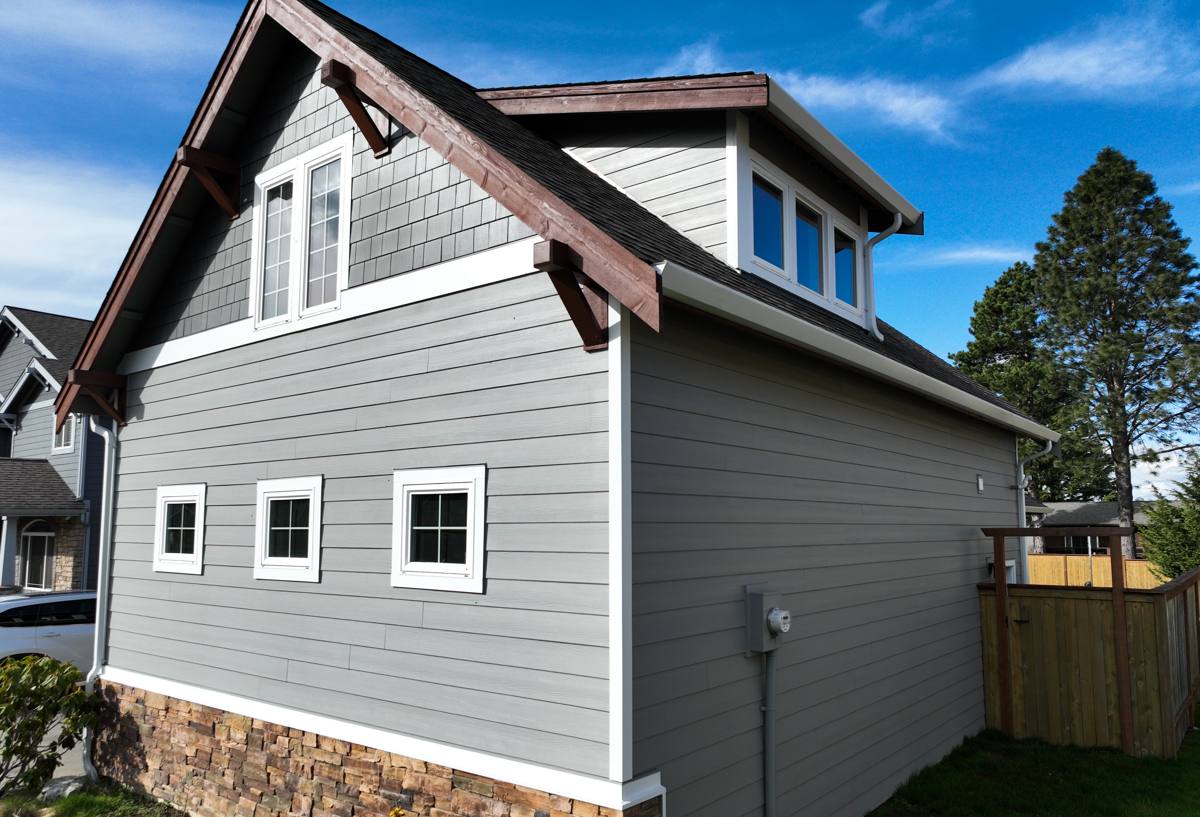
Fiber cement is cement, sand, and cellulose fiber. It doesn't absorb and swell the way wood-based products do, it won't rot, and it's non-combustible — a real consideration in a region that also deals with wildfire smoke and ember exposure in dry summer stretches. James Hardie's ColorPlus factory-applied finish is baked on under controlled conditions rather than field-painted, which gives it better adhesion and UV resistance than a coating applied on-site in variable weather. For a bay-facing house catching salt spray and long wet seasons, that combination of dimensional stability and finish durability is exactly what holds up.
Hardie also engineers specific product lines (HardiePlank HZ10 for the Pacific Northwest's damp, moderate climate zone) rather than selling one version everywhere. That's the kind of climate-specific engineering we want backing the work we put on a home a hundred yards from the bay.
We're honest that fiber cement isn't the cheapest option up front, and it's heavier and less forgiving to install than vinyl or engineered wood — which is exactly why installation quality matters as much as the product choice itself.
What We Won't Install, and Why
Vinyl siding is low-maintenance and inexpensive, but it can warp in sustained heat, crack in hard freezes, and it's a poor performer in wind-driven rain because of how its panels overlap. LP SmartSide and other engineered wood products have improved their moisture resistance over the years, but they're still wood-based at the core, meaning they carry more risk of edge swelling and moisture intrusion than cement-based siding, especially at cut ends and seams that aren't perfectly sealed. Primed spruce and cedar are traditional, attractive choices, but raw or lightly primed wood requires an ongoing paint and sealing commitment that most homeowners underestimate — and in a climate this wet, that maintenance gap shows up fast as rot at the most vulnerable points: bottom edges, corners, and anywhere water can sit.
The Full Exterior Envelope: Siding, Roofing, Windows, and Decks
Siding doesn't work in isolation. On an Edgemoor home, the roof, windows, and siding all form one water-management system, and a weak point in any one of them undermines the rest. We handle all four exterior components — siding, roofing, windows, and decks — because a house near the water needs its whole envelope evaluated together, not one component patched while the others are ignored.
A roof with failing flashing will send water behind new siding no matter how well the siding itself is installed. Windows with degraded seals let moisture track down into wall cavities. Decks exposed to the same salt air and rain cycle need the same materials thinking as the siding does. When we're on-site for a siding project, we're looking at the whole exterior, not just the walls.
Why a Local Crew Matters on a Coastal Bellingham Lot
Installing fiber cement correctly takes more than following a generic instruction sheet. Crews who work Whatcom County regularly know how to detail flashing and house-wrap for the amount of wind-driven rain this area actually gets, how much clearance to leave at grade and roofline given our wet season, and where moss and algae pressure will be worst based on tree cover and sun exposure. A crew that mostly installs in drier climates can follow the letter of the manufacturer's instructions and still miss the judgment calls that matter on a bluff-front or heavily shaded lot.
Being local also means we're available for follow-up, warranty support, and seasonal maintenance questions without a homeowner having to track down an out-of-town crew that's moved on to the next region.
What a Siding Project Looks Like on an Edgemoor Home
- On-site assessment — we look at existing siding condition, moisture damage, flashing, and the specific exposure of your lot (wind direction, tree cover, sun/shade pattern)
- Water management plan — house-wrap, flashing details, and drainage gap decisions tailored to a wet, coastal-adjacent climate
- Product and color selection — HardiePlank lap siding, panel, or shingle profiles in ColorPlus finishes suited to the home's style
- Installation to manufacturer spec — correct fastening, clearances, and joint treatment, which matters more for warranty coverage than most homeowners realize
- Final walkthrough — reviewing the finished work and what maintenance, if any, to expect going forward
Cost Factors for Edgemoor Siding Projects
Every home is different, but the same variables tend to drive cost up or down across coastal Bellingham properties:
| Factor | Why It Matters Here |
|---|---|
| Existing wall condition | Rot or moisture damage found once old siding comes off can add repair scope |
| Home access and lot terrain | Bluff and sloped lots common in Edgemoor can affect staging and scaffolding needs |
| Siding profile and trim complexity | Lap, panel, and shingle styles with detailed trim take more labor than a simple flat wall |
| Tree cover and access clearance | Heavily wooded lots may need branch clearance before work can start safely |
| Window and door count | More openings mean more flashing and trim detail, which affects both cost and moisture performance |
Keeping Fiber Cement Siding Looking Good Near the Water
One advantage of James Hardie siding is how little upkeep it needs compared to wood or vinyl, but "low-maintenance" isn't "no-maintenance," especially this close to the bay.
- Rinse siding periodically to clear salt residue, especially on walls facing open water
- Keep gutters clear so overflow doesn't run down and streak the siding
- Trim back trees and shrubs to reduce moss growth and let walls dry between rain events
- Check caulking at trim and window edges annually — it's the first thing to give way, not the siding itself
- Address any impact damage or chipped finish promptly so moisture can't get behind the material
Get a Local, No-Pressure Estimate
If you're weighing a siding replacement — or want a second opinion on your roof, windows, or deck while you're at it — we're happy to walk your property, look at what your specific exposure is doing to your current exterior, and give you a straightforward estimate. No pressure, no upsell script, just an honest look at what your Edgemoor home needs. The form below gets you started.