 Bellingham Siding
 Siding That Has to Work Harder in Edgemoor
Edgemoor sits on the wooded bluffs above Bellingham Bay, and that setting is exactly what makes it one of the more demanding places in Whatcom County to keep exterior siding looking good and performing well. Homes here get a steady mix of salt-laden air off the bay, wind-driven rain that hits walls at an angle instead of straight down, and heavy tree cover that keeps north- and west-facing walls shaded and damp for long stretches of the year. That combination is hard on most siding materials, and it's a big part of why we standardized on James Hardie fiber cement siding instead of the wood, vinyl, or lower-cost fiber cement products still common on older homes in the neighborhood.
This page is about that one product, in this one setting: what Edgemoor's climate actually does to a wall over time, what a correct fiber cement installation looks like here, and why the details matter more on a bluff-adjacent, tree-shaded lot than they do on a dry inland street.
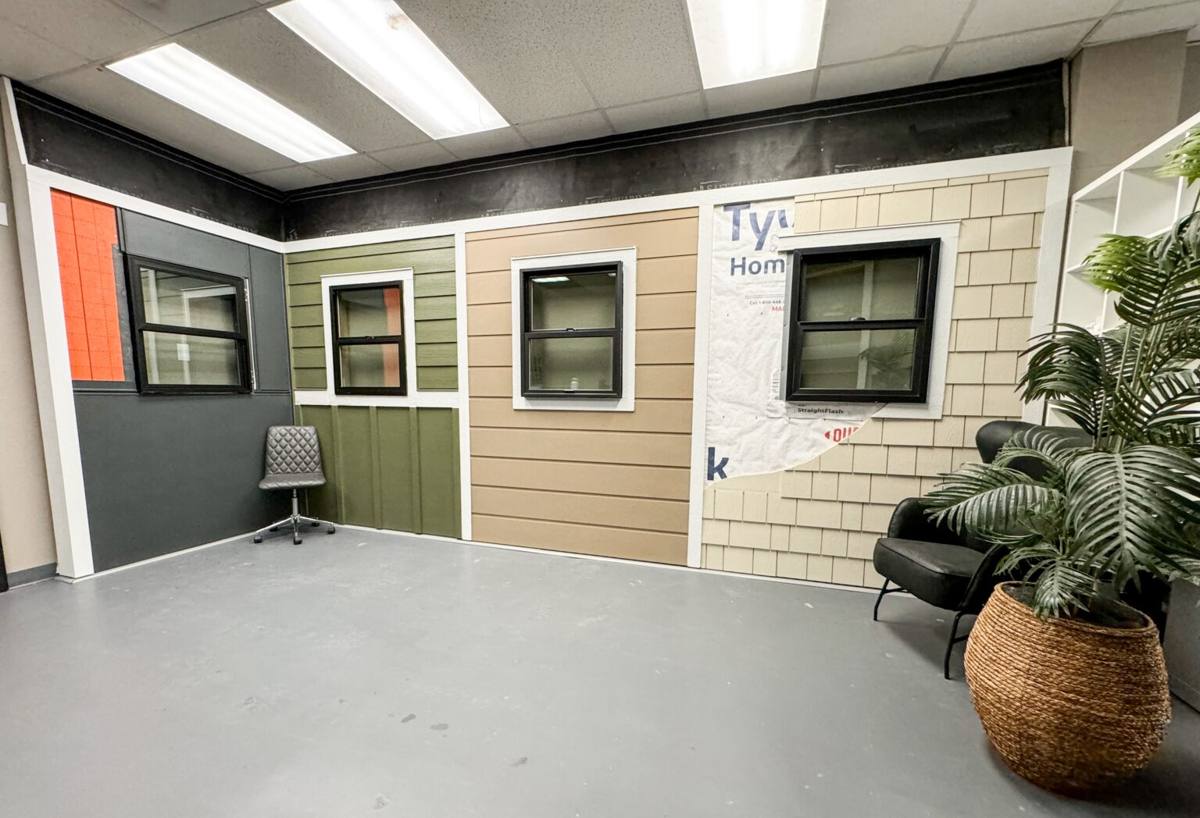
What Salt Air, Driving Rain, and Moss Actually Do
Three things define exterior wear in Edgemoor, and each one attacks siding in a different way.
Salt Air
Airborne salt from Bellingham Bay settles on siding and trim, and over years it accelerates corrosion of exposed fasteners, hinges, and metal flashing. It also breaks down cheaper paint films faster than inland exposure does, which is why homes closer to the water tend to show chalking, fading, and peeling sooner than the same product would a few miles inland.
Driving Rain
Storms off the Strait of Georgia and Bellingham Bay don't fall straight down — wind pushes rain sideways into walls, corners, and window trim. Any siding system with weak seams, poor flashing, or gaps at butt joints will let water track behind the cladding during these events, even if the face of the siding looks fine.
Moss and Prolonged Dampness
Mature tree canopy is one of Edgemoor's defining features, and it's also the reason shaded walls stay wet longer after every rain. Moss and algae take hold readily on surfaces that don't dry out quickly, and on wood-based siding that constant moisture is what eventually leads to soft spots, delamination, and rot — problems that start behind the surface, long before they're visible from the yard.
Why We Install Only James Hardie Fiber Cement
We don't install LP SmartSide, vinyl, Cemplank, Allura, or bare cedar and spruce, and Edgemoor's climate is a clear illustration of why. Each of those products has real strengths, but each also has a weak point that this specific environment tends to find:
- Vinyl can warp and become brittle with UV and temperature swings, and its seams are a natural place for wind-driven rain to work its way behind the panel.
- Wood-based composite and untreated cedar/spruce are organic materials — in a shaded, damp, moss-prone environment like Edgemoor, that means ongoing exposure to the exact conditions that cause swelling, fungal growth, and rot.
- Other fiber cement brands (Cemplank, Allura) use similar raw materials to Hardie but don't offer the same factory-engineered, climate-specific product lines or the same long-standing finish warranty backing.
James Hardie fiber cement is non-combustible, dimensionally stable, and manufactured with a factory-applied ColorPlus finish that's baked on and warrantied against fading and peeling — not something applied after installation and left to weather on its own. Hardie also makes an HZ5 product line engineered specifically for cold, wet, high-moisture climates like ours, which is what we spec for Edgemoor jobs by default.
How Fiber Cement Compares to What It's Replacing
| Factor | James Hardie Fiber Cement | Vinyl | Cedar / Untreated Wood |
|---|---|---|---|
| Moisture & rot resistance | Engineered non-organic material; HZ5 line built for wet climates | Doesn't rot, but seams and channels can trap moisture | Absorbs moisture; prone to rot under shade and moss |
| Salt air & UV finish life | Factory ColorPlus finish, warrantied against peeling/fading | Color molded through material, but can chalk and become brittle over time | Paint or stain needs reapplication every few years near the bay |
| Wind-driven rain performance | Rigid panels, tight lap joints, proper flashing detail | Flexes in wind; seams can allow water intrusion | Board seams and knots are common entry points for water |
| Fire resistance | Non-combustible | Melts/deforms under heat | Combustible |
| Typical maintenance | Periodic wash and caulk check | Occasional wash | Regular painting/staining, moss and rot monitoring |
What a Correct Installation Involves
Fiber cement siding performs the way it's supposed to only when it's installed to the manufacturer's specification. In a marine-exposed, tree-shaded neighborhood like Edgemoor, the installation details matter more than they would on a drier, more exposed inland lot — sloppy work here shows up as problems years earlier than it would elsewhere.
The details we don't skip
- Correct water-resistive barrier and rain-screen or drainage gap behind the siding, so any moisture that does get past the cladding can drain and dry rather than sit against the sheathing.
- Proper flashing at every window, door, deck ledger, and roofline intersection — the places driving rain finds first.
- Minimum clearance from grade, decks, and roof lines per Hardie's install guide, so splash-back and standing water can't wick into the bottom of the boards.
- Correctly spaced fasteners driven to the right depth — overdriven or underdriven nails are one of the most common causes of early siding failure.
- Sealed and caulked joints at corners, trim, and penetrations, using materials rated for the finish and climate.
- Field-cut edges primed or sealed before installation, since raw cut edges are more absorbent than the factory-finished face.
Every one of these is a step that can be shortcut without being visible from the curb — which is exactly why the crew doing the work matters as much as the product itself.
Our Process on an Edgemoor Job
We walk the site first and look specifically at the things that drive material and detailing decisions on a lot like this: how much direct sun each wall actually gets through the tree canopy, how close the home sits to the bluff or waterline, the condition of the existing sheathing and water barrier once old siding comes off, and any areas already showing moss growth or moisture staining. That inspection shapes the plan before we talk about color or panel style.
From there, the process is straightforward:
- On-site assessment and honest scope — including whether sheathing repair is likely needed once old siding is removed.
- Written estimate covering material, HZ5 specification where appropriate, trim details, and timeline.
- Careful removal of existing siding with inspection of the wall assembly underneath.
- Installation of water-resistive barrier, flashing, and drainage detailing before a single piece of Hardie goes up.
- Fiber cement installation to manufacturer spec, with attention to fastening, gaps, and sealant at every transition.
- Final walkthrough so you can see the completed work and ask questions before we consider the job done.
Living With Fiber Cement Siding in a Marine Climate
One reason homeowners move to fiber cement is that it asks for far less upkeep than wood — but "low maintenance" isn't "no maintenance," especially this close to the bay. A short annual routine keeps a correctly installed system performing for decades:
- Rinse siding gently once or twice a year to clear salt residue, pollen, and organic buildup, especially on shaded, moss-prone walls.
- Walk the exterior after major storms and check caulking at trim, corners, and penetrations for cracking or gaps.
- Keep gutters and downspouts clear so roof runoff isn't dumping extra water onto siding below.
- Trim back branches and foliage that keep a wall section shaded and damp longer than the rest of the house.
- Watch for moss or algae starting at the base of walls or under eaves, and address it early rather than letting it spread.
Why Hiring Local Experience Matters Here
Edgemoor isn't a typical Whatcom County lot. Bluff-edge grading, mature tree cover, and direct bay exposure all affect how a siding job should be detailed — decisions about drainage planes, flashing, and material spec that a crew unfamiliar with this specific microclimate might not think twice about. A contractor who already works this neighborhood knows which walls take the worst of the weather, where moisture tends to collect, and how to plan around the tree canopy instead of being surprised by it partway through the job.
That local pattern recognition, paired with a single product line we install to spec on every job, is what keeps a fiber cement installation performing the way it's supposed to for the long run — not just for the first few dry summers.
If you're planning a siding project in Edgemoor, we're happy to walk the property, look at what your home's specific exposure requires, and put together a straightforward, no-pressure estimate — just fill out the form below to get started.