 Bellingham Siding
 Siding Replacement for Happy Valley Homes
Happy Valley is one of Bellingham's older, well-established residential pockets, and that means a lot of the housing stock is carrying siding that's well past its intended service life. Whether your home has aging cedar, chalky vinyl, or a fiber cement product that was never detailed correctly at installation, the pattern we see on service calls in this neighborhood is consistent: moisture finding its way behind the cladding faster than homeowners expect, and siding that looks fine from the curb but is failing at the seams, corners, and bottom courses.
This page is specifically about siding replacement in Happy Valley — not a general overview of siding in general. We'll walk through what the local climate does to exterior walls here, what a correct replacement actually involves, and why we only install James Hardie fiber cement when we take on a project in this part of Bellingham.
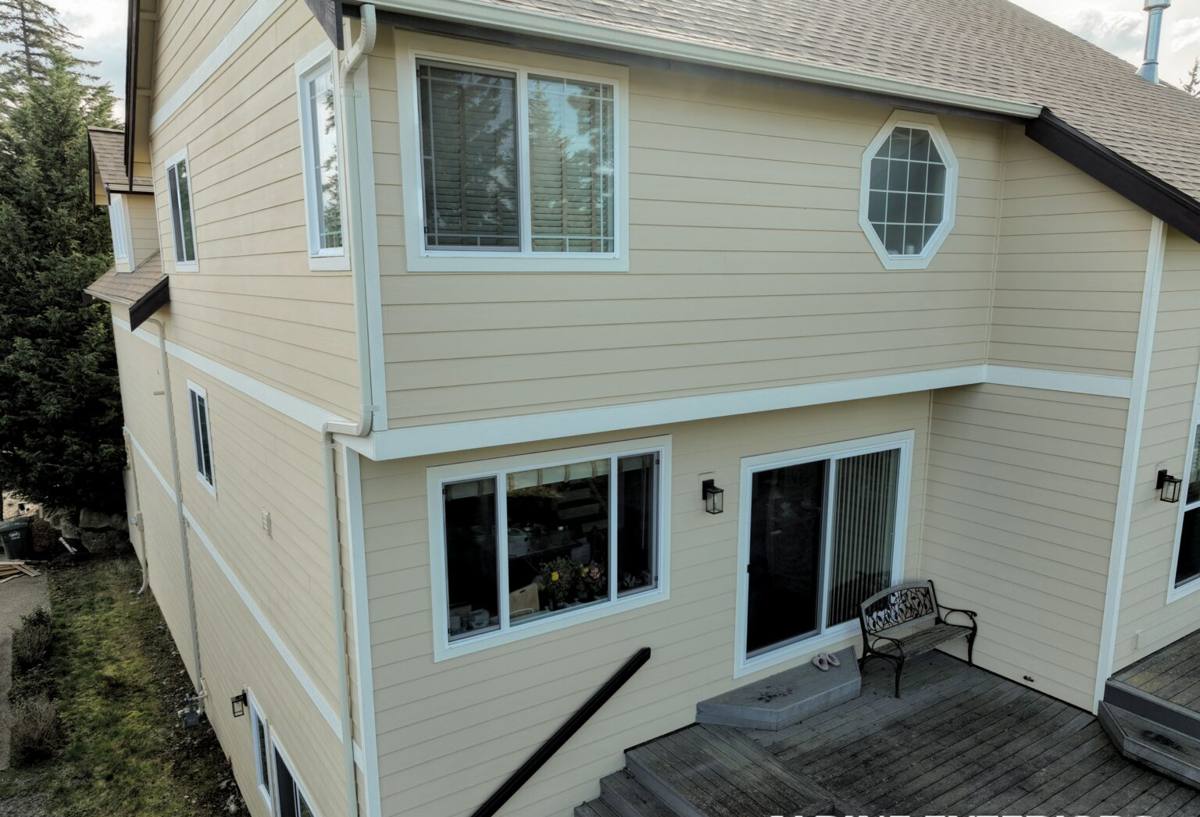
What Whatcom County Weather Does to Siding Here
Bellingham sits close enough to the water that salt-laden air is a real factor on exterior materials, and Happy Valley's mature tree canopy and proximity to Bellingham Bay both work against bare or lightly-finished siding. Three conditions do most of the damage over time:
- Salt air exposure — accelerates corrosion on exposed fasteners, trim flashing, and any metal components integrated into the siding system, and it degrades cheaper factory finishes faster than inland homes ever experience.
- Driving rain — Bellingham's rain rarely falls straight down; wind-driven rain off the bay pushes water sideways into laps, butt joints, and window trim, which is exactly where poorly installed siding fails first.
- A long moss season — shaded lots, mature landscaping, and our extended wet stretch from fall through spring give moss and algae months to establish on north-facing walls and anything under tree cover, holding moisture against the siding surface far longer than a sunnier lot would see.
None of these conditions are unique to Happy Valley, but the combination of tree cover, older housing stock, and bay proximity makes this neighborhood a good example of why generic siding advice doesn't always apply block by block.
Signs a Happy Valley Home Needs Siding Replaced, Not Patched
Not every siding problem calls for full replacement. But there are signs that tell us a patch or repaint is just delaying the inevitable:
Visual and physical signs
- Soft or spongy spots when you press on the siding, especially near the bottom courses and around window and door trim
- Persistent moss or dark streaking that returns within a season or two of cleaning
- Visible cupping, warping, or delamination on wood or older composite siding
- Cracked or missing caulk joints that have let water track behind the cladding
- Paint that won't hold — blistering or peeling within a couple years of a fresh coat, which usually points to trapped moisture, not a paint quality issue
What's happening behind the siding
By the time these signs show up on the surface, there's a good chance the water-resistive barrier or sheathing behind the siding has already been compromised. That's the real reason we recommend full replacement over spot repair once a wall has multiple failure points — patching the outside doesn't fix what's already wet on the inside.
What a Correct Siding Replacement Involves
Siding replacement done right is not just swapping old boards for new ones. A correct job in a wet, salt-exposed neighborhood like Happy Valley includes:
Tear-off and inspection
We remove the existing siding and trim down to the sheathing so we can actually see the wall assembly. This is the step that gets skipped when contractors "reside over" old siding, and it's the step that determines whether the new siding lasts.
Sheathing repair
Any rotted or water-damaged sheathing gets cut out and replaced before anything new goes up. Installing new siding over compromised sheathing just resets the clock on the same failure.
Water-resistive barrier and flashing
A properly lapped weather-resistive barrier, correctly integrated window and door flashing, and proper kick-out flashing at roof-to-wall intersections are what actually keep driving rain out — the siding itself is the second line of defense, not the first.
Rainscreen or drainage gap
Given how long our wet season runs, a drainage gap behind the siding gives any incidental moisture a path to escape instead of sitting against the back of the cladding — which matters directly for moss and mildew resistance on shaded walls.
Correct fastening and factory-finished material
Fastener spacing, caulking at joints, and proper clearance from grade and roof lines all follow manufacturer specification, not shortcuts. This is also where salt air exposure matters most — corrosion-resistant fasteners and a factory-applied finish hold up far longer than field-applied paint.
Why We Install Only James Hardie Fiber Cement
We don't install vinyl, LP SmartSide, primed spruce, cedar, or other fiber cement brands. That's a deliberate standard, not a limitation of what we're capable of installing. In a climate like Bellingham's — wet, salt-influenced, moss-prone — the material matters as much as the workmanship:
- Non-combustible — fiber cement doesn't feed a fire the way wood-based products can.
- Climate-engineered product lines — Hardie's HZ10 formulation is built for regions with our freeze-thaw and moisture exposure, unlike products designed around drier, milder climates.
- ColorPlus factory finish — baked-on finish holds color and resists the peeling and chalking that field-painted siding suffers under UV and salt air.
- Dimensional stability — fiber cement doesn't swell, cup, or rot the way wood-based and some engineered wood products can when moisture gets past the surface.
- Transferable warranty — a real factor for resale in an established neighborhood like Happy Valley, where homes often change hands after decades of ownership.
We're not going to tell you every other siding product is junk — plenty of them have legitimate uses. But for what this climate does to a wall over 20-30 years, we've standardized on the product we trust to actually hold up, and we'd rather turn down a job than install something we don't believe will perform here.
How Our Process Works for Happy Valley Projects
| Step | What Happens |
|---|---|
| Site walk and assessment | We inspect existing siding, trim, and visible wall condition, and talk through what we expect to find once tear-off starts |
| Written estimate | Scope, material selection, and pricing laid out in writing before any work is scheduled |
| Tear-off and sheathing check | Old siding removed, sheathing inspected and repaired as needed |
| Water management install | Weather-resistive barrier, flashing, and drainage gap installed per manufacturer and code requirements |
| Hardie siding installation | Fiber cement installed to spec, including fastening, clearances, and joint treatment |
| Final walkthrough | Punch-list review with the homeowner before the job is considered complete |
What Drives Cost on a Happy Valley Siding Replacement
Every home is different, but the same factors move the price up or down on most projects in this neighborhood:
| Factor | Why It Matters |
|---|---|
| Extent of sheathing damage | Hidden rot found during tear-off adds material and labor that can't be quoted sight-unseen |
| Home size and wall complexity | Dormers, multiple gables, and cut-up wall lines take more time than a simple rectangular footprint |
| Siding profile and trim detail | Lap width, trim style, and accent details affect both material and labor |
| Access and site conditions | Mature landscaping, tight side yards, or steep grade common in older Happy Valley lots can slow staging and setup |
| Existing paint or finish removal | Older painted siding sometimes requires extra prep for disposal, depending on what's underneath |
We won't quote a fixed number without seeing the home, but we'll always explain what's driving the estimate we give you.
Why a Crew That Already Works Happy Valley Matters
Neighborhood familiarity isn't a marketing line — it changes how a job actually goes. A crew that regularly works Happy Valley knows the tree-cover and moss patterns to watch for on shaded walls, understands how the wind off the bay tends to drive rain into specific wall orientations, and has already dealt with the older sheathing and framing quirks common to this vintage of home in Bellingham. That familiarity means fewer surprises during tear-off and a more accurate estimate up front, instead of change orders after the walls are already open.
Questions worth asking any siding contractor before you hire
- Will you inspect and repair sheathing, or just install over what's there?
- What water-resistive barrier and flashing details will you use at windows and roof lines?
- Is a drainage gap or rainscreen included behind the siding?
- What's included in writing — material, labor, disposal, and warranty terms?
- Do you have experience with older homes in this specific part of Bellingham?
If your Happy Valley home is showing signs of siding failure — soft spots, persistent moss, peeling paint, or trim that's staying wet longer than it should — we're happy to take a look and give you a straight answer about what it needs. Reach out for a free, no-pressure estimate using the form below.