 Bellingham Siding
 Two Products That Look Almost Identical on a Spec Sheet
If you've collected a few siding bids for a home in Bellingham or anywhere else in Whatcom County, you've probably noticed that most fiber cement products read the same on paper. Cemplank and James Hardie both start with the same basic recipe: portland cement, sand, cellulose fiber, and water, cured into a dense board that won't rot, won't feed insects, and won't burn. Both come in lap siding, panels, and trim profiles. Both are pitched as a step up from vinyl and a lower-maintenance alternative to wood.
Because the raw material category is the same, a lot of homeowners assume the products themselves are interchangeable, and that the choice comes down to price. We don't see it that way, and after installing fiber cement siding on homes up and down this stretch of Pacific Northwest coastline, we made a deliberate decision to install only James Hardie products. This page explains why, without exaggerating what's wrong with the alternative.
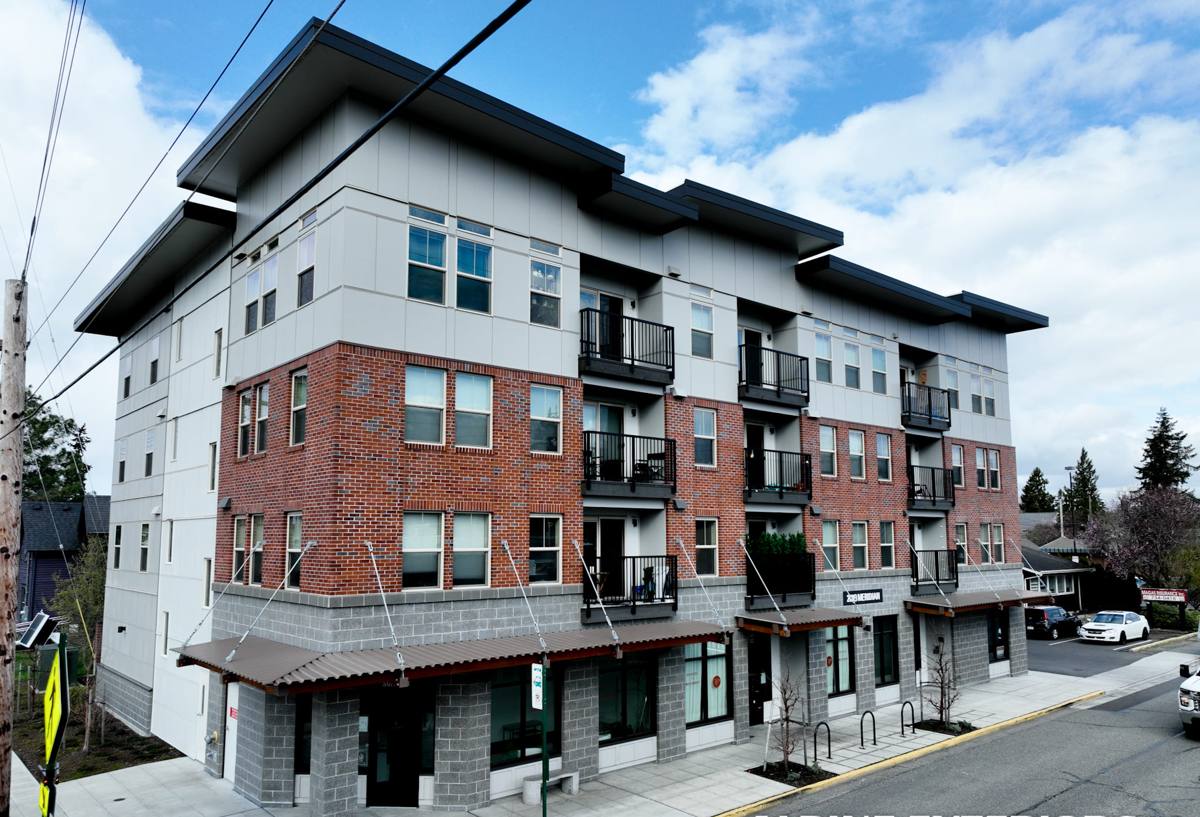
What Cemplank Gets Right
Credit where it's due: Cemplank is a genuine fiber cement product, not an imitation. It's non-combustible, it resists the swelling and splitting that plague wood siding, and it holds paint better than most traditional cladding. For a homeowner comparing it against vinyl or engineered wood, Cemplank is a real upgrade in durability and fire resistance. We're not going to pretend otherwise, and we're not going to make claims about product failures we haven't personally verified.
Where our concerns start is not with the base material, but with the finish system, the warranty structure, and how consistently the product performs specifically in a marine, high-moisture climate like ours — factors that matter more here than they would in a drier inland region.
The Finish Is the Real Difference
Factory-Cured Color vs. Field-Applied Paint
This is the single biggest reason we standardized on Hardie. James Hardie's ColorPlus finish is baked onto the board at the factory in multiple coats, cured under controlled conditions, and backed by a separate finish warranty on top of the product warranty. It's engineered specifically to survive UV exposure and moisture cycling without fading or peeling at the same rate field-applied paint does.
Cemplank, by contrast, is more commonly sold as a primed substrate that gets top-coated after installation, or with finish coverage that isn't matched to the same depth of factory engineering. That means the long-term look of the siding depends heavily on the quality of the field paint job — the prep, the primer, the number of coats, the weather conditions during application. In a climate that gets driving rain for months at a stretch, a field finish has less room for error, and repainting sooner is a real cost homeowners should plan for rather than get surprised by later.
Why Finish Quality Matters More in Bellingham Specifically
Whatcom County sits right on the water, and that changes what siding actually has to survive. Salt-laden air off Bellingham Bay and the Strait of Georgia accelerates the breakdown of lower-grade coatings and fasteners. Wind-driven rain — not just rainfall totals, but rain that hits siding sideways during a fall or winter storm — pushes water into every seam, joint, and butt end that isn't detailed correctly. And the long moss season here, often eight or nine months out of the year on north-facing and shaded walls, keeps siding damp longer than it would stay in a drier region, which stresses any finish that isn't fully cured and sealed.
None of that is unique to one brand of fiber cement — it's simply the environment every product installed here has to handle. But it's exactly why we don't want to gamble the finish on a field-applied coating when a factory-cured option engineered for this kind of exposure is available.
Product Line Engineering for This Climate
James Hardie sells regionally engineered product lines, and the HZ5 formulation is built for climates with significant moisture and freeze-thaw cycling — which describes Whatcom County's weather pattern reasonably well, even though our winters are milder than inland Washington. That's a meaningful detail for a product that's going to sit on an exterior wall for decades: the board itself, not just the coating, is formulated with this kind of weather in mind.
We haven't found the same depth of climate-zone-specific engineering documented for Cemplank. That doesn't mean the product can't perform adequately — it means we don't have the same level of manufacturer-published assurance that it was designed with our specific rain and moisture exposure in mind, and we're not willing to install something on a customer's home based on an assumption.
Warranty Structure: A Practical Comparison
Warranties tell you a lot about how a manufacturer expects its product to age. Here's how the two generally compare on structure — homeowners should always verify current terms directly with each manufacturer before making a final decision, since warranty terms do change over time.
| Factor | James Hardie | Cemplank |
|---|---|---|
| Substrate warranty | Long-term, non-prorated limited warranty on the fiber cement board | Limited warranty on the fiber cement board, terms vary by product line |
| Finish warranty | Separate ColorPlus finish warranty covering fade and peel, distinct from the substrate warranty | Finish warranty coverage depends on whether the board is factory-finished or field-painted |
| Transferability | Transferable to a new owner if the home is sold, within stated terms | Transferability varies; homeowners should confirm directly |
| Installer requirements | Full warranty coverage typically requires installation per Hardie's published instructions | Similar installer compliance requirements generally apply to fiber cement warranties |
The pattern that matters most to us as installers is the separation between the board warranty and the finish warranty on the Hardie side. Since the finish is where we see the most climate-driven wear in coastal Washington, having it backed independently — rather than folded into a single blanket warranty or left entirely to a repaint — is the difference that shows up ten and twenty years down the road.
Installation Sensitivity and Long-Term Support
Fiber cement siding, whatever the brand, only performs as advertised when it's installed correctly — proper clearances, correctly fastened butt joints, flashing at every penetration, and caulking only where the manufacturer actually calls for it. A sloppy installation will cause problems with any fiber cement product.
What differs between brands is the depth of installer training, published detailing guides, and technical support available to a crew working through the specific problems a Pacific Northwest home presents — tight lot lines, older homes with uneven sheathing, roof-to-wall intersections that see heavy runoff. We've found Hardie's installation documentation and regional technical resources more thorough for exactly these situations, which matters when our crews are making judgment calls on a home that doesn't match a textbook wall section.
There's also a practical, unglamorous factor: availability of matching material for future repairs. If a homeowner needs a section replaced in ten years after a tree limb comes down or a remodel changes a window opening, being able to source a matching profile and color line matters. Hardie's broad distribution and stable, long-running color and profile lines make future repairs easier to match than a less widely stocked product line.
What to Ask Any Contractor Quoting Fiber Cement Siding
Whether you end up going with our recommendation or shopping around, these are the questions worth asking any contractor before signing a siding contract:
- Is the color factory-applied and warrantied, or will it be field-painted after installation?
- What does the finish warranty cover, and is it separate from the board warranty?
- Is the product engineered for a specific climate zone, and does that zone match ours?
- What is the manufacturer's published installation standard, and is the crew trained to it?
- Is the warranty transferable if you sell the home?
- Can the contractor show you real installed examples of the product in a similar coastal or high-moisture setting?
- How readily available is matching material for future repairs?
Why We Standardized on One Product
We made the decision years ago to stop quoting multiple fiber cement brands and install James Hardie exclusively. Part of that is practical — our crews get deeper, more consistent training on one system rather than spreading expertise across several. Part of it is what we've laid out above: the factory-cured finish, the climate-engineered HZ product lines, the warranty structure that separates board from finish, and the material availability all line up better with what a home on the Whatcom County coast actually needs to survive salt air, sideways rain, and a moss season that doesn't quit until late spring.
We're not telling homeowners that Cemplank is a bad product. We're telling you why, after weighing the trade-offs, it's not the one we put our name behind. If you're planning a re-side and want an honest look at what your home actually needs — not just a quote — we're happy to walk the exterior with you and put together a free, no-pressure estimate.