 Bellingham Siding
 Two Wood-Look Sidings, Two Different Bets
James Hardie fiber cement and LP SmartSide engineered wood are often shown to homeowners as interchangeable options — both give you a clean lap or panel look, both take paint or come pre-finished, both cost less than real cedar. But the materials underneath that similar appearance are fundamentally different, and in a climate like Whatcom County's, that difference matters more than the showroom sample suggests.
We are a Bellingham siding contractor, and we install James Hardie fiber cement exclusively. We do not install LP SmartSide, vinyl, or the other engineered-wood and composite products that show up in bid comparisons. This page explains what each material actually is, what each one is good at, and why we made the call we made — without pretending the product we don't install is junk. It isn't. It's just built on a different bet about how wood behaves over time, and that bet plays out differently 15 miles from Bellingham Bay than it does in a drier inland market.
What LP SmartSide Actually Is
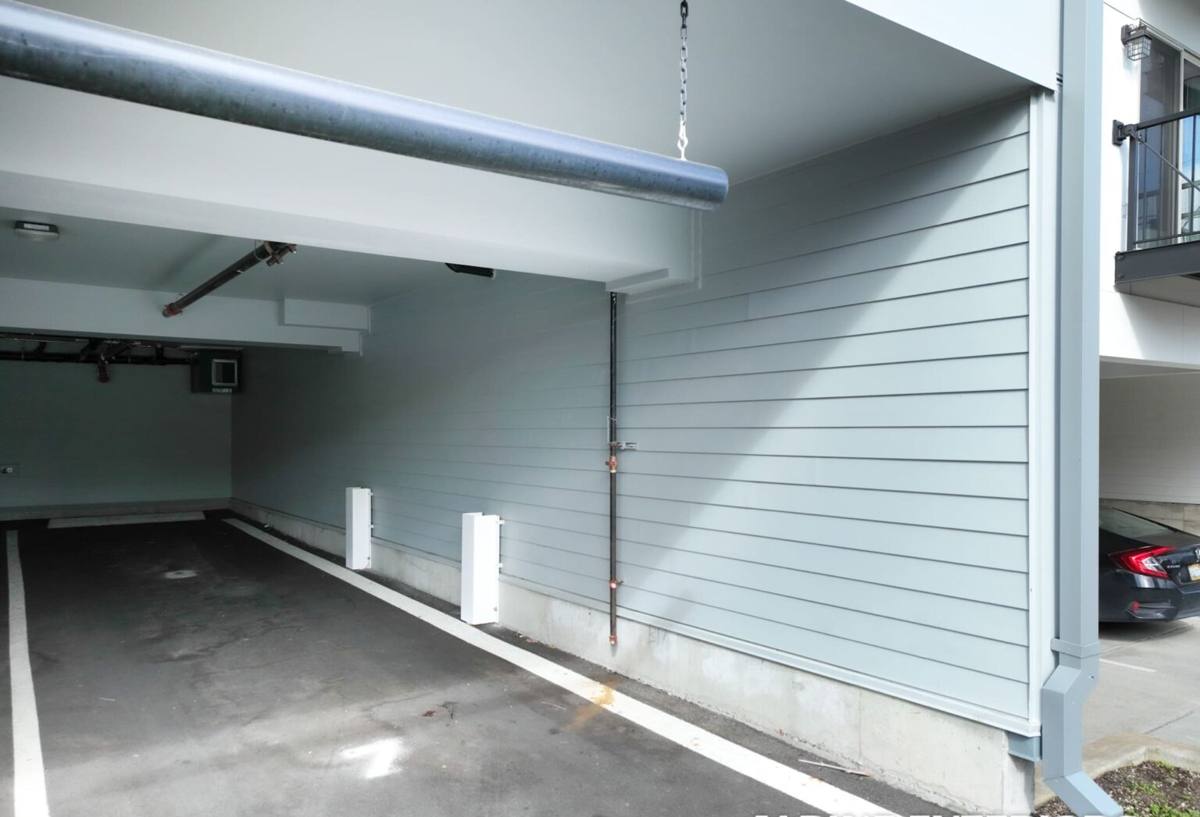
LP SmartSide is an engineered wood product — strand board (similar in concept to OSB) treated with zinc borate for insect and fungal resistance, then resin-saturated and coated with a proprietary overlay before finishing. It's a real improvement over the old primed hardboard sidings that gave engineered wood a bad name in the 1990s. LP backs it with a reasonable warranty, it's lighter and easier to handle than fiber cement, and it holds paint well when properly installed and maintained. Framing crews like it. Installed correctly, on a building with good roof overhangs and consistent maintenance, it performs.
That's a fair description of the product, and we're not going to pretend otherwise.
Where It's a Reasonable Choice
- Drier climates with less sustained moisture exposure
- Budgets where the gap between engineered wood and fiber cement matters
- Buildings with generous eave overhangs that keep walls out of direct rain
- Owners committed to inspecting and re-caulking on a regular schedule
Why the Local Climate Changes the Math
Bellingham and the rest of Whatcom County sit in a specific weather pattern: salt-laden marine air off Bellingham Bay and the Strait of Georgia, long stretches of driving rain that comes in sideways off Puget Sound storms, and a moss and mildew season that can run eight or nine months out of the year in shaded, north-facing exposures. None of that is exotic — it's just persistent, low-grade moisture pressure, day after day, for most of the year.
Engineered wood siding is, at its core, still wood fiber. It's engineered to resist moisture far better than raw lumber, but the failure mode when it does take on water is the same one wood has always had: swelling at the edges, delamination, and softening, usually starting at cut ends, seams, and fastener penetrations where the factory coating has been broken. In a market with 60 inches of annual rainfall and salt air accelerating coating breakdown, those vulnerable points get tested constantly. Any caulk joint, any missed touch-up paint, any spot where a gutter overflowed onto the wall for a season — that's an opening for the underlying wood fiber to start absorbing moisture.
Fiber cement doesn't have that failure mode, because there's no wood fiber to swell. It's cement, sand, and cellulose fiber pressed and cured into a rigid, dimensionally stable board. It doesn't expand and contract with humidity the way wood-based products do, it doesn't rot, and it's non-combustible — a real consideration during dry summer stretches when wildfire smoke rolls into the county and ember exposure becomes a talking point for coastal Washington homes too.
Side-by-Side: What the Materials Actually Do
| Factor | James Hardie Fiber Cement | LP SmartSide Engineered Wood |
|---|---|---|
| Base material | Cement, sand, cellulose fiber | Wood strand, resin-saturated |
| Combustibility | Non-combustible | Combustible |
| Moisture failure mode | Does not swell or rot; freeze-thaw stable | Can swell, delaminate, or soften at exposed edges |
| Factory finish option | ColorPlus baked-on finish, 30-year finish warranty | Primed or pre-finished; field paint common |
| Weight / handling | Heavier, requires specific fastening and cutting practices | Lighter, faster to handle and cut |
| Long-term maintenance | Periodic caulk/paint touch-up on cut ends | Regular inspection and re-coating of edges, seams, and end cuts |
| Typical material cost tier | Higher | Moderate |
Installation Sensitivity Is the Real Differentiator
Both products have a defined installation spec, and both fail early when that spec is ignored. But the tolerance for error is different. Engineered wood is more forgiving to cut and hang, which is part of why it moves quickly on a job site — but every field-cut edge that isn't sealed per the manufacturer's instructions is a moisture entry point, and in a climate that rains as often as ours does, those unsealed edges get tested within the first winter, not after ten years.
Fiber cement has its own installation demands — correct fastener spacing and depth, proper gapping and flashing at joints and penetrations, and specific blade and dust-control requirements when cutting (fiber cement dust contains crystalline silica and needs to be cut with the right equipment). It's not a forgiving material for a crew unfamiliar with it. That's exactly why we install only Hardie: it lets our crews build deep, repeatable expertise in one system's flashing details, fastening schedule, and joint treatment instead of switching methods between two very different materials.
Where Installation Mistakes Show Up First
- Butt joints and seams without proper flashing or gapping
- Fasteners driven too deep, cracking the board face
- Cut ends left unsealed, especially at window and door trim returns
- Siding installed tight to grade or hardscape with no clearance
- Missing or inadequate weather-resistive barrier behind the cladding
Warranty Structure: What You're Actually Covering
Both manufacturers offer warranties, but they cover different things and it's worth reading past the headline years. James Hardie's product warranty runs long-term on the substrate, and ColorPlus prefinished products carry a separate, transferable finish warranty that covers fading and peeling — a meaningful detail if you sell the house before the siding's service life is up. LP SmartSide's warranty covers manufacturing defects and, depending on the product line, has historically included provisions tied to maintenance compliance, meaning documented upkeep can matter to a claim. Neither warranty covers installation error, which is a separate reason installer track record matters as much as the brand name on the product.
Why We Standardized on One Product
We used to get the same question every homeowner asks: "Why don't you just carry both and let us choose?" The honest answer is that stocking, training, and warranting two structurally different siding systems means being average at both instead of genuinely good at one. We chose fiber cement because it matches the trade-offs of this specific coastline — moss, salt air, and driving rain that doesn't let up for months — better than engineered wood does, and because a non-combustible, dimensionally stable board gives us fewer callback scenarios tied to the material itself rather than the workmanship.
That's not a claim that LP SmartSide is a bad product. It's a claim that, for the climate our crews actually work in, James Hardie's HZ5 climate-engineered line, ColorPlus factory finish, and long track record in Pacific Northwest markets is the better match for a siding job we're willing to put our name behind for the next 30-plus years.
Questions Worth Asking Before You Sign a Siding Contract
Whichever material you're leaning toward, the questions below will tell you more about the actual outcome than the brand name will.
- Is the crew factory-certified or trained specifically on the product being installed?
- What flashing and gapping details will be used at joints, corners, and penetrations?
- Does the quoted warranty cover the finish separately from the substrate, and is it transferable?
- How are cut ends and field cuts sealed, and by whom, before the board goes up?
- What's the manufacturer's specific product line for coastal or high-moisture exposure, and is that what's being quoted?
- Will the contractor put the installation warranty in writing, separate from the manufacturer's material warranty?
Getting a Straight Answer for Your Home
Every house on every lot in Whatcom County sits a little differently — sun exposure, tree cover, proximity to the water, existing moisture issues under the current siding. The right answer for your home is worth a real look, not a generic recommendation. If you'd like a free, no-pressure estimate and an honest walk-through of what we'd install and why, the form below gets you on our schedule.