 Bellingham Siding
 Barkley's Exterior Challenge: A Coastal Neighborhood That Never Fully Dries Out
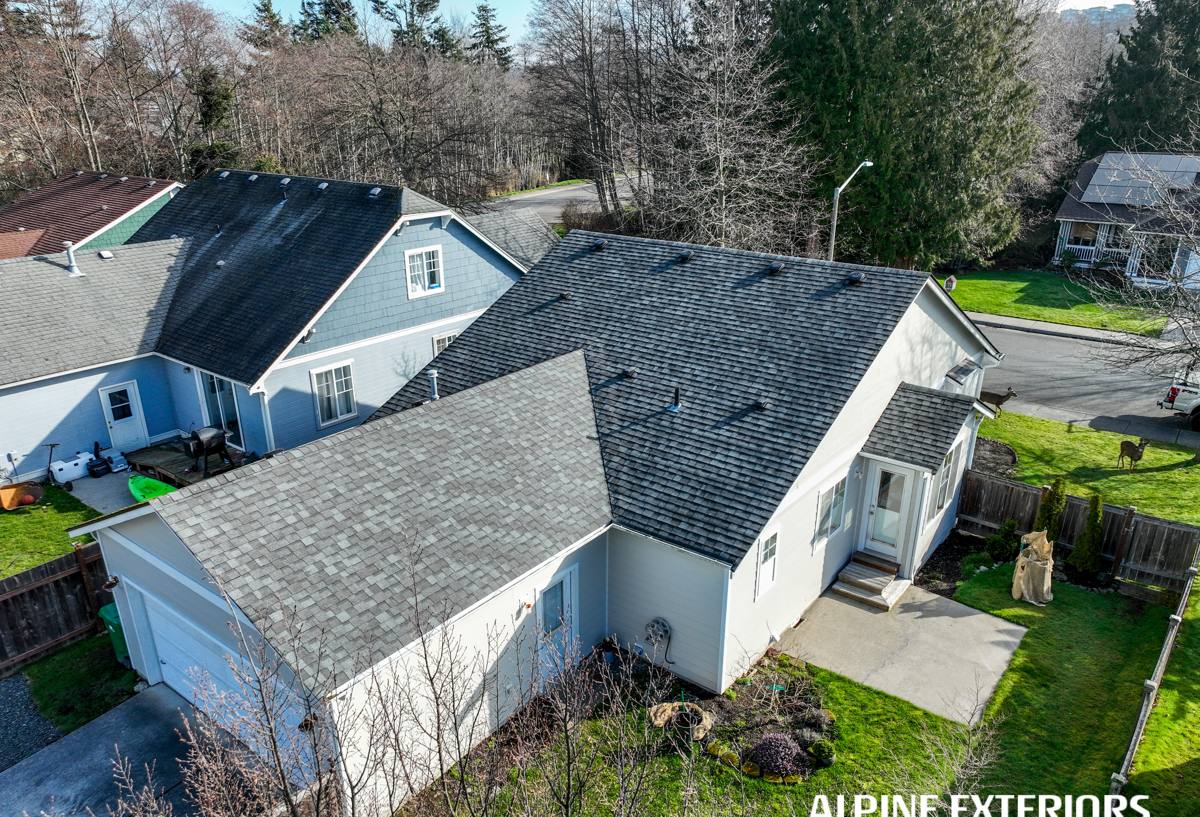
Barkley sits close enough to Bellingham Bay and the surrounding wetlands that its homes and commercial buildings deal with a specific combination of exterior stress most drier climates never see: salt-tinged marine air, long stretches of driving rain off the Sound, and a moss and algae season that can run nine or ten months out of the year. Individually, none of these is dramatic. Together, over ten or fifteen years, they are exactly what breaks down siding that wasn't built for this region or wasn't installed correctly.
As a planned neighborhood with a mix of newer residential construction and commercial buildings, Barkley has a lot of exterior surfaces that were installed on a schedule, by whoever the builder had under contract at the time. That's not a knock on any particular product or crew — it's just how development works. It means a wide range of siding ages, materials, and installation quality exist within the same few blocks, which is part of why we get so many different kinds of siding calls from this part of Bellingham.
What Salt Air, Rain, and Moss Actually Do to a Wall
Salt air
Proximity to Bellingham Bay means a steady low-level exposure to salt-laden moisture in the air. Salt is hygroscopic — it pulls and holds moisture against a surface longer than plain rainwater would. On siding, that means more time spent damp, more stress on fasteners and metal flashing, and faster breakdown of paint films and caulk joints that weren't rated for coastal exposure.
Driving rain
Whatcom County doesn't just get rain, it gets wind-driven rain, which behaves very differently than a straight-down shower. Driving rain gets forced sideways into lap joints, around window trim, and up under poorly sealed seams — areas that a product's data sheet assumes will only see gravity-fed water. This is where installation detail (proper flashing, correct lap exposure, sealed penetrations) matters as much as the material itself.
Moss and algae
Consistent moisture plus shade from mature landscaping is a moss factory. Moss holds water against a surface indefinitely, which is a problem for any wood-based product and a genuine risk for anything with an absorbent core. It's also just an appearance issue that homeowners get tired of pressure-washing every year.
Why We Only Install James Hardie Fiber Cement Siding
We don't install LP SmartSide, vinyl siding, Cemplank, Allura, primed spruce, or cedar. That's a deliberate standard, not a marketing line, and it's worth explaining honestly rather than just asserting it.
- Vinyl is affordable and low-maintenance in mild climates, but it expands and contracts with temperature swings, can warp or crack under impact in colder snaps, and its seams and J-channels give wind-driven rain more places to work its way behind the panel.
- Wood products (cedar, primed spruce) look great when new and can be maintained indefinitely by someone committed to it, but they're organic material in a climate built to rot organic material. Paint failure, moisture intrusion, and moss growth are a constant maintenance cycle here, not an occasional one.
- Engineered wood siding like LP SmartSide improved a lot over older wood products, but it's still a wood-strand composite with an engineered core. Cut edges, fastener penetrations, and any breach in the factory coating are places moisture can get into that core, and in a region with this much sustained dampness, that's a real long-term risk, not a hypothetical one.
- Other fiber cement brands (Cemplank, Allura) are legitimate fiber cement products and not something we'd tell a homeowner is unsafe. Our decision comes down to product line depth for this specific climate, factory finish quality, and warranty structure — areas where we've found James Hardie's HardieZone system and ColorPlus finish to be the strongest match for what Whatcom County exteriors actually go through.
James Hardie fiber cement is non-combustible, doesn't have an absorbent wood core to rot, and is engineered in HZ5 and HZ10 formulations specifically for wetter, cooler climate zones like ours. The ColorPlus factory finish is baked on under controlled conditions, which holds up to UV and moisture far more consistently than field-applied paint on wood or engineered wood siding. It's the product we're willing to put our name behind and back with correct installation.
Siding Options for Barkley Homes
| Hardie Product | Best For | Look |
|---|---|---|
| HardiePlank lap siding | Most single-family homes | Classic horizontal lap, smooth or cedar-textured |
| HardiePanel vertical siding | Modern builds, accent walls, gable ends | Clean vertical lines, often paired with lap |
| HardieShingle | Craftsman and cottage-style homes | Staggered or straight-edge shingle profile |
| HardieTrim | Window/door surrounds, corners, fascia | Smooth, paintable, matches the siding system |
What a Local Crew Actually Adds
Siding installation is one of those trades where the material only performs as well as the details around it. Two crews can install the same product on the same house and get very different long-term results based on flashing, fastener placement, and lap exposure alone. A crew that works Whatcom County exteriors regularly already knows:
- Where wind-driven rain concentrates on a given elevation and how to detail flashing accordingly
- How much clearance to leave near grade, decks, and landscaping so moisture and moss don't get a head start
- Which caulk and sealant products actually hold up through repeated wet-dry cycling instead of just the first year
- How local permitting and inspection works in Bellingham and unincorporated Whatcom County, so a job doesn't stall on paperwork
That local knowledge doesn't show up on a spec sheet, but it's the difference between siding that looks right for two years and siding that performs right for thirty.
Beyond Siding: The Rest of the Exterior Envelope
Siding doesn't work in isolation. A roof that's shedding water onto a wall, windows that leak at the flange, or a deck ledger board trapping moisture against the house can undo good siding work fast. We handle roofing, windows, and decks alongside siding for exactly this reason — an exterior is one connected system, and problems in one area tend to show up as damage in another.
Roofing
Roof-to-wall transitions, valleys, and overhangs all affect how much water your siding sees and where it concentrates. A roof inspection is a natural companion to any siding project in this climate.
Windows
Window flashing integration is one of the most common failure points we find when we open up a wall. New siding is a good time to correct flashing details around existing windows, or upgrade windows that are already past their service life.
Decks
Deck ledger connections and any point where a deck meets siding are high-risk moisture zones. If your deck was built before current flashing standards, it's worth a look while other exterior work is underway.
Signs Your Siding Is Telling You Something
- Paint that's peeling, bubbling, or chalking faster than it used to
- Soft or spongy spots when you press on the siding, especially near the bottom courses
- Persistent moss or dark streaking that comes back within weeks of cleaning
- Visible gaps, warping, or buckling at seams and corners
- Rising energy bills that aren't explained by anything else
- Interior signs like musty smells or staining on walls that back up to exterior siding
Any one of these on its own might be minor. Two or three together usually means moisture has already gotten past the surface, and it's worth having someone look before it spreads.
What a Siding Project in Barkley Typically Involves
- On-site assessment — checking existing siding condition, flashing, and any moisture damage underneath before quoting anything.
- Product and color selection — walking through Hardie's lines and ColorPlus palette against your home's style and HOA or neighborhood guidelines, if applicable.
- Prep and moisture barrier — correcting any water damage found and installing a proper weather-resistive barrier before a single piece of siding goes up.
- Installation to manufacturer spec — correct fastener type and placement, lap exposure, and flashing at every penetration and transition.
- Final walkthrough — reviewing the finished work and warranty documentation with you.
Cost Factors Worth Understanding Upfront
| Factor | Why It Matters |
|---|---|
| Home size and number of stories | More surface area and access complexity (scaffolding, lifts) increase labor time |
| Extent of underlying damage | Rot repair and sheathing replacement, if found, are priced separately from siding itself |
| Product line and profile | Lap vs. shingle vs. panel, and standard vs. premium ColorPlus colors, affect material cost |
| Trim and detail work | Homes with more corners, gables, and window trim need more precision cutting and labor |
| Tear-off vs. overlay feasibility | Most fiber cement projects require full tear-off of old siding rather than overlay, which affects scope |
We'll never guess at a number over the phone. A proper quote comes after we've actually looked at your walls, because the condition underneath the current siding drives cost more than almost anything else.
If you're weighing a siding project in Barkley — whether it's a full replacement, a repair after storm damage, or you're just trying to figure out what's going on with a wall that doesn't look right anymore — we're happy to come take a look. The estimate is free, there's no pressure, and you'll get a straight answer about what your home actually needs.