 Bellingham Siding
 Siding Replacement in Barkley: Knowing When It's Time
Barkley homeowners usually start looking into siding replacement for one of two reasons: something visible has gone wrong — soft trim, bubbling paint, a section that's clearly failing — or a home inspection during a sale or refinance flagged moisture behind the cladding that wasn't obvious from the curb. Either way, replacement is a bigger decision than a repair, and it's worth being clear-eyed about when it's actually the right call versus when targeted repair or a maintenance pass will do.
Full replacement makes sense when the damage is spread across multiple walls rather than isolated to one corner, when the water-resistive barrier or sheathing behind the siding has been compromised, when the existing material is a type that's inherently high-maintenance for this climate (old cedar, primed wood, aging vinyl), or when a home is getting old enough that patch repairs are becoming a recurring expense rather than a one-time fix. If the problem is truly limited to one section with sound sheathing underneath, a repair may be the more honest answer — we'll tell you that during an estimate rather than push a full tear-off a home doesn't need yet.
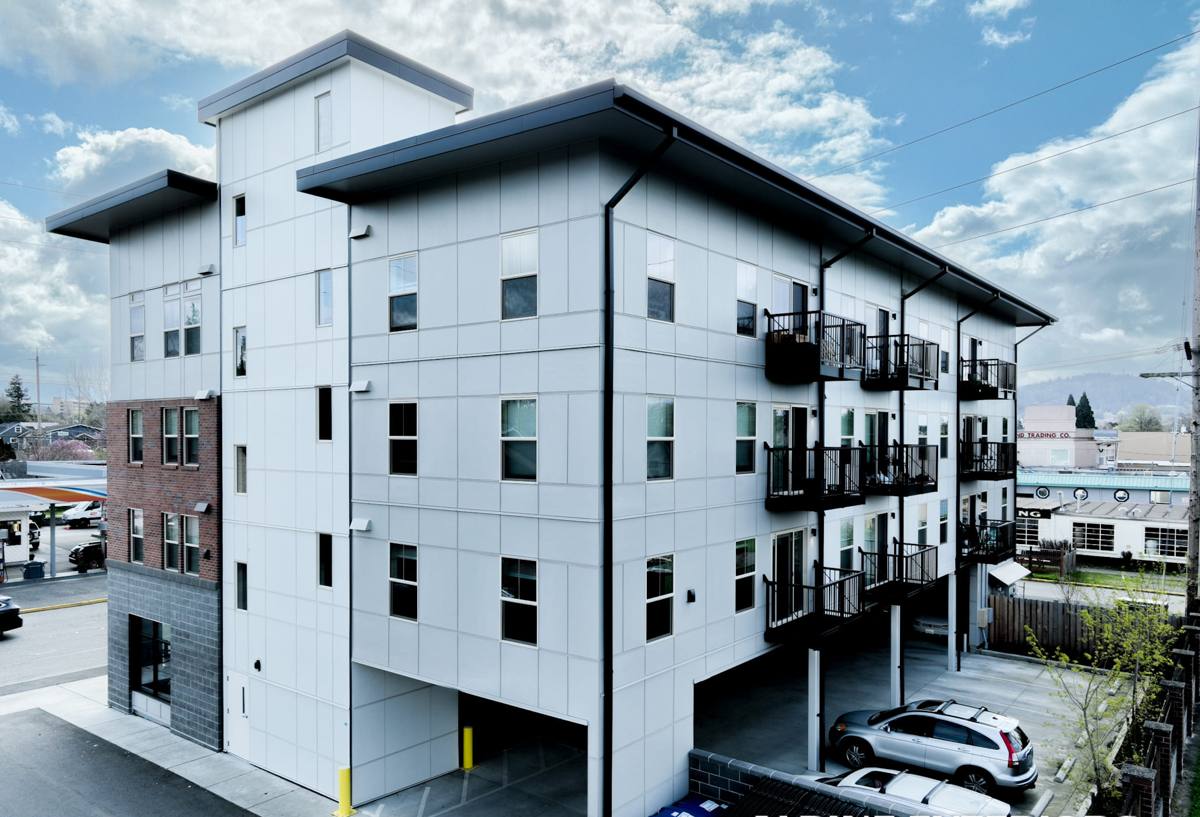
What Barkley's Climate Asks of a Replacement Project
Whatcom County's marine climate puts three specific pressures on an exterior: salt-tinged air that speeds up corrosion on fasteners and hardware, driving rain that gets pushed sideways by wind into laps and seams rather than falling straight down, and a moss season that can run most of the year on shaded, north-facing walls. None of that is dramatic day to day — it's cumulative, and it's exactly why a siding replacement here has to be built differently than one going on a home in a dry inland climate.
That means a replacement project in Barkley isn't just about swapping old panels for new ones. It's an opportunity to correct whatever let water in or moss take hold in the first place — usually a gap in flashing, a water-resistive barrier that wasn't lapped correctly, or a siding material that simply wasn't built to shed this much sustained moisture. Skipping that correction and just re-cladding over the same underlying problem is how homeowners end up back in the same spot in another ten or fifteen years.
Why We Install Only James Hardie Fiber Cement
We don't install vinyl, LP SmartSide, primed spruce, cedar, or other fiber cement brands. That's a professional standard, not a marketing angle — we install one system so we install it consistently well, and we've chosen the system that holds up best to this specific climate. James Hardie fiber cement is non-combustible, it doesn't absorb moisture and swell or rot the way wood-based products can, and it doesn't feed moss growth the way untreated wood surfaces do. Its ColorPlus factory finish is baked on under controlled conditions rather than relying on a field-applied coat of paint that has a narrow, often rainy window to cure properly in this region.
Why the HZ5 Formulation Matters Here
Hardie doesn't sell one universal board — its HZ product lines are engineered for different climate zones, and the HZ5 formulation is built for regions with more moisture and freeze-thaw cycling, which fits Whatcom County's weather pattern closely. Paired with a strong transferable warranty and installation carried out to Hardie's actual specifications — not shortcuts that void it — this is the system we've found actually performs through a full Barkley year rather than just looking good on install day.
What a Correct Siding Replacement Involves
A siding replacement is only as good as what happens underneath it. This is where a rushed or underbid job separates from one that will actually last.
Tear-Off and Sheathing Inspection
Old siding comes off in full, not patched around, so we can see the sheathing underneath. This is the point where hidden problems — soft or delaminated sheathing, rot around window openings, prior water intrusion — get found and dealt with instead of buried under new material. Any damaged sheathing gets replaced before anything else goes back on the wall.
Water-Resistive Barrier and Flashing
A new weather-resistive barrier goes on correctly lapped, shingle-style, so water always drains downward and outward rather than getting trapped behind a seam. Flashing at windows, doors, and roof-to-wall intersections gets detailed to actually shed wind-driven rain, since that's the single most common point of failure we see on homes that come to us with moisture damage. This step matters more in Barkley's driving-rain pattern than it would in a calmer, drier climate.
Installation to Manufacturer Specification
Correct fastener type, spacing, and placement; proper clearances at the ground line and roofline; caulking only where Hardie's install guide actually calls for it rather than as a substitute for good flashing. This is also where a warranty either stays intact or quietly becomes unenforceable — most siding warranty disputes trace back to installation shortcuts, not a defect in the material itself.
Our Replacement Process, Start to Finish
- Estimate and inspection — we walk the exterior, note problem areas, and give you an honest read on whether it's a repair or a full replacement situation.
- Scope and product selection — profile, color, and trim details get finalized before any work starts, so there are no surprises mid-project.
- Tear-off and sheathing check — old material comes off, sheathing gets inspected, and any rot or damage gets addressed before moving forward.
- Water-resistive barrier and flashing — the new drainage plane and flashing details go in, correctly lapped and sealed at every penetration.
- Hardie installation — siding, trim, and accessories go on to manufacturer spec, with fastening and clearances checked as we go.
- Final walkthrough — we go over the finished exterior with you before calling the job done.
Replacement vs. Repair: How to Tell Which One You Need
| Situation | Repair Usually Fits | Replacement Usually Fits |
|---|---|---|
| Damage location | Isolated to one wall or section | Spread across multiple walls |
| Sheathing condition | Sound, no soft spots found | Soft, delaminated, or water-stained |
| Current material | Hardie or another durable material in good shape | Aging cedar, primed wood, or failing vinyl |
| Moss/moisture history | Surface staining only, no rot | Recurring rot or soft trim over several seasons |
| Age of siding | Under 10-15 years | Original siding on an older home, or past its practical life |
What Drives Cost on a Barkley Replacement
Every project is different, and we'll give you a firm number after walking your home — but these are the factors that move the price up or down on most siding replacements in this area.
| Factor | Why It Matters |
|---|---|
| Home size and wall complexity | More corners, dormers, and cutouts mean more labor and trim work per square foot |
| Sheathing condition | Rot found during tear-off adds material and labor to repair before new siding can go on |
| Existing material removal | Some materials (old cedar, certain vinyl systems) take longer to strip than others |
| Trim and accessory scope | Corner boards, fascia, and soffit work added to the same project changes total scope |
| Access and site conditions | Landscaping, fencing, and how close the home sits to neighboring structures affect setup time |
| Color and profile selection | ColorPlus factory finishes and certain profiles carry different material costs |
Signs Your Barkley Home May Need Siding Replacement
- Soft or spongy spots when you press on siding or trim, especially near the ground line or window sills
- Paint that's bubbling, peeling, or failing repeatedly in the same spots year after year
- Persistent moss or dark staining on shaded, north-facing walls that returns soon after cleaning
- Visible gaps, warping, or panels that have pulled away from the wall
- Rust streaking from fasteners or corroded trim hardware
- Rising energy bills that suggest the wall assembly behind the siding is no longer doing its job
- A home inspection report noting moisture intrusion or sheathing concerns behind the cladding
Why a Crew That Already Works Barkley Matters
Siding replacement isn't a one-size-fits-all trade skill — it's a lot more about local judgment than most homeowners expect. A crew that regularly works Barkley and the surrounding Whatcom County area already knows what this specific mix of salt air, wind-driven rain, and long moss seasons does to a wall assembly, and builds the flashing and drainage details around that from the start rather than treating it as an afterthought. That familiarity also shows up in smaller, practical ways: knowing how Barkley's mix of newer planned-development homes and older infill construction tend to be built, what to expect from local permitting, and how to sequence a project around the wetter months so materials aren't sitting exposed during a stretch of driving rain.
It also matters for accountability. A local crew is still around next year and the year after — for warranty questions, for a follow-up look at a trim detail, for anything that comes up after the invoice is paid. That's a different relationship than a crew that moves through an area once and doesn't come back.
Protecting Your Investment After the Job Is Done
A correctly installed Hardie replacement is genuinely low-maintenance compared to what most Barkley homeowners are used to, but "low-maintenance" isn't "no-maintenance." An occasional rinse to knock down surface grime, keeping gutters clear so overflow doesn't run down a wall, and trimming back vegetation that shades a wall and keeps it damp all go a long way toward getting the full lifespan out of the system. None of that comes close to the recurring recaulking, repainting, and panel replacement that wood-based or lower-grade materials tend to demand in this climate, but it's still worth doing.
If your Barkley home is showing any of the signs above, or you just want an honest opinion on whether you're looking at a repair or a full replacement, we're glad to take a look. The estimate is free, there's no pressure attached to it, and you'll get a straight answer either way — use the form below to get started.