 Bellingham Siding
 Building a Deck That Can Actually Handle Happy Valley's Weather
Happy Valley sits close enough to Bellingham Bay that salt-laden air is a real factor in how outdoor structures age, and far enough into the Pacific Northwest's wet-season pattern that driving rain and a long moss season are just part of the deal. A deck built here has to do more than look good on a dry afternoon. It has to shed water fast, resist corrosion in its hardware, and keep moss and algae from turning the walking surface into a hazard for months at a stretch. Homes in this neighborhood range from older builds on sloped lots to newer construction with more tree cover, and each of those conditions changes what a deck needs to hold up over time.
We build and repair decks throughout Bellingham and Whatcom County, and Happy Valley's mix of hillside grading, mature trees, and proximity to the water means we plan differently here than we would on a flat, sun-exposed lot across town. This page covers what that actually looks like — the structural details, the material choices, and the process — so you know what to expect and what questions to ask before committing to a project.
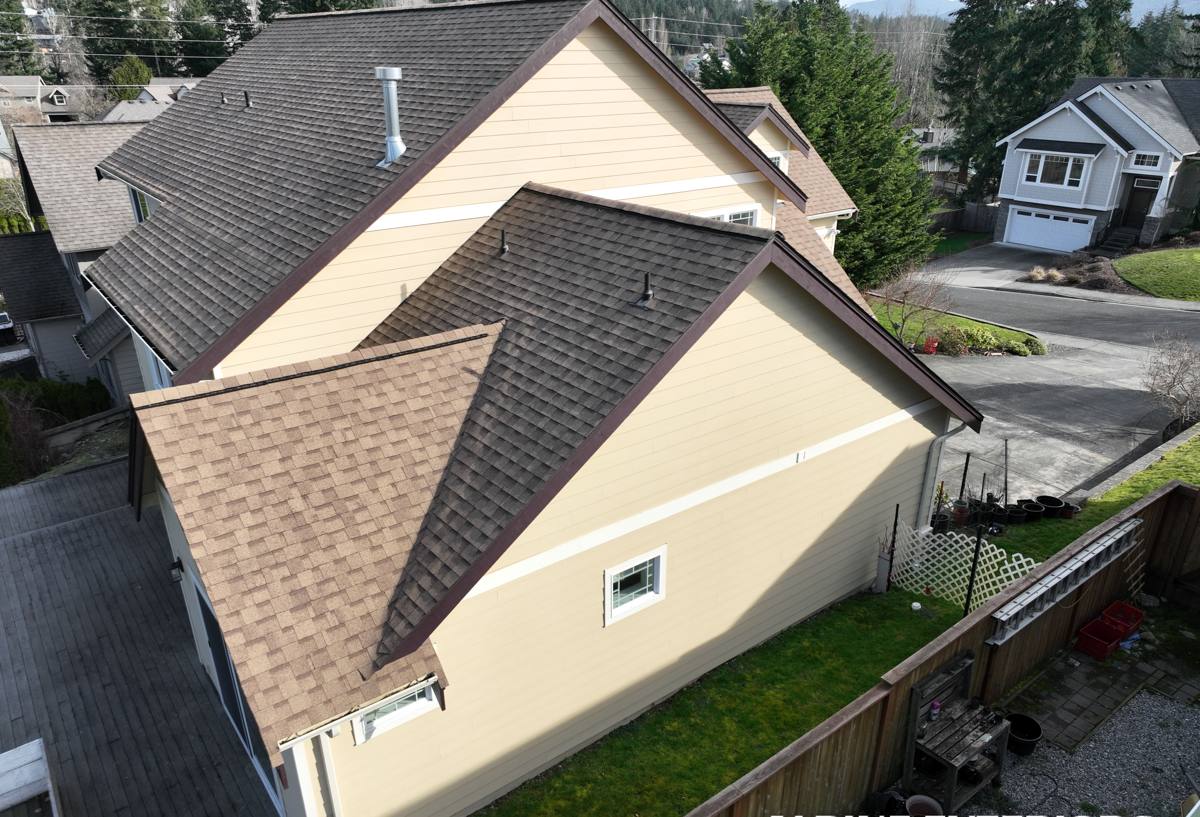
What a Properly Built Deck Needs Below the Surface
Most deck problems homeowners notice — soft boards, sagging rail posts, rust streaks — trace back to decisions made below the decking that nobody sees once the project is finished. In a climate that stays wet for months at a time, those hidden details matter more than they would somewhere dry.
Footings Sized for the Site
Footing depth and bearing capacity need to match the actual soil on your lot, not a generic assumption. Many Happy Valley properties sit on sloped or partially graded ground, which affects drainage around footings and how much water sits against concrete piers during winter. Footings that are undersized or poured without proper drainage gravel underneath are one of the more common causes of a deck that starts to shift or feel unstable after a few wet seasons.
The Ledger Board Connection
Where a deck attaches to the house is the single most water-vulnerable joint on the entire structure. If flashing isn't installed correctly behind the ledger board, water works its way into the rim joist and wall framing over time — and because it's hidden behind the decking and siding, it often isn't discovered until there's already rot. Correct flashing, proper fasteners, and a small air gap or drainage path behind the ledger are non-negotiable in a climate with this much annual rainfall.
Fasteners and Hardware
Salt air off the bay accelerates corrosion on standard fasteners faster than most homeowners expect. Structural hardware — joist hangers, post bases, ledger bolts — should be rated for coastal or wet-climate exposure, typically hot-dip galvanized or stainless steel depending on the connection. Cheaper coated fasteners can look fine for a year or two before rust starts bleeding through the wood around them, which is a repair headache we see on older decks that weren't built with this exposure in mind.
Choosing Decking Material for Rain, Salt Air, and Moss
There's no single "best" decking material — there's the material that fits your budget, your maintenance tolerance, and how much shade and moisture your specific yard deals with. Here's how the common options actually perform under Whatcom County conditions.
| Material | How It Handles This Climate | Maintenance Reality |
|---|---|---|
| Pressure-treated wood | Affordable and structurally solid, but absorbs moisture readily and needs a sealed finish to resist moss and graying | Annual cleaning and re-sealing to prevent moss growth and checking |
| Cedar | Naturally rot-resistant and handles moisture better than most softwoods, but still needs finish maintenance in constant damp shade | Periodic staining or sealing; softer surface can show wear |
| Composite decking | Resists moisture absorption and won't rot, though it can still grow surface algae or moss film in shaded, low-airflow spots | Occasional washing; no sealing or staining required |
| PVC decking | Fully moisture-resistant with the least susceptibility to moss staining of the common options | Lowest maintenance; higher upfront material cost |
We don't push one product on every job. A shaded, low-sun deck under tree cover is going to fight moss no matter what you put down — in that situation, ease of cleaning often matters more than the material's price tag. A more open, sun-exposed deck has more flexibility because it dries out between rain events instead of staying damp.
Design Choices That Matter on Happy Valley Lots
Working With Slope and Drainage
Sloped and hillside lots are common in this neighborhood, and how a deck's substructure interacts with that grade affects both water runoff and long-term stability. Deck framing built without accounting for how water moves across the site during a heavy winter storm tends to trap moisture against posts and footings, which shortens the structure's life.
Shade, Tree Cover, and Moss Pressure
Mature tree cover is part of what makes many Happy Valley properties attractive, but it also means less sun exposure to dry a deck surface between rains — the exact condition moss needs to establish. Board spacing, surface texture, and airflow underneath the deck all influence how fast moss takes hold, and we factor that into the design rather than treating it as a maintenance problem to solve later.
Railings and Guards
Any deck built above a certain height needs code-compliant guardrails, and the hardware for those rails is exposed to the same rain and salt air as everything else. We spec rail post connections and hardware the same way we spec the deck's structural fasteners — for corrosion resistance, not just up-front cost.
Our Deck Building Process
- On-site assessment — we walk the lot, check slope and drainage patterns, and look at existing structures (house wall condition, prior decks, grading) before quoting anything.
- Design and material selection — we talk through decking material, layout, and railing options based on your budget and how much maintenance you want to take on.
- Permitting — we handle the permit application and coordinate any required inspections with the City of Bellingham or Whatcom County, depending on your property's jurisdiction.
- Footings and framing — footings sized for your soil, correctly flashed ledger connection, corrosion-rated hardware throughout.
- Decking, railing, and finish work — installed per manufacturer spacing and fastening specs so warranties stay intact.
- Final walkthrough — we go over care and cleaning specific to the material you chose before we consider the job done.
Keeping a Deck Ahead of Moss and Moisture
Whatever material you choose, a little seasonal attention goes a long way toward keeping a deck safe and good-looking through a long wet season. A basic maintenance routine for this climate should include:
- Sweeping debris and standing leaves off the surface regularly in fall, before they trap moisture against the boards
- Cleaning moss and algae film off the surface at least once a year, more often in heavily shaded areas
- Checking for gaps in caulking or flashing where the deck meets the house
- Inspecting fastener heads and hardware for early rust staining, especially closer to the bay
- Re-sealing or staining wood decking on the manufacturer's recommended schedule, not just when it looks faded
- Keeping gutters and downspouts near the deck clear so runoff isn't dumping extra water onto the structure
Permits and Code Considerations in Bellingham
Most new deck construction and many significant deck repairs require a permit, and requirements can differ depending on whether your property falls under City of Bellingham or Whatcom County jurisdiction, along with details like deck height, size, and proximity to property lines. Skipping the permit step can create real problems later — unpermitted structural work can complicate a home sale or an insurance claim. We handle the permit process as part of the job so you're not left figuring out which office to call.
Why Hiring a Crew That Already Works in Happy Valley Matters
A deck built by a crew that hasn't worked much in this specific climate tends to make assumptions that don't hold up here — using standard fasteners instead of corrosion-rated hardware, underestimating how much shade a lot actually gets, or skipping drainage details that only matter once the rainy season sets in. We build decks throughout Bellingham and Whatcom County and see, year after year, which construction shortcuts show up as callbacks two or three winters later. That's not a knock on any particular product or crew — it's just the reality of building outdoor structures in a marine climate with this much annual rainfall and a genuine moss season. Knowing the neighborhood's lot conditions, drainage patterns, and typical exposure ahead of time means fewer surprises during construction and a deck that's built for the weather it will actually face, not a generic set of assumptions.
If you're planning a new deck or need an honest look at whether an existing one is holding up the way it should, we're happy to come take a look. The estimate is free, there's no pressure, and you'll get a straight answer about what your project actually needs.