 Bellingham Siding
 Why Siding Choice Matters More in Barkley Than It Looks Like It Should
Barkley sits close enough to Bellingham Bay and the Salish Sea that salt-laden air is a constant factor on exterior materials, even on homes that aren't waterfront. Add Whatcom County's long wet season, driving rain that comes in sideways off winter storms, and heavy tree cover that keeps north- and east-facing walls shaded and damp for weeks at a time, and you have a climate that is genuinely hard on siding. It's not dramatic weather — no hurricanes, no extreme heat — but it's relentless, and relentless is what wears out the wrong product faster than homeowners expect.
Siding in this neighborhood has to do three jobs at once: shed water fast, resist the algae and moss that thrive in shade and moisture, and hold its finish through salt exposure and UV cycling without chalking, peeling, or swelling. Wood-based products and some composite sidings can technically do all three for a while, but they need consistent maintenance to keep doing it. Fiber cement, installed correctly, is built for exactly this kind of climate — which is why it's the only material we put on homes.
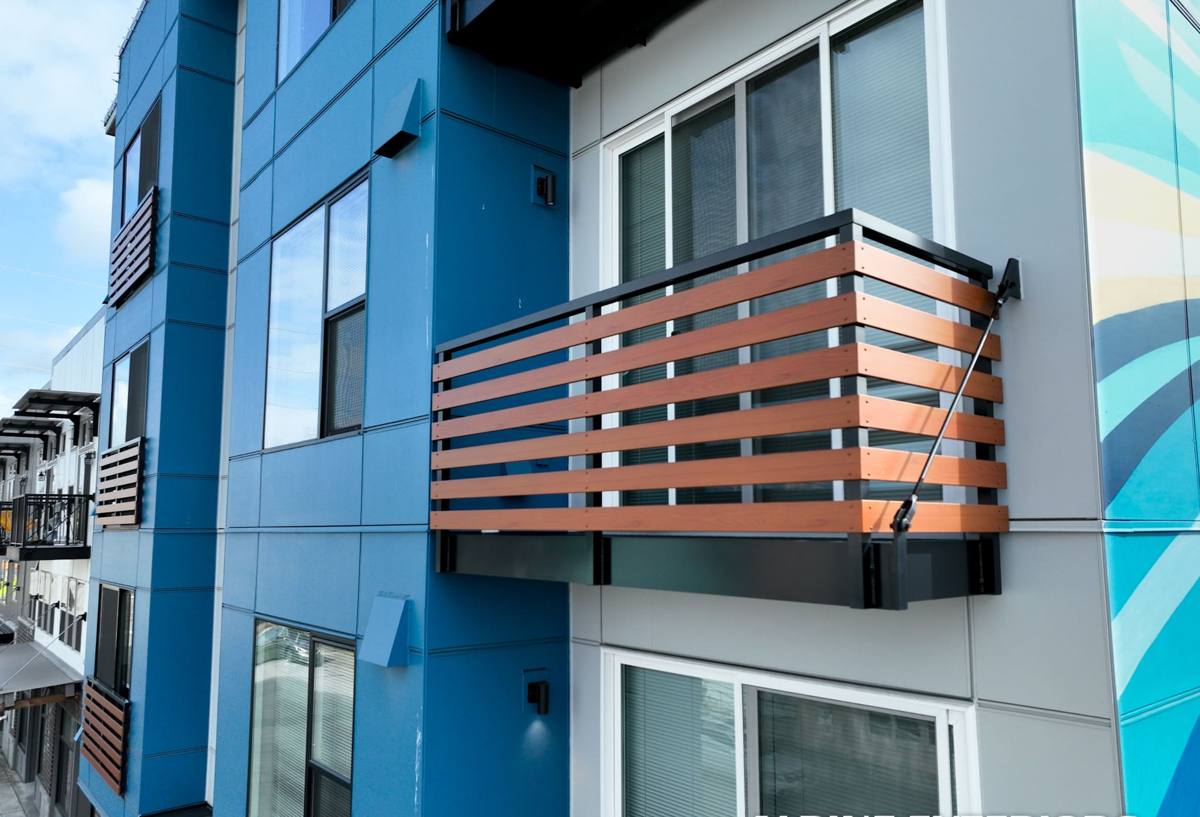
What Barkley's Climate Actually Does to Siding Over Time
Salt Air and Metal Fasteners
Salt-influenced coastal air accelerates corrosion on fasteners, flashing, and any exposed metal trim. Siding systems that rely on standard fasteners or thin, unprotected flashing degrade faster here than they would inland. Correct fiber cement installation uses corrosion-resistant fasteners and properly detailed flashing specifically because this region punishes anything less.
Driving Rain and Wall Assemblies
Rain that comes in at an angle finds every gap, seam, and improperly lapped joint. A siding product can be excellent and still fail if it's installed without a proper drainage plane behind it. Water that gets behind the cladding and has nowhere to go is the actual cause of most siding failures in this region — not the siding material itself.
Moss and Algae Season
Bellingham's moss season effectively runs from fall through spring. Shaded walls, gutters that stay damp, and organic debris from surrounding trees all give moss and algae a foothold. Some siding materials absorb moisture into the substrate, which lets organic growth take root in the material itself rather than just sitting on the surface — that's a much harder problem to reverse.
What a Correct Fiber Cement Installation Involves
Fiber cement siding is only as good as the installation behind it. The board itself resists moisture, fire, and pests, but the assembly around it is what actually keeps a Barkley home dry.
Drainage Plane and Water-Resistive Barrier
Every correct install starts with a continuous water-resistive barrier, properly lapped shingle-style so water sheds down and out, not into the wall. Where budgets and conditions allow, a rainscreen gap behind the siding gives any incidental moisture a path to drain and dry instead of sitting against the sheathing.
Flashing at Every Penetration
Windows, doors, hose bibs, light fixtures, and roof-to-wall transitions are where the vast majority of leaks originate. Each of these needs dedicated flashing detailed to shed water outward, not just caulk over a gap. Caulk is a backup, not a strategy.
Clearances and Fastening
James Hardie specifies minimum clearances from grade, roof lines, and decks, along with fastener spacing and placement. Skipping these clearances is one of the most common corner-cutting mistakes we see on homes we're asked to fix or re-side — it looks fine on install day and causes problems two or three winters later.
James Hardie Product Lines That Fit Barkley Homes
James Hardie engineers its siding by climate zone, and the Pacific Northwest formulation is built specifically to resist the moisture cycling common to Whatcom County. We select the product line based on the home's architecture, exposure, and the look the homeowner wants — not a one-size-fits-all default.
| Product Line | Best Use | Look | Notes for Barkley Homes |
|---|---|---|---|
| HardiePlank lap siding | Most single-family homes | Traditional horizontal lap, smooth or woodgrain | Most common choice; handles driving rain well when lapped and flashed correctly |
| HardiePanel vertical siding | Modern or mixed-material exteriors | Clean vertical panels, often paired with board-and-batten | Good for contemporary Barkley builds mixing siding textures |
| HardieShingle siding | Accent gables, dormers, Craftsman-style detailing | Staggered or straight-edge shingle profile | Popular for adding texture without full wood-shingle maintenance |
| HardieTrim boards | Corners, window and door casing, fascia | Smooth or textured trim profiles | Matched fiber cement trim avoids the mismatch and rot issues of wood trim on a fiber cement wall |
ColorPlus Factory Finish
Every project we install uses ColorPlus, James Hardie's factory-applied finish, rather than field-painting after installation. It's baked on and cured under controlled conditions, which gives it better fade and chip resistance than a job-site paint job — a meaningful advantage in a climate where salt air and UV exposure both work against a finish over time.
Moss, Shade, and Choosing a Finish That Holds Up
Because so much of Barkley's tree cover creates persistent shade on certain elevations, we talk with homeowners about texture and color as functional decisions, not just aesthetic ones. Smoother finishes shed surface moisture and resist algae staining more easily than heavily textured woodgrain finishes in shaded spots. Darker colors show less visible staining between cleanings, while lighter colors show buildup sooner but are easier to spot early. Neither is "wrong" — it's a trade-off worth discussing before you pick a color, not after.
Fiber cement doesn't stop moss and algae from ever landing on a wall — nothing does, outdoors, in this climate. What it does is refuse to let that growth take root in the material itself the way untreated wood or absorbent substrates can. Surface growth on fiber cement is a periodic wash-down issue, not a structural one.
Our Process for a Barkley Siding Project
The steps are the same on every job because skipping one is how problems get built into a wall for the next decade.
- On-site assessment of existing siding, sheathing condition, and problem areas (rot, prior water intrusion, undersized clearances)
- Removal of old siding and inspection of the sheathing underneath before anything new goes up
- Repair of any damaged sheathing or framing found during tear-off — this gets flagged and priced before we cover it up, not discovered later
- Installation of a continuous water-resistive barrier, properly lapped
- Flashing at every window, door, and penetration
- Fiber cement installation to James Hardie's fastening, clearance, and joint specifications
- Trim, caulking at appropriate joints only (not as a substitute for flashing), and final cleanup
What to Verify Before You Sign Off
- Old siding was fully removed and sheathing was actually inspected, not just covered
- A continuous water-resistive barrier is visible in progress photos before siding goes on
- Flashing is installed at every window, door, and penetration — not just caulked
- Minimum clearances from grade, decks, and roof lines are maintained
- Fasteners and joints follow James Hardie's published installation specifications
- ColorPlus finish (factory-applied) is used rather than field painting, unless you've specifically chosen otherwise
Cost Factors on a Barkley Fiber Cement Project
Every home is different, so we won't quote a number without seeing the house, but these are the variables that actually move the price.
| Factor | Why It Matters | Impact |
|---|---|---|
| Tear-off scope | Removing old siding and disposing of it is real labor before any new material goes up | Higher on homes with multiple layers of old siding |
| Sheathing repair | Water damage found during tear-off has to be fixed before siding can go on | Variable — depends on prior moisture issues |
| Home complexity | Gables, dormers, and multiple roof lines multiply flashing and cutting time | Higher on architecturally detailed homes |
| Product line mix | Combining lap siding, shingle accents, and trim adds labor versus a single product | Moderate increase for mixed-material designs |
| Access and site conditions | Tree cover, tight lot lines, and grade all affect scaffolding and staging | Common factor on established Barkley lots |
Why a Crew That Already Works in Barkley Matters
Fiber cement installation isn't complicated in theory, but the details that make it last in this specific climate — flashing sequencing for driving rain, clearance decisions on shaded and moss-prone walls, fastener selection given salt air — are the kind of judgment calls that come from doing this work repeatedly in Whatcom County conditions, not from a general contracting background applied to any region. A crew that already knows how Bellingham's rain behaves against a wall, and what a north-facing elevation under tree cover actually needs, makes fewer assumptions and catches more problems before they're sealed behind new siding.
There's also a practical side: local crews know Bellingham's permitting expectations and can plan a project timeline around this region's wet season rather than fighting it, scheduling tear-off and dry-in stages to minimize the window where a wall is exposed.
Maintenance After Installation
Correctly installed James Hardie siding is low-maintenance, not no-maintenance. An occasional rinse to clear pollen, dust, and early moss growth — especially on shaded elevations — keeps the ColorPlus finish looking like day one. Keep gutters clear and vegetation trimmed back from the siding so airflow can dry the wall between rain events. Beyond that, there's no annual painting, sealing, or caulking regimen required the way there is with wood or some composite products.
If you're weighing a siding replacement or repair for a home in Barkley, we're happy to walk the property, look at what your current siding and framing are actually dealing with, and give you a straight, no-pressure estimate. Use the form below to get started.