 Bellingham Siding
 Why Silver Beach Homes Wear Out Siding Faster Than You'd Expect
Silver Beach sits close enough to Bellingham Bay that salt-laden air is a fact of life, not an occasional nuisance. That air carries moisture and mineral salts that settle on exterior walls, and combined with Whatcom County's long wet season, it creates a slow, steady attack on anything less than a fully engineered siding system. Add in driving rain that comes sideways off the water during winter storms, and siding here has to resist wind-driven moisture intrusion, not just handle a light drizzle running down a wall.
Then there's moss. Bellingham's tree cover, overcast stretches, and mild temperatures mean north- and west-facing walls in Silver Beach can stay damp for days at a time. Moss and algae don't just look bad — they hold moisture against the siding surface, and on the wrong material that moisture eventually finds its way behind the cladding, into the sheathing, and into the framing. By the time a homeowner notices a soft spot or a musty smell in a wall cavity, the damage is usually well past a cosmetic fix.
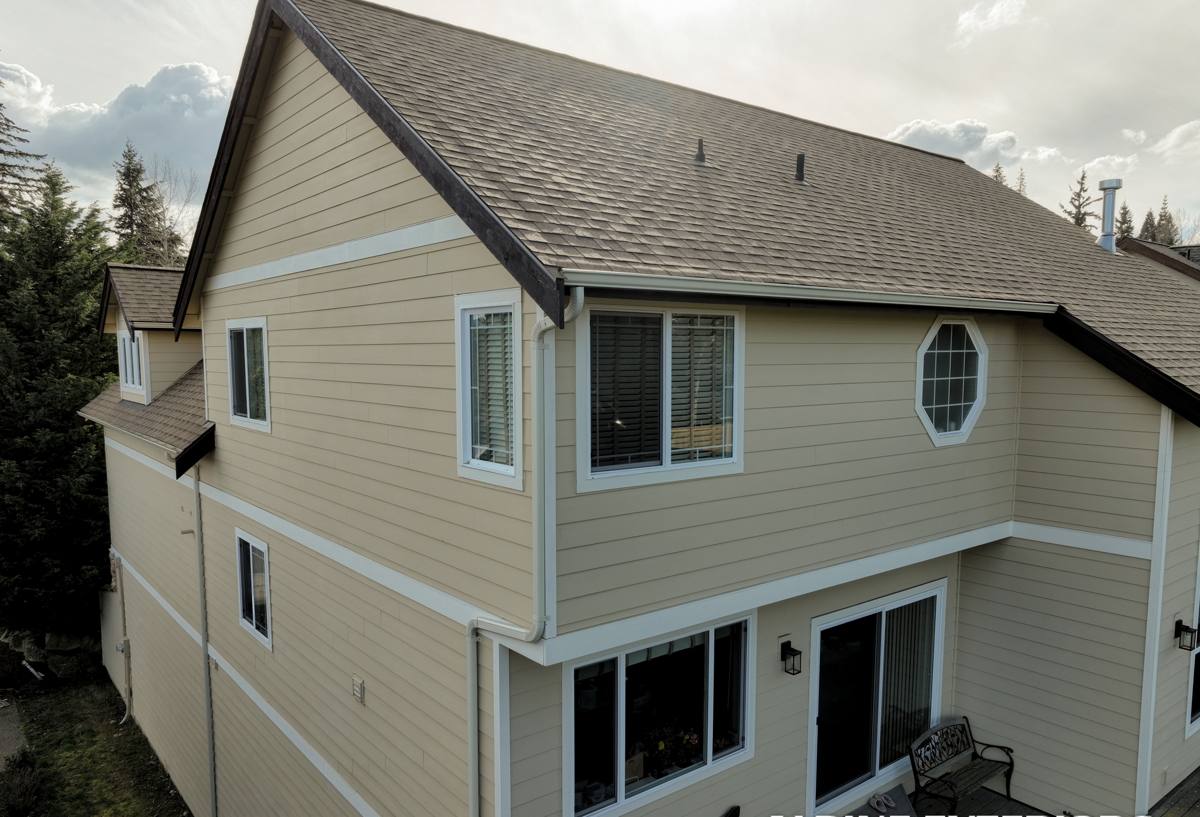
Signs a Silver Beach Home Needs Siding Replacement, Not Just Repair
Not every siding problem calls for a full tear-off, but in this climate, certain symptoms almost always mean the water has already gotten past the surface. Knowing the difference saves homeowners from throwing money at repeated patch jobs that don't address the underlying moisture path.
- Soft, spongy, or bubbling siding panels, especially near ground level or under windows
- Visible warping, cupping, or delamination of boards or panels
- Paint that keeps failing within a year or two of repainting, even with quality products
- Persistent moss or dark staining that returns quickly after cleaning
- Interior signs — peeling paint, musty odor, or discoloration on walls that back up to exterior siding
- Gaps opening up at seams, corners, or trim where caulking used to hold
- Visible rot or crumbling at the bottom edge of siding boards
If more than one or two of these show up, especially on the sides of the house facing prevailing weather, it's worth having a crew evaluate the wall assembly rather than the siding surface alone.
What a Correct Siding Replacement Actually Involves
Tear-Off and Inspection
Removing the old siding is the only point in a project where the sheathing, framing, and existing moisture barrier are fully visible. A rushed tear-off skips this — a correct one treats it as the most important inspection the house will get in years. Any soft sheathing, compromised framing, or hidden mold gets addressed before a single new piece of siding goes up. Skipping this step is how a new siding job ends up hiding the same problem it was supposed to fix.
Water-Resistive Barrier and Flashing
In a climate with as much driving rain as Bellingham sees, the water-resistive barrier and flashing details matter more than the siding brand on top of them. Every window, door, and penetration needs proper flashing that sheds water downward and outward, lapped correctly with the barrier beneath it. This is the layer that actually keeps a home dry — the siding is the second line of defense, not the first.
Siding Installation to Manufacturer Spec
Fastener placement, gapping at butt joints, clearance from grade and roof lines, and caulking at the right (and only the right) locations all affect how the finished wall performs over the next 20-plus years. Installed loosely to save time, even a well-engineered product can trap moisture or fail early. This is where the difference between a crew that installs siding occasionally and one that installs it daily shows up.
Trim, Caulking, and Finish Details
The finish work — corner trim, window and door casing, caulk joints, and touch-up paint at cut edges — is what protects the cut ends of siding boards from wicking moisture. On a coastal-influenced job like this, factory-sealed cut edges and correctly caulked joints are not optional extras.
Why We Install Only James Hardie Fiber Cement Here
We don't install vinyl, LP SmartSide, primed spruce, cedar, or other fiber cement brands like Cemplank or Allura. That's a deliberate standard, not a sales preference, and it's especially relevant in a neighborhood dealing with salt air and constant moss pressure.
Vinyl siding can warp and become brittle with age and temperature swings, and its seams and J-channels give moisture more places to collect in a wet climate. Wood-based products, including primed spruce and engineered wood siding, are more sensitive to sustained moisture exposure — exactly the condition Silver Beach's shaded, damp walls create for a good part of the year. Cedar looks great initially but demands ongoing maintenance (staining, sealing, moss treatment) that most homeowners underestimate when they choose it.
James Hardie fiber cement is non-combustible, dimensionally stable, and doesn't feed mold or moss the way wood-based products can. Its ColorPlus factory finish is baked on under controlled conditions, which holds color and resists the fading and chipping that field-applied paint struggles with in a marine climate. Hardie's HZ5 product line is specifically engineered for climates like ours, with moisture and freeze-thaw performance suited to the Pacific Northwest. Combined with a strong transferable warranty, it's the product we're willing to put our name behind on Silver Beach homes.
Our Process for a Silver Beach Siding Replacement
- On-site assessment — we walk the exterior, check the worst-exposed walls first, and look for signs of hidden moisture damage
- Written scope and estimate — a clear breakdown of what's being replaced, what Hardie product line and profile fits the home, and what the finish plan involves
- Tear-off and sheathing inspection — old siding removed, damaged sheathing or framing flagged and repaired before moving forward
- Weather barrier and flashing installation — done to manufacturer spec, with extra attention at windows, doors, and roof-to-wall transitions
- Hardie siding installation — installed per the manufacturer's fastening and clearance requirements, not shortcuts that speed up the job
- Trim, caulk, and final finish — all cut edges sealed, joints caulked correctly, and the site cleaned up
- Final walkthrough — we go over the finished work with the homeowner before calling the job done
What Affects the Cost of a Siding Replacement in This Area
Every home is different, but a few factors consistently move the price up or down on Silver Beach projects. This table covers the big ones so a homeowner can gauge where their project might fall before requesting a firm number.
| Factor | Why It Matters Here |
|---|---|
| Extent of hidden moisture damage | Rot found during tear-off adds sheathing or framing repair before new siding can go on |
| Wall exposure to weather | Walls facing prevailing wind and rain often need more flashing detail and prep work |
| Home size and wall complexity | More corners, windows, and trim details mean more labor per square foot |
| Existing siding type | Some materials (like old asbestos-cement siding) require special handling and disposal |
| Siding profile and finish chosen | Lap width, texture, and ColorPlus color selection affect material cost |
| Access and site conditions | Tight lots, slopes, or landscaping near walls can add setup time |
Why Hiring a Crew That Already Works Silver Beach Matters
Siding performance isn't just about the product — it's about whether the installer understands the specific conditions a home faces. A crew that regularly works in and around Bellingham knows which wall orientations in this area take the worst weather, how much moss buildup is normal versus a red flag, and how local humidity and rainfall patterns affect drying time during a project. That local familiarity shows up in decisions a contractor makes on-site: where to add extra flashing, which walls need closer inspection during tear-off, and how to sequence the job around Whatcom County's weather windows.
It also matters for accountability. A local crew is easy to reach if a question comes up after the job, and their reputation in the area depends on the work holding up through multiple wet seasons, not just looking good on installation day.
Caring for Your New Siding After Installation
Fiber cement siding is low-maintenance compared to wood or vinyl, but "low-maintenance" doesn't mean "no maintenance," especially in a climate that grows moss on almost anything left damp long enough.
- Rinse siding gently once or twice a year to clear pollen, salt residue, and early moss growth
- Trim back shrubs and tree branches that keep walls shaded and slow to dry
- Check caulk joints annually and have any cracked or missing caulk redone promptly
- Address gutter or downspout issues quickly — overflow onto siding accelerates staining and moisture exposure
- Watch for any soft spots or discoloration and have them checked before they spread
If you're weighing a siding replacement for a Silver Beach home, we're happy to take a look and give you a straightforward, no-pressure estimate — just fill out the form below and we'll set up a time to come take a look.