 Bellingham Siding
 Storm Damage in Barkley: A Different Kind of Roof Problem
Barkley sits close enough to Bellingham Bay that homes here deal with a mix most inland neighborhoods don't: salt-laden air off the water, wind-driven rain that comes in sideways during a real system, and a moss season that runs longer than most homeowners expect from western Washington. None of these three things is dramatic on its own. Together, over a few seasons, they wear a roof down in ways that aren't always obvious from the ground.
Storm damage repair in this kind of climate isn't just about patching what a wind event tore loose last week. It's about recognizing that the roof was already being worked on slowly by salt air and moisture before the storm ever hit, and that a proper repair has to account for both the acute damage and the conditions that made it worse than it should have been.
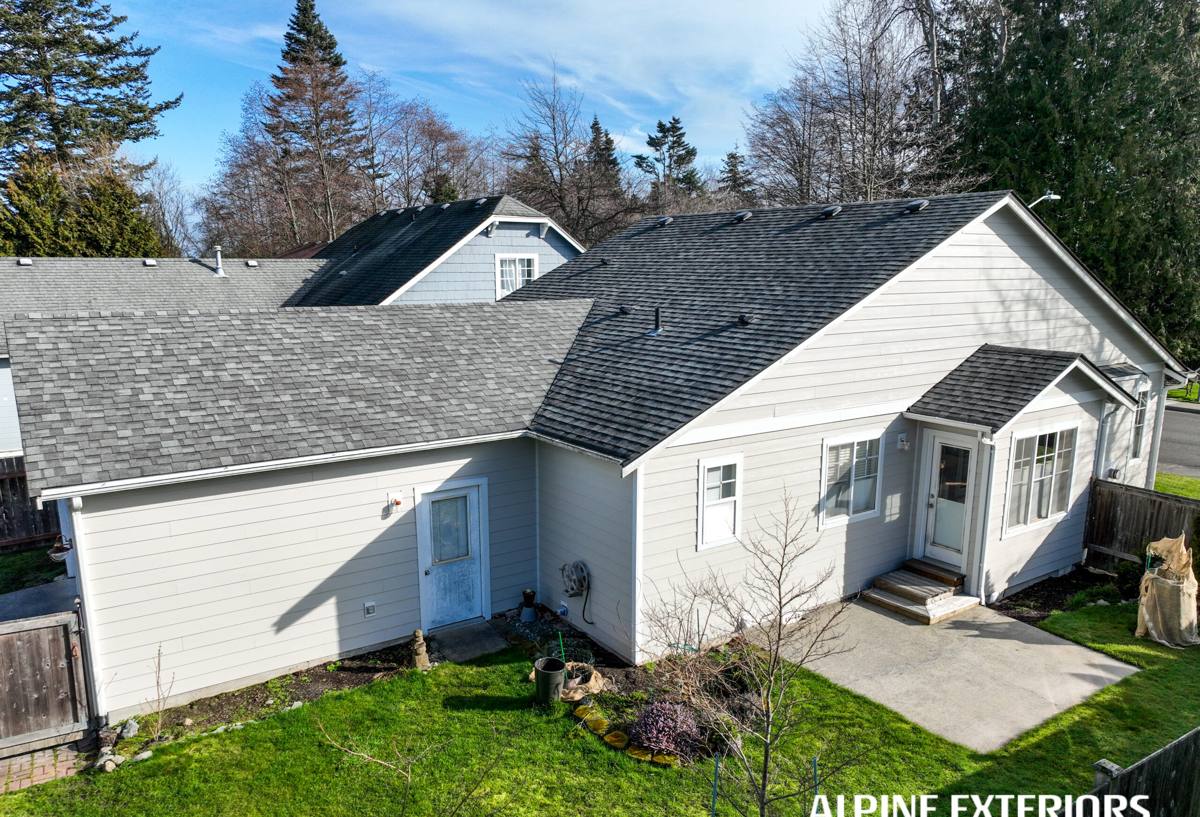
What Bellingham's Climate Actually Does to a Roof
Salt Air
Homes closer to the bay see accelerated corrosion on exposed metal — flashing, fasteners, gutter hardware, and vent caps. Corroded flashing is one of the most common places a storm-damaged roof actually starts leaking, because the metal that's supposed to shed water at a seam or penetration has already thinned or lifted.
Driving Rain
Wind-driven rain doesn't behave like a normal downpour. It gets pushed sideways and upward under shingle edges, ridge caps, and any spot where flashing has even a slight gap. A roof that would shed a straight-down rain just fine can still leak badly in a storm with real wind behind it, which is why storm damage often shows up as water intrusion in places that look untouched from the outside.
Moss Season
Bellingham's moss season stretches across most of the wet months. Moss holds moisture against the roofing material long after a storm has passed, keeps shaded and north-facing slopes damp, and lifts shingle edges as it grows — which gives wind and rain something to grab onto during the next storm. A roof that's carrying moss going into a storm is more vulnerable, not less, and that's a factor we look at during every storm damage assessment in this area.
Signs of Storm Damage Worth Getting Looked At
- Missing, cracked, or curling shingles, especially on the side of the roof that faces prevailing wind
- Granules collecting in gutters or at the base of downspouts after a storm
- Lifted or visibly bent flashing around chimneys, skylights, and vent pipes
- New or worsening water stains on interior ceilings or upper-floor walls
- Sagging or soft-feeling spots on the roof deck, viewed from the attic if accessible
- Debris punctures from fallen branches, even small ones
- Ridge cap shingles that look shifted or partially detached
- Moss or dark streaking concentrated where a leak has since developed
Not every item on this list means a full repair is needed. Some are cosmetic and can wait; others are actively letting water into the structure. The point of a proper inspection is telling the difference, not assuming the worst or waving off something that will cause damage over the next few storms.
What a Correct Storm Damage Repair Involves
A repair that actually holds up in Barkley's climate goes further than swapping out the shingles that are obviously missing. It should include:
- A full inspection of the affected slope, not just the spot that's visibly damaged, since wind damage often extends past what's noticeable from the ground
- Checking the roof deck underneath for soft spots or rot before any new material goes down over it
- Inspecting and, where needed, replacing flashing around penetrations and edges — not just re-sealing it, since caulk over failing flashing is a short-term fix, not a repair
- Matching shingle type, weight, and where possible color to the existing roof, so the repair doesn't stand out or create a mismatched wear pattern down the line
- Confirming proper underlayment is in place, particularly at edges and valleys where wind-driven rain concentrates
- Clearing moss and debris from the surrounding area so the repaired section isn't immediately compromised again
Skipping any of these steps doesn't necessarily show up right away. It shows up in the next storm, or the one after that, when the same spot fails again.
Our Process for a Barkley Storm Repair
1. Inspection and Documentation
We walk the roof (or use ladder and binocular inspection when conditions don't allow safe roof access right after a storm) and document the damage clearly — this matters both for our own repair plan and for any insurance claim you may be filing.
2. Honest Assessment
We tell you what's actually storm-related damage versus what's pre-existing wear that the storm exposed. Both may need attention, but they're different conversations, and you deserve to know which is which before deciding how to proceed.
3. Written Scope and Estimate
You get a clear explanation of what needs to happen, why, and what it costs — no vague line items.
4. The Repair Itself
We work the affected area correctly rather than rushing a patch, matching materials and following manufacturer installation specs so any existing warranty coverage on the roof isn't put at risk by the repair.
5. Follow-Up
We check our own work after the next significant rain where practical, because the real test of a storm repair in this climate is how it performs in the following weather, not how it looks the day it's finished.
Repair or Replace? How We Help You Decide
Storm damage doesn't automatically mean a full roof replacement, and it doesn't automatically mean a small patch will do either. The right call depends on a handful of factors we walk through with you honestly.
| Factor | Leans Toward Repair | Leans Toward Replacement |
|---|---|---|
| Roof age | Roof is under two-thirds of its expected lifespan | Roof is near or past its expected service life |
| Extent of damage | Isolated to one slope or a limited area | Spread across multiple slopes or the whole roof |
| Decking condition | Deck is sound underneath the damage | Rot or soft decking found in multiple spots |
| Repair history | First or second repair on this roof | Roof has been patched repeatedly over the years |
| Material availability | Existing shingles can still be matched | Shingle line discontinued and can't be reasonably matched |
| Underlying moisture damage | Contained to the storm event | Evidence of longer-term leaking or moss-related saturation |
We're not going to talk you into a full roof when a proper repair will genuinely hold, and we're not going to patch something that's structurally past the point where patching makes financial sense. We'd rather give you the straight answer than the answer that's easiest to sell.
Materials That Hold Up in This Climate
For storm repairs in a salt-air, high-moisture environment like Barkley, material choice matters as much as workmanship.
- Flashing: we favor corrosion-resistant metals over standard galvanized steel in areas exposed to salt air, since standard flashing corrodes faster this close to the bay
- Fasteners: corrosion-resistant nails or screws, especially at edges and penetrations, to avoid the streaking and loosening that comes with standard fasteners rusting over time
- Underlayment: a synthetic or self-adhering underlayment at vulnerable points like valleys and eaves, which handles wind-driven rain better than older felt products
- Shingles: matched to the existing roof's weight class and wind rating where possible, since mismatched shingles can create uneven wear and won't necessarily perform to the same wind rating as the original roof
We won't upsell a premium product where it isn't needed, but we also won't use a cheaper fastener or flashing just because it's what's on the truck, if it means the repair fails in the next moss season or the next windstorm.
Why It Matters That We Already Work in Barkley
A roofing crew that regularly works Bellingham neighborhoods like Barkley has already seen how this specific combination of salt air, wind-driven rain, and long moss seasons plays out on real roofs over multiple years — not just in a training manual. That matters in a few concrete ways:
- We recognize storm damage patterns specific to Whatcom County wind exposure, rather than treating every roof like a generic template
- We know which flashing and fastener upgrades are worth the extra cost here versus areas with a milder, drier climate
- We can usually respond faster after a local storm event, because we're not routing a crew in from out of the area
- We understand local permitting and inspection expectations for the City of Bellingham and Whatcom County, so repairs that require permits don't get delayed by unfamiliarity with the process
A contractor who mainly works other regions can still do competent work, but they're often learning the local climate's quirks on your roof instead of already knowing them.
Insurance Claims: What to Know Before You Call
Many storm damage repairs are at least partially covered by homeowners insurance, but coverage depends heavily on your policy, the cause of damage, and how quickly it's documented. A few honest points worth knowing:
- Document damage with photos as soon as it's safely possible, ideally before any temporary repairs are made
- Gradual damage from moss, age, or long-term neglect is typically treated differently by insurers than sudden storm damage, so an honest assessment of cause matters for your claim
- We can provide a written inspection report and estimate you can submit to your insurer, but we're not a substitute for your adjuster or your policy's terms
- Getting a repair estimate promptly after a storm helps if you do end up filing a claim, since insurers often want documentation close to the event date
After a Storm: A Quick Checklist
- Check gutters and the ground around your home for shingle granules or roofing debris
- Look at interior ceilings, especially top-floor rooms, for new stains or damp spots
- Photograph any visible exterior damage before cleanup, if it's safe to do so
- Avoid climbing onto the roof yourself, particularly on wet or moss-covered surfaces
- Note the date and general conditions of the storm for your own records
- Call for an inspection before the next significant rain if you suspect any damage
If you're seeing any of these signs on a Barkley home, or you just want a second opinion after a recent storm, we're happy to take a look. A free, no-pressure estimate is a straightforward way to find out what you're actually dealing with before deciding what to do next — just fill out the form below.