 Bellingham Siding
 Storm Damage Roof Repair in Cordata
Cordata sits on the north side of Bellingham, close enough to the water and the low hills around Lake Whatcom and the Nooksack valley that its roofs take a particular kind of beating. It isn't the dramatic hail or tornado damage you hear about in other parts of the country. Here in Whatcom County it's slower and sneakier: wind-driven rain working under lifted shingles, moss holding moisture against the roof deck for months at a stretch, and salt-tinged air off Bellingham Bay accelerating corrosion on flashing and fasteners. By the time a homeowner notices a stain on the ceiling, the damage underneath has usually been building for a while.
This page is about one job done right: identifying and repairing storm-related roof damage on Cordata homes, from wind and rain events through the winter moss season. We're not going to sell you a full tear-off you don't need, and we're not going to patch over a problem that needs real attention. Below is what we look for, how we fix it, and what to expect if you call us after a storm.
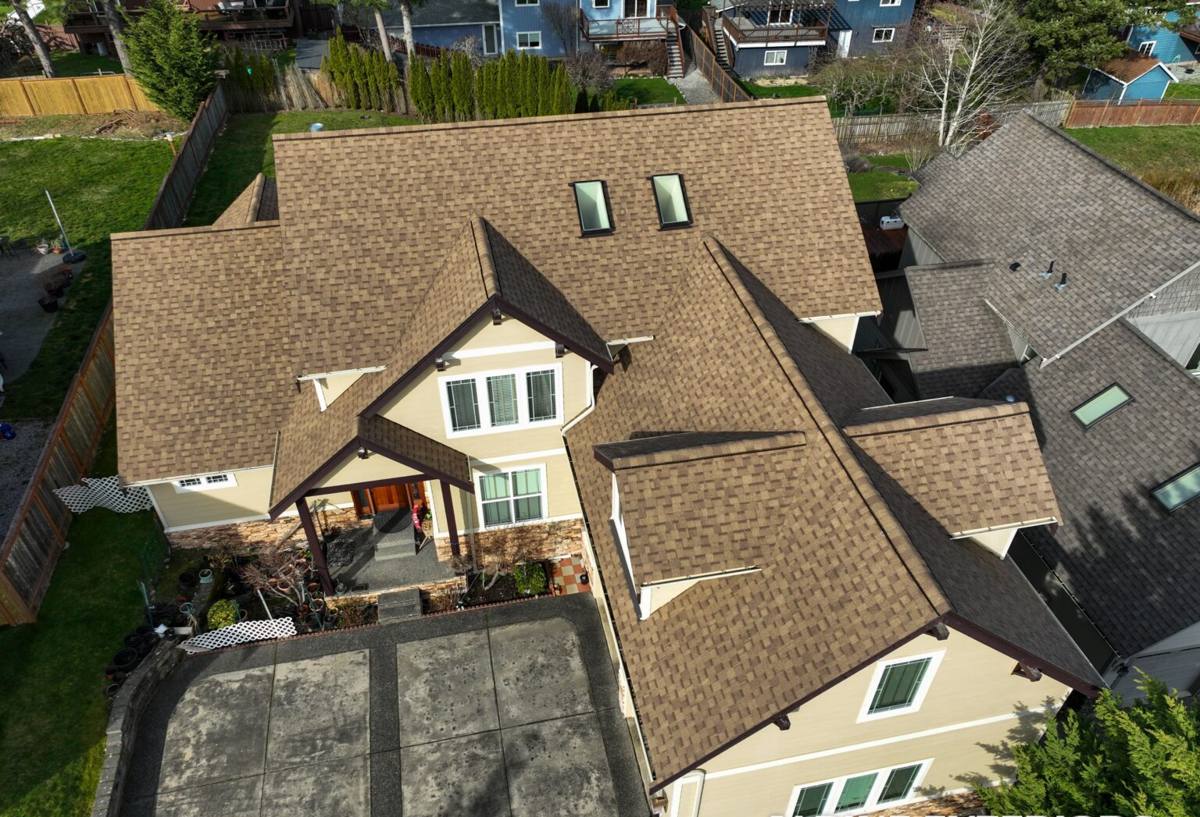
Why Cordata Roofs Take Storm Damage Differently
Wind-driven rain, not just wind
Whatcom County storms rarely bring the kind of straight-line wind gusts that rip whole roof sections off. What we see more often is sustained wind pushing rain sideways and uphill under shingle edges, ridge caps, and around chimney or vent flashing. A roof that looks intact from the ground can still be taking on water at every seam that wasn't sealed or lapped correctly.
The long moss season
Cordata's tree cover and the region's mild, wet winters give moss a long runway — often eight or nine months of the year with enough moisture to keep it growing. Moss doesn't just look bad. It holds water against shingles and wood decking long after a storm has passed, softening the material and working its root structure under shingle tabs, which lifts them just enough for the next storm to finish the job.
Salt air and metal fatigue
Bellingham's proximity to the bay means homes here get more airborne salt than roofs further inland. Over years, that accelerates rust on exposed fasteners, flashing seams, and gutter hardware. A fastener that's lost its grip or a flashing seam that's corroded through is a much easier entry point for storm water than most homeowners realize.
What Storm Damage Actually Looks Like
Storm damage on a Cordata roof rarely announces itself with missing shingles scattered across the yard. More often it shows up as:
- Granule loss on shingles, visible as dark streaking in gutters or downspout runoff
- Lifted or curled shingle tabs, especially on the side of the roof that takes the prevailing wind and rain
- Soft or discolored decking felt through a shingle when pressed gently (a sign moisture has already reached the wood)
- Flashing that's pulled away from a chimney, skylight, or sidewall, even by a small gap
- Moss colonies at ridge lines and in valleys, often with a slightly raised or spongy feel underneath
- Interior signs: a ceiling stain, a musty smell in the attic, or insulation that's damp to the touch
None of these on their own mean the whole roof needs replacing. But left alone through another Whatcom County wet season, most of them get worse, not better.
Our Assessment Process
1. Ground-level and roof-surface inspection
We start by walking the roof itself where it's safe to do so, checking shingle condition, flashing points, ridge and valley lines, and gutter attachment. We also check the roof from the ground and from any accessible upper windows to catch damage patterns that aren't obvious up close.
2. Attic and interior check
Where accessible, we check the attic for water staining on rafters or decking, damp insulation, and daylight coming through anywhere it shouldn't. This is often where we find the real extent of a leak that's been running longer than the homeowner suspected.
3. Honest scope, in writing
We tell you plainly whether you're looking at a targeted repair, a larger section replacement, or — if damage is limited and well within roofing material lifespan — no repair needed at all. If moss is the underlying issue, we address root cause (cleaning and prevention) rather than just patching the symptom.
What a Correct Repair Involves
A storm damage repair that actually holds up through the next Whatcom County winter isn't just replacing a few shingles. It includes:
- Removing and replacing any shingle, felt, or decking material that's been compromised by moisture — not just what's visibly damaged, but the margin around it
- Re-flashing any point where water intrusion occurred, not just resealing the existing flashing
- Matching shingle type, color, and exposure to the existing roof as closely as possible so the repair doesn't stand out or create a mismatched wear pattern
- Checking and clearing moss and debris from the surrounding roof area so the repair isn't immediately undermined by the same conditions that caused the original damage
- Verifying ventilation at the repair area — trapped moisture from poor attic airflow is a common reason repairs fail early in this climate
Skipping any of these steps is how a homeowner ends up calling about the "same leak" again eighteen months later.
Repair vs. Replacement — Cost Factors
| Factor | Favors Targeted Repair | Favors Larger Replacement |
|---|---|---|
| Extent of moisture damage | Isolated to one section or penetration point | Multiple areas, or decking soft in more than one spot |
| Roof age | Roof has significant remaining service life | Roof is near or past typical lifespan for its material |
| Moss history | Light, manageable moss with no root penetration | Heavy, long-term moss growth with shingle lift across large areas |
| Shingle match availability | Close match available for a clean repair | Discontinued or badly weathered shingle makes matching impractical |
| Underlying deck condition | Deck is sound once affected material is removed | Deck shows rot or delamination beyond the repair area |
We'll walk you through where your roof falls on this table before recommending either path — the goal is the right scope, not the biggest invoice.
Preventing the Next Round of Storm Damage
Since Cordata's storm damage is so often tied to moss and prolonged moisture exposure, prevention matters as much as repair:
- Keep gutters and downspouts clear so storm water actually drains instead of backing up under the roof edge
- Trim back overhanging branches that keep sections of roof shaded and damp longer than the rest
- Address moss early, before it establishes a root mat under shingle tabs
- Have flashing points checked periodically, especially around chimneys, skylights, and where a roof meets a sidewall — these are the most common failure points in wind-driven rain
- Confirm attic ventilation is adequate; poor airflow speeds up moisture damage from the inside as much as weather does from the outside
After-Storm Checklist for Homeowners
- Check gutters and downspouts for granules or shingle fragments after any significant wind event
- Look at ceilings and upper closets for new staining, especially after multi-day rain
- Note any new moss growth or areas where existing moss looks disturbed or lifted
- If you can safely see your roof from the ground, look for shingles that appear curled, cracked, or out of line with the rest of the field
- Don't walk on the roof yourself after a storm — wet shingles and moss are genuinely slick, and it's not worth the fall risk to save a phone call
Why a Local Cordata Crew Matters
A crew that already works in this part of Bellingham knows which storm patterns hit which roof orientations hardest, which streets tend to have heavier tree cover and moss buildup, and what shingle products actually hold up under Whatcom County's combination of rain volume, wind, and salt air — versus what looks good on a spec sheet from a drier climate. That local knowledge shortens the diagnosis step and helps make sure the repair addresses the actual cause, not just the visible symptom.
It also means we're not a name you found after searching a national directory. We're available for follow-up if something doesn't look right after the next storm, and we stand behind the work because we're not going anywhere.
What We Don't Do
We don't recommend re-roofing when a targeted repair will genuinely hold. We don't seal over wet decking instead of replacing it — that's a repair that fails within a season or two and costs more in the long run. And we don't push a shingle or flashing product that trades short-term cost savings for higher moisture sensitivity in a climate like ours; our standard is picking materials and installation methods that are proven to handle sustained wet-season exposure, even if that means a slightly higher upfront cost on the repair.
If you've had a recent storm come through Cordata and you're seeing any of the warning signs above — or you just want a second opinion before committing to a bigger repair someone else quoted — we're happy to take a look. Reach out through the form below for a free, no-pressure estimate.