 Bellingham Siding
 Roofing in Barkley: A Different Set of Problems Than Inland Homes
Barkley sits close enough to Bellingham Bay that homes here deal with a roofing environment inland Whatcom County neighborhoods don't see as intensely. Salt-laden air moves in off the water and settles on roof surfaces, driving rain comes in sideways during fall and winter storms instead of falling straight down, and the shaded, tree-lined streets typical of this part of Bellingham keep roofs damp long after a storm has passed. That combination is exactly what wears out an asphalt shingle roof faster than the manufacturer's warranty assumes — and it's why a roof that would last 25+ years in a dry inland climate can show real trouble in Barkley well before that.
None of this means asphalt shingles are the wrong choice here — they're still the most practical, cost-effective roofing material for most Barkley homes. It means the installation details matter more here than they would somewhere drier, and a crew that doesn't account for Bellingham's climate is setting a roof up to underperform.
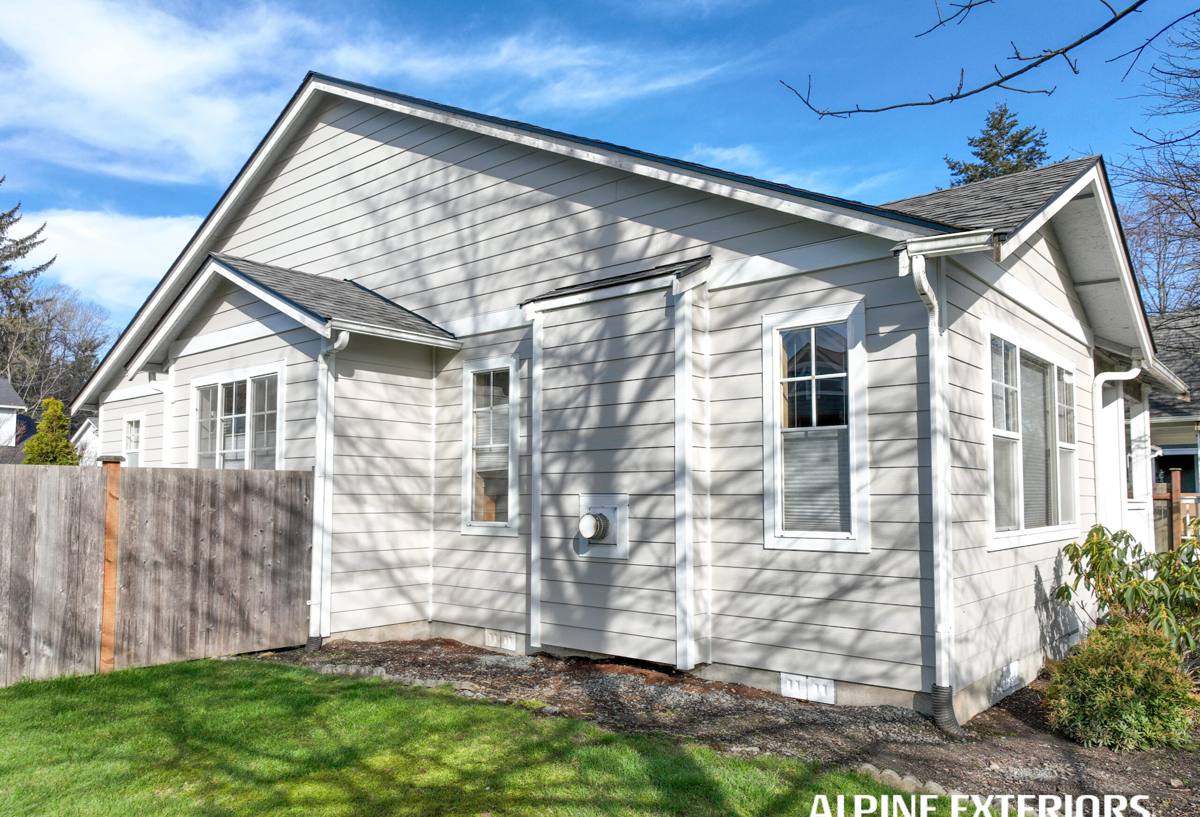
What Bellingham's Climate Actually Does to a Shingle Roof
Salt Air and Metal Fatigue
Salt air accelerates corrosion on every exposed metal component of a roofing system — nails, flashing, vent stacks, and gutter hardware. Cheaper galvanized fasteners and flashing can start rusting and losing their seal years before the shingles themselves are due for replacement. Once a nail head or a flashing seam corrodes, water finds its way underneath the shingle field, and by the time a stain shows up on an interior ceiling, the damage has usually been happening for a while.
Driving Rain and Wind-Driven Water
Storms that come off the water don't always fall straight down. Wind-driven rain gets pushed sideways and upward under shingle tabs, around chimneys, and along valleys — areas that a roof built for calm, vertical rainfall doesn't always protect well. This is a wind and water-direction problem more than a volume problem, and it's solved with sealing detail, not just more shingles.
The Long Moss Season
Bellingham's mild, wet climate and shaded lots give moss and algae a long growing window — often close to year-round on north-facing slopes or roof sections shaded by mature trees. Moss doesn't just look bad. As it grows, it lifts shingle edges, holds moisture against the shingle mat, and works its root structure under the granule surface, which shortens the life of the shingle underneath it and can eventually work water back toward the deck.
What a Correctly Installed Shingle Roof Needs in This Climate
A shingle roof built for Barkley's conditions isn't a different product — it's the same asphalt shingle system installed with attention to the details that matter most in a wet, coastal, tree-shaded environment.
- Ice-and-water shield membrane at eaves, valleys, and around every penetration — not just where code minimums require it
- Corrosion-resistant flashing and fasteners rated for coastal exposure, not standard-grade galvanized
- Properly lapped and sealed underlayment across the full deck, so any water that does get past the shingle field has a second line of defense
- Balanced intake and exhaust ventilation, so moisture from inside the attic isn't adding to what the roof is already fighting from outside
- Algae-resistant (AR) shingle granules on any section with shade exposure or north-facing pitch
- Tight, correctly stepped flashing at every chimney, skylight, and wall intersection — these are the most common leak points on any roof, and even more so here
Skipping any one of these doesn't usually cause an immediate problem. It shows up two, five, or ten years later as a leak, premature granule loss, or moss damage that could have been avoided at install time for a small fraction of what a mid-life repair costs.
Shingle Options for Barkley Homes
Most Barkley reroofs land on one of two shingle types. Both are legitimate choices — which one makes sense depends on the roof's exposure, the home's age and style, and the budget.
| Factor | 3-Tab Shingles | Architectural (Laminate) Shingles |
|---|---|---|
| Typical lifespan in this climate | 15–20 years | 25–30+ years |
| Wind rating | Lower — more vulnerable to lifting in coastal gusts | Higher — better resistance to wind-driven rain intrusion |
| Moss/algae resistance (with AR granules) | Available, less durable over time | Available, holds up longer under repeated growth cycles |
| Upfront cost | Lower | Moderate to higher |
| Appearance | Flat, uniform look | Dimensional, heavier shadow line |
For most homes in Barkley, we recommend architectural shingles specifically because of the wind and moisture exposure this area sees. The extra upfront cost is usually offset by a longer service life and fewer mid-life repairs — but for a garage, outbuilding, or a home on a tighter budget, 3-tab shingles installed correctly are still a sound option.
How Our Process Works
1. Inspection and Honest Assessment
We start by getting on the roof, not just looking at it from the ground. We check the deck condition, existing ventilation, flashing detail, and how much moss or granule loss is already present. If a roof can be repaired instead of replaced, we'll say so — a full reroof isn't always necessary.
2. Tear-Off and Deck Inspection
A full tear-off exposes the deck so we can find and fix soft spots, rot, or old fastener damage before anything new goes down. Installing new shingles over a compromised deck just hides a problem that gets worse underneath.
3. Underlayment and Ice-and-Water Membrane
This is where a lot of the climate-specific work happens — full underlayment coverage, membrane at every vulnerable area, and flashing sized and sealed for this environment rather than the bare minimum.
4. Shingle Installation
Nailing pattern, exposure, and fastener placement all matter for wind performance. We follow manufacturer specs closely because that's also what keeps the shingle warranty valid — a roof installed off-spec can void coverage even if the shingles themselves are fine.
5. Ventilation Check and Cleanup
We confirm intake and exhaust ventilation is balanced before we call the job done, then do a full site cleanup, including a magnetic sweep for nails.
Moss: Prevention Beats Removal
Once moss is established on a roof, scraping it off can do more harm than good if it's not done carefully — aggressive removal can lift granules and shorten the shingle's remaining life. The better approach is prevention built into the installation and upkeep of the roof:
- Algae-resistant shingles on shaded or north-facing sections
- Zinc or copper strips near the ridge, which release trace metal that inhibits moss and algae growth as rain washes over the roof
- Keeping overhanging branches trimmed back to reduce shade and debris buildup
- Regular gentle cleaning — low-pressure rinse, not pressure washing, which can strip granules
- Clear gutters, so trapped moisture at the eaves doesn't feed moss growth right where the roof edge is most vulnerable
Attic Ventilation: The Part Homeowners Don't See
A shingle roof doesn't fail in isolation — what's happening in the attic underneath it matters just as much. In a climate as damp as Bellingham's, an attic without proper intake and exhaust ventilation traps moisture, which condenses on the underside of the deck, encourages rot and mold, and shortens the life of the shingles from below at the same time moss and rain are working on them from above. Balanced ventilation also keeps attic temperatures more stable, which reduces the freeze-thaw stress that contributes to ice damming during Whatcom County's colder snaps. Any full reroof is a good opportunity to correct ventilation problems that may have been present for years.
What Affects the Cost of a Barkley Reroof
| Factor | Why It Matters |
|---|---|
| Roof size and pitch | Steeper roofs take longer and require more safety setup |
| Number of layers being removed | Tear-off of multiple old layers adds labor and disposal cost |
| Deck condition | Rot or soft sheathing found during tear-off requires repair before shingles go down |
| Shingle type | Architectural shingles cost more upfront than 3-tab |
| Flashing and penetrations | Chimneys, skylights, and multiple valleys add material and labor |
| Ventilation upgrades | Adding or correcting intake/exhaust vents adds a modest cost but extends roof life |
We give straightforward, itemized estimates so you can see what's driving the number, not just a bottom-line figure.
Signs a Barkley Roof Needs Attention
- Granules collecting in gutters or at the base of downspouts
- Moss visible on the roof surface, especially on shaded slopes
- Curling, cupping, or cracked shingle edges
- Daylight visible through the attic roof deck
- Staining on interior ceilings, particularly near chimneys or valleys
- Shingles that feel soft or spongy when walked on during inspection
Why Hire a Crew That Already Works in Barkley
A roofing crew that works this part of Bellingham regularly knows which details actually matter here versus what a generic installation manual assumes. That means recognizing which slopes need algae-resistant shingles because of tree cover, sizing flashing and fasteners for salt air exposure without being asked, and understanding how wind-driven rain off the bay behaves differently than a straight-down storm. It also means being available for warranty questions or a follow-up inspection without a long drive — something that matters more once a roof is a few years old and you actually need someone to come look at it.
If you're weighing a repair against a full replacement, or just want a straight answer on what your roof actually needs, we're glad to take a look. Reach out for a free, no-pressure estimate using the form below.