 Bellingham Siding
 Why Decks in Barkley Wear Out Faster Than Homeowners Expect
Barkley is one of Bellingham's newer, more established residential areas, with a mix of single-family homes and townhomes built over the past two to three decades. A lot of those original decks are now old enough to be showing real wear — and in Whatcom County, decks age differently than they do in drier parts of the country. Bellingham's marine climate brings a steady mix of salt-tinged air off the Sound, long stretches of driving rain in fall and winter, and a moss season that can run half the year in shaded yards. None of that is dramatic on its own, but it adds up fast on wood that isn't sealed, flashed, or fastened correctly.
A deck that looks fine from the top can be failing underneath. We see this constantly in Barkley: sound-looking decking boards sitting on joists that have been soaking up moisture for years because the original build skipped proper flashing or ventilation. Replacement isn't just about swapping boards — it's about fixing the parts of the structure that actually determine how long the next deck lasts.
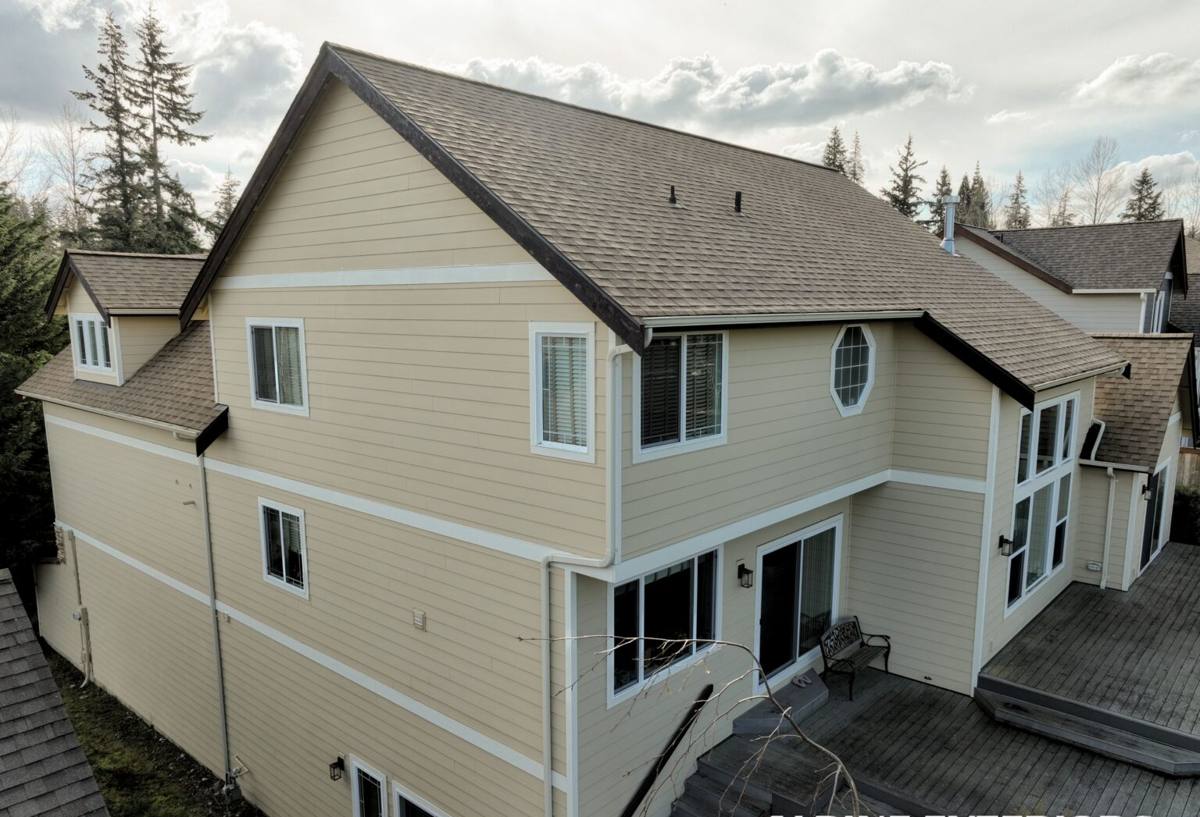
Signs a Barkley Deck Needs Replacement, Not Just Repair
Structural Red Flags
Some problems are worth patching. Others mean the whole deck needs to come down and be rebuilt correctly. If you're seeing any of the following, you're past the point where a few new boards will solve it:
- Soft, spongy decking in more than one area, not just around a single planter or grill spot
- Visible rot or dark staining at the ledger board where the deck attaches to the house
- Joists that flex noticeably when you walk across the deck
- Railing posts that wiggle at the base, which usually means the post-to-frame connection has failed
- Persistent moss or algae growth on the deck surface that returns within weeks of cleaning
- Fasteners that are rusted, backing out, or streaking the wood with corrosion stains
The Ledger Board Problem
Most of the deck failures we investigate in this area trace back to the ledger board — the piece bolted to the house that the rest of the deck hangs from. If that connection was built without proper flashing to shed water away from the house, years of Bellingham's rain eventually find their way behind it. By the time you see staining on the siding above the deck, the framing behind it has often been wet for a long time. This is one of the main reasons we don't recommend patching an older deck that's showing ledger problems — you're covering up the one failure point that matters most.
What a Correct Deck Replacement Actually Involves
Framing and Flashing
The framing is where a deck's lifespan is decided, long before anyone picks a decking material. A proper replacement means new or inspected joists sized for the actual span and load, corrosion-resistant structural hardware rated for exterior use, and ledger flashing installed so water is directed away from the house wall rather than trapped against it. We also look at airflow underneath the deck — a low, enclosed deck with no ventilation traps moisture and accelerates rot, which is a common issue on homes here where decks sit close to grade.
Decking Material
Once the frame is right, the decking surface is mostly a matter of budget, maintenance tolerance, and how the deck gets used. In a climate with this much rain and moss pressure, we steer most Barkley homeowners toward materials that don't depend on a perfect annual maintenance schedule to stay sound — though there's nothing wrong with real wood if you're willing to keep up with it.
Railings, Stairs, and Code
Replacement is also the right time to bring railings and stair geometry up to current code, especially on older decks built before current guardrail height and baluster spacing requirements were standard. We handle this as part of the job rather than treating it as an upsell — it's a safety issue, not an add-on.
Decking Material Comparison for This Climate
There's no single "best" material — the right choice depends on how much upkeep you want to do and how long you plan to stay in the home. Here's how the common options compare specifically against Whatcom County's wet, moss-prone conditions:
| Material | Upfront Cost | Maintenance in This Climate | Moss/Algae Resistance |
|---|---|---|---|
| Pressure-treated wood | Lowest | Annual cleaning and re-sealing to prevent moisture uptake | Low — needs regular treatment to resist growth |
| Cedar | Moderate | Periodic oil/sealant to maintain color and prevent checking | Moderate — natural oils help but fade over time |
| Composite | Higher | Occasional washing; no sealing or staining required | Good, though surface growth still needs periodic cleaning |
| PVC/Capped composite | Highest | Minimal — rinse as needed | Best resistance to moisture absorption and staining |
Cost is only part of the equation. A pressure-treated deck that isn't sealed on schedule can actually cost more over ten years than a composite deck, once you count re-staining labor and earlier board replacement. We'll walk through the honest math for your situation rather than just quoting the cheapest option.
Our Process, From First Look to Finished Deck
1. On-Site Assessment
We start by getting under the deck, not just walking on top of it. That means checking joists, the ledger connection, post footings, and any areas where moisture has clearly been sitting. This is where we catch the difference between a deck that needs replacement and one that could still be repaired.
2. Straightforward Proposal
You get a written scope covering demolition, framing repairs or replacement, flashing, decking material, railings, and stairs — with material options priced separately so you can see what you're actually paying for at each tier.
3. Permitting
Deck replacements in Bellingham typically require a permit, especially when framing, footings, or railings are being rebuilt rather than just resurfaced. We handle the permit application and inspection scheduling so it isn't left for you to figure out.
4. Demolition and Rebuild
Old decking, and any compromised framing, comes out completely — we don't build a new surface over questionable joists. Ledger flashing, joist hardware, and structural connections are installed to current code, then the new decking, railings, and stairs go on.
5. Final Walkthrough
Before we call it done, we walk the deck with you, check railings for solid connections, and go over any maintenance the specific material you chose will need going forward.
Permits and Building in Barkley Specifically
Because Barkley is a more established, planned neighborhood, many homes here have decks original to construction that are now old enough to need full replacement rather than repair. If your home is part of an HOA or planned community with design guidelines, we also check those before finalizing railing style or decking color so you're not stuck redoing paperwork after the fact. Whatcom County's inspection requirements around footings and structural connections are non-negotiable, and we build to pass them the first time, not to squeak by.
Maintaining a New Deck in Bellingham's Climate
Whatever material you choose, a few habits make a real difference in how long it lasts through our wet season and the moss that comes with it:
- Sweep leaves and debris off the deck surface regularly in fall — trapped organic matter holds moisture and feeds moss
- Keep gutters and downspouts clear so runoff isn't dumping directly onto or under the deck
- Clean moss and algae with a deck-safe cleaner rather than a pressure washer alone, which can damage wood fibers and void some composite warranties
- Check railing posts and stair connections once a year for movement or looseness
- For wood decks, plan on re-sealing on the schedule your product calls for — skipping a year is often when moisture damage starts
- Make sure under-deck ventilation isn't blocked by stored items or overgrown landscaping
Why Local Experience in Barkley Matters
A crew that already works in this neighborhood knows the common deck ages, typical framing shortcuts from certain construction eras, and how the local combination of rain and shade affects moss growth on north- and east-facing decks. That's not something you get from a general contractor who works all over the region without a real feel for how Bellingham's climate behaves at ground level, year-round. We build decks to handle the conditions this area actually sees, not a generic spec sheet.
If your deck is showing soft spots, staining near the house, or just isn't holding up the way it used to, we're happy to take a look. We'll give you a straight answer about whether it needs replacement or just repair, and a free, no-pressure estimate with the details in writing — just fill out the form below.