 Bellingham Siding
 Building New in Barkley Means Building for This Climate
Barkley sits close enough to Bellingham Bay and the Whatcom County coastline that new construction here has to account for salt-tinged air, long stretches of driving rain off the Sound, and a moss season that can run half the year. If you're framing a new home or a major addition in this neighborhood, the windows you choose and how they get installed will matter more than almost any other exterior decision you make. Get it right at the framing stage and you avoid years of callbacks, staining, and slow moisture problems. Get it wrong and you're chasing leaks behind trim that was never sealed correctly in the first place.
New construction is actually the easiest time to do this well. Unlike a retrofit, where we're working around existing siding and finished walls, new-construction windows go in before the weather barrier and cladding are closed up. That gives us full access to flash, seal, and tie the window into the building envelope the way it's supposed to be done — not the way it has to be patched around later.
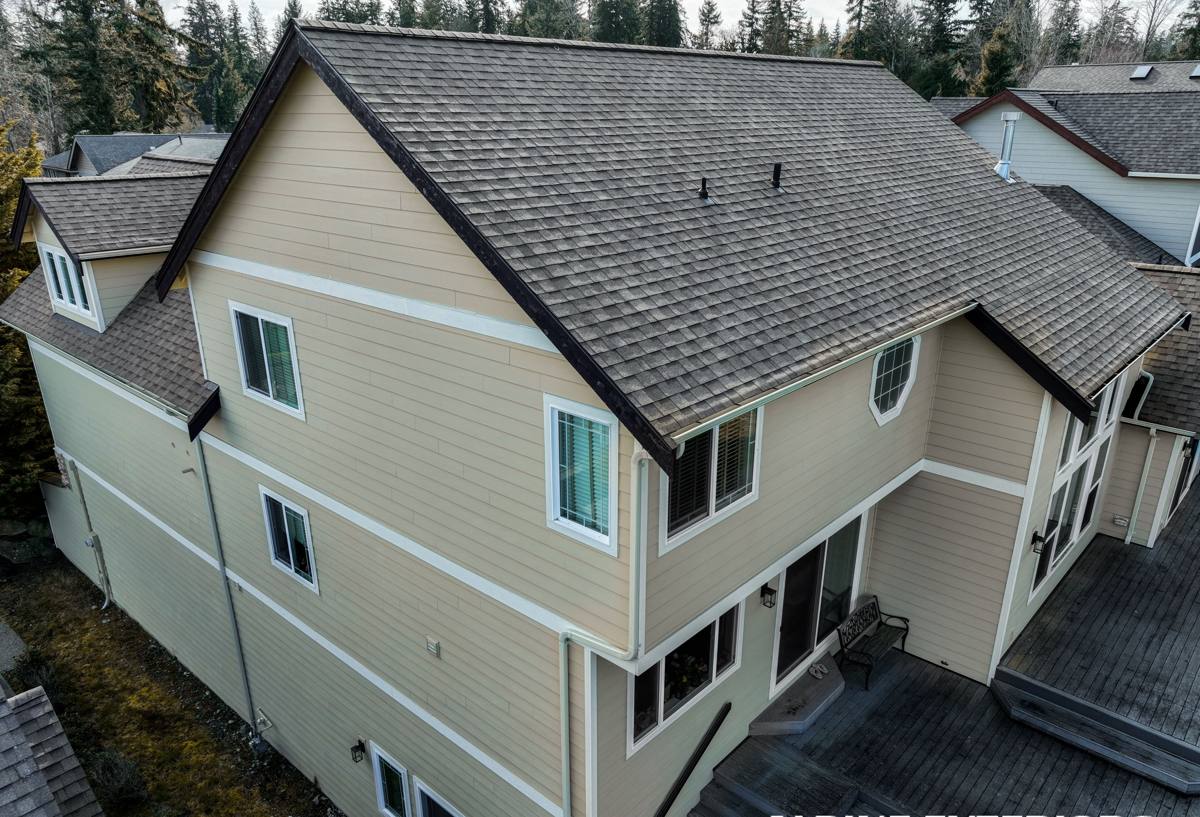
What Bellingham's Weather Actually Does to a Window Opening
Whatcom County doesn't get the kind of violent storms other regions deal with, but it makes up for that with volume and duration. Rain here isn't usually intense — it's persistent, wind-driven, and it comes from the water. Over a Bellingham winter, a window opening can see weeks of near-continuous moisture exposure punctuated by driving rain events where wind pushes water sideways into any gap in the flashing.
Add in the salt content in the air near the bay, which accelerates corrosion on hardware, fasteners, and lower-grade cladding finishes, and a moss and algae season that thrives in our shaded, damp microclimates, and you get a set of conditions that punishes shortcuts. A window that would perform fine in a drier climate can fail here in a handful of seasons if the flashing details, sealants, or drainage path weren't done correctly on day one.
The three things that actually fail first
- Flashing laps — installed in the wrong order or taped instead of properly shingled, letting water behind the weather barrier
- Sill pan drainage — missing or improperly sloped, so water sits against the frame instead of draining out
- Fastener and hardware corrosion — standard-grade fasteners and hinges breaking down faster near the bay than they would inland
Why New Construction Is the Right Time to Get This Done Correctly
Every new-construction window installation should be treated as a system, not just a product swap. The window unit itself is only one piece. What actually keeps water out over a 20-30 year span is the combination of the rough opening prep, the sill pan, the flashing sequence, the weather-resistive barrier integration, and the sealants used at each layer. None of that can be inspected or corrected once siding and interior finishes are closed up — which is exactly why doing it right the first time on a new build is so much more valuable than fixing it later.
We treat every opening the same way regardless of window brand or size: build the sill pan first, integrate the weather barrier in the correct shingled order, flash the head last so water sheds over every lower layer, and never rely on caulk alone to do a flashing detail's job. Caulk is a backup, not a strategy.
Our Process on a Barkley New-Construction Job
- Plan review and product selection — we look at the home's orientation, exposure to prevailing wind and rain, and elevation before recommending frame material and glazing package, not just picking a default line
- Rough opening inspection — every opening is checked for square, plumb, and correct dimension before a window ever gets set, since undersized or out-of-square openings cause installation compromises that show up as leaks later
- Sill pan flashing — a sloped, sealed pan under every opening so any water that gets past the window has somewhere to go besides your wall cavity
- Window setting and shimming — set level, plumb, and square, shimmed at the manufacturer's specified load points so the frame isn't stressed and the sash operates correctly for the life of the window
- Flashing integration with the weather barrier — jambs and head flashed in the correct shingle-lap order and tied into the house wrap or building paper so water sheds outward at every layer
- Sealant and backer rod at interior and exterior — appropriate sealant chemistry for the substrate, not a single all-purpose caulk used everywhere
- Final inspection and documentation — photographed before cladding closes it up, so there's a record of what's behind your siding
Choosing a Frame Material for This Environment
There's no single "correct" window frame material for every new build in Bellingham — it depends on budget, exposure, and maintenance appetite. What matters is understanding the trade-offs honestly before you commit, since this decision gets buried behind siding for decades.
| Frame Material | Salt Air / Coastal Performance | Maintenance | Typical Trade-Off |
|---|---|---|---|
| Vinyl | Good — won't corrode, stable in moisture | Low | Fewer color/finish options, can't be refinished |
| Fiberglass | Very good — dimensionally stable, resists moisture swelling | Low | Higher upfront cost than vinyl |
| Aluminum-clad wood | Fair to good depending on cladding finish and detailing | Moderate | Wood interior needs interior climate control; cladding seams are a moisture-entry point if not detailed well |
| Solid wood | Requires diligent maintenance in this climate | High | Best appearance option for some homeowners, but moss, mildew, and rot risk are real here without upkeep |
We'll walk through this with you against your actual plans rather than push one line by default. A shaded, north-facing wall in Barkley with heavy moss exposure calls for different priorities than a sunnier, more exposed elevation.
Why we're selective about certain builder-grade products
Some lower-cost window and hardware lines simply aren't built with coastal-grade corrosion resistance or weep-path design in mind. Our standard is to only install products where the manufacturer's warranty and construction actually hold up to the moisture and salt exposure this area sees — not because a product is bad everywhere, but because it's the wrong fit for this specific climate. We'd rather tell you that upfront than install something that looks fine at closing and causes problems in year four.
Glazing and Energy Performance for a Marine Climate
Bellingham's climate is mild but consistently damp and overcast for long stretches, which changes what you actually need from a glazing package compared to a colder, drier region. Double-pane low-E glazing with a well-sealed insulated glass unit is the baseline we recommend for most new construction here — the priority is a tight seal and correct gas fill more than an extreme U-factor rating, since our winters are moderate but our humidity load is high.
- Confirm the argon or krypton fill and seal warranty in writing, not just the printed U-factor
- Ask about condensation resistance rating if the home has high interior humidity (kitchens, bathrooms, laundry rooms)
- Match glazing tint and coating to the home's orientation — west and south exposures benefit from different solar heat gain coefficients than north-facing walls
What Happens If This Gets Rushed or Skipped
The failures we see most often in this neighborhood trace back to speed, not bad materials. A framing crew under schedule pressure tapes a flashing detail instead of shingling it. A general sealant gets used at every joint instead of the right chemistry for each substrate. A sill pan gets skipped because "the window has weep holes." Every one of these shortcuts looks fine at final walkthrough and causes a problem two, five, or ten winters later — usually as a stain on drywall, soft trim, or a musty smell that's actually hidden moisture behind the wall.
Because Barkley's climate keeps materials damp for so much of the year, small mistakes compound faster here than they would in a drier region. Moss and algae growth on a poorly-drained sill or head flashing isn't just cosmetic — it holds moisture against the building longer, extending the damage window every season.
Why Hiring a Crew That Already Works Barkley Matters
Window installation instructions from a manufacturer are written for a national market. They don't account for Whatcom County's specific rain patterns, the salt exposure this close to the bay, or the way moss and shade interact on a north-facing wall in this neighborhood. A crew that installs windows regularly in Barkley and the surrounding Bellingham area has already seen which details hold up here and which ones don't, on homes with the same exposure your new build will have. That local pattern recognition is not something you get from a general contractor who does new-construction windows a few times a year across a wide service area.
We also know the local permitting and inspection expectations for new builds in this part of Bellingham, which keeps your project moving instead of stalling on a flashing detail an inspector flags at the wrong stage.
A Simple Pre-Install Checklist for Your Builder or GC
- Rough openings confirmed square, plumb, and to correct dimension before delivery
- Sill pan flashing specified and installed under every opening, sloped to drain outward
- Weather-resistive barrier integrated in proper shingle-lap order with window flashing
- Frame material and glazing package matched to the home's specific exposure, not a default spec
- Sealant chemistry confirmed appropriate for each substrate being joined
- Photos taken of flashing and pan details before siding closes up the wall
If you're framing a new home or addition in Barkley and want windows installed the right way from the start, we're happy to walk your plans with you and give you a straightforward, no-pressure estimate — just fill out the form below.