 Bellingham Siding
 Deck Building in Sehome: A Neighborhood With Its Own Set of Problems
Sehome sits on rolling, wooded terrain close to Western Washington University and Sehome Hill Arboretum, and that setting shapes what a deck in this neighborhood has to deal with. Mature tree canopy overhead means shade, falling needles and leaf litter, and slower drying times after rain. Sloped and uneven lots are common, which changes how a deck needs to be framed and supported compared to a flat backyard. And like the rest of Bellingham, Sehome sits under the same marine weather pattern: salt-tinged air moving in off Bellingham Bay, rain that comes in sideways as often as it falls straight down, and a moss season that can run most of the year in shaded spots. A deck built without accounting for all of that will look fine for a season or two and then start showing problems that are expensive to fix after the fact.
We build and repair decks throughout Sehome and the rest of Bellingham, and the difference between a deck that holds up here and one that doesn't usually comes down to decisions made before the first board is ever cut: material selection, framing and fastener choices, and how the structure sheds water and dries out between storms.
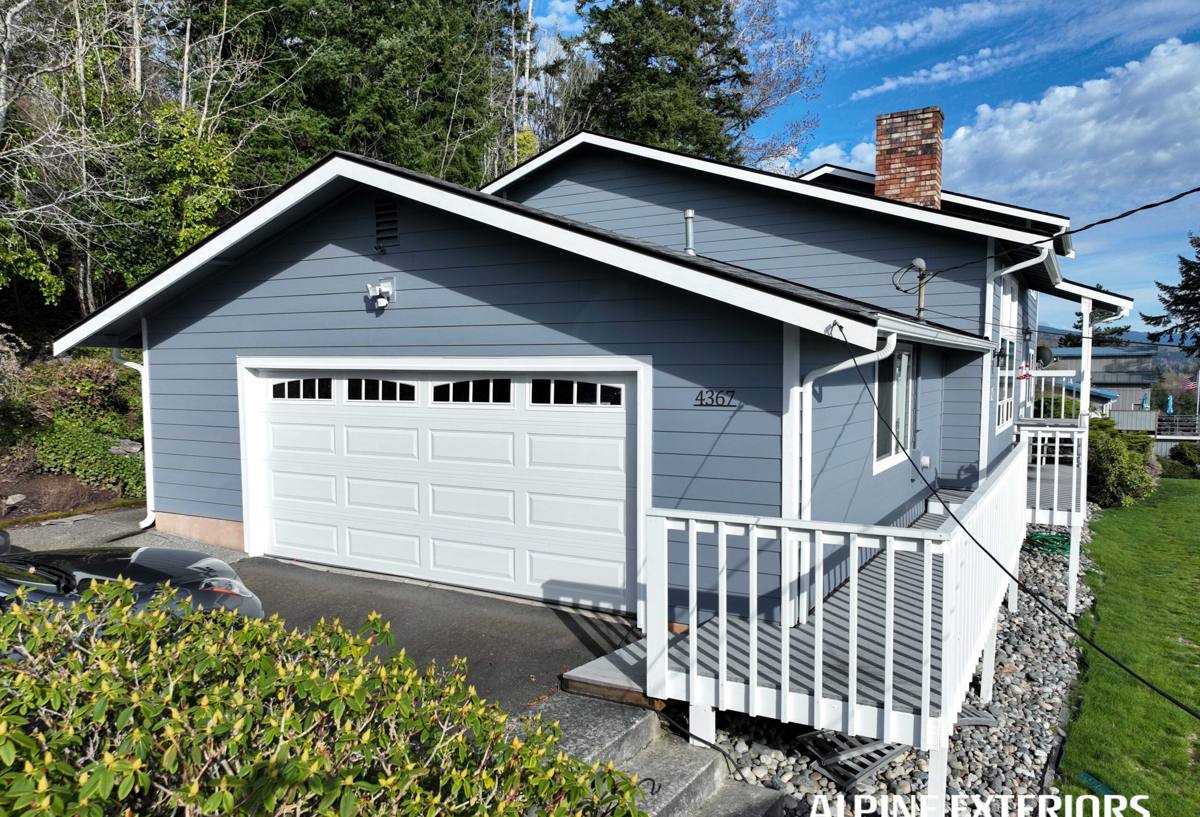
What Bellingham's Climate Does to a Deck
Salt Air and Slow Corrosion
Bellingham's proximity to the bay means a steady presence of moisture-laden, salt-tinged air, and that air is hard on fasteners and hardware over time. Standard coated screws and connectors can corrode faster here than the same products would in a drier, inland climate, and corrosion in structural hardware is the kind of problem that's invisible until a board or a rail starts to feel loose.
Wind-Driven Rain and Trapped Moisture
Rain here doesn't just fall, it gets pushed. Wind-driven rain finds its way into ledger connections, under poorly flashed rim joists, and into any gap where two pieces of wood meet without a clear path to dry out. On a sloped Sehome lot, water also runs downhill toward the house, so grading and drainage around footings matter more than they would on a flat site.
A Long Moss and Mildew Season
The tree cover that makes Sehome a pleasant place to live also means a lot of shade on decks, and shade plus dampness plus mild year-round temperatures adds up to extended moss and mildew growth. Untreated or porous decking surfaces become slick and start holding moisture against the boards instead of shedding it, which accelerates rot in wood decking and can stain composite material if it isn't cleaned periodically.
Choosing the Right Decking Material for a Sehome Yard
There's no single right answer for every property, but the shaded, tree-heavy lots common in Sehome push the decision in a specific direction. A deck that gets several hours of direct afternoon sun dries out and self-cleans differently than one tucked under a canopy that barely lets light through, and material choice should reflect which situation you're actually in.
| Material | How It Handles Sehome's Shade and Moisture | Maintenance Reality |
|---|---|---|
| Pressure-treated wood | Affordable and structurally solid, but shaded, damp spots stay wet longer and are more prone to splintering, cupping, and mold staining | Needs regular cleaning and re-sealing, more often in low-sun areas |
| Cedar | Naturally rot-resistant compared to other softwoods, but still absorbs moisture in shaded, moss-prone spots over time | Requires periodic staining or sealing to hold its color and resist decay |
| Composite decking | Doesn't rot or splinter, but can still grow surface mildew in shaded, poorly ventilated areas if not cleaned | Low maintenance overall; occasional washing keeps moss and algae from taking hold |
| Capped PVC decking | Fully sealed surface resists moisture absorption even in heavy shade, generally the most consistent performer under tree cover | Lowest maintenance; periodic cleaning is mostly cosmetic |
We'll walk your specific lot with you and talk through how much sun the deck footprint actually gets before recommending a material, rather than defaulting to whatever's cheapest or whatever's trendiest.
What a Correctly Built Deck Actually Requires
A deck is a structure first and a surface second, and most of the failures we get called out to repair trace back to shortcuts taken in the parts nobody sees once the boards are down.
- Proper footings for the soil and slope: Sloped Sehome lots often need deeper or stepped footings to reach stable bearing soil, not the same shallow footing pattern that works on a flat site.
- Ledger board flashing done right: The ledger-to-house connection is the single most common source of hidden rot on attached decks; it needs proper flashing and a water-resistant barrier, not just lag bolts and caulk.
- Corrosion-resistant fasteners and hardware: Given the salt air here, hot-dip galvanized or stainless connectors are worth the modest upfront cost over standard coated hardware.
- Joist spacing matched to the decking material: Composite and PVC boards often need tighter joist spacing than solid wood to avoid flexing or long-term sag.
- Airflow and drainage underneath: A deck built low to the ground or over poorly graded soil traps moisture underneath, which shows up as odor, mold, and premature rot well before the visible boards look bad.
Permits, Setbacks, and Sehome's Older, Uneven Lots
Sehome has a mix of older, established homes on lots with real grade changes, mature trees close to the build area, and in some cases tighter setbacks than newer subdivisions elsewhere in Bellingham. Depending on size, height, and attachment to the house, a deck project may need a permit through the City of Bellingham, and elevated decks in particular get scrutinized for railing height, guard spacing, and structural attachment. We handle the permitting conversation as part of the process rather than leaving a homeowner to figure out city requirements on their own, and on sloped or tree-crowded lots we look early at how footings, tree roots, and drainage will interact so there aren't surprises once digging starts.
Our Process From First Look to Finished Deck
We start with an on-site walk of the actual space, not a phone estimate, because slope, shade, tree root locations, and how the deck ties into the house all affect the plan. From there we talk through material options honestly, including what each one will actually look like on your specific lot five and ten years out, not just on day one. Once a design and material are settled, we handle permitting where required, then move into footings and framing before decking, railing, and any finish work. We walk the finished deck with you before calling the job done, and we're straightforward if something on an older or sloped property turns out to need more attention than expected, rather than discovering it partway through and letting the budget quietly grow.
Maintenance That Actually Matters Through Moss Season
A well-built deck in Sehome still needs some seasonal attention given the amount of shade and moisture most lots here deal with. This isn't a long list, but skipping it is how a good deck starts looking like a neglected one within a couple of years.
- Sweep leaves and needles off the deck surface regularly in fall, especially in corners and between boards where debris traps moisture
- Rinse or wash the surface a couple of times a year to keep moss and algae from establishing on shaded sections
- Check railing posts and stair connections annually for looseness, a common early sign of fastener corrosion or wood movement
- Keep gutters and downspouts near the deck clear so runoff isn't dumping extra water onto or under the structure
- For wood decking, plan on re-sealing or staining on a regular cycle, more often on shaded sections than sun-exposed ones
- Trim back overhanging branches where practical to improve airflow and sun exposure on the deck surface
Why a Crew That Already Works Sehome Matters
A lot of deck problems in this neighborhood come from designs and material choices that would work fine somewhere sunnier and flatter, applied here without adjustment. A crew that already builds and repairs decks around Sehome's slopes, tree cover, and Bellingham's marine climate isn't guessing about what a shaded lot on a hillside needs, because we've already seen how the last one held up five years in. That familiarity shows up in smaller decisions too, like where to expect drainage problems on a sloped lot or which spots on a given property will realistically need composite or PVC decking instead of wood, decisions that are hard to get right from a generic estimate.
If you're planning a new deck or dealing with an existing one that's showing its age, we're happy to take a look and walk the property with you. Reach out for a free, no-pressure estimate using the form below.