 Bellingham Siding
 Roofing in Birchwood: What the Climate Actually Does to a Roof Here
Birchwood sits close enough to the water and the weather patterns that move through Whatcom County to feel the full effect of a Pacific Northwest roof cycle: long stretches of driving rain in the fall and winter, salt-laden air rolling in off the Sound, and a moss season that can run most of the year in shaded, north-facing sections of a roof. None of that is unusual for Bellingham. What it means for a homeowner is that a roof here ages differently than the same roof would in a drier inland climate, and a replacement done without accounting for that will show its age faster than it should.
Salt air accelerates corrosion on exposed metal — nails, flashing, vent caps, gutter hardware. Driving rain, especially wind-driven rain that hits a roof at an angle instead of straight down, finds every gap in flashing and underlayment that a calmer climate would never expose. And moss doesn't just sit on the surface; its root structure lifts shingle edges, holds moisture against the roof deck, and shortens the life of whatever is installed if the roof isn't detailed to resist it from day one.
A roof replacement in Birchwood needs to be planned around these three factors specifically, not treated as a generic re-roof. That's the difference between a roof that looks good for two years and one that performs for its full rated life.
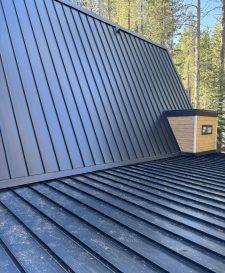
What a Correct Roof Replacement Involves Here
Tear-Off and Deck Inspection
Every legitimate replacement starts with a full tear-off down to the deck — not a layover. Once the old roofing is off, the deck gets inspected for soft spots, rot, or delamination, which is common on older Birchwood homes where a slow leak has been sitting under the shingles for years without anyone noticing. Any compromised sheathing gets replaced before anything new goes down. Skipping this step is the single most common shortcut that leads to early roof failure.
Ice and Water Shield in Vulnerable Zones
Given how much driving rain this area sees, we install self-adhered ice and water shield membrane at the eaves, valleys, and around every penetration — not just where code minimums require it. Valleys are where wind-driven rain concentrates and moss tends to establish first, so this is not a place to use standard felt underlayment alone.
Flashing Detail
Flashing failures cause more roof leaks than worn-out field shingles do. Step flashing at wall intersections, counter-flashing at chimneys, and properly lapped flashing at every penetration all need to be done correctly and in materials that hold up to salt-air corrosion — not reused from the old roof, which is a shortcut some crews take to save time.
Ventilation
A roof deck that can't breathe traps moisture, which speeds up rot and gives moss a head start from the underside. Balanced intake and exhaust ventilation is part of a correct replacement, not an optional add-on.
Material Selection for Moss and Moisture Resistance
Algae- and moss-resistant shingle products (with copper or zinc granules built in) make a real difference in how long a roof stays clean in a climate like this. We'll talk through the trade-offs of different material classes for your specific roof — pitch, sun exposure, and tree cover all affect how much moss pressure a given roof actually faces.
Signs a Birchwood Roof Needs Replacing Rather Than Repairing
- Granule loss heavy enough that you're finding grit in the gutters regularly
- Shingles that are curling, cupping, or cracking across large sections rather than in one isolated spot
- Moss or algae growth that keeps coming back within months of cleaning
- Soft spots in the decking felt when walking the roof, or sagging visible from the ground
- Repeated flashing leaks around chimneys, skylights, or wall intersections
- A roof approaching or past the end of its rated lifespan, especially if the last replacement predates current underlayment and flashing standards
- Daylight visible through the attic or consistent moisture staining on interior ceilings
If your roof shows one or two of these signs isolated to a small area, a repair may still make sense. If several apply, or the roof is old enough that repairing one section just means the next section fails soon after, replacement is usually the more honest recommendation — and the one that saves money over a few more years of patch repairs.
How We Approach a Roof Replacement Project
1. On-Site Assessment
We walk the roof, check the attic for ventilation and moisture issues, and look at how the specific site — tree cover, sun exposure, roof pitch, proximity to the water — is affecting wear. This tells us what the roof actually needs, not just what the shingles look like from the ground.
2. Written Estimate
You get a clear, itemized estimate before any work starts: materials, scope, timeline, and what's included in tear-off, decking repair (if needed), underlayment, flashing, and ventilation. No vague allowances that turn into surprise charges mid-project.
3. Scheduling Around Weather
Roof replacement needs a dry work window. We plan around Bellingham's weather patterns rather than pushing through rain, which protects your home's interior and the quality of the underlayment installation.
4. Tear-Off, Repair, and Installation
Full tear-off, deck inspection and repair as needed, membrane and flashing detail work, then installation of the new roofing system to manufacturer specification — which matters for keeping any material warranty valid.
5. Final Walkthrough
We walk the finished roof and the site with you, confirm cleanup (magnetic sweep for nails, debris removal), and go over any maintenance recommendations specific to your property's moss and moisture exposure.
Cost Factors for a Birchwood Roof Replacement
Every roof is different, and giving a number without seeing the roof isn't honest. But the factors that actually move the price are consistent, and it helps to understand them before you're comparing estimates.
| Factor | Why It Affects Cost |
|---|---|
| Roof size and pitch | More square footage and steeper pitches both increase labor and material needs |
| Deck condition | Rotted or soft sheathing found during tear-off adds material and labor to replace it |
| Number of penetrations | Chimneys, skylights, and vents each need individual flashing work |
| Material class | Standard vs. algae-resistant vs. premium shingle lines vary significantly in per-square cost |
| Layers to remove | A roof with multiple existing layers takes longer to tear off than a single layer |
| Access and site conditions | Steep lots, limited driveway access, or tree cover near the roofline can affect setup and disposal logistics |
As a rough range, most full roof replacements on typical single-family homes run from the mid five figures into the low-to-mid teens of thousands of dollars, depending heavily on the factors above. The only way to get an accurate number for your home is an on-site look, which is what our estimate covers.
Why It Matters to Hire a Crew That Already Works in Birchwood
A roofing crew that works Bellingham and the surrounding Whatcom County neighborhoods regularly knows how differently roofs age here compared to drier climates, and details their work accordingly — heavier ice and water shield coverage, corrosion-resistant fasteners and flashing, and material choices that actually hold up against the moss cycle. That's not something a crew coming from outside the region typically accounts for, because it isn't a problem they deal with every day.
It also matters for accountability. A local, established roofing company has a reputation in the community to protect and is still around if a warranty issue comes up years down the line — which matters more with roofing than almost any other exterior project, since problems can take a season or two of weather cycles to surface.
Maintenance That Extends the Life of a New Roof
A correctly installed roof still benefits from basic upkeep, especially in a climate that grows moss on anything that sits still.
- Keep gutters clear so water isn't backing up under the roof edge, especially heading into the fall rains
- Have moss and debris cleared from the roof surface before it establishes a heavy growth, rather than after
- Trim back tree branches that overhang the roof to reduce shade, debris, and moss pressure
- Schedule a periodic visual inspection, particularly after major windstorms
- Address any small flashing or ventilation issues promptly rather than letting them sit through a wet season
None of this replaces a quality installation, but it protects the investment once the new roof is on.
Ready to Talk About Your Roof?
If you're weighing repair against replacement, or just want an honest read on where your roof stands, we're happy to take a look. Reach out for a free, no-pressure estimate — we'll walk the roof, explain what we find in plain terms, and give you a clear written quote with no obligation.