 Bellingham Siding
 Custom Windows Built for Sehome's Climate
Sehome sits close enough to Bellingham Bay that homes here take a steady beating from salt-laden air, wind-driven rain, and the long gray stretch of moss season that runs from fall through spring. Original wood windows in Sehome's older homes and the aluminum-frame units common in mid-century remodels both show the same wear pattern over time: swollen sashes, fogged glass, soft sills, and frames that let cold air creep in around the edges. Custom windows done right for this neighborhood aren't just about looks — they're about picking materials and installation details that hold up to Whatcom County's wet-side weather year after year.
"Custom" here doesn't mean exotic. It means the window is sized, framed, and specified to fit your actual opening and your actual house, instead of forcing a stock size into a rough opening that was never square to begin with. That distinction matters more in Sehome than in newer subdivisions, because a lot of the housing stock here predates modern window standards and has settled or shifted slightly over the decades.
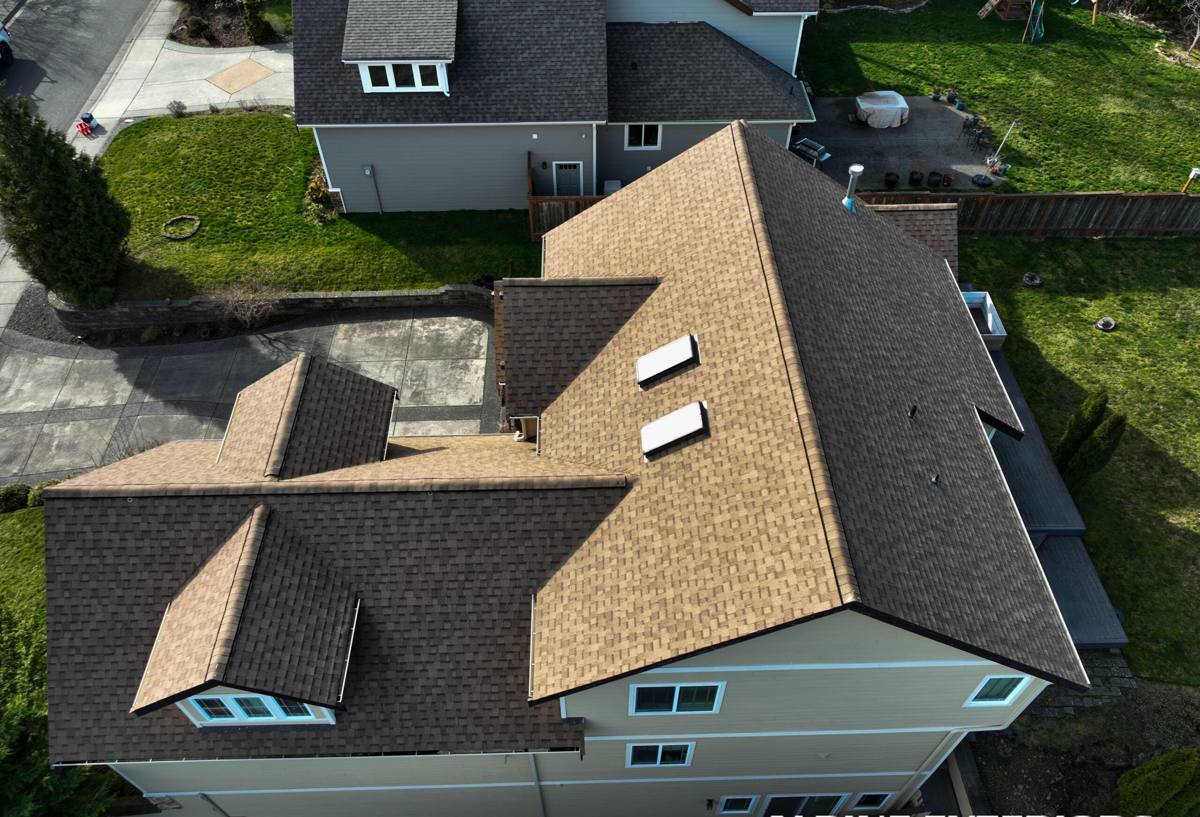
What Bellingham's Weather Does to Windows Over Time
Three climate factors drive almost every window failure we see in this part of Bellingham:
- Salt air: Even a few miles inland from the bay, airborne salt accelerates corrosion on hardware, hinges, and any exposed metal fasteners. Cheap cladding and low-grade hardware fail faster here than they would inland.
- Driving rain: Wind off the water pushes rain sideways, not just down. Flashing details and sill pitch that would be adequate in a drier climate aren't enough here — water gets forced up and under improperly lapped materials.
- Moss and prolonged damp: Whatcom County's long wet season keeps wood trim and sills damp for weeks at a time. Moss and algae hold moisture against the surface, which speeds rot in any wood that isn't properly primed, back-primed, and sealed.
None of this means Sehome homes need unusual materials — it means the ordinary details (flashing, sealant, drainage, hardware grade) have to be done correctly, every time, because there's no margin for shortcuts in this climate.
Signs a Sehome Home Needs Window Replacement
Visible Problems
- Fogging or condensation between panes on double-pane units — a sign the seal has failed
- Wood sills or frames that feel soft, spongy, or show dark staining
- Paint that's cracking or peeling repeatedly on the same window despite repainting
- Visible gaps between the frame and the siding or trim
- Moss or persistent green staining on sills and lower frames
Less Obvious Problems
- A noticeable draft near the window even when it's fully latched
- Windows that are hard to open, close, or lock — often a sign the frame has racked out of square
- Higher heating bills in a home where nothing else has changed
- Noise from outside that seems louder than it should be for the window's age
Any one of these can sometimes be fixed with a repair. Several at once, especially on a window over 20-25 years old, usually means replacement is the more honest and cost-effective call.
What Correct Custom Window Installation Involves
A window is only as good as the opening it's installed into. For Sehome homes specifically, we pay close attention to:
Accurate Measurement and Sizing
We measure the actual rough opening, not the nominal size of the old unit. Older Sehome homes often have openings that have shifted slightly out of square over the decades, and a custom-sized window accounts for that instead of relying on shims and caulk to make up the difference.
Flashing and Water Management
Given how much driving rain this area gets, proper flashing at the head, jambs, and sill is not optional. Water needs a clear path out of the assembly, not just a caulk bead holding it back. This is the single most common point where lower-quality installs fail in wet coastal climates.
Sill Pitch and Drainage
The sill needs to shed water outward, away from the house, every time — a detail that's easy to get wrong on a retrofit if the old opening wasn't built with proper slope to begin with.
Insulation and Air Sealing
Gaps around the frame get properly insulated and air-sealed, not just stuffed with fiberglass. This is where a lot of the draft and energy-loss complaints we hear about actually originate — not the window itself, but the installation around it.
Hardware Grade
Given the salt air near the bay, we favor hardware and fasteners rated for coastal or corrosive environments over standard-grade options that will pit and seize sooner in this environment.
Choosing the Right Frame Material for Sehome
| Material | How It Handles This Climate | Maintenance |
|---|---|---|
| Vinyl | Good moisture resistance, no repainting needed, solid performer in wet coastal conditions | Low — occasional cleaning |
| Fiberglass | Excellent dimensional stability, holds up well to temperature swings and moisture, strong long-term option | Low |
| Wood (clad exterior) | Warm interior look with a protected exterior face; the cladding has to be properly detailed to keep water off the wood core | Moderate — interior finish upkeep |
| Aluminum | Durable but conducts cold and can promote condensation in a climate this damp; we're selective about where we recommend it | Low, but thermal performance is a trade-off |
There's no single "best" material for every Sehome home — it depends on your home's style, your budget, and how much upkeep you want to take on. We'll walk through the honest trade-offs for your specific house rather than pushing one product line.
Glass and Energy Performance for This Climate
Bellingham's mild but wet and often overcast climate means the bigger energy concern for most Sehome homes is heat loss and condensation control, not extreme summer heat gain. A few details worth getting right:
- Double or triple pane with argon fill improves insulation value and reduces interior condensation on cold, damp days
- Low-E coatings help retain heat in winter without sacrificing natural light on the region's already limited sunny days
- Warm-edge spacers reduce the cold-spot effect at the glass edge, which is where condensation and fogging typically start first
We'll match glass packages to your home's exposure — a west-facing window catching direct wind and rain off the bay has different needs than a sheltered window on the lee side of the house.
Our Process for a Sehome Window Project
- On-site assessment — we look at the existing openings, framing condition, and any moisture or rot issues before quoting anything
- Honest recommendation — we tell you what actually needs replacing versus what could be repaired, and why
- Custom measurement — openings are measured individually, accounting for any settling or square issues specific to your home
- Material and glass selection — we walk through frame and glass options suited to your home's exposure and your budget
- Installation — proper flashing, sill pitch, insulation, and air sealing on every unit, not just the visible finish work
- Final walkthrough — we check operation, seals, and finish work with you before calling the job done
Why It Matters to Hire a Crew That Already Works in Sehome
A crew that regularly works in Sehome and around Bellingham Bay already knows which details can't be shortcut here — the flashing sequence that actually keeps driving rain out, the hardware grade that won't corrode in a season or two, the sill pitch that accounts for how hard the rain comes in sideways during a winter storm. That's different knowledge than what a crew coming from a drier inland market brings to the job. It's also worth asking any contractor how they handle Whatcom County permitting and inspection requirements for window replacement, since requirements can vary depending on your home's age and whether the work involves structural changes to the opening.
Questions Worth Asking Before You Hire
- Do you pull permits when required, and who's responsible for scheduling inspections?
- What warranty covers the installation itself, separate from the manufacturer's product warranty?
- How do you handle flashing and sill detailing on older, potentially out-of-square openings?
- Can you show me the hardware and material specs you're quoting, not just a brand name?
A contractor who answers these plainly, without dodging, is generally one worth trusting with the job.
Get a Free Estimate for Your Sehome Home
If your windows are drafty, fogged, hard to operate, or just showing their age, we're happy to take a look and give you a straight assessment — no pressure, no upsell. Fill out the form below to schedule a free estimate for your Sehome home.