 Bellingham Siding
 Why Columbia Homes Need Windows Built for This Climate
The Columbia neighborhood sits close enough to Bellingham Bay that homes here take on a specific set of challenges: salt-laden air that accelerates corrosion on hardware and frames, driving rain that comes in sideways during winter storms, and a long, damp moss season that keeps exterior surfaces wet for months at a stretch. Windows are one of the first components on a house to show the effects of all three. Hardware pits and seizes, sealants break down faster than manufacturers' literature suggests, and frames that aren't detailed correctly at installation start letting moisture into the wall cavity long before anyone notices a problem indoors.
This isn't unique to Columbia, but it is more pronounced here than in drier inland parts of Whatcom County. A window package that performs fine in a sheltered, sun-facing lot elsewhere in the county can underperform on a Columbia property exposed to bay winds and prolonged shade. Getting windows right in this neighborhood means treating the climate as a design input, not an afterthought.
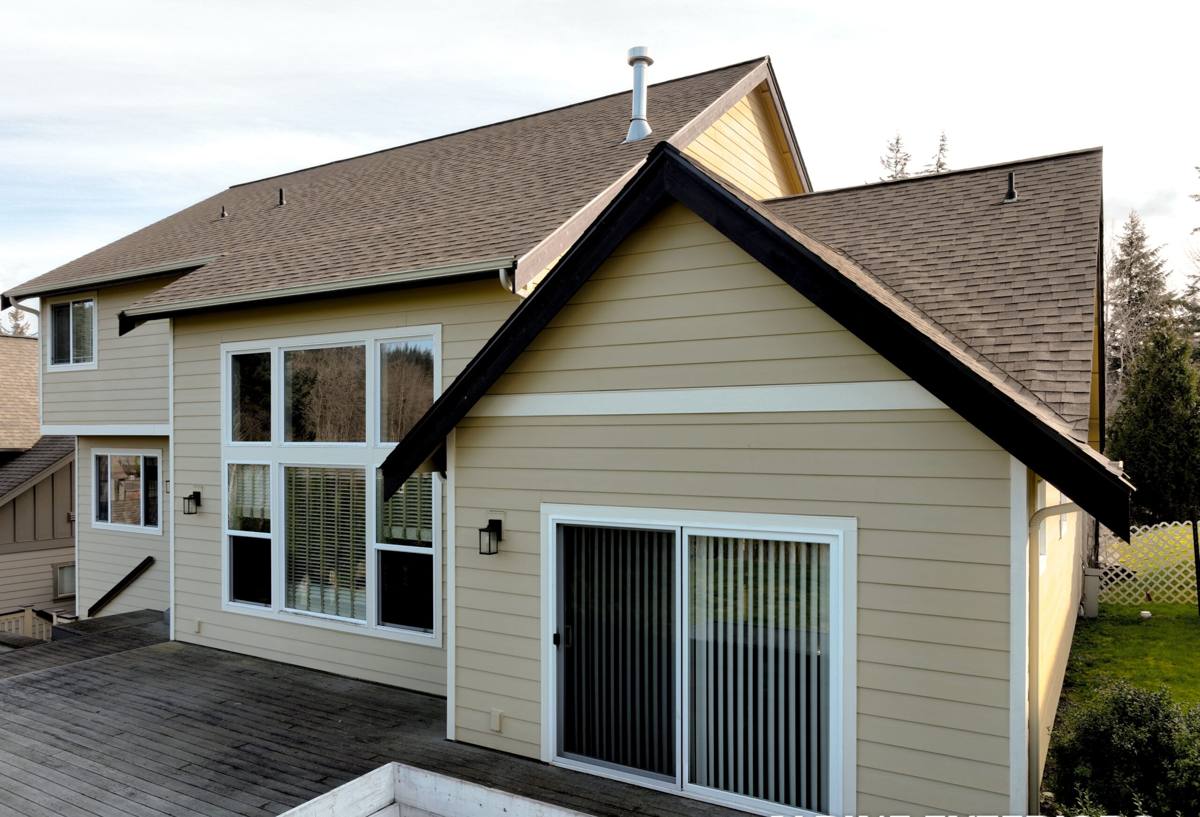
What "Custom" Actually Means on Columbia Properties
Non-Standard Openings
Many homes in this part of Bellingham were built decades ago, and rough openings have often shifted slightly out of square over the years — from settling, from moisture cycling in the framing, or from earlier remodels. "Custom" in this context usually means field-measuring every opening individually rather than ordering off a standard size chart, then building or ordering windows that actually fit the opening as it exists today, not as it was framed originally.
Matching the Home's Character
Columbia has a mix of older bungalows, mid-century homes, and newer infill construction. A custom window job respects the proportions and grille patterns of the existing house rather than dropping in whatever's fastest to source. That matters for resale value and curb appeal, but it also matters functionally — window styles like casements, which seal tighter against driving rain than sliders, are often a better fit for exposed elevations even when the home's original windows were a different style.
Materials and Frame Options That Actually Hold Up Here
Every window material has trade-offs. In a marine, high-moisture environment like Columbia, those trade-offs matter more than they would in a drier climate. Here's how the common options compare for this specific setting.
| Frame Material | Performance in Salt Air / Driving Rain | Maintenance Burden |
|---|---|---|
| Vinyl | Good — won't corrode or rot, handles moisture well | Low; occasional cleaning of tracks and weep holes |
| Fiberglass | Very good — dimensionally stable, resists warping in temperature/moisture swings | Low; holds paint well if a custom color is wanted |
| Aluminum | Fair — durable but conducts cold and can show pitting near the bay over time | Moderate; hardware and finish need periodic attention |
| Wood (unclad) | Poor in this exposure without diligent upkeep — absorbs moisture, prone to rot near the sill | High; regular refinishing required |
| Wood-Clad | Good on the exterior face if cladding and flashing are detailed correctly | Moderate; interior wood still needs care |
We don't typically recommend unclad wood frames for exposed elevations in this neighborhood. It's not that wood is a bad material — it's that the maintenance schedule required to keep it performing near the bay is more than most homeowners want to sign up for. Fiberglass and vinyl consistently give Columbia homeowners the best balance of appearance, performance, and long-term cost.
Glass Package Matters As Much As Frame
Frame material gets most of the attention, but the glass package does a lot of the work against condensation and heat loss. In this climate, we lean toward double- or triple-pane units with a warm-edge spacer system — the spacer is often where older window units fail first, showing up as fogging between the panes years before the frame itself has a problem.
What a Correct Installation Actually Involves
A window is only as good as its installation. This is the step where most of the long-term water problems we get called out to fix actually originate — not from a bad product, but from shortcuts taken during the swap.
- Removing the old unit without tearing the surrounding weather-resistive barrier more than necessary
- Inspecting the rough opening and sill for hidden rot or moisture damage before the new unit goes in
- Installing sill pan flashing so any water that gets past the window sheds outward, not into the wall
- Properly lapping flashing tape with the house wrap in the correct shingle-style order, top piece over bottom
- Shimming and fastening the unit square and plumb, not just tight to the opening
- Sealing the interior air seal separately from the exterior water seal — these are two different jobs
- Using backer rod and the correct exterior sealant, not just a bead of caulk over a gap
Skipping any one of these steps might not show a problem for a year or two. In a neighborhood that gets sustained driving rain off the bay, it usually does show up eventually — as staining below the sill, soft trim, or a musty smell in an exterior wall.
Our Process, From Estimate to Final Walkthrough
1. On-Site Assessment
We look at each opening individually, check for existing moisture damage, and talk through which frame material and glass package make sense for that elevation's sun and wind exposure.
2. Measuring and Ordering
Every opening is field-measured. We don't order from a generic size chart, which is one of the more common causes of gaps and improvised shimming on jobs that go wrong.
3. Preparing the Opening
Old units come out carefully, and we inspect the sill and framing before anything new goes in. If there's rot or moisture damage, we address it before the new window is installed — not after.
4. Installation and Flashing
New units are set, flashed, and sealed following the sequence above, with the water management detail treated as non-negotiable regardless of how the old window was originally installed.
5. Interior and Exterior Finish
Trim, caulk lines, and hardware are finished to match the surrounding house, and we walk the homeowner through operation and any warranty paperwork before we consider the job done.
Signs Your Current Windows Are Already Failing
Homeowners in Columbia often notice one of these before deciding to look into replacement:
- Fogging or a cloudy haze between the panes that won't clean off — the seal has failed
- Visible staining, soft wood, or bubbling paint on the interior sill or exterior trim
- Windows that are noticeably harder to open, close, or lock than they used to be
- Drafts you can feel near the frame even when the window is fully latched
- A musty smell near an exterior wall, especially after a stretch of heavy rain
- Visible moss or dark streaking building up on or below the window in shaded areas
Any one of these on its own isn't necessarily urgent. Several of them together, especially on a wall that faces the prevailing weather, is usually a sign the window system is no longer keeping water and air out the way it should.
Energy Efficiency and Comfort in a Pacific Northwest Winter
Bellingham's winters aren't extreme by national standards, but the combination of persistent damp cold and wind off the water makes air leakage more noticeable indoors than the outdoor temperature alone would suggest. A properly sealed, insulated-frame window with a good glass package makes a real difference in comfort near exterior walls, and it takes pressure off heating systems that would otherwise be compensating for constant draft. This is less about hitting a specific efficiency number and more about eliminating the cold spots and condensation that come with aging, leaky units.
Why Hiring a Crew That Already Works in Columbia Matters
General window installation skill is necessary but not sufficient here. A crew that regularly works this part of Whatcom County has already seen how the local exposure plays out on real houses — which elevations take the worst of the driving rain, how quickly moss and grime build up on north-facing walls, and where older homes in this area tend to have hidden moisture issues behind the siding. That experience shows up in small decisions during the job: which flashing detail to use on a particularly exposed sill, when to recommend a frame upgrade because of what's found once the old window comes out, and how to sequence work around the area's weather patterns instead of fighting them.
It also matters for accountability. A crew with an ongoing presence in the neighborhood has a reason to get the flashing and sealing right the first time, because callbacks on water intrusion are expensive in both material terms and reputation.
Keeping New Windows Performing Long-Term
Even a correctly installed window benefits from basic upkeep in this climate. Clear weep holes of debris and moss buildup a couple of times a year, rinse salt residue off frames and hardware periodically if the home is close to the water, and check exterior caulk lines annually for cracking or separation. Catching a small sealant failure early is a five-minute fix; ignoring it for a season or two in this climate can turn into a wall repair.
If you're weighing window replacement for a Columbia-area home, we're happy to take a look and give you a straightforward, no-pressure estimate — just fill out the form below to get started.