 Bellingham Siding
 Sunnyland's Homes and Why Siding Here Isn't a One-Size Job
Sunnyland is one of Bellingham's older, established residential neighborhoods, sitting east of downtown with a mix of early-to-mid-20th-century houses alongside newer infill. Homes in neighborhoods like this were mostly built with whatever exterior cladding was standard for their decade — original wood lap siding, later replaced in some cases with vinyl or basic fiber cement, and in newer construction, a wider mix of products. That variety matters because it means every siding installation in Sunnyland is really a judgment call: what's under the existing cladding, how the wall has handled 40, 60, or 80 years of Whatcom County weather, and what needs to change so the next installation actually lasts.
We don't treat a Sunnyland job like a generic siding swap. Mature tree cover throughout the neighborhood keeps a lot of exterior walls shaded and slow to dry after rain. Older houses often have minimal or degraded weather barriers behind the original cladding. And because Bellingham Bay is close enough to put salt-laden air into the mix, the corrosion and moisture story here is different than it would be 20 miles inland. Getting siding installation right in this neighborhood means respecting all of that, not just nailing up new panels over what's already there.
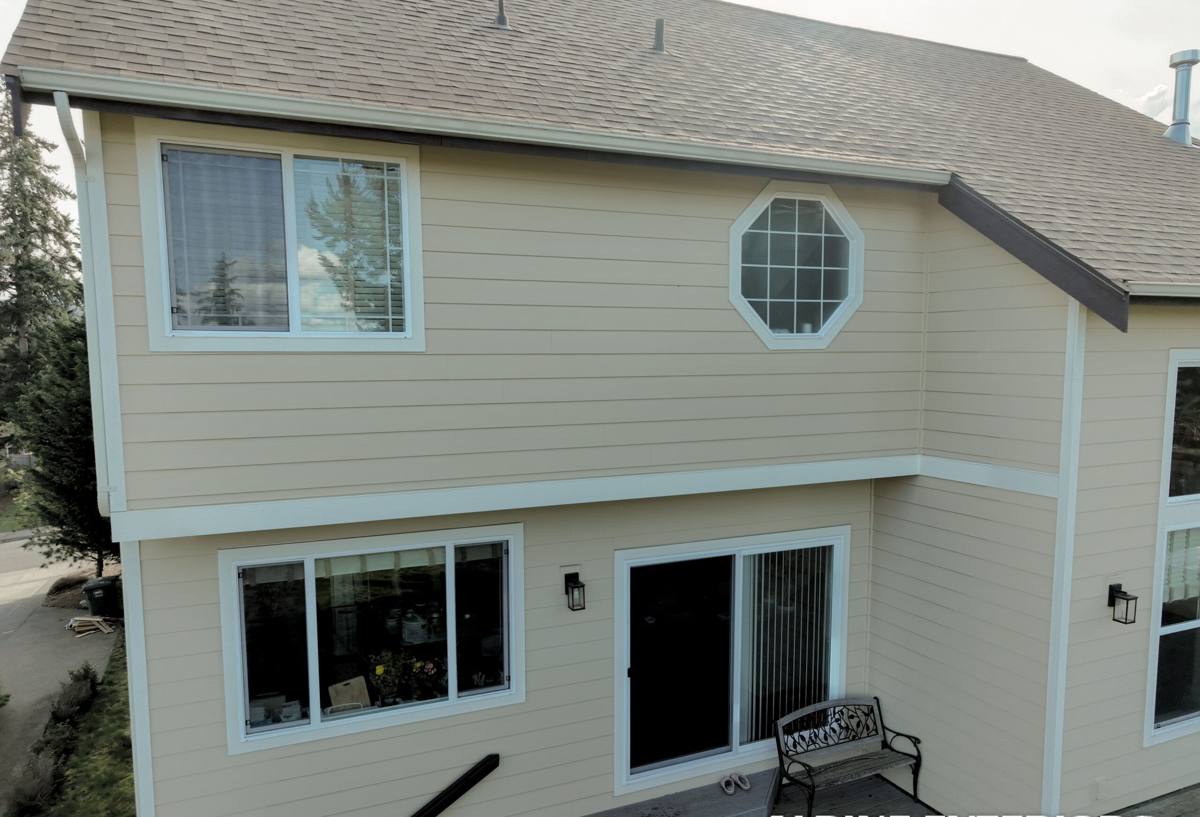
The Climate Sunnyland Siding Has to Survive
Salt Air Off Bellingham Bay
Bellingham sits on saltwater, and neighborhoods on the east and north sides of town, including Sunnyland, still get a steady dose of salt-laden air carried inland on the wind. Salt air accelerates corrosion on exposed fasteners, staples, and lower-grade trim, and it degrades paint films faster than an equivalent inland location. Cladding and fastening choices that would hold up fine in, say, eastern Washington don't always perform the same way this close to the Sound.
Driving Rain and Wind-Driven Moisture
Whatcom County doesn't just get a lot of rain — it gets a lot of wind-driven rain, especially during fall and winter storm systems that push moisture sideways into walls rather than straight down. That matters more than total rainfall totals. A siding system that only manages water falling vertically will let wind-driven moisture find every gap, seam, and unflashed penetration. Correct detailing at windows, doors, and trim is not optional in this climate; it's the difference between siding that lasts three decades and siding that starts showing rot in eight or ten years.
The Long Moss Season
Bellingham's moss season isn't really a season — on shaded, north-facing, or tree-covered walls, it's close to year-round. Moss and algae hold moisture against the cladding surface, feed off dust and organic debris, and can migrate into seams and butt joints where they trap water long after the rain has stopped. Left unaddressed, sustained moss growth softens paint finishes, stains cladding permanently, and accelerates the breakdown of anything not built to resist sustained dampness. Sunnyland's tree canopy makes this a bigger factor here than it is on more open, sun-exposed lots elsewhere in the county.
What Correct Siding Installation Actually Involves
A siding installation is only as good as the assembly behind the visible panels. In this climate, several details separate a job that performs for decades from one that looks fine for a year or two and then starts failing quietly behind the surface.
Weather-Resistive Barrier and Flashing
Every wall needs a continuous weather-resistive barrier installed correctly — lapped shingle-style so water sheds down and out, not into seams. Every window, door, and penetration needs proper flashing integrated with that barrier, so wind-driven rain is directed back out of the wall assembly instead of behind it. This is the single most common corner cut in low-bid siding work, and it's invisible once the cladding goes up — which is exactly why it has to be done right the first time.
The Rainscreen Gap
In a climate with this much sustained moisture and moss pressure, an air gap between the back of the siding and the weather barrier isn't a luxury upgrade. It lets bulk water drain, lets the wall assembly dry from both sides, and reduces the moisture load that feeds moss and mildew on the cladding face. Solid, direct-to-sheathing installation with no drainage plane traps moisture against the back of the siding in exactly the conditions Sunnyland sees most of the year.
Fastening and Clearances
Corrosion-resistant fasteners, driven to the manufacturer's specified depth and pattern, matter more here than in a dry inland climate because of the salt-air exposure. Ground clearance, deck and roofline clearances, and proper gaps at inside and outside corners all need to be held to spec so water has somewhere to go besides into the wall. These are simple rules on paper and easy to skip under schedule pressure — which is exactly how a lot of premature siding failures start.
Why We Install Only James Hardie Fiber Cement
We standardized on James Hardie fiber cement siding and don't install vinyl, LP SmartSide, Cemplank, Allura, or bare wood siding like primed spruce or cedar. That's not a marketing position — it's a conclusion we reached from what actually holds up in this climate over the long haul.
Fiber cement is non-combustible, which matters increasingly in the Pacific Northwest as wildfire smoke and ember exposure become part of the regional conversation. It doesn't feed moss and mildew the way untreated wood can, and it doesn't soften, warp, or become a moisture magnet the way engineered wood products can once a seam or cut edge is compromised. James Hardie's ColorPlus factory finish is baked on under controlled conditions, which gives it more consistent adhesion and color retention against sustained damp and UV exposure than field-applied paint on site-primed products. And Hardie engineers specific HZ product lines for wetter, harsher climate zones, which is the category the Pacific Northwest falls into.
None of this means other products are junk. Vinyl is inexpensive and low-maintenance in the right setting. Engineered wood siding installs quickly and takes paint well when it's fresh. Cedar has a look a lot of homeowners genuinely love. But each of those products asks a Sunnyland homeowner to accept a trade-off — more maintenance, more moisture sensitivity, more installation precision required to avoid problems, or a shorter realistic service life in this specific climate — that we're not willing to install and then be responsible for down the road. Fiber cement, installed correctly, is the product we've seen perform the way homeowners expect it to.
Our Installation Process
Every Sunnyland siding installation follows the same disciplined sequence, whether it's a full re-side or a targeted section replacement:
- Site and substrate assessment. We check for existing rot, delamination, or water damage before anything gets covered up, since siding installed over a compromised wall just hides the problem.
- Removal and substrate repair. Damaged sheathing, framing, or trim gets repaired or replaced — not skipped — before new materials go on.
- Weather-resistive barrier installation. Installed and lapped correctly, with all seams sealed per manufacturer specification.
- Flashing at every penetration. Windows, doors, hose bibs, vents, and any other wall penetration get integrated flashing tied into the weather barrier.
- Rainscreen furring, where the assembly calls for it. Creates the drainage gap that lets the wall dry and reduces moss and mildew pressure on the cladding.
- James Hardie panel or plank installation to manufacturer fastening schedules, with correct gapping, clearances, and corner detailing.
- Trim, caulking, and touch-up using compatible, climate-appropriate materials at cut edges and joints.
- Final walkthrough with the homeowner before we consider the job complete.
Signs a Sunnyland Home Needs New Siding
Because a lot of Sunnyland's housing stock has been through multiple decades of Pacific Northwest weather, it's worth knowing what to look for before small problems become structural ones:
- Persistent moss or algae staining that returns within weeks of cleaning
- Soft or spongy spots when you press on the siding, especially near the bottom courses
- Paint that's bubbling, peeling, or won't hold a fresh coat
- Visible warping, buckling, or gaps opening up between boards or panels
- Rising energy bills that suggest the wall assembly isn't insulating or sealing the way it used to
- Rot or discoloration around window and door trim
- Cracked or crumbling caulk at seams and penetrations
- Interior signs like musty smells, peeling wallpaper, or damp drywall near exterior walls
Any one of these on its own might just need a repair. Several at once, especially on a home that's original or close to it, usually means the siding and the assembly behind it are due for a full replacement rather than another round of patching.
What Siding Installation Costs Depend On
We don't quote exact numbers without seeing the house, but the factors that actually move the price on a Sunnyland job are consistent from project to project:
| Factor | Why It Matters |
|---|---|
| Wall condition underneath existing siding | Rotted sheathing or framing found during tear-off adds repair scope that can't be priced until the old cladding comes off |
| Home size and wall complexity | More corners, gables, and dormers mean more cutting, flashing, and labor per square foot of coverage |
| Existing siding material | Removing old wood or fiber cement takes longer than removing vinyl, and disposal costs vary by material |
| Access and site conditions | Mature trees, tight lot lines, and limited staging space — common on older Sunnyland lots — affect scaffolding and material handling time |
| Hardie product line and profile | Plank lap, shingle-style panels, and board-and-batten carry different material and labor costs |
| Trim and detail work | Window casing, corner boards, and fascia detailing add labor beyond the flat wall areas |
Maintaining Hardie Siding in Sunnyland's Climate
Fiber cement is low-maintenance compared to wood, but low-maintenance doesn't mean no maintenance, especially with a moss season this long. A simple annual routine keeps the siding performing and looking the way it should:
- Rinse the exterior annually with a garden hose and soft brush — skip the pressure washer, which can force water behind panels and damage caulk lines
- Check and refresh caulking at trim, corners, and penetrations every couple of years
- Trim back tree branches and shrubs that keep siding shaded and damp longer than necessary
- Watch gutters and downspouts for overflow that dumps extra water directly onto wall sections
- Address any moss regrowth promptly rather than letting it establish for another season
- Inspect after major windstorms for loose trim or fasteners that may have worked free
Why Hire a Crew That Already Works in Sunnyland
Siding installation in this climate rewards experience with this exact combination of conditions — salt air, wind-driven rain, and shaded, moss-prone walls. A crew that's worked Sunnyland and the surrounding Bellingham neighborhoods knows which walls need extra attention to drainage detailing, which lots need extra care around mature landscaping during tear-off, and how local permitting and inspection expectations run in Whatcom County. That's the kind of judgment that doesn't show up in a spec sheet but shows up years later in whether the siding is still doing its job.
If you're weighing a siding replacement or repair on a Sunnyland home, we're happy to take a look and walk you through what we're seeing and why. There's no pressure and no obligation — just a straight assessment from a crew that installs one product, does it to spec, and stands behind it. Reach out below for a free estimate.