 Bellingham Siding
 Edgemoor Is a Different Window Problem Than the Rest of Bellingham
Edgemoor sits close to the water, wrapped in mature evergreen canopy, with a mix of older architect-built homes and newer construction perched along the bluff. That combination is beautiful and it's also hard on windows. Homes here take on salt-laden air off Bellingham Bay, wind-driven rain that hits at an angle instead of straight down, and long stretches of shade and dampness that keep moisture sitting on glass and frames far longer than it would on a more exposed, sun-baked lot. A window package that works fine in a dry inland neighborhood can underperform here within a few years.
We've done energy-efficient window replacements on Edgemoor homes long enough to know the neighborhood isn't a generic "coastal Pacific Northwest" checkbox. It has its own microclimate, its own housing stock quirks, and its own failure patterns. This page is about what actually matters when you're replacing windows on a home in this specific part of Whatcom County.
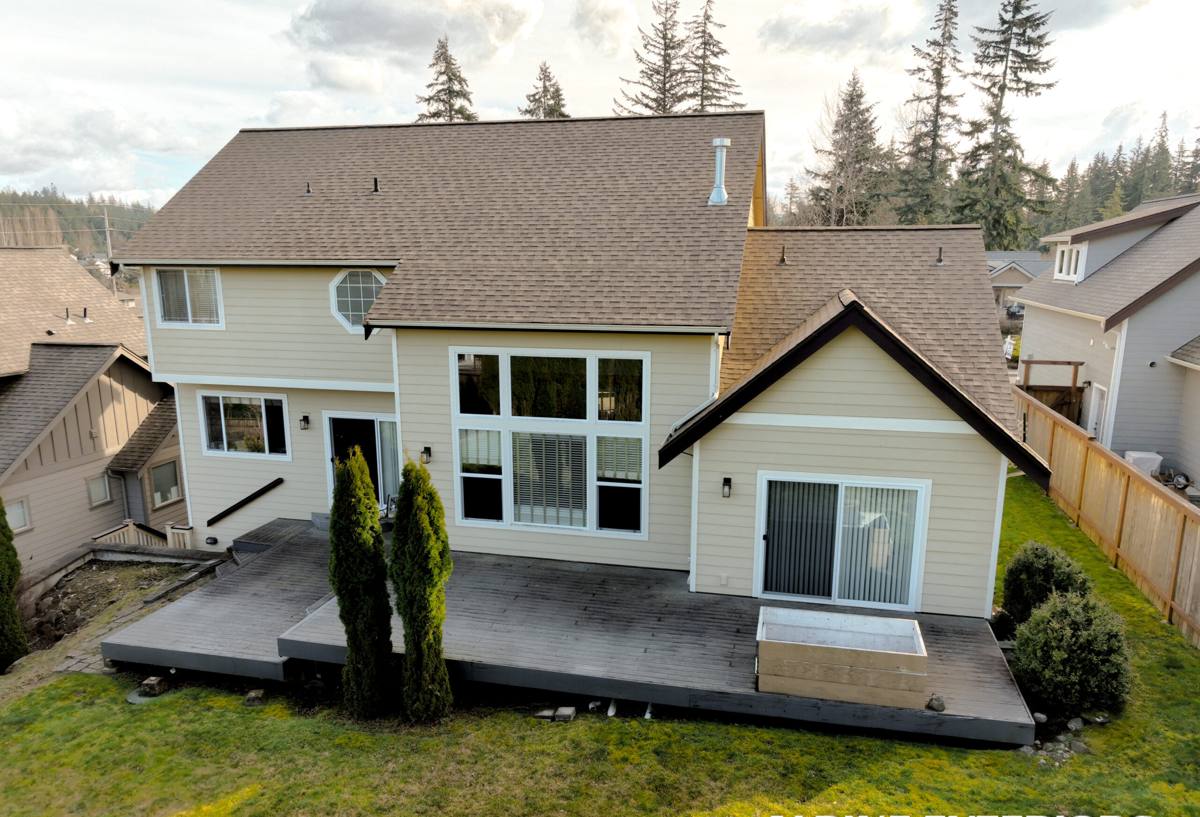
What Bellingham's Climate Does to Windows Over Time
Three things drive almost every window problem we see in Edgemoor:
- Salt air: proximity to Bellingham Bay means airborne salt settles on exterior surfaces. Over years it accelerates corrosion on hardware, fasteners, and lower-grade aluminum components, and it can dull or degrade certain finishes faster than manufacturers' inland warranty testing assumes.
- Driving rain: wind off the water pushes rain sideways into wall assemblies, not just down onto sills. Windows and flashing details that only manage vertical water shedding will eventually let moisture track sideways behind the trim.
- A long moss season: shade from mature trees plus persistent damp keeps north- and west-facing walls wet for extended periods each year. Moss and algae hold moisture against siding and window trim, which is exactly the condition wood rot and seal failure need to get started.
None of this means Edgemoor is unlivable or that windows fail constantly — it means the margin for error in materials and installation is smaller than in a drier climate, and cutting corners shows up sooner.
What "Energy-Efficient" Actually Means in This Climate
A lot of window marketing focuses entirely on U-factor and glass coatings. Those numbers matter, but in a marine climate like Bellingham's, energy efficiency is just as much about keeping water and air out of the wall as it is about insulating glass.
Glass and Frame Performance
For our climate zone, we're generally looking at low-E coated, dual-pane (sometimes triple-pane on particularly exposed elevations) glass with a warm-edge spacer system and a U-factor suited to Northwest conditions. Argon or krypton gas fill helps, but it only holds its value if the seal stays intact — which is where the frame and installation come back into the picture.
Installation Detail That Matters More Than the Glass Spec
We've replaced plenty of "good" windows that were failing early not because the glass unit was bad, but because flashing, sill pan drainage, and sealant details weren't built for wind-driven rain. On an Edgemoor bluff or waterfront-adjacent lot, we treat flashing and drainage as equally important as the window's energy rating. A high-efficiency window installed without a proper sill pan and correctly lapped flashing will let water behind the wall long before the glass ever underperforms thermally.
Signs Your Edgemoor Home's Windows Are Underperforming
Homeowners usually notice one or two of these before they notice a rising energy bill:
- Visible fogging or a hazy film between panes (seal failure — the gas fill has escaped)
- Cold drafts near the frame edges even when the window is fully latched
- Soft or discolored wood trim around the exterior frame, especially on north or west walls
- Hardware that's stiff, corroded, or won't latch flush anymore
- Moss or algae buildup on the sill or lower trim that keeps coming back after cleaning
- Condensation pooling on interior glass or sills during cold, damp stretches
- Noticeably higher heating costs compared to similarly sized rooms elsewhere in the house
Any one of these is worth a look. Several together usually mean the window and its surrounding flashing are both due for replacement, not just the glass.
How We Approach an Edgemoor Window Replacement
Our process doesn't change dramatically house to house, but the details we pay closest attention to are shaped by what this neighborhood throws at a building envelope.
- On-site assessment: we look at each elevation separately — a west-facing window catching driving rain off the bay needs different flashing attention than a sheltered, tree-shaded window on the opposite side of the same house.
- Material and glass selection: based on exposure, shade, and how the home is used, we walk through frame material, glass package, and hardware options — including where salt-air corrosion resistance should factor into the decision.
- Removal and structural check: once the old window is out, we check the rough opening and sheathing for hidden rot or moisture damage before anything new goes in. This is often where older Edgemoor homes reveal water intrusion that wasn't visible from inside.
- Sill pan and flashing installation: proper drainage plane and flashing sequencing so any water that gets past the exterior finish drains back out, not into the wall.
- Window installation and air-sealing: set level and square, shimmed correctly, insulated and air-sealed around the frame without over-compressing the insulation.
- Exterior finish and trim: trim and caulking detailed to shed water away from joints, with attention to the surfaces most likely to hold moss and moisture long-term.
- Final walkthrough: operation check on every window, plus a plain-language explanation of what was done and what maintenance to expect.
Comparing Frame Materials for a Salt-Air, High-Moisture Setting
There's no single "best" frame material for every home — it depends on exposure, budget, and how the house looks. Here's how the common options hold up under Edgemoor's specific conditions:
| Frame Material | Salt Air / Moisture Behavior | Maintenance | Typical Fit |
|---|---|---|---|
| Vinyl | Doesn't corrode; performs well with quality welded corners and reinforced sightlines | Low — occasional cleaning | Good value across most exposures |
| Fiberglass | Very stable dimensionally; handles temperature and moisture swings well | Low | Higher-exposure walls, larger openings |
| Aluminum | Can corrode over time near the water unless properly finished; conducts cold | Moderate | Only with marine-grade finishes and thermal breaks |
| Wood / Wood-Clad | Handsome, but exterior wood surfaces need consistent upkeep in a wet, shaded climate | Higher — regular inspection and finish maintenance | Homes prioritizing a traditional look, with a maintenance plan in place |
We're straightforward with homeowners about trade-offs rather than pushing one material for every job. A wood-clad window can be the right call on a home where appearance matters most, as long as the owner understands the upkeep it needs in a shaded, damp setting. Vinyl and fiberglass tend to be the lower-maintenance path for exposed walls facing the water or prevailing wind.
What Affects the Cost of an Edgemoor Window Project
Every home is different, so we won't quote a number without seeing the house, but these are the main factors that move the price up or down:
| Factor | Why It Matters |
|---|---|
| Number and size of openings | More or larger windows means more material and labor |
| Frame material chosen | Vinyl, fiberglass, and wood-clad carry different material costs |
| Existing wall condition | Hidden rot or moisture damage found during removal adds repair scope |
| Access and elevation | Upper-story or difficult-access windows on a bluff lot take more time to stage safely |
| Glass package | Double vs. triple pane, coatings, and gas fill affect unit cost |
| Trim and exterior finish work | Matching existing trim profiles or upgrading finish detail adds labor |
Broadly, homeowners should expect energy-efficient window replacement to be a mid-to-upper range home improvement investment rather than a quick, low-cost swap — the real cost driver is almost always what the assessment finds once the old window comes out, not the glass itself.
Why It Matters That We Already Work in Edgemoor
A crew that mostly works drier, more sheltered neighborhoods can still do a technically fine window install and still miss what this specific setting needs — the flashing detail for sideways rain, the frame choice that won't corrode near the bay, the trim approach that won't just grow moss again in two winters. Working Edgemoor regularly means we've already seen how different elevations on bluff and waterfront-adjacent lots behave, and we build that into the assessment before a single window is ordered. It also means we're realistic about seasonal timing — scheduling exterior work around Bellingham's wetter stretches so installation happens under conditions that let sealants and flashing cure properly.
Living With New Windows Through Bellingham's Moss Season
Energy-efficient windows installed correctly still benefit from basic seasonal upkeep in this climate:
- Rinse salt residue off exterior glass and frames periodically, especially after storms
- Keep gutters and downspouts clear so overflow doesn't run down onto window trim
- Trim back tree limbs and vegetation that keep a wall shaded and damp longer than necessary
- Check weep holes and sill drainage paths each fall so they're clear before the wet season
- Address any moss or algae on trim promptly rather than letting it sit against the wood or finish
None of this is heavy maintenance — it's the same kind of seasonal attention any Whatcom County home needs, just applied consistently.
Ready to Talk About Your Edgemoor Windows?
If your windows are fogging, drafting, or just feel past their prime, we're happy to come take a look and give you an honest read on what's going on — no pressure, no upsell script. Use the form below to request a free estimate and we'll walk the house with you.