 Bellingham Siding
 Why Bellingham Roofs Wear Differently — And Why York Feels It
A roof in York doesn't age the same way a roof does in a dry inland climate, and it doesn't age the same way as a roof three states over that gets more sun and less rain. Bellingham sits close enough to Bellingham Bay that salt-laden air reaches inland neighborhoods and slowly works on exposed metal — fasteners, flashing, vent caps, and anything else that isn't corrosion-resistant. Add the driving, wind-pushed rain that comes through Whatcom County during fall and winter storms, and every seam, lap, and penetration on a roof gets tested repeatedly, not just once a year during a big storm.
Then there's moss. York is a mature, established part of Bellingham, and mature neighborhoods mean mature tree canopy. Shade plus consistent moisture plus mild temperatures is exactly the recipe moss and roof algae need, and in this climate that recipe holds for most of the year, not just a few soggy months. A roof that would stay clean for a decade in a sunnier, drier region can start showing moss growth in a fraction of that time here if it wasn't built and detailed with that reality in mind.
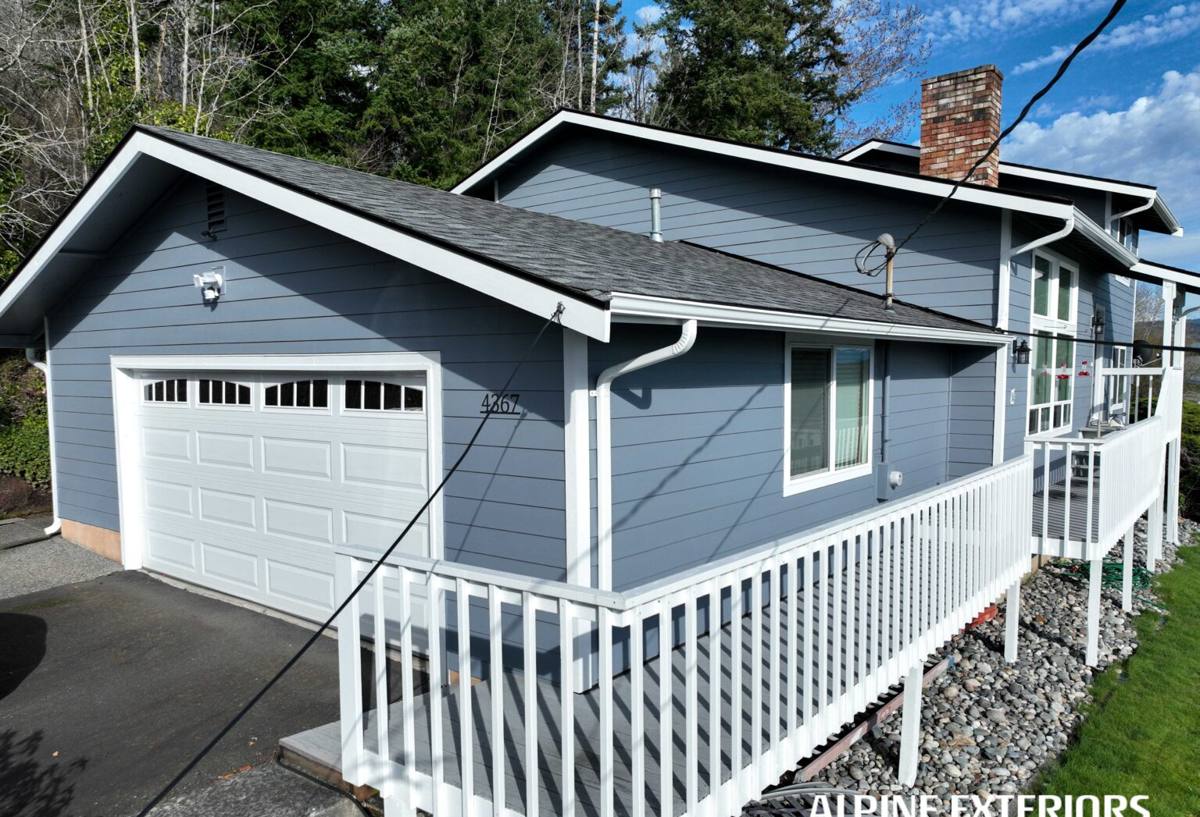
Signs a York Roof Needs Replacing, Not Patching
Not every roof problem calls for a full tear-off. But there's a point where repeated patching stops being the economical choice, and pushing past that point usually means paying for both the patches and the eventual replacement.
Age and material condition
Most asphalt shingle roofs in this climate are realistically looking at replacement in the 18-25 year range, often on the shorter end if the roof has heavy shade and moss exposure. Cracked, cupping, or granule-bald shingles across large sections — not just one isolated area — are a sign the material itself is failing, not just a localized leak.
Visible damage patterns
Moss growth thick enough to hold water against the shingle surface, soft or spongy spots when walked on, and daylight visible through the roof deck from the attic are all signs that go beyond a simple repair. Repeated flashing failures around chimneys, skylights, or valleys — the same spot leaking again after being patched — usually means the underlying material has reached the end of its service life.
Interior warning signs
Water stains on ceilings, musty smells in upper rooms, or visible mold near roof penetrations often show up well after the roof itself started failing. By the time interior damage appears, the deck underneath may already need repair, which changes the scope of the job.
What Correct New Roof Installation Actually Involves
A new roof is a system, not a single product. In a climate that gets tested by driving rain and long wet seasons, every layer of that system matters, and skipping or shortcutting any one of them is where premature failures come from.
Tear-off and deck inspection
A full tear-off removes the old roofing down to the deck, which is the only way to actually inspect the plywood or OSB underneath for rot, delamination, or soft spots — problems a simple overlay would just bury. Any damaged decking gets replaced before anything new goes down; installing new roofing over a compromised deck is a guaranteed short-term fix.
Underlayment and moisture protection
The underlayment is the roof's backup layer if wind-driven rain gets past the shingles, which happens more often in this region than homeowners realize. Self-adhered ice-and-water membrane belongs at eaves, valleys, and around penetrations — the spots most exposed to standing water and wind-pushed moisture — with a quality synthetic underlayment across the rest of the field.
Flashing done right
Flashing failures are the single most common cause of roof leaks, more than the shingles themselves. Step flashing at walls, counter-flashing at chimneys, and properly lapped valley flashing all need to be installed in the correct sequence with the roofing material, not caulked on as an afterthought.
Ventilation that actually balances
Balanced intake at the soffits and exhaust at the ridge keeps the attic dry and keeps roof temperatures stable, which matters for shingle lifespan and for preventing trapped moisture from feeding rot in the deck. Ventilation that's out of balance — plenty of ridge vent with blocked or insufficient soffit intake — can quietly shorten a new roof's life even when everything else was installed correctly.
Choosing a Roofing Material for a Shaded, Damp Lot
There's no single "best" roofing material — the right choice depends on the home, the budget, and how much shade and moss exposure the roof will actually see. Here's how the common options compare for a York-type lot with mature tree cover:
| Material | Typical Lifespan | Moss/Algae Resistance | Maintenance |
|---|---|---|---|
| Architectural asphalt shingle | 20-30 years | Good with algae-resistant granules; needs periodic cleaning under heavy shade | Low to moderate |
| Metal roofing (standing seam) | 40-60 years | Very good — moss struggles to root on a smooth metal surface | Low |
| Cedar shake/shingle | 25-30 years with upkeep | Poor without regular treatment; shaded, damp lots are the hardest environment for cedar | High — regular treatment and cleaning required |
Cedar can look excellent, but on a shaded, damp lot it demands the most upkeep to avoid the moisture problems this climate is prone to causing. Metal carries a higher upfront cost but the lowest long-term maintenance burden in exactly the conditions York homes deal with. Architectural asphalt remains the most common choice because it balances upfront cost, appearance, and performance reasonably well, provided it's specified with algae-resistant granules and installed with the moisture details above.
What Drives the Cost of a New Roof
Roofing quotes vary widely because several independent factors stack together. Understanding them helps you evaluate a quote rather than just compare a bottom-line number.
| Factor | Why It Matters |
|---|---|
| Roof size and pitch | More square footage and steeper pitches mean more material and more labor time, plus added safety measures on steep sections |
| Number of layers to remove | A roof with one or two existing layers takes longer to tear off and generates more debris to haul |
| Deck condition | Rotted or soft decking found during tear-off requires replacement sheathing, which isn't always visible until the old roofing is off |
| Material selected | Asphalt, metal, and cedar carry very different material costs, as shown above |
| Access and tree cover | Limited access, steep lots, or roofs surrounded by mature trees can slow staging and increase labor and cleanup time |
| Permit and code requirements | Local permit fees and any code-required upgrades (ventilation, ice-and-water coverage) factor into the total |
Our Installation Process, Start to Finish
- Inspection and estimate. We walk the roof and the attic, document the actual condition, and give you a written estimate that reflects what we found — not a guess from the driveway.
- Material selection. We go over the realistic options for your home and budget, including the trade-offs above, so you're choosing with full information.
- Permitting. We handle the permit process required for a full roof replacement.
- Tear-off and dry-in. We remove the old roofing, inspect and repair the deck as needed, and get the roof dried in with underlayment the same day whenever weather allows — leaving a deck exposed overnight is one of the most avoidable mistakes in this climate.
- Installation. Flashing, underlayment, and roofing material go on in the correct sequence, with attention to the details that actually determine whether a roof lasts.
- Cleanup. A magnetic sweep for stray nails, full debris removal, and a final site check before we consider the job done.
- Walk-through and warranty. We review the finished roof with you and register any manufacturer warranty that applies.
Checklist: What to Confirm Before You Hire
- Contractor is licensed, bonded, and insured to work in Washington State
- Written estimate that itemizes tear-off, materials, and labor — not a single vague number
- Clear answer on whether a full tear-off or overlay is being proposed, and why
- Deck repair is addressed as a possibility, not ignored until it becomes a change order surprise
- Underlayment and flashing details are specified, not left as "standard" with no explanation
- Ventilation is discussed as part of the job, not treated as optional
- Permit responsibility is spelled out in writing
- Debris removal and cleanup, including a nail sweep, are included
Why a Crew That Already Works York Matters
A roofing crew that regularly works in Bellingham's established neighborhoods already knows what a shaded, mature lot does to a roof over time, and specs the job accordingly instead of treating every roof the same. That local familiarity extends to practical things too — knowing the City of Bellingham's permitting process, understanding how Whatcom County's weather patterns affect scheduling around tear-off and dry-in, and being able to respond quickly if a storm causes damage rather than being weeks out because the work is spread across an unfamiliar service area. None of that replaces sound installation practices, but it does mean fewer surprises and a crew that isn't learning the local climate at your home's expense.
If your roof is showing its age or you just want an honest read on where it stands, we're happy to take a look. The estimate is free, there's no pressure, and you'll get a straight answer either way — just fill out the form below.