 Bellingham Siding
 Why Lynden's Climate Is Harder on Siding Than It Looks
Lynden sits inland from the coast, but it lives inside the same wet, maritime weather pattern that soaks the rest of Whatcom County. Homeowners here sometimes assume that being away from Bellingham Bay means less exposure risk. In practice, Lynden trades some of the direct salt air for its own combination of problems: open farmland with little windbreak, low-lying ground that holds humidity, and long stretches of overcast, damp weather that keep exterior surfaces wet far longer than a sunnier climate would. Add in the driving rain that comes through the region several months a year, and siding on a Lynden home is under near-constant moisture pressure for most of the year.
Rain That Doesn't Just Fall, It Drives
Wind-driven rain is a different problem than rain falling straight down. It gets pushed sideways into laps, seams, and trim joints, and it finds any gap in the water-management details behind the siding. A product and installation that only handle vertical rain will eventually let moisture behind the cladding on an exposed Lynden wall.
A Long Moss Season
Whatcom County's moss season runs long — often eight months or more of conditions where organic growth on siding, trim, and roofs is realistic rather than occasional. Shaded walls, north-facing elevations, and anywhere airflow is blocked by landscaping or outbuildings are especially prone to green growth that traps moisture against the surface and accelerates wear on materials that aren't built to shrug it off.
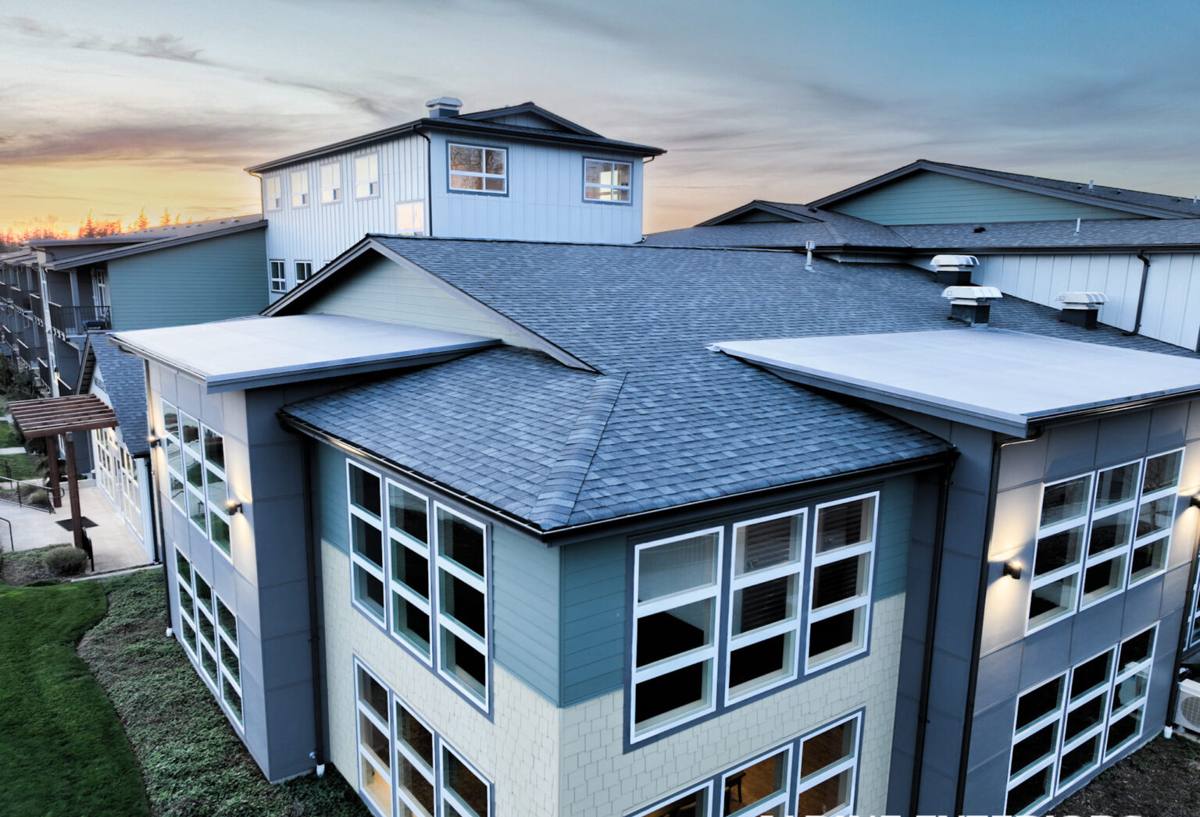
What James Hardie Siding Actually Solves
We install James Hardie fiber cement siding exclusively, and the reasons come directly out of climates like this one. Fiber cement is made from cement, sand, and cellulose fibers — it does not have the wood content that gives moisture and moss something to feed on, and it does not soften, swell, or delaminate the way some other siding materials can when they stay wet for weeks at a time.
Non-Combustible Material
James Hardie siding is non-combustible, which matters for insurance conversations and peace of mind regardless of climate, and is simply a sound baseline standard for anything going on the outside of a home.
ColorPlus Factory Finish
Most James Hardie products are available with a ColorPlus factory-applied finish — baked on in a controlled environment rather than field-sprayed. That finish is formulated to resist fading and hold up under UV and moisture cycling, and it comes with its own finish warranty separate from the substrate warranty. For a Lynden home repainted every several years under a standard paint-grade product, that's a real maintenance difference over the life of the siding.
HZ5 Engineering for This Region
James Hardie makes climate-specific product formulations, and the HZ5 line is engineered for regions with more moisture and freeze-thaw cycling than the mild coastal South. Whatcom County, including Lynden, falls into that category. Installing the correct HZ-rated product for this climate zone isn't a marketing detail — it affects how the product performs against moisture absorption and long-term durability.
What a Correct Installation Involves
Fiber cement siding is only as good as the installation behind it. A large share of the siding problems we get called out to inspect on older homes trace back to installation shortcuts, not the material itself. On a Lynden project, we treat the following as non-negotiable:
- A continuous weather-resistive barrier installed correctly behind the siding, with proper lapping so water sheds outward, not inward
- Correct flashing at every window, door, and roofline intersection — the single most common failure point on poorly installed siding
- Manufacturer-specified fastening: the right fastener type, spacing, and penetration depth, since under- or over-driven nails compromise the water management of lap siding
- Proper clearance between the bottom of the siding and the ground, roofline, decks, and patios, so water and splash-back don't sit against the material
- Caulked and sealed joints only where the manufacturer calls for sealant — not as a substitute for correct flashing
- Field-cut edges primed or sealed before installation, since raw cut edges are the most vulnerable part of any fiber cement board
Why This Matters More in Lynden
Every one of those details becomes more important, not less, in a climate that keeps walls wet for days at a stretch. A flashing detail that might get away with being slightly off in a dry climate has no such margin here — moisture that gets behind the cladding has months of damp weather to do damage before it ever has a chance to dry out.
James Hardie Product Lines We Use on Lynden Homes
James Hardie makes several product lines, and the right one depends on the home's style, exposure, and the look the homeowner wants. We walk through these options during the estimate rather than defaulting to one product for every house.
| Product | Best For | Look |
|---|---|---|
| HardiePlank lap siding | Most traditional Lynden homes, farmhouses, ranch and craftsman styles | Classic horizontal lap, multiple textures and widths |
| HardiePanel vertical siding | Modern builds, gable accents, barn-style architecture common in the area | Clean vertical lines, often paired with board-and-batten trim |
| HardieShingle siding | Accent gables, dormers, and homes wanting a shingle-style look without the maintenance of wood shakes | Staggered or straight-edge shingle profiles |
| HardieTrim boards | Corners, window and door surrounds, fascia | Smooth or textured trim that matches the siding finish |
Cost Factors for a Lynden James Hardie Project
Every home is different, so we don't quote broad numbers without seeing the house, but the factors below are what actually move a Lynden siding estimate up or down.
| Factor | Why It Matters |
|---|---|
| Existing siding removal | Tear-off of old material, disposal, and any sheathing repair found underneath adds labor and time |
| Wall complexity | Gables, dormers, and multiple roof intersections mean more flashing detail and cutting |
| Product line and profile | Panel and lap widths, textures, and ColorPlus color selection affect material cost |
| House size and stories | Square footage and access (single-story vs. multi-story) affect labor and equipment needs |
| Moisture or rot repair | Damaged sheathing or framing found once old siding comes off needs to be addressed before new siding goes on |
Why We Only Install James Hardie
We don't install vinyl, LP SmartSide, or other fiber cement alternatives, and that's a deliberate standard, not a lack of options. Vinyl siding can work loose, warp under thermal cycling, and offers little defense against long-term moisture exposure in a climate this wet. Engineered wood products like LP SmartSide use a wood-strand substrate that, however well treated, still relies on an unbroken factory coating to keep moisture out — any breach at a cut edge, fastener, or seam gives water a path into a material that can swell and deteriorate faster than fiber cement once it's compromised. Given the amount of rain, humidity, and moss pressure a Lynden home deals with over a year, we'd rather stand behind one product system we trust completely than offer a menu of options with different risk profiles.
Our Process, Start to Finish
Estimate and Inspection
We look at the existing siding, sheathing condition where visible, trim details, and the home's specific exposure — which walls take the most weather, where moss has already established, and where past water damage shows up.
Product and Color Selection
We walk through HardiePlank, HardiePanel, and HardieShingle options along with ColorPlus color choices, so the homeowner picks a system that fits the home's style and the maintenance level they want going forward.
Prep and Installation
Old siding comes off, sheathing is inspected and repaired as needed, the weather-resistive barrier and flashing go in correctly the first time, and the James Hardie system is installed to manufacturer specification — fastening, clearances, and sealant included.
Final Walkthrough
We go over the finished work with the homeowner, including care basics and what the warranty covers, before calling the job complete.
Why Hiring a Crew That Already Works Lynden Matters
Siding installation isn't just about following a manufacturer's install guide in the abstract — it's about applying that guide correctly to the specific exposure a given wall faces. A crew that regularly works Whatcom County homes already understands how moss establishes on shaded gables, where driving rain hits hardest on an open farmhouse lot, and which flashing details actually hold up through a full wet season here rather than in a milder climate the manufacturer's generic literature was written for. That local pattern recognition is the difference between an installation that looks right on day one and one that still performs correctly five and ten years in.
If you're planning a siding project on a Lynden home, we'd be glad to take a look and walk you through what correct James Hardie installation looks like for your specific house. Reach out for a free, no-pressure estimate using the form below.