 Bellingham Siding
 Why Edgemoor Decks Wear Out Faster Than the Average Deck
Edgemoor sits close enough to Bellingham Bay that salt-laden air is a constant factor, not an occasional one. Combine that with Whatcom County's driving winter rain and the long, damp moss season that runs from fall through spring, and you have a climate that's genuinely tough on exterior wood and hardware. Homes on tree-covered, bluff-adjacent lots get the added challenge of heavy shade, which slows drying time after every storm and gives moss and algae a head start on any surface that isn't sealed or ventilated properly.
A deck built without this climate in mind — undersized flashing, the wrong fastener coatings, decking laid tight with no drainage path — will show its age in five to eight years instead of fifteen or twenty. We see this pattern often enough in this neighborhood that it shapes how we spec every replacement here: material choice, ledger flashing, joist protection, and airflow underneath all get more attention than they would on a drier, more open lot.
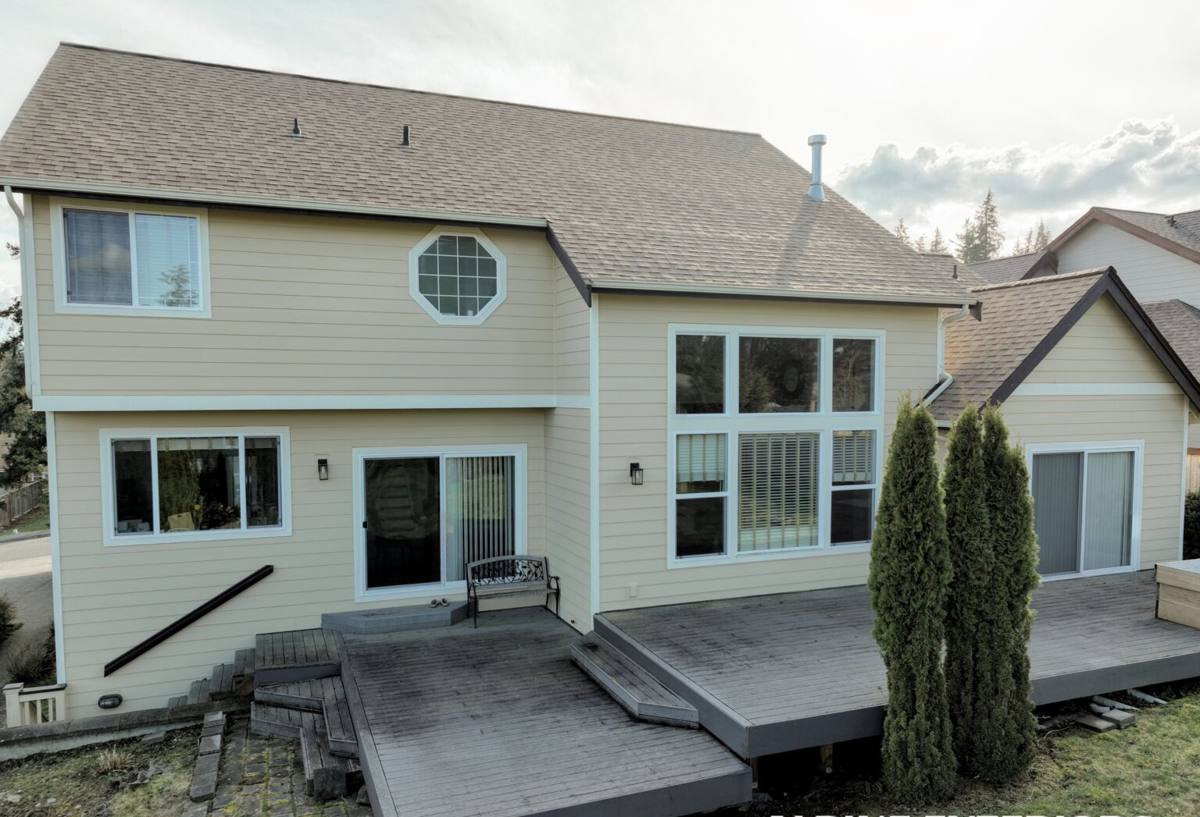
Signs It's Time to Replace, Not Repair
Not every tired-looking deck needs a full tear-off. But there's a point where patching boards is just delaying an inevitable, more expensive job. Here's what tells us a deck is past the repair stage:
- Soft, spongy, or spreading spots in the decking that go beyond one or two boards
- Rot at the ledger board (where the deck meets the house) — this is a structural safety issue, not cosmetic
- Posts or footings that have shifted, heaved, or show visible rot at ground contact
- Railings that flex or wiggle under normal pressure
- Persistent moss and green staining that comes back within weeks of cleaning, signaling the wood is holding moisture it can't shed
- Fasteners that are rusted, popped, or corroded through — common on older decks that used standard rather than coated hardware near the bay
If the framing underneath is sound and it's just the surface boards showing wear, resurfacing can make sense. If the ledger, joists, or footings are compromised, replacement is the honest recommendation — and the one that keeps you from paying for the same repair twice.
Choosing the Right Decking Material
There's no single "best" decking material — it depends on how much upkeep you want to do and how much of the year your deck sits in shade or gets rained on. For Edgemoor specifically, drainage and moisture-shedding matter more than they would on a sunny, open lot inland.
| Material | Moisture & Moss Behavior Here | Maintenance | Typical Lifespan |
|---|---|---|---|
| Pressure-treated wood | Absorbs moisture readily; needs sealing to resist moss and staining in shaded areas | Annual cleaning, re-sealing every 1-3 years | 10-15 years |
| Cedar | Naturally rot-resistant but still needs regular sealing near the bay; grays without maintenance | Cleaning and finish renewal every 1-2 years | 15-20 years |
| Composite decking | Sheds water well, resists rot, but can still grow surface moss in constant shade if not cleaned | Periodic washing, no sealing or staining | 25-30 years |
| PVC/capped polymer | Best moisture and moss resistance of the group; fully sealed surface | Occasional washing | 25-30+ years |
We're upfront about trade-offs rather than pushing one product. Composite and PVC cost more up front but save on the recurring maintenance that wood demands in this climate. Cedar and pressure-treated wood cost less initially and can look great, but only if you're willing to keep up with sealing on a schedule — skip a year or two under heavy tree cover and moss gets ahead of you fast.
What a Correct Deck Replacement Actually Involves
A deck replacement is more than swapping old boards for new ones. The parts you don't see are what determine whether the new deck lasts 20 years or repeats the same failure in eight.
Ledger and Flashing
The ledger board, where the deck attaches to the house, is the single most common point of failure on decks in wet climates. Correct flashing — installed so water is directed away from the house framing rather than trapped behind the ledger — is non-negotiable on every replacement we do.
Framing and Fasteners
Joists and beams need to be sized correctly for the span and load, and every fastener should be rated for exterior, coastal-adjacent use. Standard interior-grade hardware corrodes faster here than most homeowners expect.
Footings
Post footings need to sit below frost depth and bear on undisturbed, stable soil. On sloped or bluff-adjacent lots, this sometimes means engineered footings rather than a standard poured pad.
Drainage and Airflow
Ground-level and low-clearance decks need attention to grading and airflow underneath so moisture doesn't sit and breed rot from below — a real issue on shaded lots where the ground stays damp for days after a storm.
Permits and Local Site Considerations
Most deck replacements in Bellingham require a building permit, particularly when the deck is attached to the house, elevated, or being rebuilt rather than resurfaced. Requirements can shift depending on deck height, footprint, and whether guardrails or stairs are involved, so we handle the permit conversation with the City of Bellingham as part of the job rather than leaving it to the homeowner to sort out.
Edgemoor's lots add a few practical wrinkles worth planning for early:
- Sloped or bluff-adjacent yards that may call for engineered footings or additional structural review
- Mature tree canopy that limits drying time and can restrict work access — we plan around root zones and existing landscaping rather than working around them as an afterthought
- Setback and view-related considerations that can come up on lots with any deck height changes
None of this is unusual, but it's the kind of thing that catches homeowners off guard when a contractor unfamiliar with the area treats every lot the same.
Our Replacement Process
We keep the process straightforward and communicate what's happening at each stage:
- On-site assessment — we inspect the ledger, framing, footings, and existing decking to determine what's actually driving the deterioration, not just what's visible on the surface.
- Honest scope and material discussion — we walk through material options and trade-offs based on your budget, sun/shade exposure, and how much upkeep you want going forward.
- Permit handling — we manage the City of Bellingham permit application for the scope of work involved.
- Demolition and structural rebuild — old decking, framing, and any compromised footings come out; new framing goes in built to current code and to hold up in this climate specifically.
- Decking, railing, and finish work — installed with attention to drainage, fastening, and airflow, not just visual fit and finish.
- Final walkthrough — we go over the finished deck with you, including basic care guidance for whatever material you chose.
Cost Factors to Expect
Every deck is different, so we don't publish flat pricing — but these are the main factors that move the number up or down:
| Factor | Impact on Cost |
|---|---|
| Decking material (wood vs. composite vs. PVC) | Largest single variable; composite/PVC costs more upfront, less over time |
| Deck size and height | Taller, larger decks need more framing, footings, and guardrail work |
| Condition of existing structure | Rotted ledger, joists, or footings add rebuild scope beyond surface replacement |
| Site access and slope | Bluff or sloped lots can require engineered footings or added labor for access |
| Railings and stairs | Custom railings, cable rail, or multiple stair runs add material and labor |
| Permit and inspection scope | Larger or structurally significant projects require more inspection steps |
We give a written estimate that breaks these factors down so you know what you're paying for, not just a bottom-line number.
Protecting Your New Deck Year-Round
A well-built deck still needs basic seasonal attention in this climate. A short annual routine goes a long way toward hitting the material's full expected lifespan:
- Sweep debris and standing leaves off the deck regularly during fall, especially under tree cover
- Clean surface moss and algae before it gets a foothold — early spring and late fall are the key windows
- Check and clear gaps between boards so water keeps draining rather than pooling
- Inspect railings and stair connections annually for looseness or corrosion
- Reseal or refinish wood decking on the schedule appropriate to the product — don't wait until it visibly needs it
- Keep gutters and downspouts near the deck clear so runoff isn't draining directly onto or under it
Why a Crew That Already Works Edgemoor Matters
A lot of deck problems in this neighborhood trace back to work that was designed for a drier, more open climate — not for salt air, shade, and Whatcom County's rain totals. A crew that already works Edgemoor knows to flash the ledger for constant moisture exposure, spec hardware that won't corrode near the bay, and plan footings for sloped or bluff-adjacent soil without treating it as a surprise mid-project. That familiarity shows up in fewer change orders, fewer callbacks, and a deck that's still solid well past the point where a poorly built one would need attention again.
If your deck is showing its age or you're planning ahead of a problem rather than reacting to one, we're happy to come take a look. The estimate is free, there's no pressure to sign anything on the spot, and you'll get a straight answer about whether repair or full replacement makes sense for your situation — use the form below to get started.