 Bellingham Siding
 Edgemoor's Setting Makes Siding Choice and Installation Quality Non-Negotiable
Edgemoor sits close to Bellingham Bay, and that proximity to the water shapes almost everything about how exterior siding performs here. Homes in this part of Whatcom County deal with a combination most siding products were never designed to handle well over the long term: salt-laden air drifting in off the bay, driving rain that comes in sideways during fall and winter storms, and a moss and mildew season that can stretch for months under the tree canopy common to the neighborhood. Add in mature landscaping that keeps large sections of many homes shaded and slow to dry, and you have a climate that will find every weak point in a siding system within a few years if the material or the installation isn't right for the conditions.
This page is specifically about siding installation for Edgemoor properties — not a general overview of siding everywhere in Bellingham. The goal is to walk through what local homes actually need, what correct installation involves, and why a crew that already understands this pocket of Whatcom County matters more here than in a drier, more sheltered part of town.
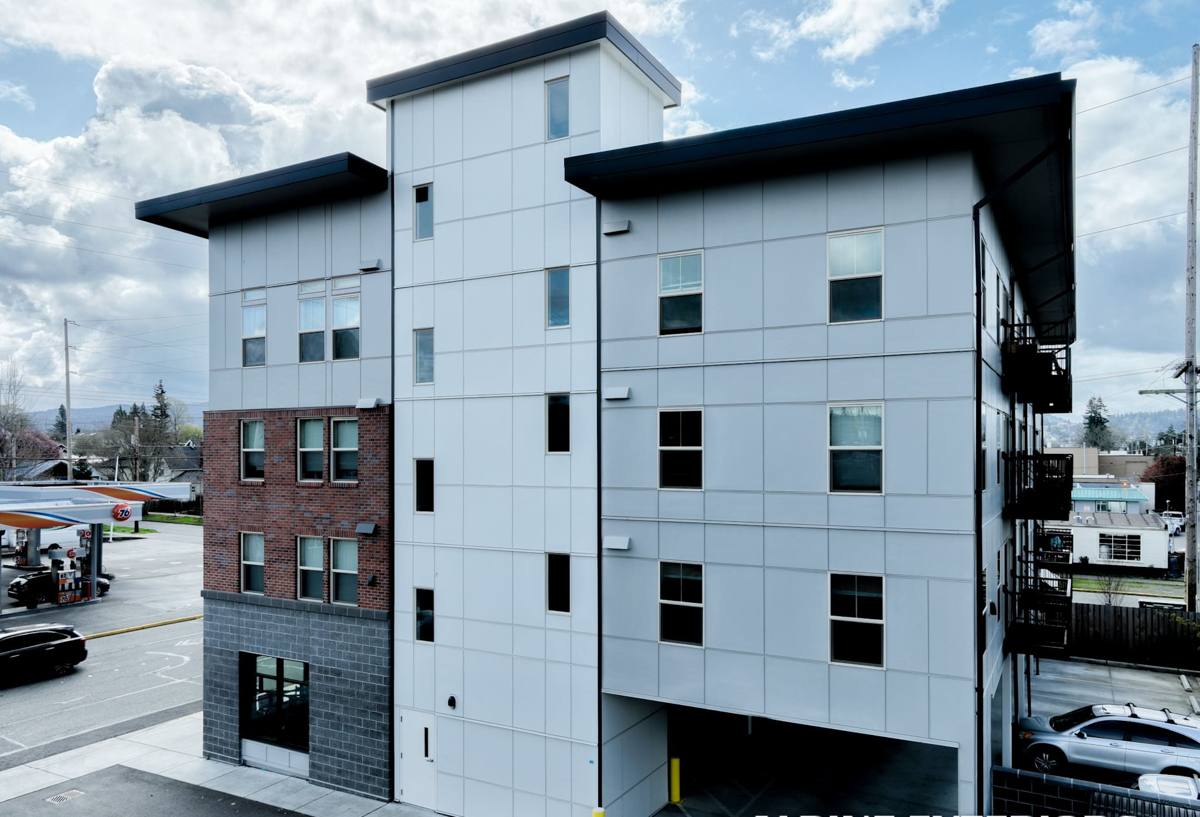
What Edgemoor's Climate Actually Does to Siding
Salt Air and Corrosion
Homes within roughly a mile or two of Bellingham Bay are exposed to airborne salt that settles on exterior surfaces and fasteners. Over years, this accelerates corrosion on unprotected metal trim, fasteners, and flashing, and it can degrade certain siding finishes faster than the manufacturer's inland test data would suggest. This is one of the reasons fastener selection and flashing material matter as much as the siding panel itself.
Driving Rain and Wind-Driven Moisture
Storms moving in off the water tend to push rain horizontally against west- and southwest-facing walls. Siding systems that rely on face-sealing (caulk and paint alone, without a properly drained assembly behind them) are the first to fail under this kind of exposure, because wind pressure can force water past the surface even when the siding looks intact.
Moss, Algae, and Prolonged Dampness
Edgemoor's tree cover is part of its character, but shaded, damp walls stay wet longer after every rain. That extended dampness is exactly what moss and algae need to take hold on siding surfaces, trim, and especially north-facing walls that see little direct sun. Left unmanaged, sustained moisture at the siding surface can eventually work into seams, fastener holes, and butt joints.
Why We Install James Hardie Fiber Cement — Nothing Else
We install James Hardie fiber cement siding exclusively. We don't install vinyl, LP SmartSide, Cemplank, Allura, primed spruce, or cedar, and in a climate like Edgemoor's, that standard isn't arbitrary. Fiber cement is non-combustible, dimensionally stable in wet-dry cycling, and doesn't feed mold or rot the way wood-based products can when moisture gets past the surface. James Hardie's ColorPlus factory finish is baked on under controlled conditions, which gives it more consistent, longer-lasting color and moisture resistance than field-applied paint — a real advantage in a neighborhood where UV exposure is lower under tree cover but humidity and salt exposure are higher.
James Hardie also makes climate-engineered product lines (HZ5 and HZ10) formulated for different regional conditions, which lets us match the product to the specific exposure a home actually faces rather than installing a one-size-fits-all panel. That, combined with a strong transferable warranty, is why we standardized on this single manufacturer rather than offering a menu of materials with very different long-term track records.
How Siding Materials Compare Under Edgemoor Conditions
| Factor | Vinyl | Wood / Primed Spruce | James Hardie Fiber Cement |
|---|---|---|---|
| Moisture & rot resistance | Doesn't rot, but can trap moisture behind it | Vulnerable to rot without diligent maintenance | Won't rot; engineered to manage moisture |
| Salt air / corrosion tolerance | Can become brittle over time near salt air | Finish breaks down faster near salt exposure | Factory finish holds up well; non-corrosive material |
| Moss & algae resistance | Moderate; textured panels can hold grime | Prone to organic growth if shaded and damp | Dense material resists surface growth better; still needs cleaning |
| Fire performance | Combustible | Combustible | Non-combustible |
| Repainting needs | Rarely painted, limited color life | Repainting every few years | ColorPlus finish holds color for many years |
What a Correct Siding Installation Actually Involves
The siding panel is only part of the system. In a wet, salt-exposed environment like Edgemoor, the assembly behind and around the panel is what determines whether a job lasts fifteen years or fifty. A correct installation includes:
- A properly lapped and sealed weather-resistive barrier (house wrap) installed to shed water downward and outward
- Rain-screen or drainage gap detailing where the wall assembly calls for it, so incidental moisture behind the siding can drain and dry
- Corrosion-resistant fasteners and flashing appropriate for near-water, salt-air exposure
- Correct flashing and kick-out details at every roof-to-wall intersection, window, and door — the single most common source of hidden water damage
- Manufacturer-specified fastener spacing, clearances from grade and roofing, and butt-joint treatment per James Hardie installation guidelines
- Caulking used as a secondary defense, not the primary water seal
Skipping or rushing any of these steps is how a "new siding job" ends up with rot or moisture damage behind the wall within a few years — even when the siding material itself is excellent. This is where installation quality matters as much as the product choice.
Our Process for Edgemoor Siding Projects
1. On-Site Assessment
We start by walking the exterior with the homeowner, looking at existing siding condition, moisture staining, trim and flashing condition, and how the home's orientation and tree cover affect exposure on each wall. Waterfront-adjacent and shaded lots often need different detailing wall by wall, not a uniform approach on all four sides.
2. Removal and Substrate Inspection
Once old siding comes off, we inspect the sheathing and framing underneath for any moisture damage that wasn't visible from the outside. This step matters everywhere, but it's especially important on older Edgemoor homes where original siding may have been sealing in moisture for years without obvious exterior signs.
3. Weather Barrier and Flashing Installation
We install or correct the weather-resistive barrier and all flashing details before a single piece of Hardie siding goes up. This is the step that most determines long-term performance and is also the easiest to shortcut if a crew is moving too fast.
4. James Hardie Installation to Manufacturer Spec
Panels, fasteners, and trim go in following James Hardie's published installation requirements — clearances, fastener patterns, and joint treatment — because deviating from spec can affect both performance and warranty coverage.
5. Final Walkthrough
We review the completed work with the homeowner, including care and maintenance guidance specific to a shaded, near-water property.
Cost Factors for an Edgemoor Siding Installation
Every home is different, so we don't publish flat per-square-foot pricing, but the main variables that affect the scope and cost of a project are consistent:
| Factor | Why It Matters |
|---|---|
| Home size and wall complexity | More corners, dormers, and roof-wall intersections mean more flashing detail work |
| Existing substrate condition | Rot or moisture damage found during tear-off adds repair scope before new siding goes on |
| Siding profile and trim selection | Lap width, panel style, and trim detailing affect material cost |
| Access and site conditions | Mature trees, slopes, and tight lot lines common in Edgemoor can affect staging and labor time |
| Color and finish selection | Factory ColorPlus finishes vary slightly in cost by color line |
Why Local Experience in Edgemoor Specifically Matters
A siding crew that has worked in Edgemoor already knows which walls tend to hold moisture longest, how far salt exposure typically reaches from the shoreline, and how tree cover on a given lot affects drying time after storms. That's not something you can fully compensate for with a generic installation checklist — it shapes decisions like where extra flashing attention goes, which walls get the most scrutiny during inspection, and how we sequence a project around Bellingham's wetter months. A contractor unfamiliar with this specific stretch of Whatcom County is more likely to treat every wall the same way, which is exactly how moisture problems get missed.
What Homeowners Should Ask Before Hiring for Siding Work Here
- Do you install fiber cement to James Hardie's published specifications, including fastener and clearance requirements?
- How do you handle flashing at roof-to-wall intersections and window/door openings?
- Will you inspect and address any substrate damage found during tear-off, or just cover it?
- What weather-resistive barrier and drainage detailing do you use behind the siding?
- Can you explain the warranty coverage on both material and labor?
After Installation: Keeping Edgemoor Siding Performing
Correctly installed James Hardie siding needs relatively little upkeep, but a few habits go a long way in this climate: periodically rinsing off shaded or north-facing walls to discourage moss buildup, keeping gutters clear so overflow doesn't run down wall surfaces, and trimming back vegetation that keeps siding in constant shade and dampness. None of this replaces correct installation — it simply protects the investment once the system is in place.
If you're weighing a siding project for an Edgemoor home, we're happy to walk the property with you, look at what your current siding is telling us, and talk through what correct installation would involve for your specific walls and exposure. Reach out for a free, no-pressure estimate using the form below.