 Bellingham Siding
 Building Decks for Edgemoor's Particular Conditions
Edgemoor sits on elevated, tree-shaded lots close to Bellingham Bay, and that combination shapes almost every decision that goes into a deck here. You've got salt-laden air moving off the water, heavy tree canopy that keeps surfaces shaded and damp longer than open lots, and Whatcom County's long wet season that can leave a deck under standing moisture for months at a stretch. A deck built the same way you'd build one in a dry inland suburb won't hold up the same way in Edgemoor. The materials, the fasteners, the framing details, and even the layout all need to account for a site that's shaded, breezy off the bay, and rarely fully dry.
This page is specifically about custom deck construction for Edgemoor properties — what the local climate demands, what a properly built deck actually involves under the surface, and how we approach the job so it holds up rather than becoming a five-year maintenance headache.
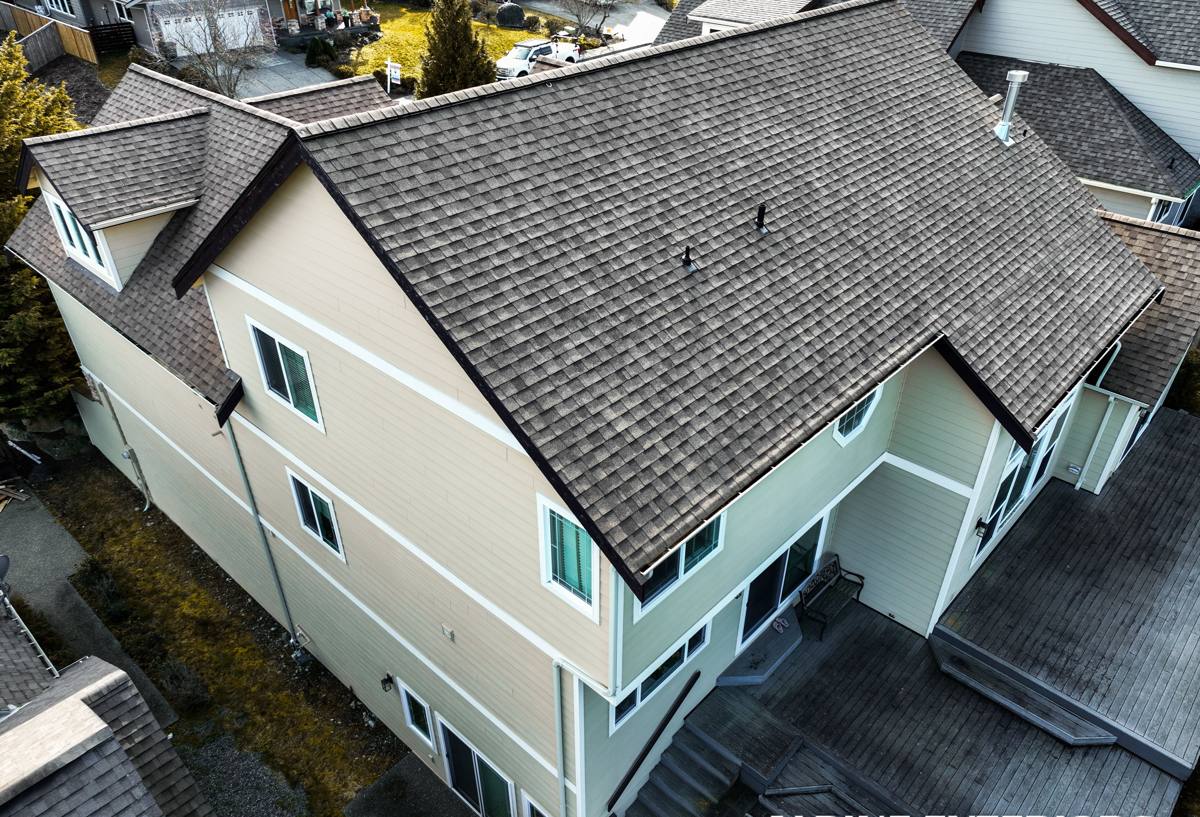
What Salt Air, Driving Rain, and Moss Season Do to a Deck
Salt Air and Metal Fasteners
Proximity to Bellingham Bay means airborne salt reaches decks even a good distance uphill from the water, especially on lots with direct exposure through gaps in the tree line. Salt accelerates corrosion in fasteners, joist hangers, and any exposed hardware that isn't rated for it. Standard electro-galvanized screws and nails will show rust streaking and weakening well before their inland counterparts. This is one of the most common shortcuts we see on older or budget-built decks in this area — the wood looks fine, but the hardware holding it together is failing from the inside.
Driving Rain and Wood Movement
Whatcom County doesn't just get a lot of rain — it gets wind-driven rain that hits decking boards and structural members from angles a dry-climate deck was never designed for. That means water gets pushed into end grain, fastener holes, and any joint that isn't properly flashed or gapped. Wood expands and contracts with repeated wetting and drying, and over years that movement works fasteners loose, opens up gaps for rot to start, and warps boards that weren't installed with the right spacing.
Moss Season
Edgemoor's mature tree cover is part of what makes the neighborhood attractive, but it also means extended shade on deck surfaces for much of the fall through spring. Combined with the region's long wet stretch, that shade creates ideal conditions for moss and algae to establish on decking, stair treads, and railings. Beyond looking bad, moss holds moisture against the wood surface and turns stairs and walking surfaces slick and genuinely dangerous underfoot.
Choosing the Right Decking Material for an Edgemoor Lot
There's no single "best" decking material — the right choice depends on how shaded the site is, how much upkeep the homeowner wants to do, and the look they're after. Here's how the common options actually perform under Edgemoor's conditions:
| Material | Performance in Shade & Salt Air | Maintenance | Typical Lifespan Here |
|---|---|---|---|
| Cedar | Naturally rot- and insect-resistant; still needs sealing to resist moss and moisture staining | Annual cleaning, re-sealing every 2-3 years | 15-20 years with upkeep |
| Pressure-Treated Fir/Pine | Treated for rot resistance but more prone to surface checking and moss buildup in shade | Cleaning and sealing every 1-2 years | 15-20 years with upkeep |
| Composite (capped) | Doesn't absorb moisture like wood; still needs regular cleaning to prevent moss film on the cap surface | Periodic washing, no sealing/staining | 25-30+ years |
| Tropical Hardwoods (e.g., Ipe) | Very dense and rot-resistant; can be slick when mossy if not textured or maintained | Occasional oiling to maintain color, cleaning for moss | 30+ years |
For heavily shaded Edgemoor lots specifically, we lean toward steering clients away from bare pressure-treated lumber left unsealed, because it's the combination most likely to grow moss quickly and check at the surface. That's not a knock on treated lumber as a framing material — it's an excellent, cost-effective structural choice — it's specifically about using it as an exposed walking surface in a shaded, wet environment without a protective finish.
What's Underneath Matters More Than What's on Top
Homeowners naturally focus on decking boards and railing style, but the framing underneath is what determines whether a deck lasts 10 years or 30. For Edgemoor sites, a few structural details matter more than usual:
- Ledger board flashing — where the deck attaches to the house is the single most common failure point for water intrusion; proper flashing and a drainage gap here are non-negotiable, especially with driving rain coming off the bay.
- Joist tape or capping — sealing the tops of joists before decking goes down keeps water from soaking into end grain and starting rot from the inside out, invisible until it's serious.
- Corrosion-rated hardware — stainless or heavily coated fasteners and joist hangers cost more up front but are worth it in a salt-air environment where standard galvanized hardware corrodes faster than it should.
- Post footings sized for the site — sloped, tree-root-laced lots common in Edgemoor sometimes need deeper or reinforced footings; this isn't a place to guess at spans and depths.
- Proper board spacing — gaps between decking boards need to be wide enough to let a shaded, damp deck actually dry between rain events, not just look tight and clean on installation day.
Drainage, Slope, and Moss: Designing to Shed Water
A deck that dries out quickly is a deck that resists moss and rot. That starts with grading and slope decisions made before a single post goes in. We look at how water actually moves across the site — where runoff from the roofline lands, how much of the deck sits under canopy, and whether the surrounding grade sends water toward or away from the structure. On sloped, tree-shaded Edgemoor lots, this sometimes means adding drainage away from footings, choosing board orientation that lets water run off efficiently, or leaving deliberate gaps near the house to keep the ledger area from staying damp. None of this is visible in the finished product, but it's the difference between a deck that needs occasional cleaning and one that needs moss scraped off the stairs every few months.
Our Process for a Custom Edgemoor Deck
- Site walk and assessment — we look at sun/shade exposure, slope, existing structure (if replacing a deck), and how close the site is to the bay for salt exposure.
- Design and material selection — sized and laid out for how the space will actually be used, with material recommendations based on the shade and maintenance tolerance discussed above.
- Permitting — we handle the permit application through the City of Bellingham or Whatcom County, depending on the property's location, including any required structural review.
- Demolition (if applicable) — old decking and framing removed and hauled off; we flag any rot found in the ledger or framing before proceeding.
- Framing and structural work — footings, posts, beams, and joists built to span and load requirements, with corrosion-rated hardware and proper flashing throughout.
- Decking, railing, and stairs — installed with spacing and fastening appropriate to the material and the site's moisture exposure.
- Final walkthrough — we cover maintenance expectations specific to the material chosen and the site's shade/moisture profile.
Permits in Bellingham and Whatcom County
Most new decks and significant deck rebuilds in Bellingham require a building permit, and requirements can differ depending on whether a property falls under City of Bellingham jurisdiction or unincorporated Whatcom County. Deck height, guardrail requirements, footing depth, and proximity to property lines all factor into what's required. We handle this process as part of the job rather than leaving it to the homeowner — it's one less thing to chase down, and it ensures the finished deck is actually built to code rather than something that creates problems at resale.
Keeping a New Deck Ahead of Moss and Moisture
Even a well-built deck needs some seasonal attention in an environment like Edgemoor's. A simple maintenance routine goes a long way:
- Sweep debris and fallen needles/leaves off the surface regularly, especially in fall — trapped organic matter holds moisture and feeds moss growth.
- Clean the deck surface at least once a year with a wood- or composite-safe cleaner to remove early moss and algae before it establishes.
- Check and clear gaps between boards so water can drain through rather than pooling.
- Inspect railings, stair connections, and ledger flashing annually for movement or water staining.
- Reseal or restain wood decking on the schedule appropriate to the species (see the material table above) — don't wait until it's visibly gray and dry.
- Trim back overhanging branches where practical to reduce shade and debris buildup on the deck surface.
Why a Crew That Already Works Edgemoor Makes a Difference
A lot of deck problems we get called to fix started with a design or material choice that would have been fine in a drier, sunnier location but wasn't right for a shaded lot above Bellingham Bay. Knowing how a specific neighborhood's exposure, tree cover, and moisture patterns behave isn't something you get from a general contractor spec sheet — it comes from building and maintaining decks in that exact environment over time. That local familiarity shows up in small decisions: which hardware to spec, how much board gap to leave, where drainage needs extra attention, and which materials are worth the added cost versus which ones just add maintenance without real benefit.
If you're planning a new deck or considering rebuilding one that's showing its age in Edgemoor, we're glad to walk the site with you and talk through what makes sense for your specific lot. Reach out for a free, no-pressure estimate using the form below.